




Teresa of Avila Reforms Carmelite Convents
Teresa founds first reformed convent at Avila.
FaithTap · Sep 25, 2026 · 11 min read
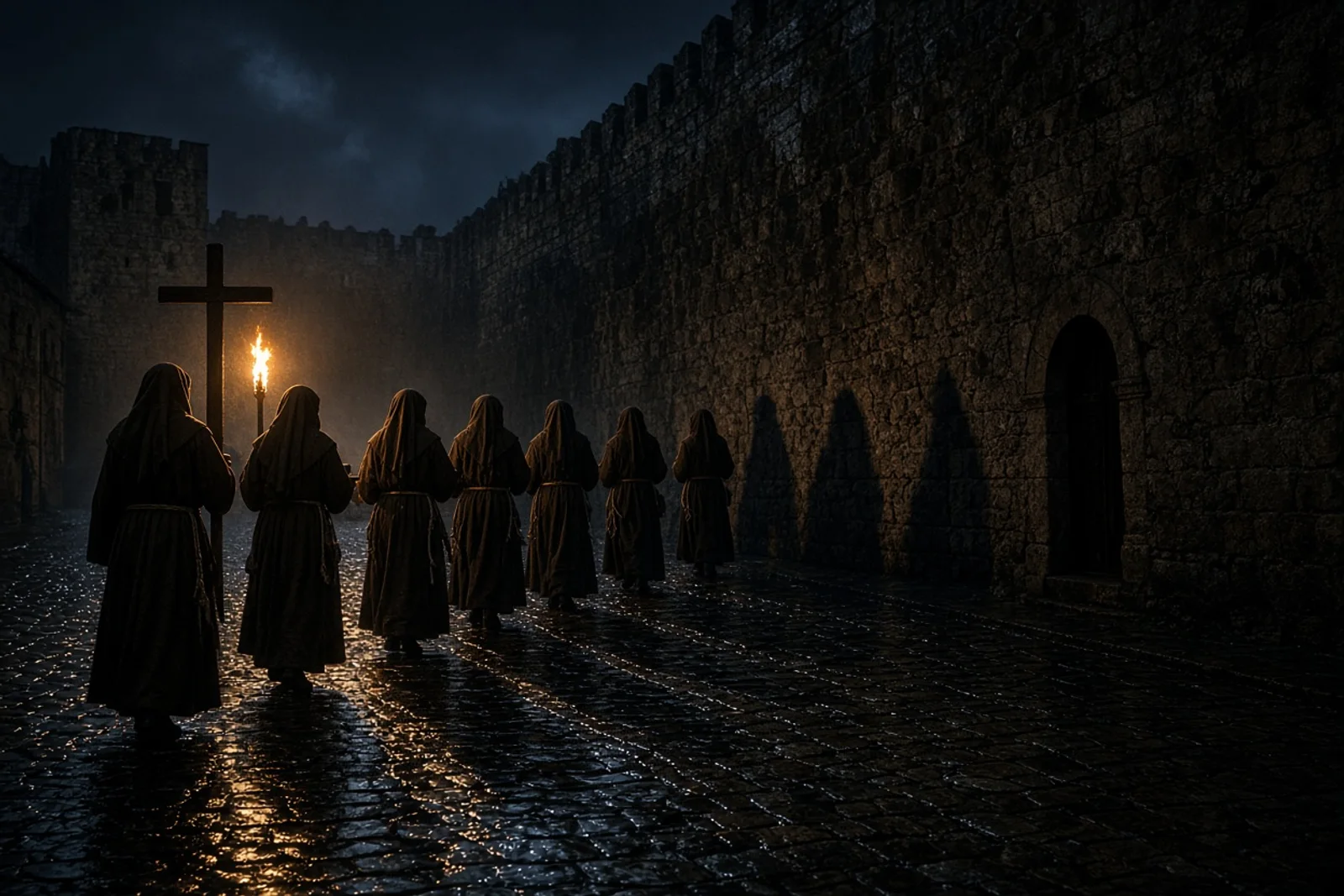
The cart wheel caught on a loose stone outside the new house and the whole load of blankets slid toward the street. I grabbed the edge with both hands and braced my shoulder against the sideboard until the driver could back the mule. Dust rose in the late August heat and stuck to my sleeves. From the corner I could see the small doorway we had whitewashed the week before. Two women already waited inside with the keys.
Teresa had come back from Toledo only days earlier. She looked thinner than when she left, and the lines around her mouth were deeper, but she moved through the empty rooms as if she already heard prayers there. She told us the Roman brief had arrived the night she reached Avila. The paper carried the date of February, yet it had taken five months to cross the mountains and find her. She read it aloud once in the sacristy of the Incarnation and then folded it away.
That same afternoon Peter of Alcantara arrived on foot from his own poor house. He was thin enough that the wind seemed to pass through his habit. He asked for the Bishop at once. The two men spoke in the garden behind the cathedral for nearly an hour. When they came out the Bishop’s face was set, but he gave his word that the foundation could proceed without further delay. Peter came straight to the new house afterward and stood in the doorway, nodding at the bare walls as if he could already see the grille in place.
We worked through the night of the twenty-third. The mattresses were straw and the sheets were coarse, yet Teresa insisted nothing else be added. She placed a small wooden cross on the wall of the room that would serve as chapel and left it there without a cloth or candlestick. At dawn on the twenty-fourth the first Mass was said by a priest from the cathedral who had been sworn to silence. Four of us stood outside the door while the words were spoken inside. We heard the bell that Teresa had brought from the Incarnation ring once, thin and clear.
By mid-morning the street began to fill. Some neighbors had heard only that a new convent was opening without dowries or servants. A few shouted that the city already had enough poor nuns and that this one would draw alms away from the older houses. Teresa stayed inside with the three sisters who had come with her. She did not answer the calls. The Bishop’s representative posted a notice on the church door confirming the license, yet the knot of people did not thin until the afternoon heat drove them to shade.
One of the women who had helped carry water that morning asked me whether the new rule would really keep the sisters from speaking to their families. I said I did not know. Teresa had told us only that the convent would live on daily work and alms, nothing more. She had written the same thing in the papers she sent to Rome months before. The exact words were not repeated in the street, but the meaning traveled.
By evening the crowd had gone. We lit a single lamp in the chapel and left the door open so any passerby could see the light. Teresa knelt on the floor without a cushion. The straw in the mattresses rustled when the other sisters lay down. Outside, the mule driver unhitched his cart and led the animal away. The street settled into the ordinary sounds of night—dogs, a distant cart, shutters closing.
In the weeks that followed the opposition cooled into ordinary talk. Some families began to leave small baskets of bread at the door. Others crossed the street rather than pass close. Teresa kept the rule she had set: no visitors beyond the grille, no private conversations, the hours of prayer fixed. She spent part of each morning copying the account of her own life that the confessors had asked her to finish. The pages were stacked on a low table in the corner of the room she used for writing.
One afternoon a messenger arrived from the Incarnation asking whether she would return to settle some remaining business. She sent word that she would come when the new community was steady. That evening she walked the short cloister twice, counting the steps aloud so the sisters would know the distance in the dark. The walls still smelled of fresh lime.