




Teresa of Ávila's Second Conversion
Carmelite nun Teresa experiences profound renewal before the wounded Christ statue and reforms her order.
FaithTap · Sep 24, 2026 · 12 min read
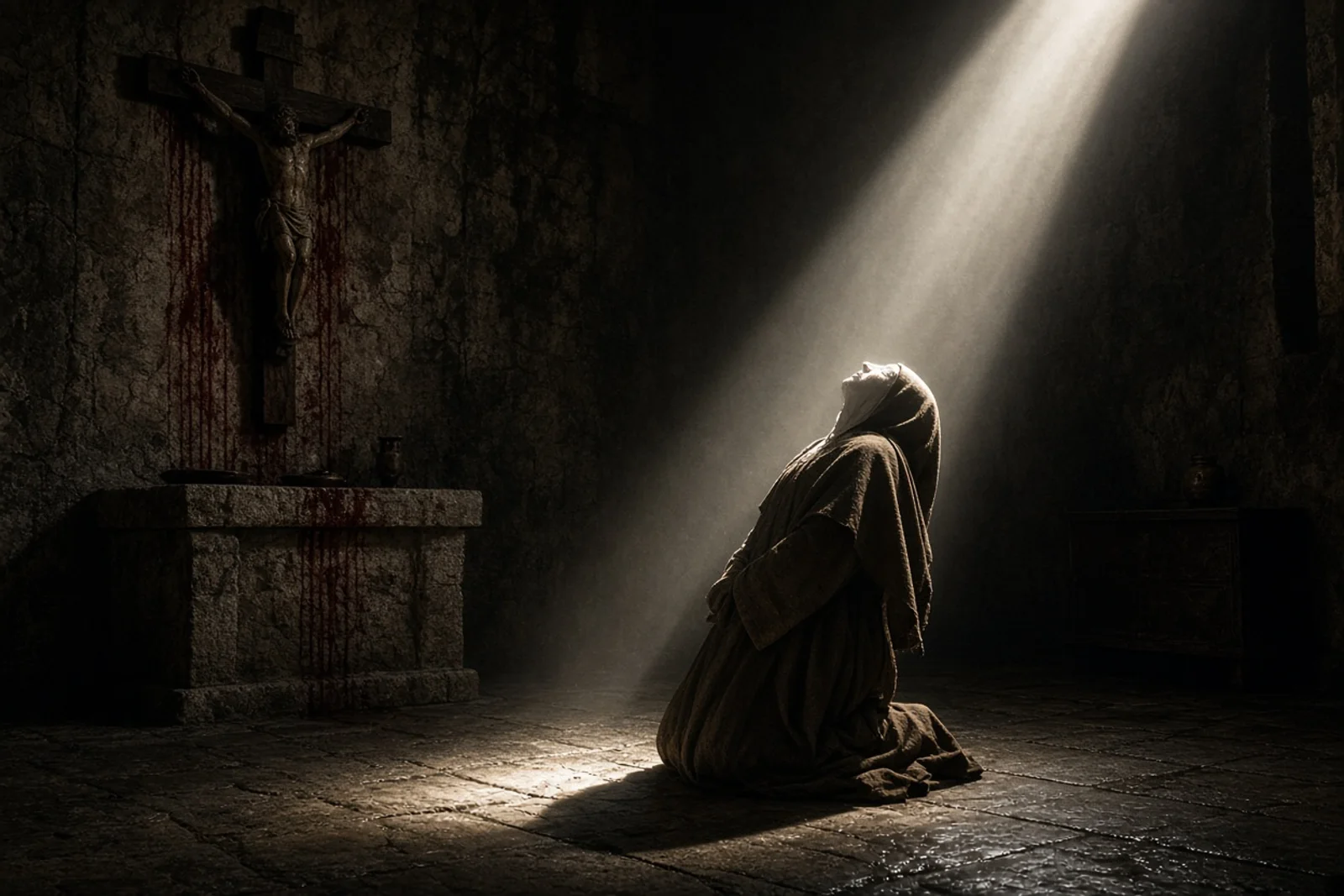
The picture had been leaned against the wall in the oratory that morning, still wrapped in the cloth the sacristan used for feast-day images. I carried the last of the candles in and set them on the ledge, then stepped back to judge the light. The frame was plain, the wood darkened from years of smoke. When the cloth came away the figure inside stopped me where I stood. The wounds were not painted for show. They looked opened and raw, the head tilted so the weight of it pulled at the neck.
Teresa came in not long after, her habit still damp at the hem from the morning chores. She did not speak at first. She stood a few paces inside the door and looked. I saw her shoulders drop as if someone had cut a cord. Then she moved forward, dropped to her knees on the stone, and stayed there without moving for what felt like a long time. When the tears came they were quiet at first, then heavier, until I could hear them hit the floor. She pressed her forehead to the ground beside the frame and stayed low.
I left her there. The bell for the next office would ring soon and someone had to see to the linen. When I passed the door again an hour later she was still on the floor, one hand now resting on the edge of the picture as if she meant to keep it from being taken away. Two other sisters glanced in and moved on without speaking. We had all grown used to her long prayers, but this was different. She did not rise when the bell rang.
That night she ate little. In the refectory she kept her eyes on her bowl. When one of the younger nuns tried to draw her into talk about a visitor who had come that week, Teresa answered only that she had nothing to add. The next morning she asked the portress to turn away two gentlemen who had come to speak with her through the grille. She had been seeing them every month for years. She gave no reason.
She began to spend more time alone in the oratory. Sometimes she would take the picture down and carry it to a corner where the light was poorer, as if she wanted fewer eyes on it. When she returned to the common rooms her face looked older, though nothing in her work had changed. She still swept, still copied the accounts when asked, still walked the cloister at the same hour each afternoon. Only the conversations stopped. The visitors who used to wait for her now waited for others.
She spoke once of the Magdalene in the hearing of three of us. It was after Compline, and she was folding the towels. She said the saint had known how to stay at the feet even when everything else had been taken. Then she went back to the folding as if she had said nothing of importance. We did not ask her to explain.
The change held through the winter. She refused the small gifts that used to come from outside, the sugared almonds and the letters that asked for her prayers in return for news. When the new Jesuit fathers arrived in Ávila she was among the first to ask for confession with them. She went regularly after that, sometimes waiting in the cold corridor until Father Juan de Padranos could see her. She never spoke of what passed between them.
By spring she had begun to walk the garden alone at times when the rest of us were gathered. She would stop at the olive tree near the wall and stand with one hand on the bark, looking at nothing in particular. Once I saw her press her thumb against a thorn on a low branch until the skin broke. She wrapped the cut in her sleeve and went inside without comment.
The picture stayed in the oratory. No one moved it to the feast-day storeroom when the season changed. Teresa would sometimes stand before it again, though she no longer threw herself down. She would look for a few minutes, then turn and continue with whatever task waited. Her voice in choir grew steadier. She missed fewer of the hours.