




Terry Fox Runs Marathon of Hope
One-legged runner covers 5,373 km raising cancer funds.
FaithTap · Sep 29, 2026 · 12 min read
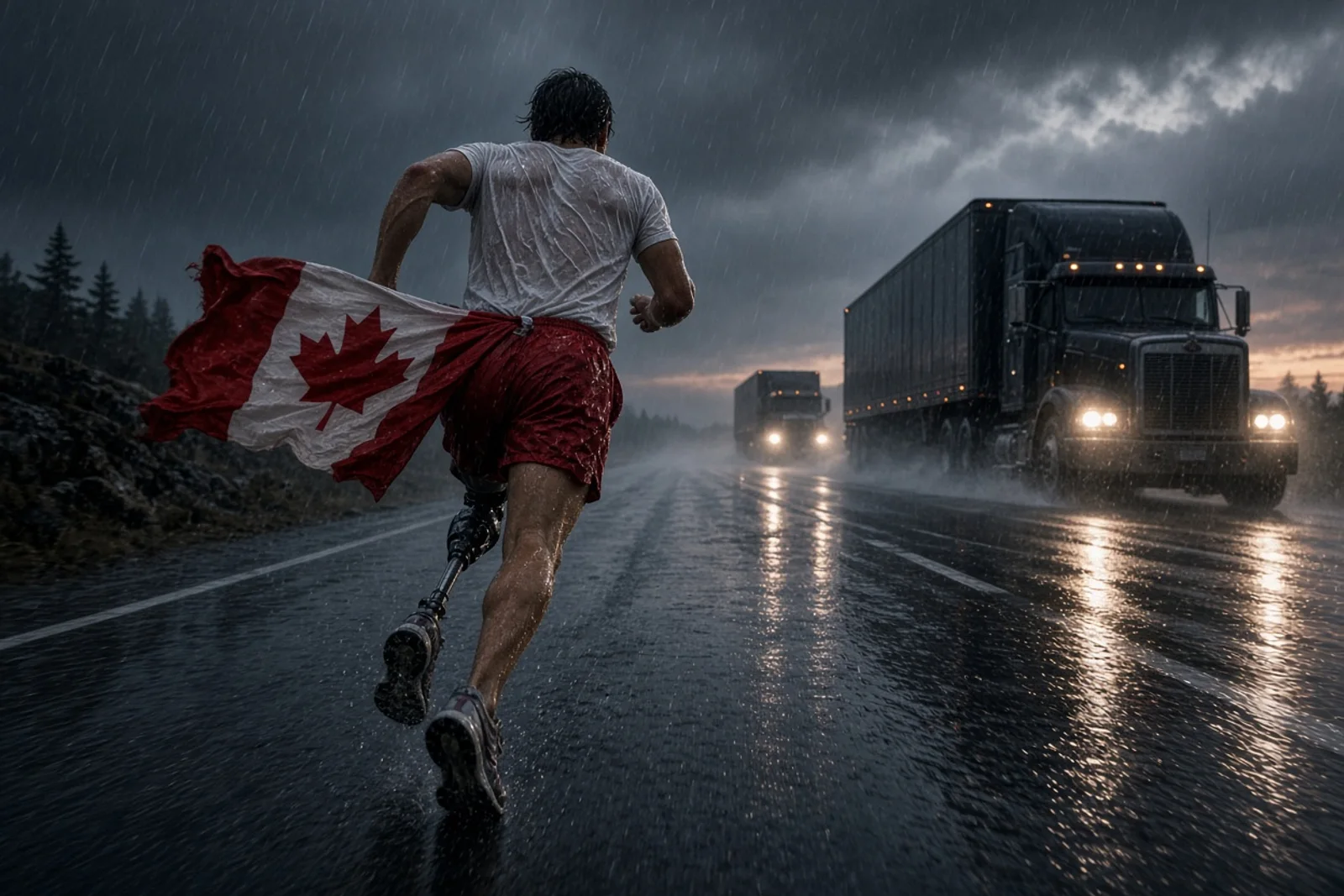
The road curved out of St. John's under a low sky, and I waited with maybe twenty others near the harbor wall. Terry Fox came into view just after dawn on that twelfth of April, his right leg swinging in the rhythm he had practiced for months. The prosthesis hit the pavement with a steady knock. He reached the water, bent, and let the artificial limb touch the Atlantic. Then he turned and began to run west.
Doug Alward drove the van a few lengths behind him. They had packed it with spare legs, a cot, and boxes of letters already arriving from strangers. Terry covered the first miles without looking back. By noon the wind off the water had turned sharp, and he kept the same pace through sleet that stung his face and made the road slick.
I followed in my own car for three days, stopping where he stopped. In small outports people stood at the edge of the pavement and held out coins. Terry would slow, accept what they offered, and keep moving. Some days the total came to less than twenty dollars. He logged forty kilometres before dark anyway, then ate whatever the van carried and slept on the cot while Doug took the wheel for the next stretch.
Through Nova Scotia the weather warmed but the hills grew steeper. Terry's stump began to bleed inside the socket. He changed the liner at the side of the road, wrapped it again, and resumed. In one town a boy on a bicycle rode beside him for half a kilometre before the chain slipped. Terry waited while the boy fixed it, then waved him on. The crowd that gathered that evening filled the main street. He spoke for eight minutes, voice hoarse, then climbed back into the van.
Quebec brought rain that lasted six days. Terry ran through it without complaint, though the prosthesis slipped on wet pavement and twice he fell. Each time he stood, checked the knee joint, and continued. In Montreal the streets were lined deeper than anywhere before. People reached out to touch his shoulder as he passed. He did not slow for them. The daily distance stayed near forty-two kilometres.
Ontario opened under clearer skies. By the time Terry crossed the border the news had spread farther. Schoolchildren lined the shoulders for miles. He stopped at every town that had sent a letter, even when the stop added extra kilometres. Doug kept a log of the money collected each day. The amounts grew, yet Terry still rose at four-thirty, ate, and began again before light.
Near the end of July the heat pressed down on the asphalt. Terry's breathing grew louder. He drank from a bottle handed through the van window and kept his eyes on the white line. In one stretch he ran alone for hours with no one ahead or behind except the van. When a farmer offered a barn for the night, Terry accepted. He slept on the floor beside the prosthesis, which he had propped against a post to dry.
By late August the crowds waited in every place large enough to have a main street. Terry spoke longer now, though the words stayed the same: he wanted one dollar from every Canadian for research. After the speeches he ran until the light failed. Doug would park the van at the side of the road, and Terry would stretch out on the cot while the engine idled to keep the heater on.
On the first of September the air outside Thunder Bay carried the first edge of autumn. Terry had already covered more than five thousand kilometres. That morning his stride shortened. He stopped once, bent forward with hands on his knees, then straightened and continued. Two kilometres later he stopped again. This time he did not resume. An ambulance took him to hospital. The doctors found cancer in both lungs.