




The Bridge of Reconciliation at Mostar
Rebuilt Ottoman bridge reunites divided city
FaithTap · Sep 28, 2026 · 11 min read
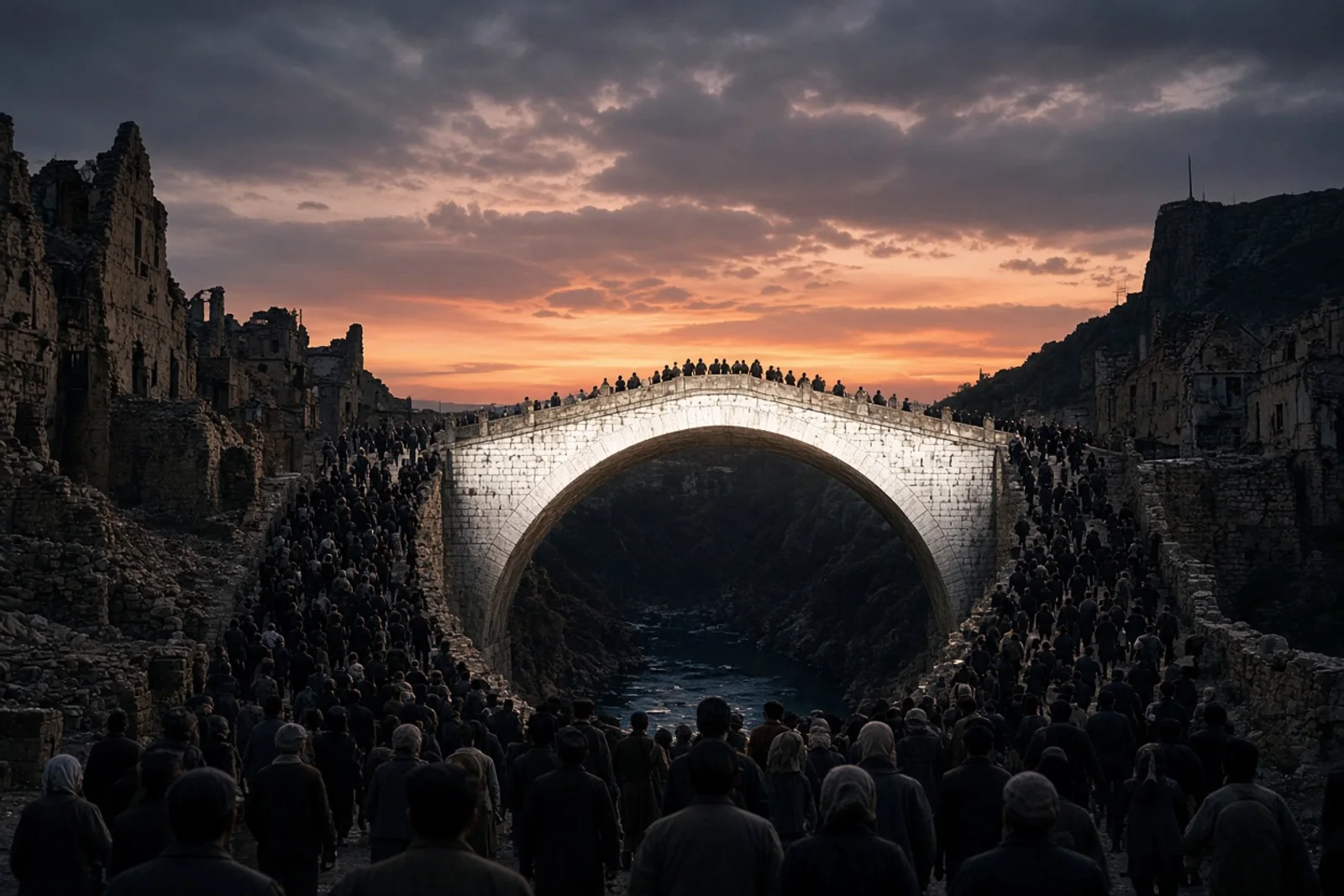
The river ran low that morning, its green surface catching the first light between the towers. I stood on the east bank with a few hundred others already gathered, the air still cool before the heat built. My hands rested on the stone rail of the approach, the same limestone that had been hauled here centuries before. Across the gap the new bridge waited, its arch clean and white against the sky, the wooden scaffolding already cleared away.
People moved slowly along the lanes behind me. Some carried flags, others just their own silence. I recognized a man from the old quarter who had once sold bread near the market. He nodded without speaking. We had both watched the shells fall ten years earlier, though neither of us said it aloud.
By mid-morning the delegations began to arrive. Cars with diplomatic plates lined the road above the towers. I stayed where I was, close enough to see the platform set up on the west side. A brass band from the local school warmed their instruments under a canvas awning. The notes drifted across the water and mixed with the sound of the current.
Sulejman Tihic stepped onto the platform first, the chairman of the tripartite presidency. He stood with his hands clasped, looking at the span as if measuring it again. Then Koïchiro Matsuura arrived, the UNESCO director-general, escorted by city officials. They spoke quietly for a moment before the microphones were switched on.
Matsuura’s voice carried clearly over the water. He spoke of breathing fresh life into the heritage, of turning a target into a sign of recognition. The words settled on the crowd without echo. I felt the weight of them because I had seen the bridge when it was only rubble in the riverbed.
Work on the new foundations had started in June 2001. I had walked past the site most days that summer, watching the divers bring up what remained of the original stones. The engineers from Florence and Dubrovnik measured every block that could be saved. The rest came from the same quarry that supplied the sixteenth-century builders. Each new stone was cut to match the old dimensions, then numbered and fitted like a puzzle that had to hold the memory of the first one.
The sun climbed higher. Sweat gathered at the back of my neck. Children edged forward for a better view, held back by parents who remembered the snipers. On the far bank a group of dervishes in white robes waited their turn to whirl. Their presence felt deliberate, a reminder that the bridge had once connected more than two sides of a river.
When Tihic gave the signal, the ribbon across the western entrance was cut. Applause rose and then faded quickly, as if the sound itself needed permission to exist. People began to cross in small groups. I stayed on the east side a little longer, watching feet test the new surface. The arch held without complaint.
Amir Pasic stood near the platform, the local architect who had tracked every drawing and every joint. He spoke with one of the Italian engineers about the final tension in the arch. Their voices were low, technical, the kind of talk that keeps disaster at bay. I had known Pasic’s name since the first appeals after 1993, when the idea of rebuilding still seemed impossible.