




The Candy Bomber of Berlin Airlift
Gail Halvorsen drops candy to children during Berlin blockade.
FaithTap · Sep 26, 2026 · 10 min read
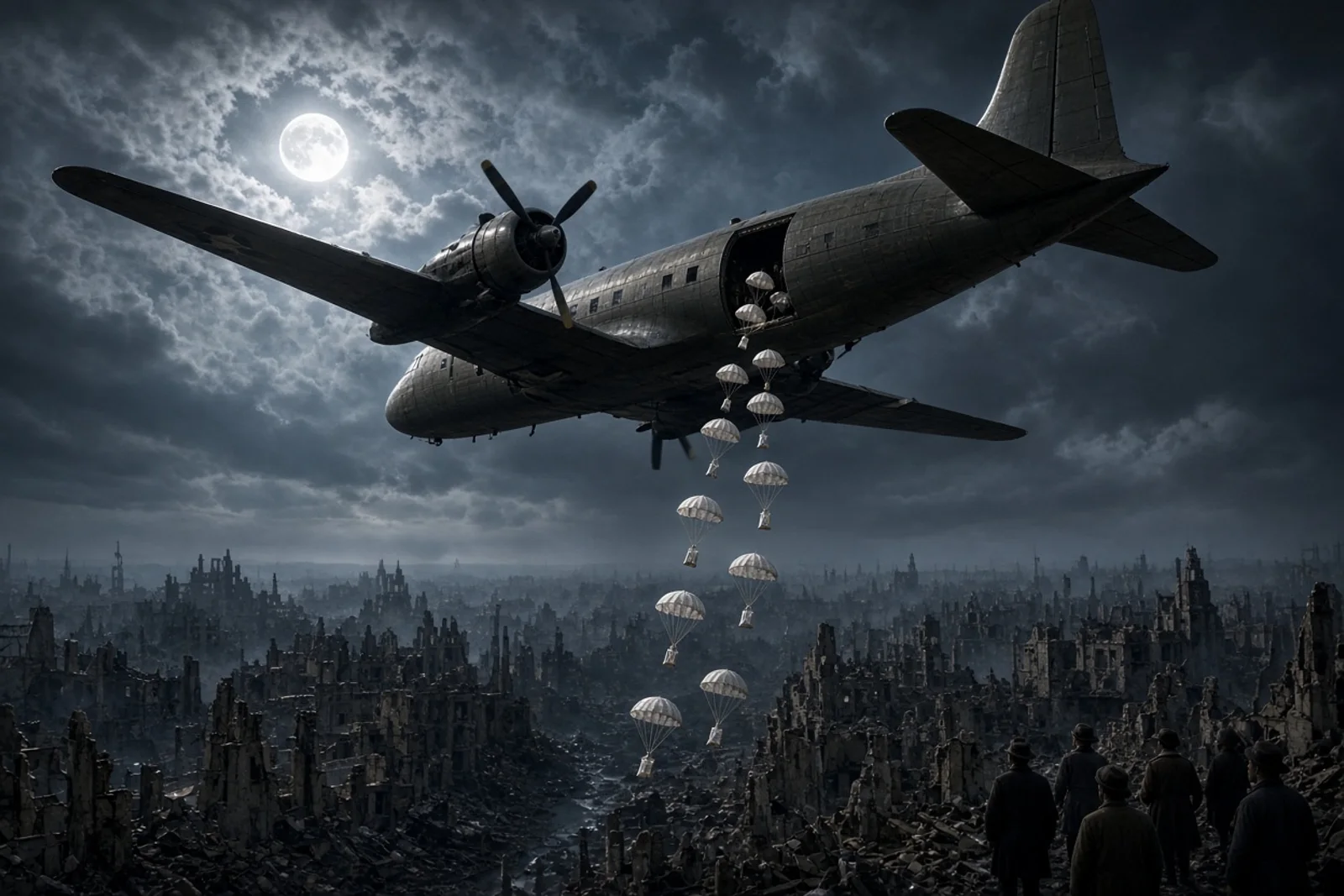
The fence cut into my palms where I gripped it. Planes roared low over Tempelhof, their wheels almost touching the rubble. I stood with the others, watching for the next C-54 to settle on the runway. Dust rose in thick sheets each time one touched down. We waited without calling out. The Americans had already told us they would keep coming even when the fog thickened.
One pilot stepped out of the line of men unloading flour sacks. He walked toward us and stopped on the other side of the wire. His uniform was wrinkled at the knees. He reached into his pocket and pulled out two sticks of gum. He held them through the fence. I took one. The foil was warm from his hand. He asked if more children would come tomorrow. I nodded.
He said he would return and that we should watch for his plane. When it approached he would rock the wings so we would know it was his. Then he turned back toward the line of aircraft. I kept the gum in my fist until the paper stuck to my skin.
The next afternoon the same plane came in lower than the others. Its left wing dipped, then the right. Two small bundles fell from the cockpit window. They drifted on white cloth squares tied at the corners. One landed near my feet. The string held a chocolate bar wrapped in brown paper. The cloth was a handkerchief with knots still tight at each corner.
Word spread along the fence. More children arrived the following day. The pilot dropped again, and again the day after that. Someone wrote his name on a scrap of paper and passed it hand to hand: Halvorsen. We began to call the rocking motion “wiggle wings.” Letters addressed to Uncle Wiggly Wings started arriving at the base.
I watched from the same spot each afternoon. The drops grew larger. Crew members tied more handkerchiefs. Candy bars appeared in clusters of three and four. One morning a colonel found the operation and ordered it stopped. Halvorsen stood in the operations tent while the colonel spoke. Outside, another load of flour sacks waited on the tarmac.
Newspapers in Berlin printed the story within two days. General Tunner read the articles and gave permission for the drops to continue under the name Operation Little Vittles. Twenty-five pilots in the squadron joined in. At the home base in Massachusetts, schoolchildren folded the parachutes and packed the candy. The first large shipment reached Germany in September.
Each evening I walked back along the canal carrying whatever had landed closest to the fence. The chocolate tasted different from the rations we had received earlier in the year. It did not melt into the paper. I saved one bar for three days before eating it.
Halvorsen flew three round trips a day when the weather held. On nights when fog grounded the fleet he stayed in the barn attic at Zeppelinheim and repaired torn handkerchiefs by lantern light. The airlift continued through thunderstorms and ice. More than two million tons of supplies crossed the corridors before the end of the year.