




The Christmas Truce of 1914
Enemy soldiers climbed out of the trenches on Christmas Eve to sing carols, trade gifts, and play football in No Man's Land.
FaithTap · Sep 26, 2026 · 9 min read
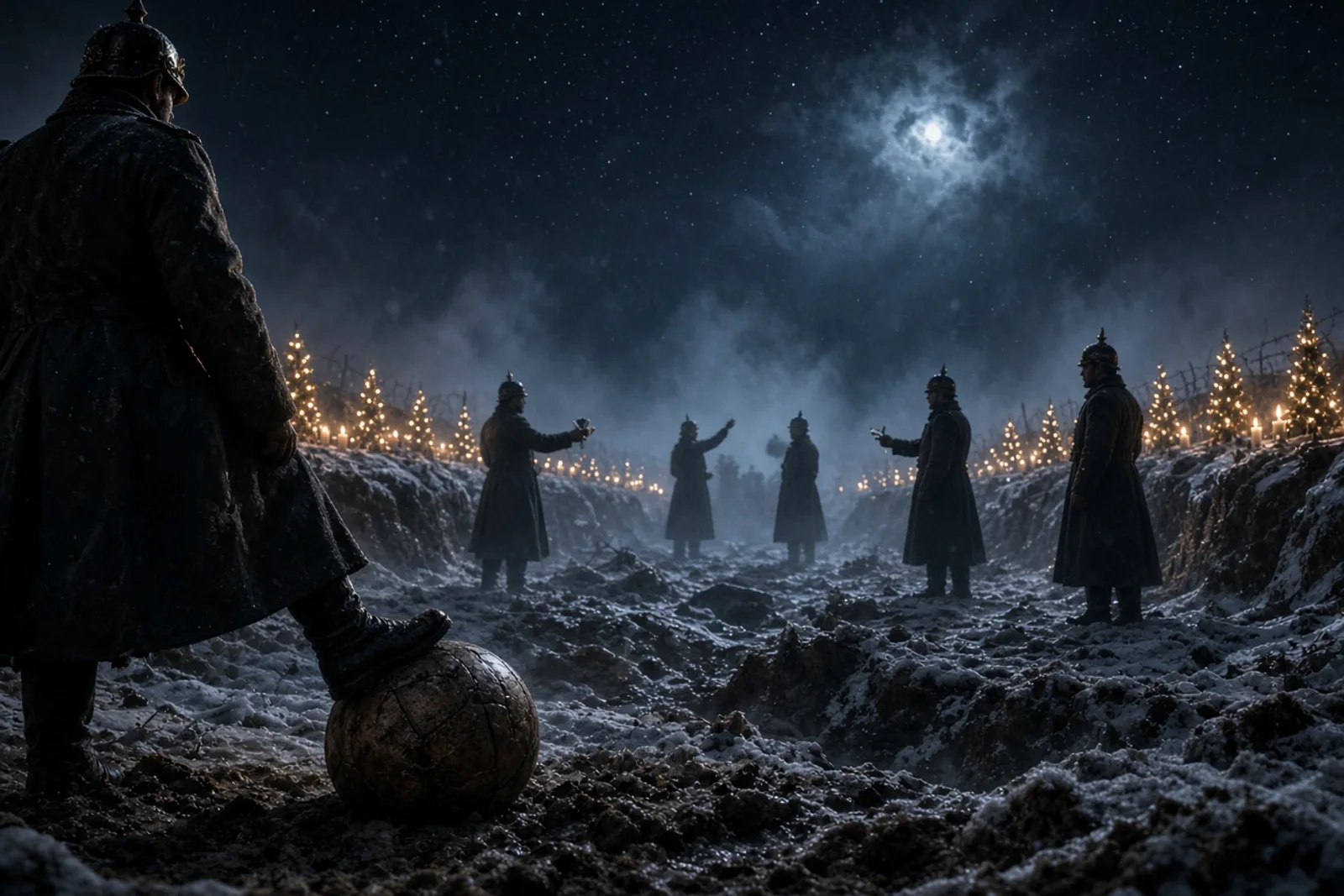
The frost had come down hard by the time the light failed, and my knees ached from three days of standing in water that had frozen thin skins at the edges of the duckboards. I was a private with the rifles somewhere along that low stretch of Flanders clay, close enough to Ploegsteert that the men called it Plugstreet, and by Christmas Eve I had stopped believing the war would end the way the newspapers had promised in August. Six months. That was all it had taken to turn certainty into a joke nobody bothered to finish anymore.
We had our tins. The King and Queen had sent them round weeks before, brass boxes stamped with the profile of Princess Mary, and inside mine there was chocolate gone slightly soft, a twist of tobacco, and a printed note wishing that God would protect us and bring us home safe. I kept the note folded in my breast pocket next to a photograph, not because I believed in its promise but because paper felt like something to hold onto when the ground itself kept trying to swallow your boots.
Word had come along the line that the Germans opposite had received gifts too, cigars from the Kaiser for their officers, pipes for the men, and I remember thinking it was strange to imagine them opening parcels forty yards away while we opened ours, both sides chewing the same kind of homesick chocolate under two different flags.
It was Rifleman Graham Williams, on sentry near me that night, who saw it first. Lights, small and trembling, strung along the top of the German trench where there should have been nothing but sandbags and darkness. He called it a funny thing, and it was, because for a moment none of us could work out what we were looking at. Lanterns. Little fir trees, some of them, set up along their parapet like a street of shopfronts closing for the holiday. Then the voices started.
Stille Nacht. Heilige Nacht. It came across no man's land thin and clear in the cold air, and every man who'd been dozing on the fire step was suddenly awake and pressed against the cold earth, straining to listen. Nobody fired. That in itself felt like the strangest thing, the guns simply silent while a hymn drifted over ground that had been killing men by the dozen only days before.
When they finished, we clapped, actually clapped, out there in the mud, and then somebody decided we ought to answer in kind. We gave them The First Noel, ragged and off-key, and when we finished there was a pause and then, unmistakably, applause coming back from their side. Carols went back and forth after that, English and German alternating, until the shouting started, men calling out across the gap in whatever fragments of each other's language they could manage, testing whether the goodwill in the singing might hold if put to a plainer kind of use.
Further along, near Armentières, a young officer named Scott Shepherd was dealing with a different kind of gift from the weather. Christmas morning came in behind a fog so heavy that a man could lose his own hand in front of his face, and the order went along his section to use the cover for trench repair, filling sandbags, shoring up a parapet that had been slowly dissolving under weeks of rain. Then the fog lifted, and lifted fast, the way weather sometimes does when it has made its decision, and there in plain view were German soldiers doing exactly the same work, out in the open, spades in hand, staring back at men staring at them.
Nobody shot. That was the whole of it, in the first instant. Both lines simply stood there in the thin grey light with sandbags in their arms, looking at one another, and then, without an order from anyone, a few men on each side put down their tools and started walking.
They met somewhere in the middle. Hands were shaken. Cigarettes changed pockets. And from that first meeting, up and down long stretches of the line, the standstill spread the way word spreads in a crowd, one man calling to the next.