




The Eucharistic Miracle of Bolsena
Host bleeds on corporal
FaithTap · Oct 1, 2026 · 10 min read
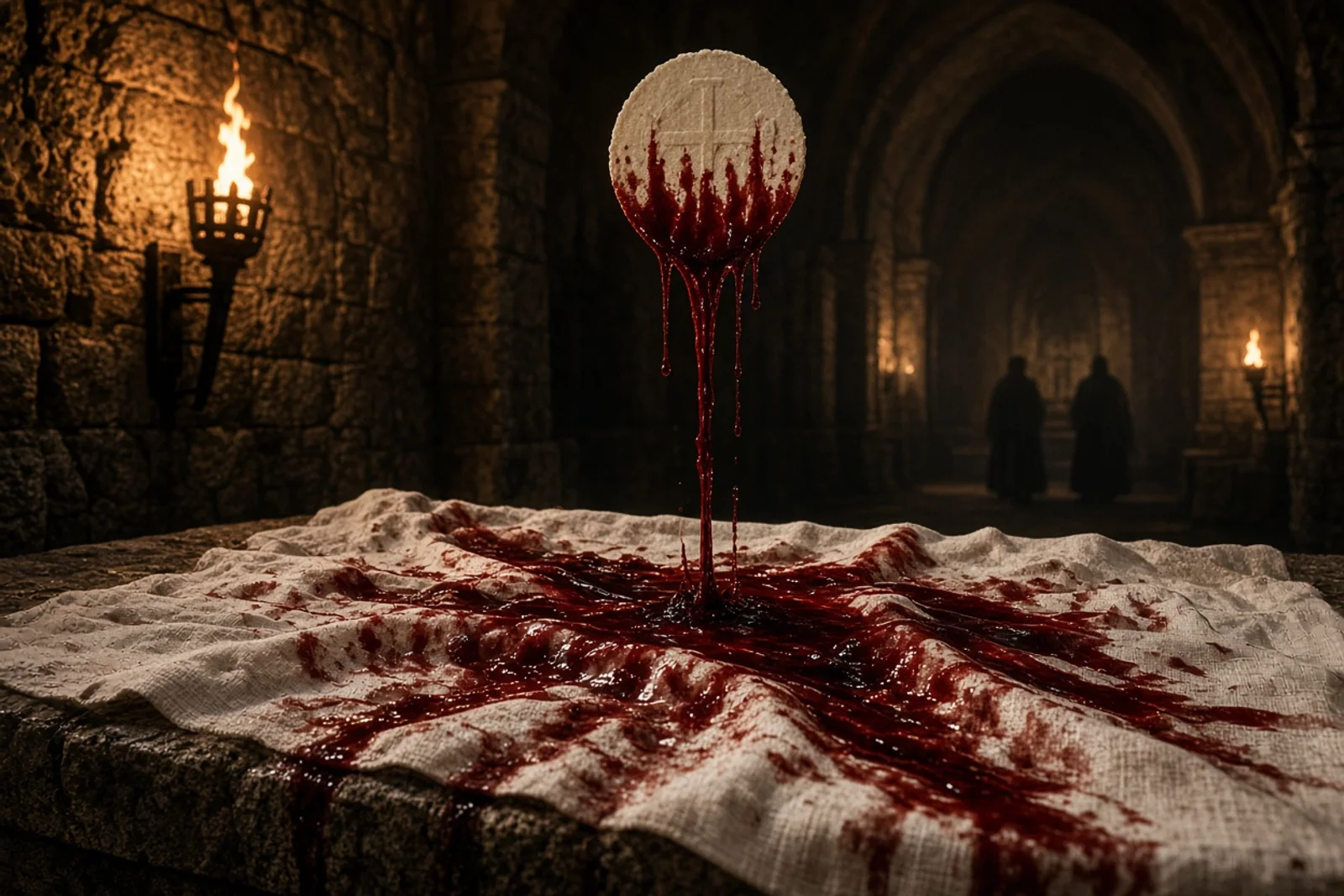
The priest's hands trembled once as he raised the host above the altar stone. I stood three rows back in the small church at Bolsena, close enough to see the linen corporal already spread beneath the chalice. Light from the high windows struck the white cloth and turned it almost silver. The nave held perhaps forty people that morning, pilgrims bound for Rome and a handful of locals who had come for the daily Mass. No one spoke.
Peter of Prague spoke the words of consecration in a low voice that carried only as far as the front benches. He lowered the host. A single drop fell, dark against the linen. Then another. The drops spread, soaking outward in uneven circles that joined and darkened. Someone behind me drew breath sharply. The priest froze, the host still between his fingers, and stared at the spreading stain. Blood, fresh and red, continued to well from the bread itself and run onto his palms.
He set the host down on the corporal with care, as though it might break further. His fingers left red prints on the cloth. He turned slightly toward the congregation but said nothing. The sacristan, a thin man named Giovanni who kept the keys, stepped forward from the side and looked once at the altar, then at the priest. No one moved to leave. The smell of the blood mixed with the incense still hanging in the air.
Peter of Prague wrapped the corporal around the host with both hands. He walked down the single aisle without looking at anyone, the bundle held against his chest. At the door he paused only long enough to speak to the sacristan. Then he was gone into the street that led toward the lake road and Orvieto. The Mass ended without the distribution of Communion. People remained in their places for some time, speaking in low voices about what they had seen.
I followed the road north the next morning with two other pilgrims who had been in the church. The distance to Orvieto is not great, but the heat rose early from the volcanic stone. By midday the walls of the papal city stood above us. Peter of Prague had already reached the pope. Urban IV was living in Orvieto that summer with his court, and word of the priest's arrival spread through the narrow streets before we entered the gates.
The bishop of Orvieto was sent at once to Bolsena to fetch the corporal and what remained of the host. He returned three days later in procession, the blood-stained cloth carried under a canopy through the main square. I stood among the crowd that lined the route. The linen had been placed in a silver frame for the journey, yet the original folds and the dark stains were still plain to see. No one touched it. The bishop placed it in the chapel of the papal residence for examination.
Urban IV ordered an inquiry. Several clerics examined the corporal under daylight and by candle. They noted the pattern of the stains, how they had soaked through both sides of the cloth in corresponding places, and the fact that the blood appeared to have separated as it dried. The priest Peter remained in the city and was questioned at length. He told them he had carried doubts about the change of bread into the body of Christ and had prayed for a sign during the Mass at Santa Cristina. The examiners recorded his account without alteration.
The corporal was kept under guard. No decision was announced immediately. I found work for a time helping to carry stone for repairs on the city walls and heard daily reports from those who had access to the papal household. One of the examiners, a canon from the cathedral, said the blood could not have come from any ordinary wound because the amount exceeded what a small host could absorb without tearing. Another said only that the matter required further prayer.
Within the year Urban issued the bull that established the feast of Corpus Christi for the whole Latin Church. The document made no reference to Bolsena. It spoke instead of the need for a solemn commemoration of the sacrament. Thomas Aquinas, already in Orvieto, was asked to prepare the office and the proper texts. The corporal itself was moved to a permanent place in the new cathedral then rising on the hill.