




The Eucharistic Miracle of Orvieto
Bleeding host prompts papal procession
FaithTap · Sep 27, 2026 · 11 min read
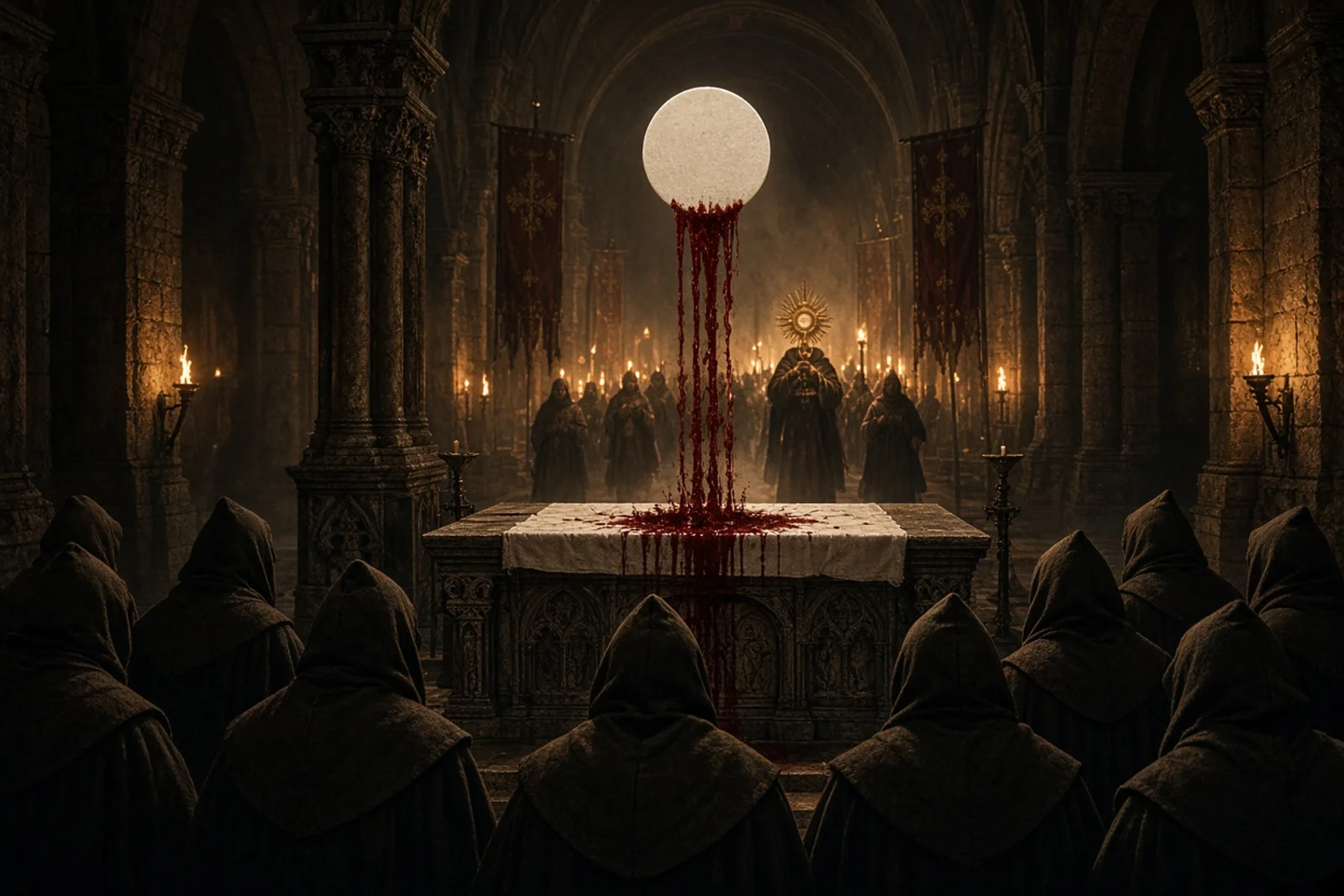
The dust from the road still clung to my sleeves when the outer gate swung open and the German priest pushed through. He carried the folded corporal against his chest like a man shielding a wound. Two guards tried to stop him at the steps of the papal residence, but he kept walking until a chamberlain recognized the blood and let him pass. I was only an assistant to the sacristan that summer, sent to Orvieto with the court the year before. I followed at a distance because no one had told me to stay back.
He was shown into the audience chamber where Urban IV sat with two cardinals and a notary. The priest knelt without ceremony and laid the linen on the table. The stains were dark, not fresh, but they spread in clear streaks across the cloth where the Host had rested. He spoke quickly, the Latin roughened by fatigue. He had celebrated Mass that morning at Santa Christina in Bolsena and had stopped because the bread began to bleed while he held it. He had come straight here, eighteen miles on foot, without finishing the liturgy.
Urban rose and examined the corporal without touching it. He asked the priest’s name and where he came from. Peter of Prague, the man answered. He had been walking to Rome to pray for an end to his doubts about the Real Presence. The Pope sent for the Bishop of Orvieto and for several Dominican friars who were already in the city. They took the corporal to a side room and left the rest of us waiting in the corridor.
I stayed near the door because the chamberlain had forgotten I was there. Through the half-open doorway I heard the friars questioning Peter again, asking exactly where the blood had fallen and whether he had added anything to the chalice. He repeated the same answers. One of the friars lifted the corporal to the light and turned it slowly. No one raised their voice. After a time they came out and told the Pope the marks were consistent with what the priest described and showed no sign of paint or dye.
Urban ordered the corporal placed in the chapel of the episcopal palace under guard. He kept Peter with the court and asked him to remain until further notice. For three days the Pope received reports from the friars and from the bishop’s own physicians. They found no natural explanation for the blood on the cloth and no evidence that the priest had carried any vessel that could have produced it. On the fourth morning Urban called the Curia together and announced that the corporal would be kept in Orvieto as a public witness.
Word reached the city squares before evening. People began to gather at the palace gate, not in procession yet, but in small groups that stayed until the light faded. I was sent to the market for extra candles and saw the same question pass from one face to the next: whether the Host had truly changed or whether the priest had only imagined it. No one I spoke to claimed to have seen the event itself; they only repeated what they had heard from those who had spoken with Peter.
In September the Pope issued the bull that established the feast for the whole Church. He gave it the name Corpus Christi and set the date five days after Trinity Sunday. He asked Thomas Aquinas, who was then teaching in Orvieto, to prepare the texts for the Mass and Office. Aquinas worked in a room above the Dominican priory and sent drafts to the papal secretaries for review. I carried one set of pages myself and remember the careful marginal notes in the theologian’s own hand.
The corporal remained in the episcopal chapel through the winter. Peter of Prague left for Rome once the inquiries were finished; he did not return to Orvieto. In the spring of the following year Urban celebrated the new feast for the first time at Santa Maria Prisca, using the Mass Aquinas had written. The bull itself circulated slowly because several bishops questioned whether a new feast was needed. In Orvieto the observance stayed local for decades.
Construction of the new cathedral began two years later on the site where the old church of Santa Maria Prisca had stood. The plans called for a chapel large enough to hold the corporal in a silver reliquary above the high altar. Work continued through the rest of Urban’s time in the city and for years after he moved the court elsewhere. The linen was transferred to the finished chapel in 1338 and placed inside the reliquary that still stands there.