




The Eucharistic Miracle of Tixtla
Host oozes blood
FaithTap · Oct 1, 2026 · 11 min read
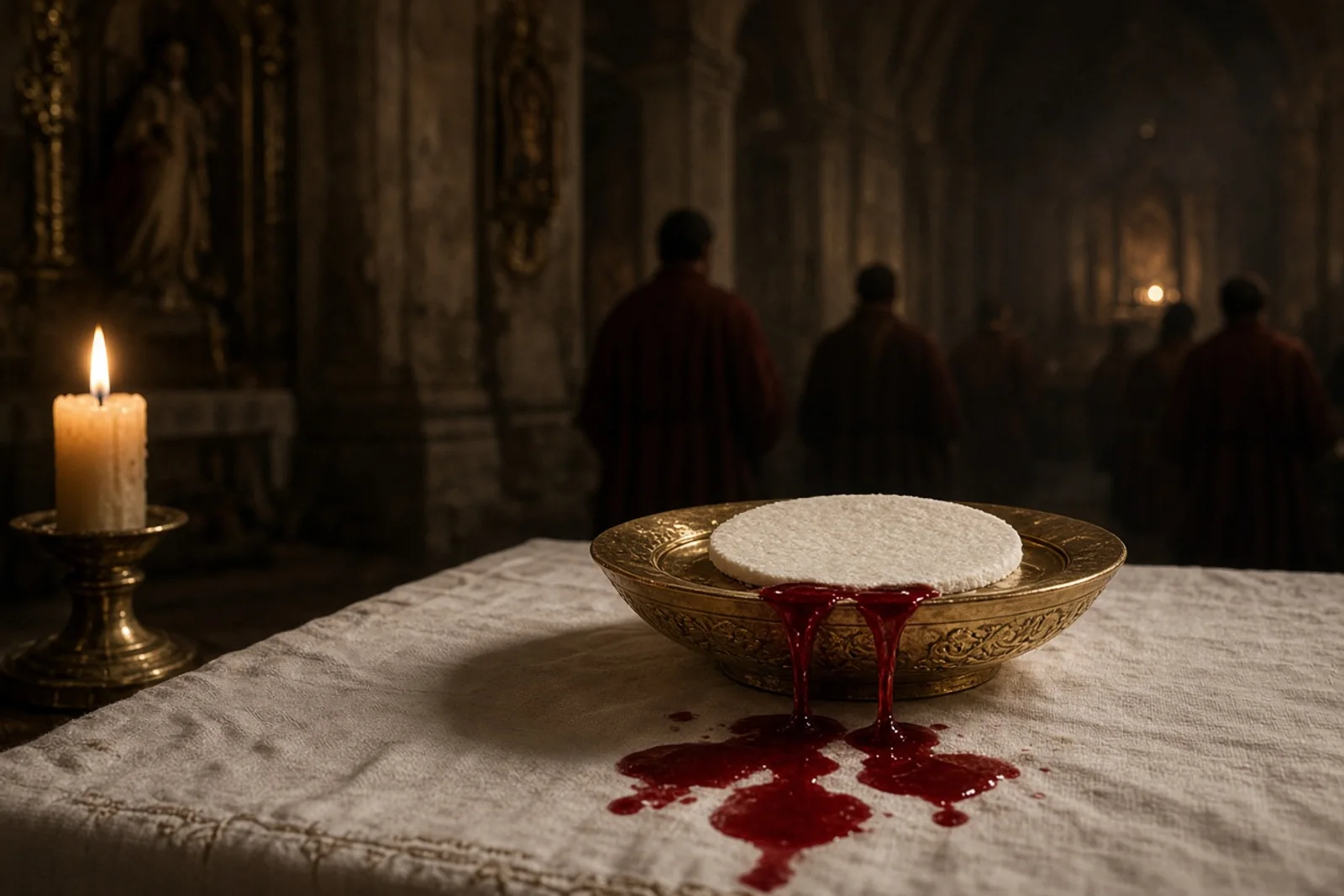
The line moved slowly toward the front of the parish. I held out my hands, palms up, the way we had been shown. Fr. Leopoldo Roque passed the Host to the woman ahead of me and murmured the words. Next came the sister, her veil pinned back so she could see clearly. She lifted a Host from the ciborium and turned it slightly in her fingers.
A dark spot appeared on the lower edge. It spread outward in a slow thread. She stared at it, then looked up at Fr. Raymundo Reyna Esteban who stood a few steps away. Her mouth opened but no sound came at first. She walked to him, the Host still between her fingers, and the thread of red lengthened.
Fr. Raymundo took the Host from her and set it on the corporal. She pressed both hands to her face. Someone behind me shifted and the kneeler creaked. Fr. Leopoldo finished the distribution without looking back at the altar. When the last person had returned to the pews, the two priests and the sister remained at the side table, heads close together.
The retreat continued that afternoon under the trees behind the church. People spoke in low voices about what they had seen or what they had missed. No one touched the Host again that day. It stayed on the corporal, covered with a purificator, until the bishop could be reached.
Bishop Alejo Zavala Castro arrived two days later. He examined the Host under the sacristy light, then ordered it placed in a tabernacle with the door left slightly open so air could circulate. He formed the theological commission the same week. The members met in the rectory dining room, reviewing photographs and written statements from everyone who had stood near the altar.
I returned to the parish each month after that. The Host remained in the tabernacle. A small lamp burned beside it. Parishioners came to pray in shifts, though no announcement had been made. The commission asked for more photographs and for the names of the laboratories that might examine the sample without knowing its origin.
Dr. Ricardo Castañón Gómez arrived in 2009 with two assistants. They worked in the sacristy for three days, taking small fragments under sterile conditions. Dr. Carlos Parellada extracted the pieces and sealed them in unmarked containers. The containers left Tixtla by courier. Reports came back from Bolivia and Guatemala over the next two years. The substance was human blood, type AB. The tissue matched myocardium. Two separate forensic examinations stated the blood had come from inside the Host.
In February 2010 the same sample was checked again. The outer layer had dried and darkened, yet the layer beneath still showed fresh red cells under the microscope. The laboratories noted active macrophages and intact white cells. No one offered an explanation for how those cells remained alive without refrigeration or circulation.
Bishop Zavala Castro issued his pastoral letter in October 2013. He described the event as a divine sign. The letter was read at all Masses that Sunday. People stood outside the church afterward, some holding printed copies, others simply looking at the closed tabernacle door.