




The Healing of Anne-Marie Ménage's Relative
Multiple sclerosis cured
FaithTap · Sep 27, 2026 · 10 min read
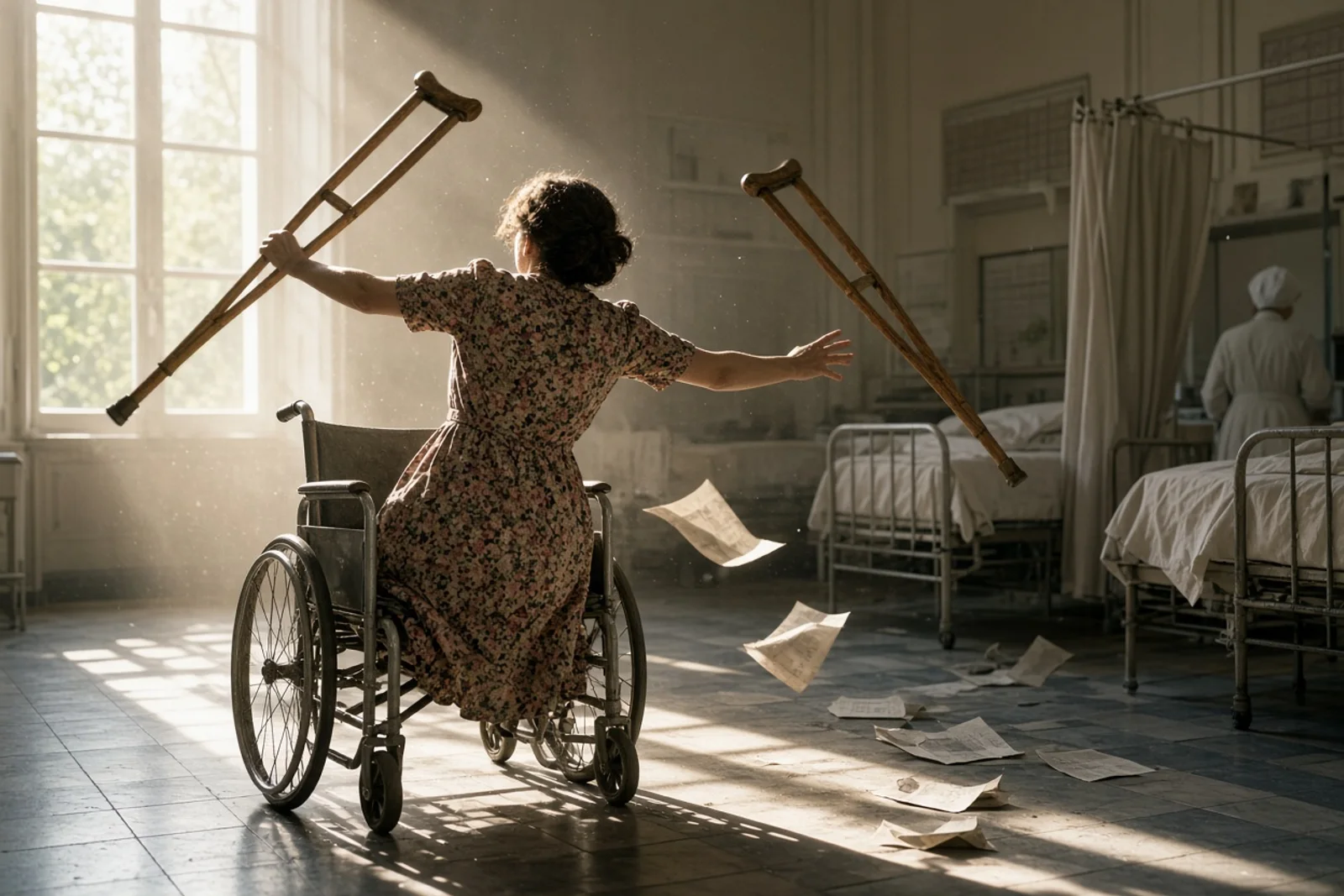
The wheels of the train from Marseille rattled under my seat as the carriage swayed into the Pyrenees. Marie Thérèse Canin lay on the stretcher two rows ahead, her face the color of old paper. She weighed so little that the straps barely creased the blanket. Two nuns from the Rosary pilgrimage took turns holding a basin in case the motion brought on the pain again.
We reached Lourdes after dark on the seventh. The air outside the station smelled of wet stone and coal smoke. I helped carry her to the hospital dormitory set aside for the sick. The night nurse recorded her name, her diocese, and the diagnosis written on the card pinned to her gown: dorso-lumbar Pott’s disease with fistulized tuberculous peritonitis. She asked for a sip of water and closed her eyes without drinking it.
On the morning of the ninth the sky stayed low and gray. The procession of the Blessed Sacrament began at the Grotto after the afternoon Mass. I walked beside the stretcher that carried Marie Thérèse. She had been lifted onto it an hour earlier and had not spoken since. The monstrance moved ahead of us under its canopy, the red silk hem brushing the gravel. People knelt as it passed. Some tried to touch the hem of the canopy with rosaries or handkerchiefs.
We reached the far end of the esplanade where the hospital stretchers were lined in rows. The priest raised the monstrance and the crowd answered with the usual prayer. Marie Thérèse’s eyes were open but fixed on nothing I could see. Then her right hand, which had rested on the blanket, lifted an inch and settled again. The movement was so small that I thought it might be the wind.
A moment later she drew both knees up. The blanket slid. One of the stretcher bearers reached to pull it back, then stopped. She sat upright without help. The leather straps that had held her shoulders were still buckled, yet she was no longer pressing against them. She looked at her hands as though they belonged to someone else.
She asked for water. When the cup came she held it herself and drank. The line of stretchers began to move again toward the square. She remained sitting. At the steps of the Rosary Basilica the bearers set the stretcher down. She swung her legs over the side and stood. Her stockings sagged around her ankles because they had been rolled to fit a thinner calf. She took one step, then another, toward the bench where the other women from Marseille waited.
That evening she ate at the long table in the hospital refectory. The meal was soup, bread, and a piece of cheese. She finished her portion and asked whether there was more bread. The sister serving looked at the empty bowl, then at the card still pinned to Marie Thérèse’s gown, and went back to the kitchen without answering.
The next morning the Medical Bureau examined her. Three doctors were present. They measured her spine, listened to her chest, and asked her to walk the length of the room and back. One of them wrote in the ledger that the fistulas had closed and that no tenderness remained over the lumbar vertebrae. They told her to return in a week. She returned every day for the rest of the pilgrimage week and each day the same men examined the same places.
She left Lourdes on the fourteenth with the rest of the group. The train back to Marseille carried the same stretchers, but hers stayed folded in the baggage car. At the station in Marseille her brother met her with a taxicab. She walked from the platform to the curb without pausing. The driver asked whether the lady needed help with the step. She answered that she did not.