




The Healing of Elisa Aloi's Son
Bone tuberculosis cured
FaithTap · Sep 29, 2026 · 11 min read
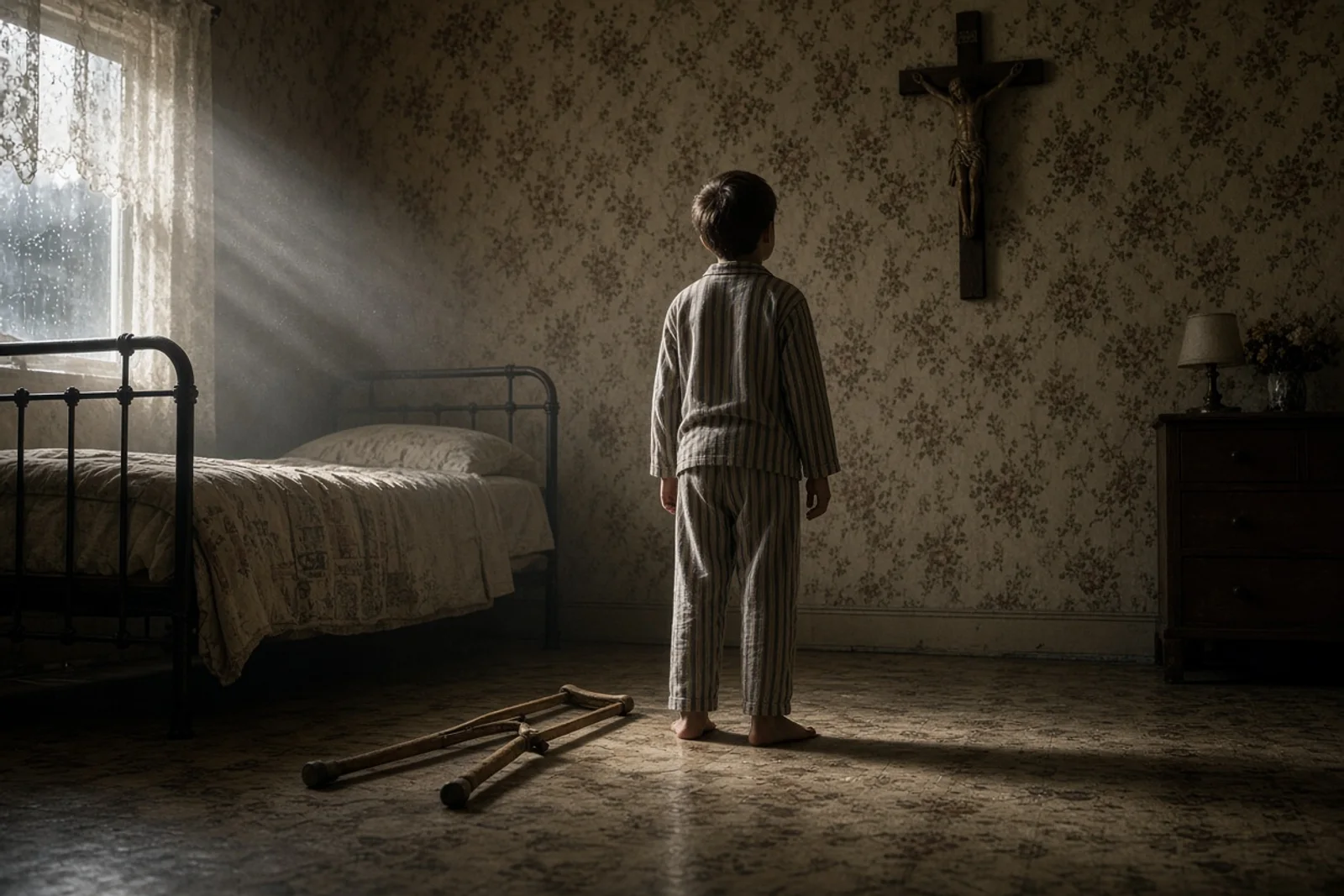
The stretcher jolted over a loose stone on the path to the pools and I tightened my grip on the handles to keep her level. Elisa lay under a thin blanket, the plaster shell from neck to thigh already warm from the June sun and the fever that had ridden with her from Messina. I had helped carry her twice before on this pilgrimage, and each time the weight felt heavier because she never complained about the pain, only asked that we not stop too long in the shade.
Father Puleo walked beside us, his soutane dusty at the hem. He leaned down once and spoke low so only she could hear. She answered with a nod that barely moved the edge of the cast. We reached the shallow steps and the volunteers waiting with the wet sheets. They draped the linen over the plaster the way they always did, wringing it so the water ran down the sides and darkened the ground. She closed her eyes when the first sheet touched her.
I stayed near the rail with the other bearers. The air smelled of wet stone and the soap they used on the linens. After a few minutes one of the women called out that it was done. We lifted her again and started back toward the esplanade where the stretchers were lined for the blessing. Halfway there she opened her eyes and looked straight at me.
“Something moved,” she said. Her voice was steady but the words came out faster than usual. I asked if she wanted us to stop. She shook her head inside the cast.
On the open ground the priest began the prayers. The sun was high and the white gravel threw the heat back up at us. Elisa stayed quiet through the first part. Then, without warning, she raised her voice enough to carry across two rows of stretchers.
“Doctor Zappia. I move my legs inside the plaster.”
People turned. A woman on the next stretcher crossed herself. Dr. Zappia was already walking the line; he came over quickly, told her not to shout, and lifted the edge of the blanket with both hands. He stood there a long moment without speaking. The four openings cut into the cast for the dressings were visible from where I stood. The gauze that had been packed against the fistulas that morning lay clean and flat beside her legs. Nothing seeped. The skin at the edges looked closed.
He lowered the blanket and told the nearest volunteer to fetch the others from the medical bureau. Elisa asked again if they could remove the cast so she could stand. He said the doctors at the bureau would decide. Two men arrived with a different stretcher and took her away. I stayed on the esplanade until the procession moved on, then walked back to the hostel with the empty handles in my hands.
That evening the bureau doctors examined her under the lights they kept for the difficult cases. They wrote notes and took photographs of the closed openings. One of them asked her to try moving her toes. She did it without effort. They told the pilgrimage leaders to wait until she reached Messina before cutting the plaster away. No one used the word miracle in her hearing.