




The Healing of Elisa Aloi’s Son at Lourdes
Child’s paralysis cured.
FaithTap · Sep 24, 2026 · 9 min read
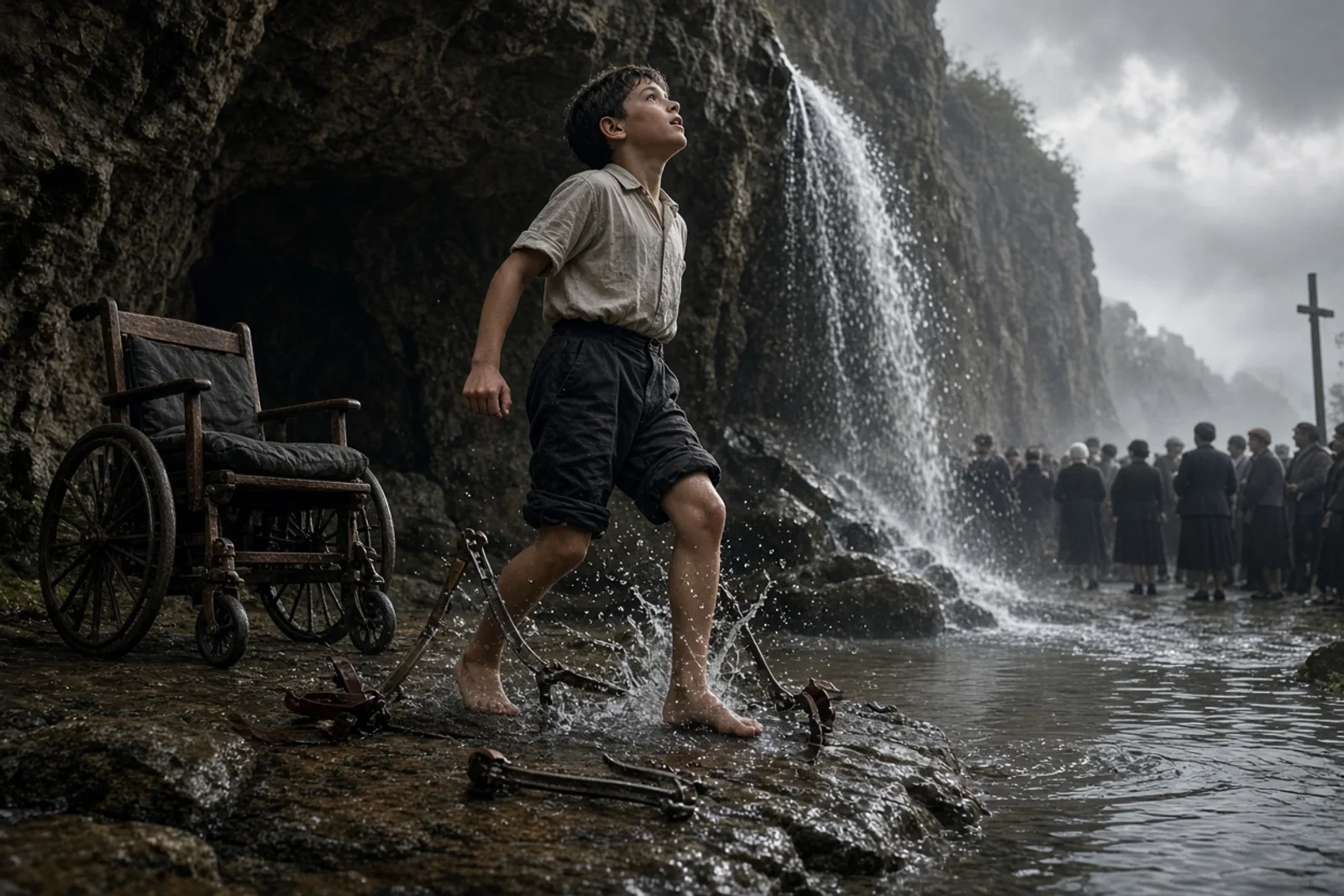
The stretcher creaked under the weight of the plaster as we lifted it from the train at Lourdes station. June heat already pressed against the platform stones. I gripped the rear handles and kept my eyes on the straps so the sway would not pull at the drainage tubes running through the cast. Elisa lay inside that shell from pelvis to right foot, four windows cut for the fistulas, her face turned toward the roof of the carriage so the sun would not strike her eyes directly.
We had come with the Unitalsi group from Sicily for the third time. The first journey in 1957 had left her no better. This time the fever ran higher and the dressings changed twice a day. Giovanni walked beside the stretcher without touching it, one hand ready if the men ahead stumbled. He had not spoken since we left Messina.
At the hospital the nurses settled her on a bed near the window. I stayed to help with the first dressing change. The gauze came away soaked, the smell sharp even after the long ride. Elisa did not complain. She asked only whether the pools would be open the next morning.
On the morning of the fifth we joined the line of stretchers moving toward the grotto. The priest who had charge of our group stopped at her side and leaned close. She answered before he finished the question. We turned the stretcher toward the baths.
The water in the pool felt colder than the air. Two attendants lowered the cast until the openings sat just below the surface. They poured fresh water over the dressings as they always did. When they raised her again the linen that had been brown was pale. Elisa’s hands, which had rested on the plaster, moved once, then again. She looked at me and said the vibration had started in her right thigh and traveled down.
We wheeled her onto the esplanade among the other stretchers. She called for Doctor Zappia by name. He came quickly, lifted the blanket, and stood still. The four fistulas had closed. The tubes lay beside her legs, dry. No new blood marked the gauze. Zappia touched the edge of one window and withdrew his hand.
They took her to the Medical Bureau before the evening procession. The doctors there examined the skin through the openings, measured the temperature at each site, and wrote notes. Elisa asked them to remove the cast so she could stand. They said the decision belonged to the physicians who had treated her in Sicily. She was quiet after that.
We returned to Messina ten days after we had left. The same surgeon who had taken ten centimeters of bone from her right leg the year before ordered new radiographs. He studied the plates under the light box for a long time. Then he told her the bone had regrown to its original length and the infection sites showed no remaining destruction. He added that he would not question the outcome but could not explain how the removed section had returned.
The Bureau in Lourdes forwarded the file to the International Medical Committee. Professor Salmon reviewed the records and the X-rays. In 1960 the Committee accepted the case as medically inexplicable. Five years later the Canonical Commission in Messina completed its inquiry. On the twenty-sixth of May, Archbishop Fasola declared the cure of multiple fistulous tuberculosis in Elisa Aloi to be miraculous.