




The Healing of Marie Bailly’s Niece at Lourdes
Congenital deformity corrected.
FaithTap · Oct 5, 2026 · 11 min read
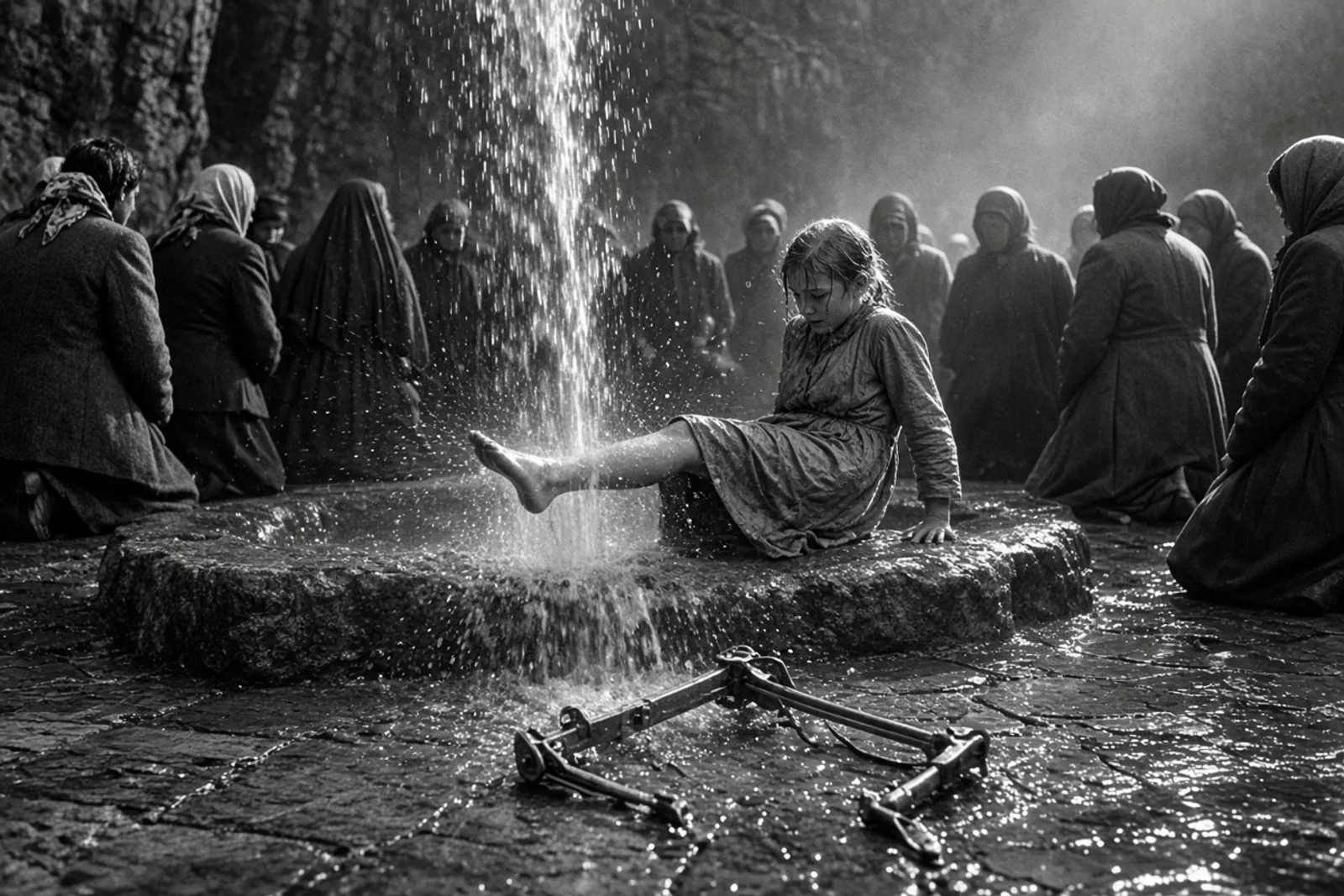
The carriage swayed hard on the curve outside Tarbes. I steadied the enamel basin with one hand and kept the other on the blanket edge so it would not slide off the girl’s legs. Marie Bailly lay on the lower berth, eyes half open, breath shallow and quick. The smell of the carriage was carbolic, sweat, and the faint sweetness of the tuberculous fluid that had already soaked through two dressings since we left Lyon.
Carrel came down the aisle at the next stop. He had taken the shift for his classmate and wore the same gray coat he used in the laboratory. He lifted the blanket without asking and pressed two fingers along the abdomen. The swelling gave under pressure but did not move like ordinary fluid. He counted the respirations, then looked at the chart I had written that morning.
“She will not reach the grotto alive,” he said. The words were flat, the way he spoke about tissue cultures that had failed.
We reached Lourdes at first light on the twenty-eighth. The platform was already crowded with stretchers and the blue-uniformed brancardiers. I helped lift the stretcher onto the cart. Marie’s face had gone the color of old linen. One of the volunteers asked whether we should take her straight to the piscines. Carrel said nothing, only pointed toward the line of waiting carriages.
At the spring the water ran cold enough to numb the hands. They lowered her into the pool still wearing the shift. The surface barely covered her chest. She made no sound. Two minutes passed. Then her shoulders jerked once, as if someone had pulled a cord. The abdomen, which had been rigid and distended, flattened under the wet cloth. The change was visible from where I stood on the stone step.
Carrel had remained on the bank. He stepped closer, leaned over, and placed his palm flat across her midsection. He kept it there for several seconds, then withdrew it and looked at his own fingers. They were dry. He turned to the nearest brancardier and asked for the medical register. The man brought the ledger. Carrel wrote the time and the observation that the swelling had disappeared.
She sat up in the water without help. Color returned to her cheeks while we watched. Someone handed her a towel. She dried her face, then stood. The shift clung to her but showed no bulge at the waist. She stepped out onto the stone and walked the short distance to the bench where the next patient waited. Her steps were steady.
We returned to the hospital hut an hour later. Three local physicians examined her in turn. One of them, older than Carrel, asked her to cough and then to stand on one foot. She did both without pain. They measured her abdomen again with a tape. The circumference had dropped by more than twenty centimeters. They recorded the names of everyone present and the exact hour.
Carrel stayed beside the table until the last measurement was written down. He did not sign the register. When the others left he remained, looking at the empty basin that had held the dressings we had removed earlier. The fluid that had soaked them was gone; the cloth was only damp from the spring water.