




The Healing of Vittorio Micheli's Son at Lourdes
Child's osteosarcoma reversed
FaithTap · Sep 25, 2026 · 10 min read
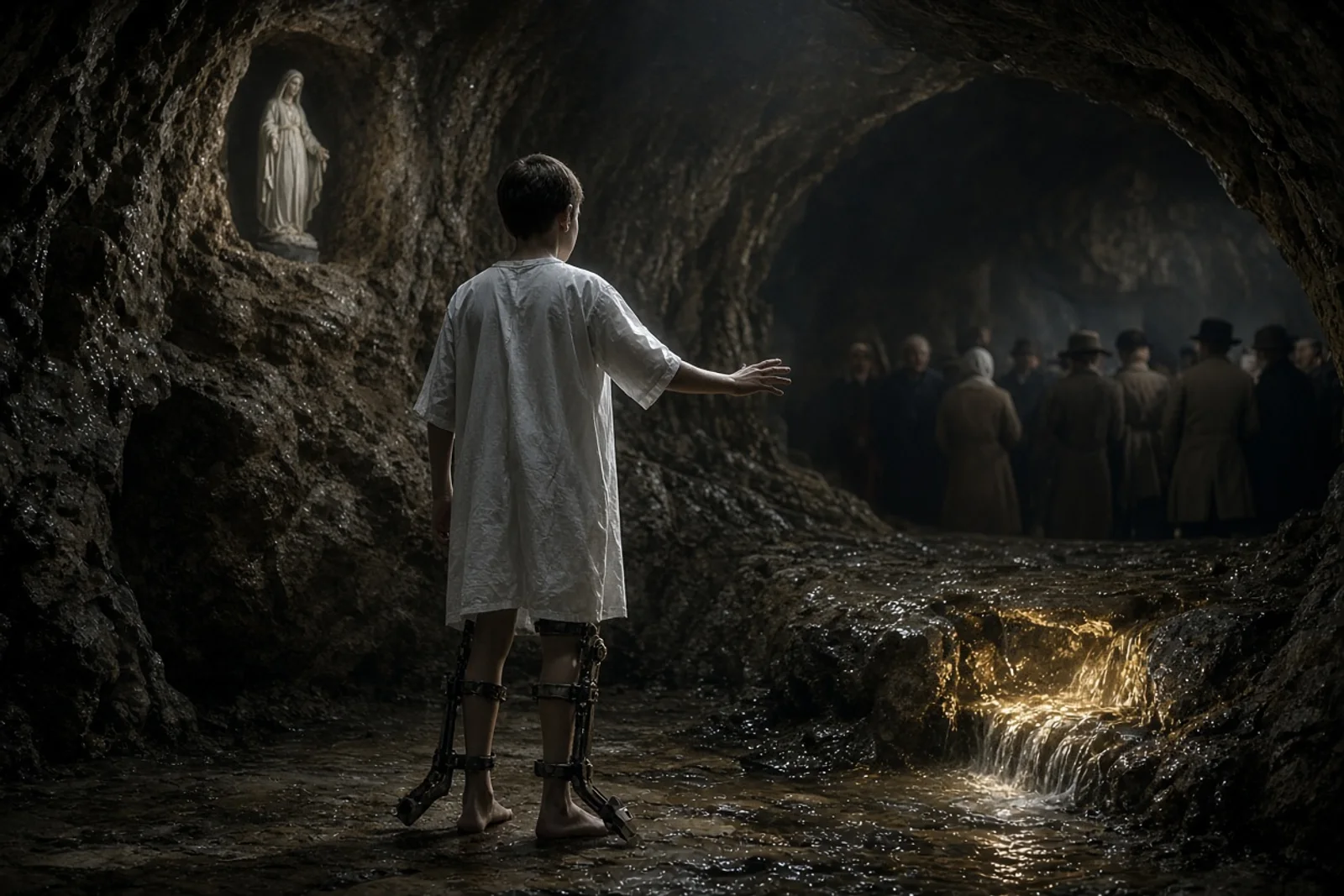
The water in the pool felt colder than usual that morning, even through the canvas aprons we wore. I was guiding another stretcher down the ramp when I first noticed him, the Italian soldier with the plaster cast running from hip to knee. He lay flat on the board, eyes half-closed, jaw tight against the pain that showed in the cords of his neck. Two other brancardiers lifted him under the arms while I steadied the board. We lowered him slowly into the pool that had been filled from the spring an hour earlier.
He did not cry out when the water reached the edge of the cast. Most men did, even the quiet ones. He only drew one long breath and let it out through his teeth. When we raised him again, his mother was waiting at the top of the steps with a dry towel. She wrapped it around his shoulders without speaking. The brother, the priest, stood a little apart, hands clasped, watching the way priests watch when they have already said everything they know how to say.
We took him through the rest of the day’s processions because that was what pilgrims did. The sun climbed and the crowd moved in slow lines past the grotto. He stayed in a wheelchair after that first bath, one foot on the ground to keep the cast from dragging. I saw him again near the end of the afternoon, near the statue where the candles were lit. His mother held one for him. He could not reach far enough to place it himself.
That night the train left for Italy. I helped load the stretchers at the station platform. His cast looked the same, the plaster still damp in places from the morning. He gave a small nod when the door closed. The engine started and the platform emptied. We went back to the baths to prepare them for the next day.
Months later a letter arrived at the medical office from a hospital in northern Italy. It mentioned the soldier by name and asked whether anyone remembered the case. The letter said the man had stopped asking for morphine two weeks after returning home. He had begun eating again. Then he had begun walking, first with crutches, then without. New X-rays showed bone where the films from 1962 had shown only empty space. The letter asked if the shrine kept any record of the baths he had used.
The International Medical Committee met in 1969. They reviewed every film, every biopsy slide, every note from the original surgeons. They met again in 1971. The conclusion was the same both times: the bone had regenerated without radiation, without chemotherapy, without any recorded intervention except the pilgrimage itself. No one on the committee offered an explanation that satisfied the rest.
By then the soldier had returned to Lourdes more than once. He came as a volunteer, one of the men who carried others into the same pools. He worked the military pilgrimage each year, the same trains we had loaded in 1963. In time he met a woman among the volunteers and married her. They came back together most summers.
The bishop of Tarbes and Lourdes signed the declaration in 1976 after the final medical review. It listed the case as the sixty-third recognized cure. The soldier, now past eighty, still arrives each May with the same group of veterans. He walks without any trace of the old limp. When the baths open at dawn he takes his place on the ramp again, steadying the stretchers as they descend.
The spring continues to run at the same temperature it has held since the first records were kept. The plaster casts and the wheelchairs still line the same stone corridors. Men still come who cannot walk and leave the same way they arrived. The records note each name, each date, each set of films sent for later examination. The water itself does not change.