




The Incorrupt Body of Bernadette Soubirous
Body remains intact after decades
FaithTap · Sep 26, 2026 · 11 min read
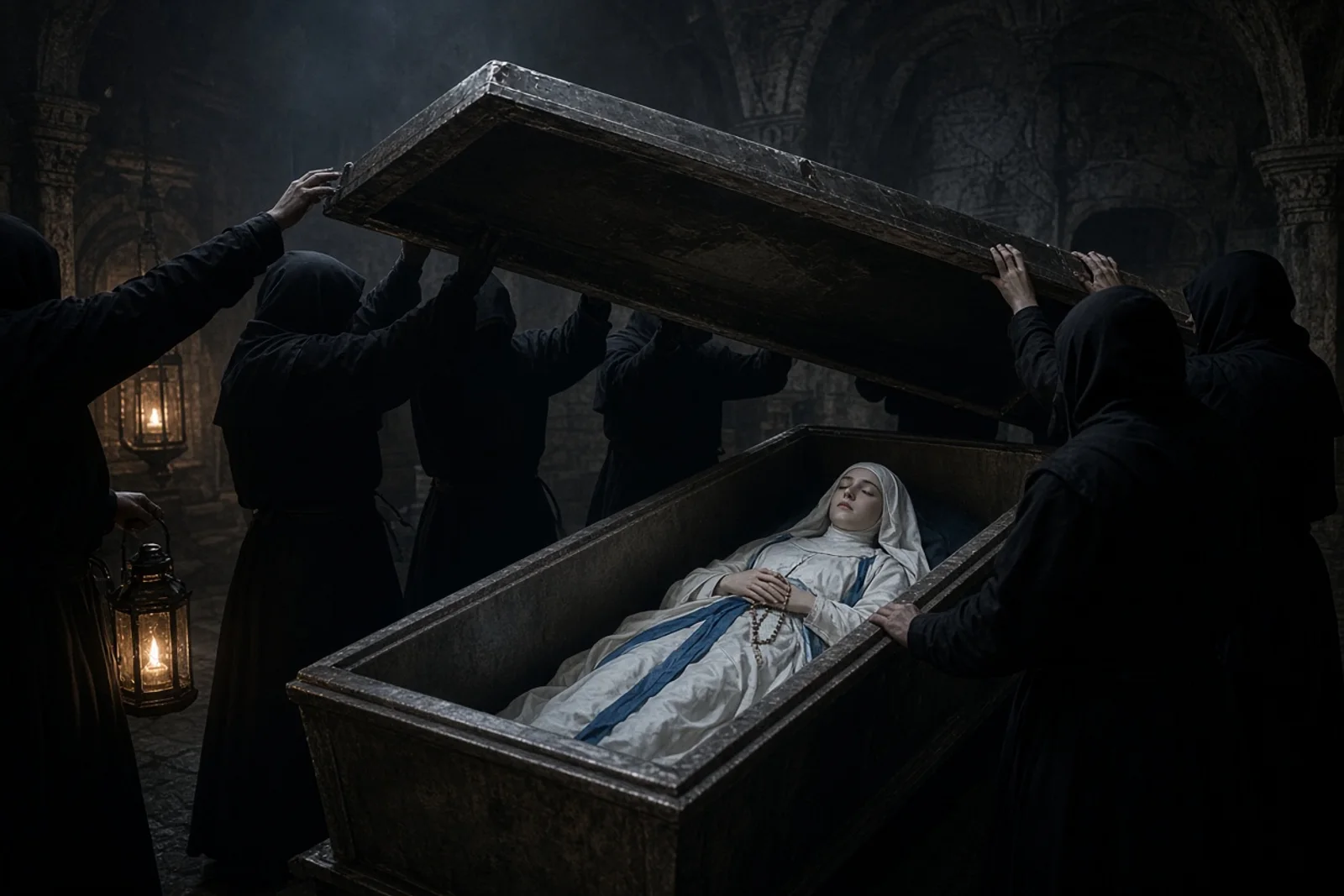
I knelt by the armchair in the Sainte Croix Infirmary as Bernadette’s breathing thinned to nothing. The fire had burned low, and her feet rested on the stool where they had been placed hours earlier. At a quarter past three she was gone.
The room stayed quiet except for the rustle of habits as the sisters crossed themselves. I helped straighten the sheet across her lap. Her face had already settled into the lines the pain had carved there for years.
Civil permission let the body remain on view through the nineteenth. People filed past the open door of the infirmary, some stopping only long enough to look, others lingering. On the twentieth the double coffin of oak and lead was brought in. Inspector Devraine and the two constables, Saget and Moyen, watched the seals set and signed the record.
We carried the coffin down the stairs on the thirtieth of May and placed it in the vault beneath Saint Joseph’s chapel. The air inside the crypt was cool and still. The bishop’s representative read the final prayers, and the stone was lowered.
Thirty years later the masons returned. I stood at the back of the chapel when the tribunal entered at half past eight on the twenty-second of September. The Gospels lay open on the table near the sanctuary rail. Bishop Gauthey took his place, and the mayor and his deputy stood ready to certify each step.
The stones came up one by one. The coffin was lifted onto trestles. When the lead lining was cut, the only sound was the scrape of the tool. No odor rose from the opening.
Doctors David and Jourdan leaned forward first. The habit was damp but whole. Bernadette’s face was turned slightly left, the skin drawn tight over the bones. The eyelids lay closed. Her hands still gripped the rosary, though the metal had rusted through the links.
The sisters who had washed her in 1879 stood close enough to see. One of them whispered that the position of the right hand had changed, nothing else. The toenails remained, even the one that had torn loose during the original washing.
We rolled the body carefully so the habit could be removed. It moved as a single rigid form. The left side sat a little higher than the right from the hip upward. When the veil was lifted, the ears showed no damage. The hair, cut short at death, still lay against the scalp.
The doctors struck the abdomen once with the side of a hand. The sound was dry, like stiff paper. The ribs stood out beneath the skin. Carbon dust from the coffin lining had darkened the lower limbs, but the flesh itself had not softened.
The examination lasted through the morning. Relics were taken under oath, then the body was returned to the lead lining and the coffin resealed. The masons replaced the stones. By midday the chapel floor looked as it had before.
In the years that followed the process was repeated twice more. Each time the same rigidity was noted, the same absence of decay. The face had begun to sink by the third opening, and the nose had flattened further.
By 1925 the sunken eyes and the darkened patches on the cheeks and hands required covering. Thin wax was laid over those areas before the final transfer to the glass casket in the chapel. The mask follows the original lines but hides what time had altered.
I have walked past that casket on ordinary afternoons. The hands remain crossed as they were when the rosary rusted between the fingers. The habit is the same one she wore in the infirmary.
No one has claimed the preservation came from any treatment applied after death. The records state plainly that none was used. The vault itself offered only the ordinary coolness of stone and earth.