




The Incorrupt Body of St. Catherine of Bologna
Body remains incorrupt for centuries
FaithTap · Oct 2, 2026 · 11 min read
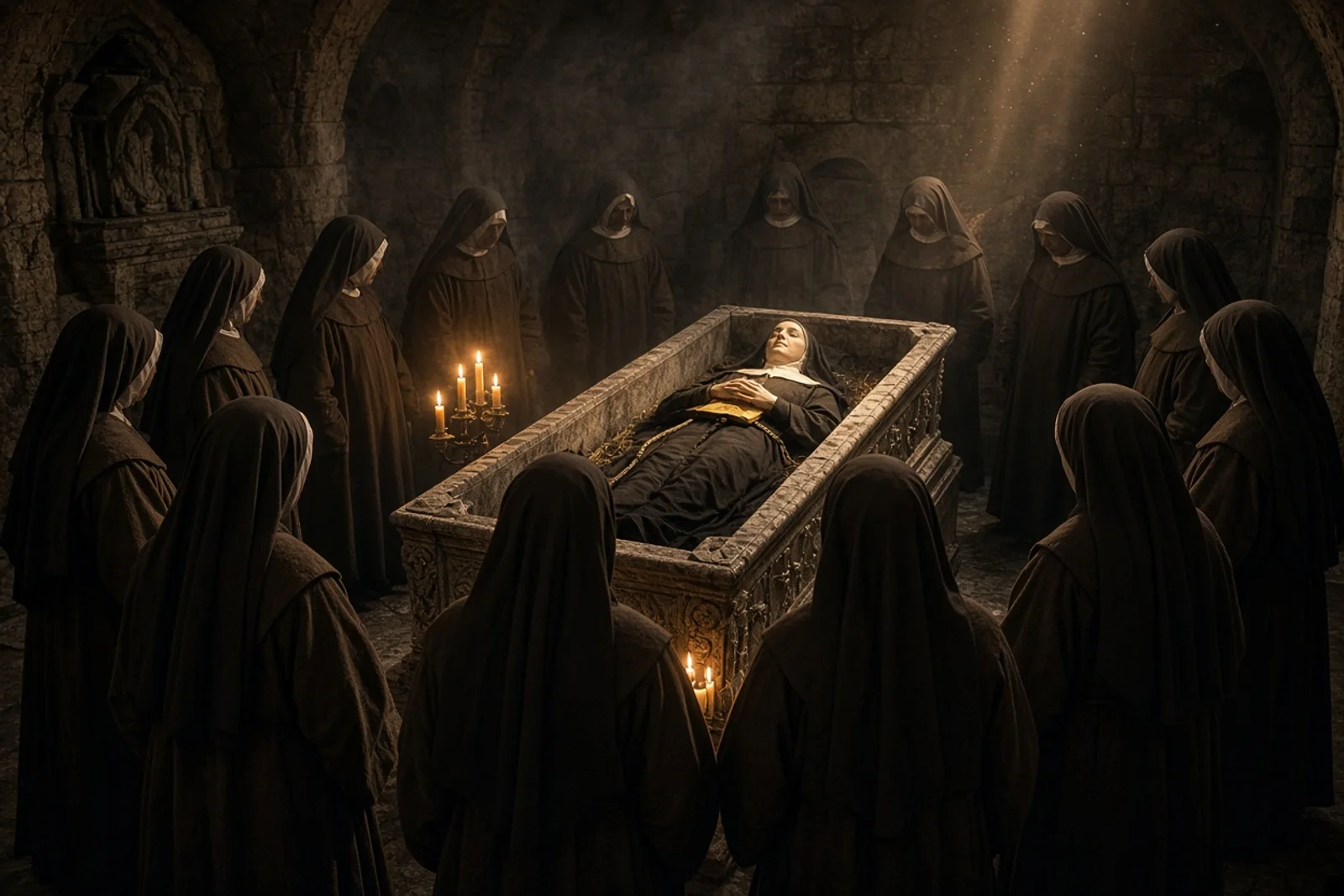
The sisters had already begun to speak of the scent by the third day after we laid her in the ground. It rose through the simple earth we had turned over her, sweet and steady, nothing like the rot we knew from other graves. We kept to our hours anyway. Matins came, then Lauds, the same plain meal at noon. One of the younger ones paused at the refectory door and asked whether we should tell the priest. No one answered at once.
I carried water that morning from the well to the small plot behind the choir. The ground looked no different than any other patch we had used. Yet when I bent to set the bucket down, the air changed. It was not strong. It was only there, like fruit left in a closed room. I went back inside without speaking of it.
Four more days passed. The scent stayed. On the eighth day after her death the abbess called us together after Compline. She said the rule allowed no special honors, yet the smell had not left and the ground had not settled as it should. She asked whether any sister had felt moved to open the grave. Most looked at the floor. One voice said the body ought to rest. Another said the scent itself was the sign.
We waited until the fourteenth day. That morning the sun came thin through the high windows of the chapel. We took spades and a length of linen and walked the short distance to the plot. The earth gave easily. No one had to force the blade. When the first layer lifted, the sweetness grew heavier, almost thick enough to taste.
The coffin boards showed no stain. We lifted the lid together. She lay as we had placed her, habit folded, hands at her sides. The face had not changed. The skin held its color. The lips were closed the way they had been when we last saw her breathing. One sister reached out and touched the cheek. She drew her hand back and said nothing.
We carried her on the linen into the chapel. The priest was already there. He examined the hands first, then the feet. No mark of decay showed. He asked for light and looked again at the eyes. They remained closed and clear. He told us to leave her uncovered for the rest of the day so others could see.
Word reached the city before Vespers. People came to the grille. Some stood only long enough to look once. Others stayed through the night watch. A man from the market asked whether we had used any oil or spice. We had used none. He left without further question.
The following week a physician from the university asked permission to examine the body. He came with two students. They measured the limbs and pressed the skin at the joints. The flesh gave no sign of softening. One student wrote notes on a small tablet. When they finished, the physician said only that the condition could not be explained by ordinary means. He did not stay for the office.
We moved her into the inner chapel where the air stayed cooler. A glass panel was set over the bier so the face could still be seen. Sisters took turns keeping the lamps lit. The scent continued, lighter now but constant, as if it came from the wood itself rather than the body.