




The Incorrupt Heart of St. John Vianney
Heart remains preserved
FaithTap · Sep 30, 2026 · 10 min read
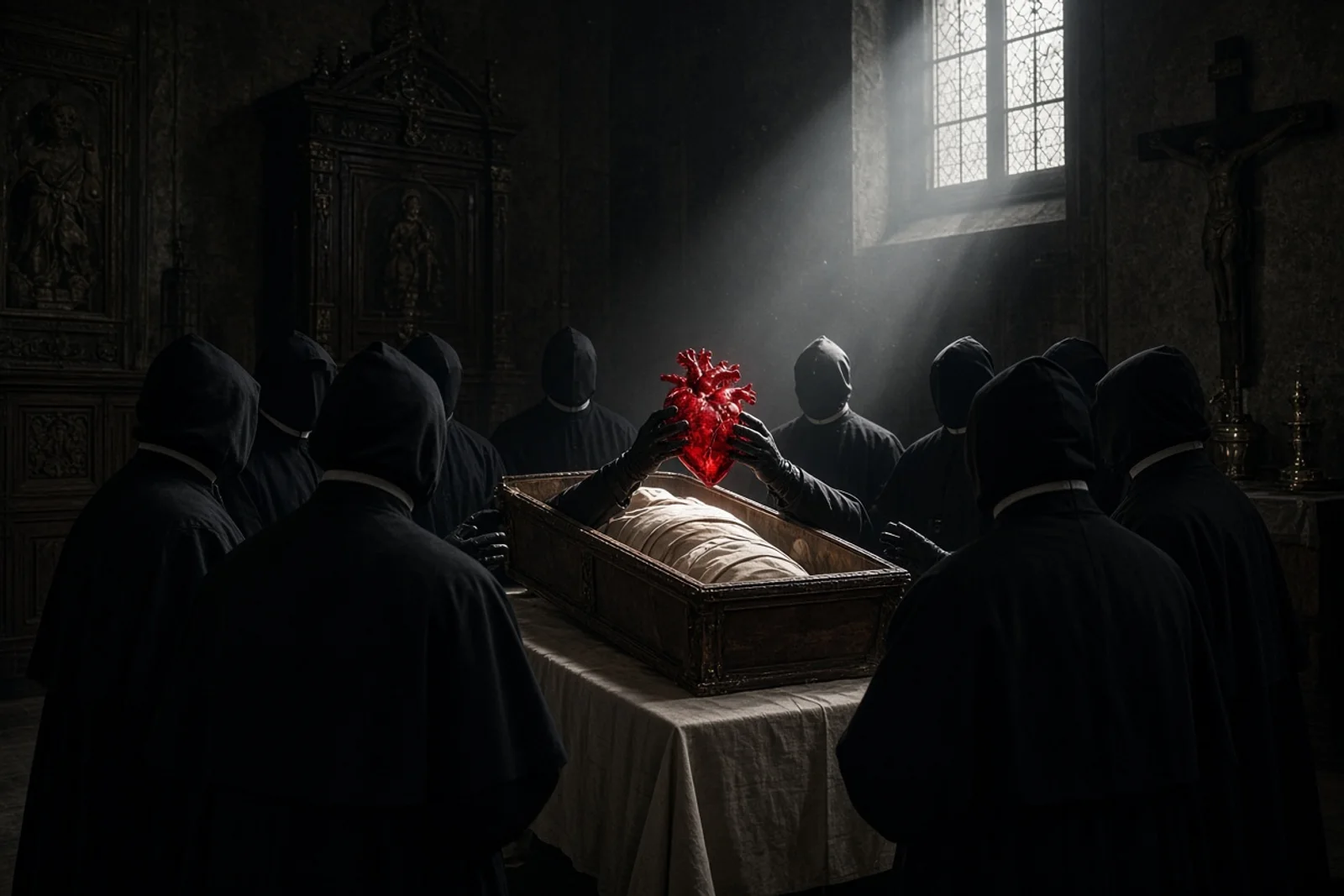
The candle guttered in the draft from the open window. I stood at the foot of the narrow bed in the room above the sacristy, holding a basin of water that had already gone cold. He lay with his eyes half open, the lines around his mouth pulled tight from the last hours in the confessional. Someone had placed a stole across his chest. The village clock struck two.
He had come back from the church only the night before, his legs unsteady after sixteen hours on the kneeler. We had helped him up the stairs one step at a time. Now the room smelled of tallow and the faint iron scent of the blood he had coughed up earlier.
Outside, the street stayed empty. Pilgrims still arrived by the cartload every day, but word had spread that the curé would not rise again. A woman from Lyon waited on the landing below with a rosary in her fist, unwilling to leave until someone told her the end had come.
His breathing changed after three. The intervals grew longer. I moved closer and heard the last words he tried to form, something about the Blessed Virgin. Then nothing. The priest beside me closed the eyelids. It was the fourth of August, 1859.
We washed the body before dawn. The limbs were light, the skin already cool. When we lifted him to change the linen, the chest did not resist the way a living man’s would. I noticed a small discoloration below the left nipple, no larger than a coin, but thought nothing of it at the time.
The bishop’s representative arrived from Lyon that afternoon. He brought a sealed order concerning the heart. In the sacristy they laid the body on the table used for vesting. Two physicians from the town stood ready with instruments. The senior one asked if any of us wished to leave the room. No one moved.
They worked quickly. The incision was made with care, the ribs parted. The heart came free in the older physician’s hands. He turned it under the lamp. The tissue showed no sign of softening or discoloration. It retained the shape and color of a living organ. One of the younger men stepped back and crossed himself.
They placed the heart in a glass vessel filled with spirits of wine. The vessel was sealed with wax and carried to the small chapel behind the high altar. The rest of the body was returned to the bed and prepared for burial. I stayed behind to scrub the table.
Word traveled through the village before nightfall. People gathered at the church door, not with the usual clamor but in small groups that spoke in low voices. A farmer from the next parish asked whether the heart had been placed back inside the chest. When told it had not, he nodded once and turned away.