




The Irish Potato Famine Relief by Quakers
Friends feed starving families without proselytizing
FaithTap · Sep 28, 2026 · 11 min read
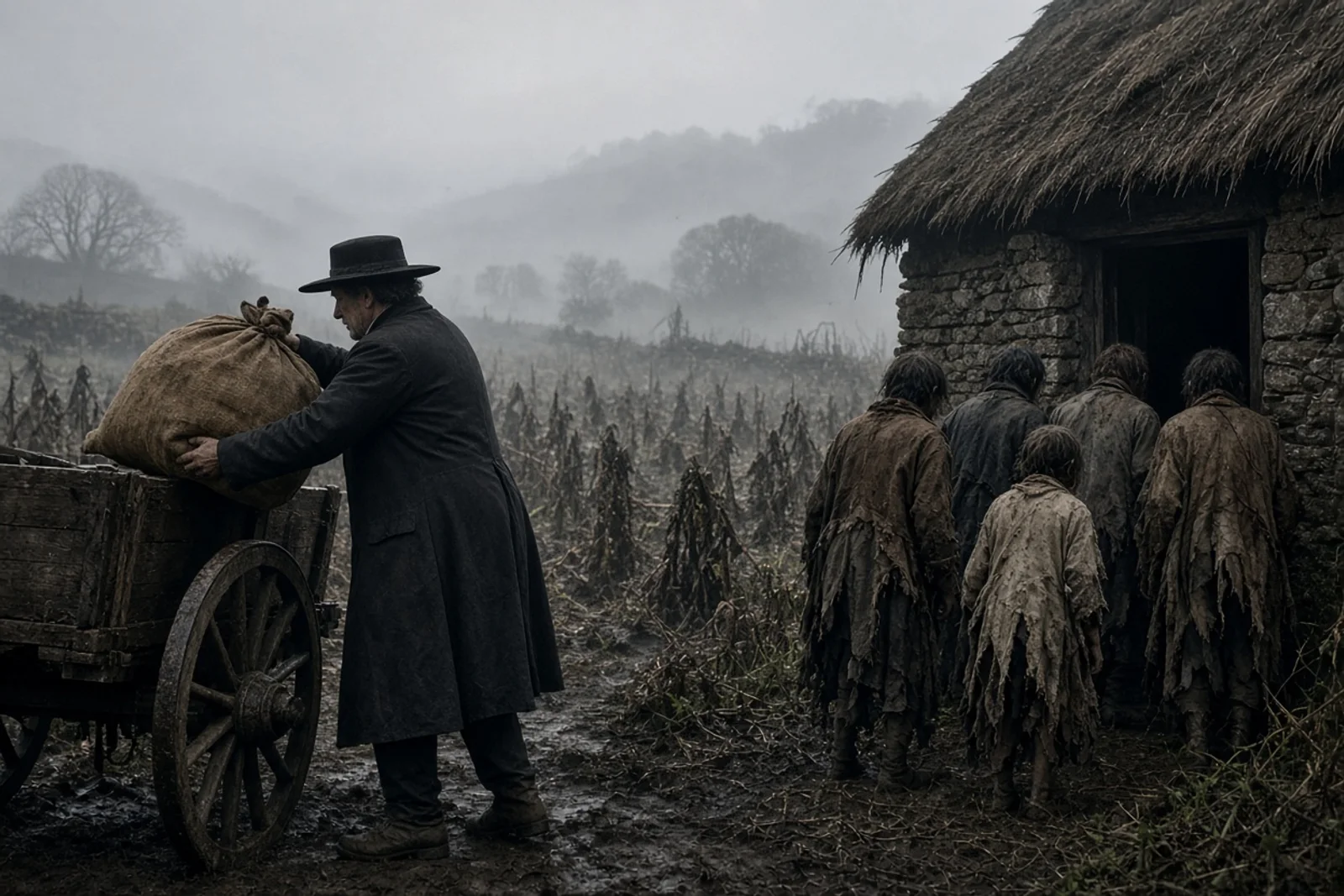
The road into Cork stank of rot and wet ash. I walked it with a sack of turnips over one shoulder and a letter from Joseph Bewley folded in my coat. The letter said only that Friends needed hands at the market before noon. By the time I reached the square the sun had burned the mist off the river and a line of women already waited with children pressed against their skirts.
A man in plain black stood on an empty stall counting out coins for two iron boilers. He looked up when I gave my name and asked if I knew how to stir without scorching the bottom. I said I did. He nodded once and pointed to a stack of wooden bowls already chipped from use. His name was William Harvey and he had come down from Dublin two days earlier with instructions to open the shop that morning.
We set the first boiler on bricks and lit the turf beneath it. Harvey measured oatmeal into the water while another Friend, a woman from Clonmel whose name I never caught, broke salt into her palm and tasted it. The smell drew more people. By mid-afternoon the queue reached the far wall of the market house. No one asked what meeting we belonged to. We asked only how many in each family and whether anyone had fever.
That night I slept on a bench behind the stall. Harvey woke me before first light to carry another letter to the post. It asked the Birmingham foundry for six more boilers and listed the townlands already without seed potatoes. He wrote the names in a small hand that did not shake even when the candle guttered.
Within a week the Cork committee had sent two men west with instructions to find the worst off holdings and report back the same day. I went with them as far as Macroom. The fields there lay black where the ridges had been dug. In one cabin a man lay on straw too weak to lift his head. His wife answered every question about the children without looking away from the pot we had brought. She took the soup and said nothing about God or blame.
We returned to Cork with a list of twelve more places that needed kitchens before the month ended. Harvey read the list aloud at the next meeting. Someone asked whether the government stores would open soon. No one answered. Instead the committee voted to buy Indian meal at the quay price and to keep the price at the shop low enough that a labourer could still afford a bowl after the day’s work.
By December the auxiliary committees had formed in Limerick and Waterford. Letters passed between them almost daily. One from Clonmel reported that a landlord had offered a barn if Friends would supply the fuel. Another from Waterford asked whether the same boiler could serve two villages on alternate days. The answers were always practical and short.
I travelled once with a party to a village north of Limerick where the road had washed out. We carried the boiler on a cart pulled by two horses that had not been fed grain in weeks. At the top of the rise we found twenty families already waiting with their own bowls. A boy no older than ten asked if the soup would be ready before dark. We told him it would. While the water heated one of the Friends walked among the cabins counting how many roofs still held thatch. He wrote the numbers in the same small hand Harvey used.
The work did not stop when the first cases of fever appeared among the distributors. Two men from the Limerick committee fell ill in January. The rest kept the kitchens open and sent what money remained to their families. No one spoke of stopping. The rule was simple: feed first, ask nothing in return.