




The Kindness of Le Mans to POWs
French town cares for captured British soldiers.
FaithTap · Sep 27, 2026 · 12 min read
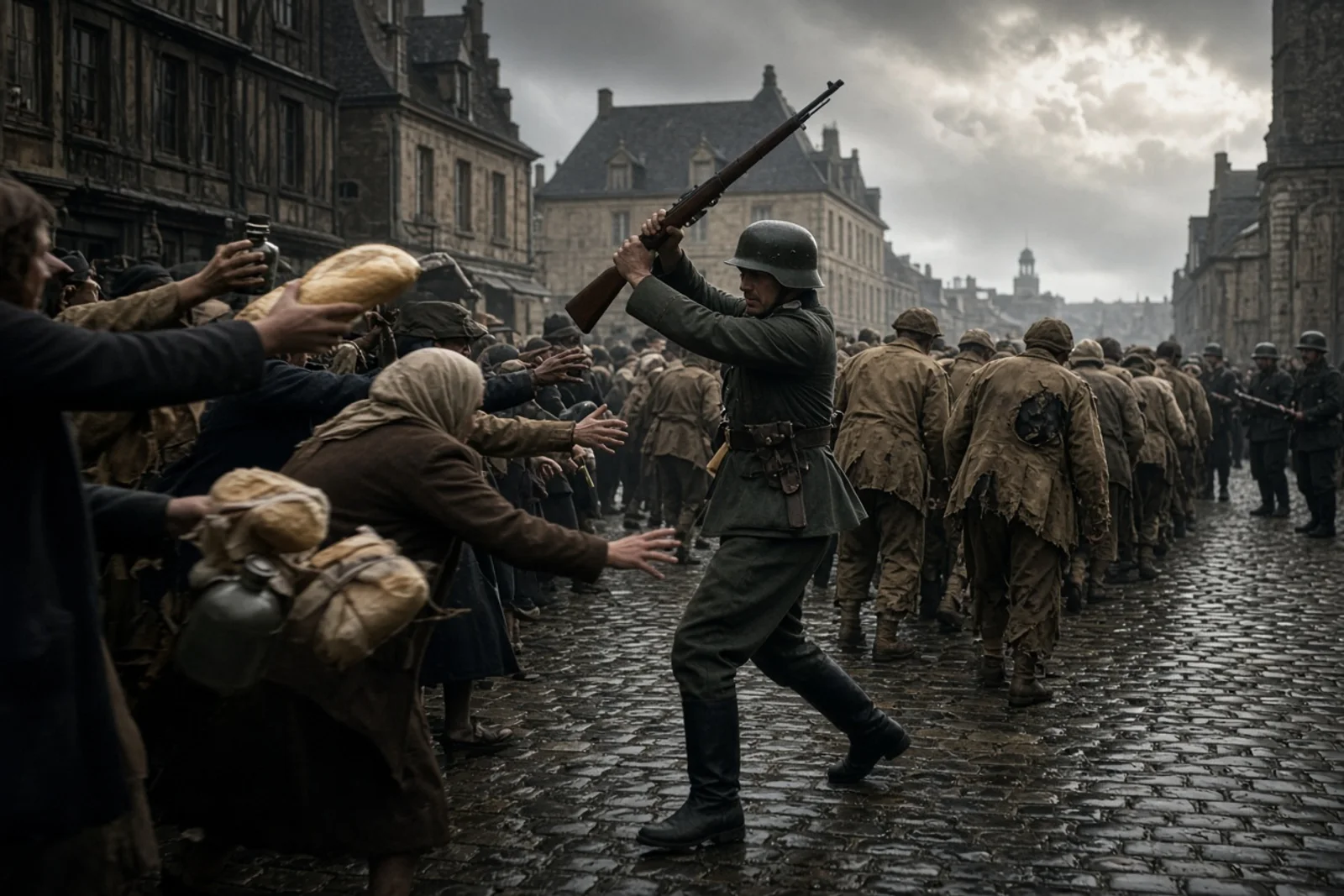
The column had been moving since before dawn, boots slapping the same stones hour after hour until the blisters opened and the blood dried inside the wool. I kept my eyes on the back of the man in front, counting his steps without meaning to, until the order came to halt. We filed into a stubble field beside the road, the sun already high enough to lift steam from the cobbles. No one spoke. We dropped where we stood, packs still on, and the dust settled over us.
A low ridge of slag heaps marked the edge of the mining town. The guards spread out along the hedge, rifles slung, their own faces streaked with sweat. One of them passed a canteen along the line but it was empty before it reached the middle. We lay on our sides, knees drawn up, listening to the flies.
Then the women appeared. They came in ones and twos at first, crossing the open ground with buckets and baskets balanced on their hips. More followed, until there were twenty or more moving steadily toward the wire. Their dresses were dark with coal dust at the hems. They set the buckets down just inside the hedge and began ladling coffee into tin mugs the guards held out. The smell reached us before the first mug did, thick and bitter and hot.
I pushed myself upright. A girl no older than twenty carried a basket of bread crusts and hard-boiled eggs. She stopped at each man, offering what she had without looking up. When she reached me she pressed two eggs into my palm and a thick slice of bread already spread with butter. Her fingers were callused and cool. She shook her head when I tried to hand her the few coins I still carried.
Others were doing the same. An older woman with white hair tied in a scarf moved along the line, pouring coffee from a kettle into whatever container was held out. She spoke softly in French, the same few words repeated, and the men answered with nods or silence. No one took money. One guard tried to wave her off and she simply stepped around him, continuing until the kettle was empty.
The coffee burned my tongue but I drank it anyway, feeling the heat travel down my chest. Around me men were chewing slowly, saving the crusts, tucking eggs into pockets for later. The girl with the basket came back with another load, this time small squares of sugar wrapped in newspaper. She placed two in my hand and closed my fingers over them. When I looked up she was already moving to the next man.
The sun climbed higher. Sweat ran under my collar and the coffee made it worse, but no one left the line. The guards had stopped trying to keep the women at a distance. One of them lit a cigarette and offered it to the white-haired woman. She took it, drew once, and handed it back. They stood together without speaking while the baskets emptied.
When the last bucket was drained the women gathered the empty containers. They walked back across the field the same way they had come, single file now, the baskets light against their skirts. No one called after them. The field settled into the same quiet it had held before they arrived, only the sound of men shifting their weight and the distant clink of a guard adjusting his rifle strap.
We were ordered to our feet again before the sweat had dried. The column formed on the road, boots finding the same rhythm. I kept the sugar squares in my fist until the heat of my palm began to melt them, then slipped one into my mouth and the other into the breast pocket of my tunic. The taste stayed with me through the next three hours of marching, sharper than the dust or the blisters.