




The Kindness of the People of Le Mans to POWs
French villagers feed German prisoners after liberation
FaithTap · Sep 26, 2026 · 10 min read
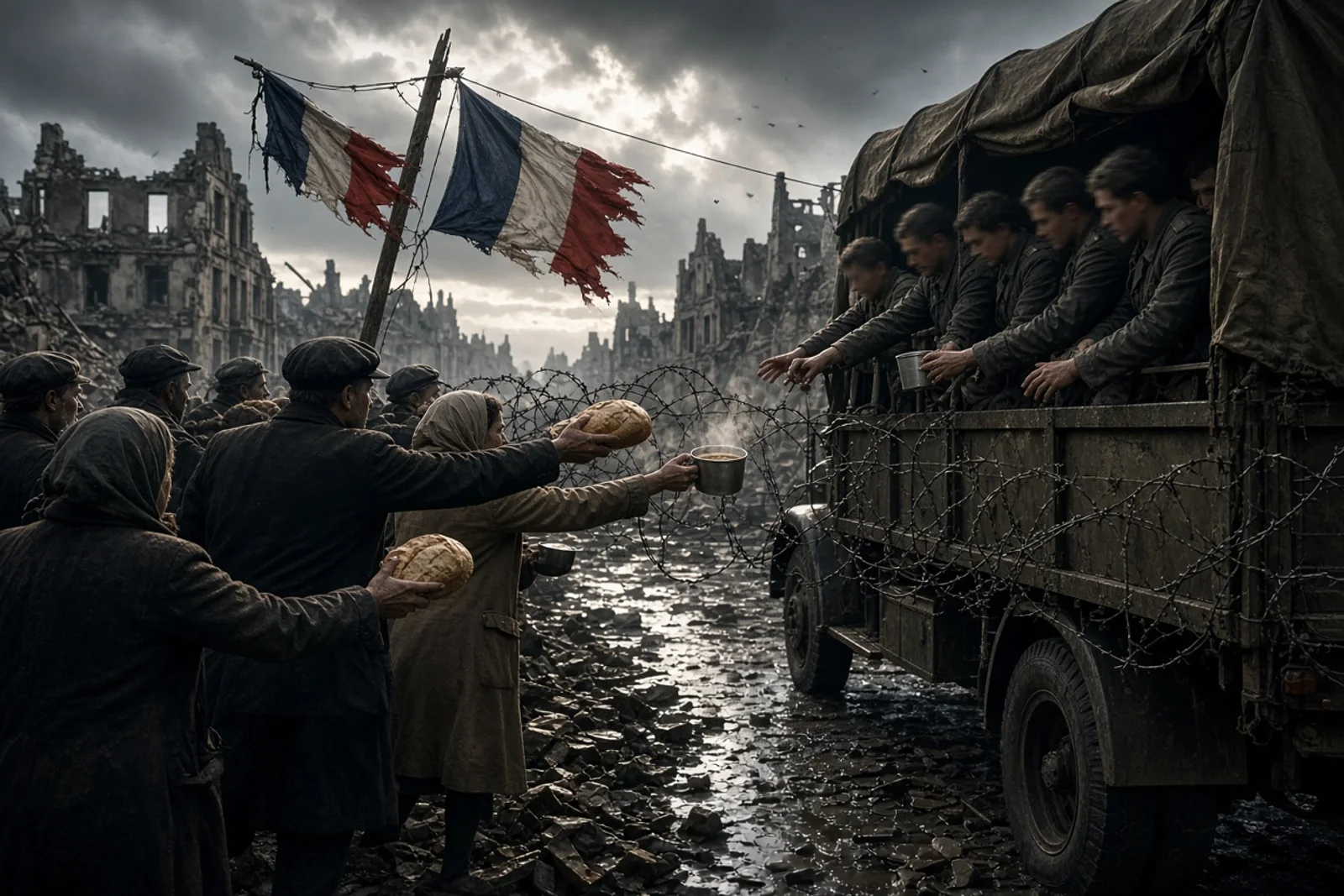
The truck bed smelled of diesel and wet canvas when it finally stopped outside the wire. I pressed my shoulder against the side to keep from falling, boots sliding on the metal. Around me men coughed and shifted, their faces gray from the long ride south from the surrender lines. Someone muttered that we were in Le Mans now. The gates swung open and American guards waved us through with rifles held loose.
Inside the enclosure the ground was churned mud. Tents stood in crooked rows. We were counted twice, then told to sit on the bare earth while clerks walked the lines with clipboards. My stomach had been tight for three days. The last proper meal had been a tin of meat shared in the back of another truck near the Seine.
By the second morning the hunger had a sound. It scraped behind the ribs when boots passed carrying bread. I learned to keep my eyes down. A bigger man from the Black Sea flotilla took my morning ration on the third day without a word. I let him. Fighting would cost more energy than the bread was worth.
Wilhelm Steffens sat two rows over. He was smaller than most, shoulders narrow under the thin coat. He read a folded page from a book he had somehow kept. When the same man reached for his portion Wilhelm did not resist either. He simply closed the book and watched the ground.
A French civilian crew arrived on the fifth day to repair a collapsed section of fence. One of them, a wiry man in his forties named Emile, paused near our line during the noon break. He had a canvas sack. He looked at the faces, then walked straight to Wilhelm and set a wrapped packet on the ground between his boots. Bread, cheese, a piece of sausage. He said nothing and returned to the fence crew.
The next day Emile brought two packets. Wilhelm tried to refuse the second. Emile shook his head and pointed at me. I took it. The bread was still warm. That evening Emile’s wife sent a small tin of stew. Wilhelm ate half and passed the rest along the line without looking up.
Within a week the pattern held. Emile would appear at the work detail, nod once, and leave food. Twice he waited at the gate after shift and took Wilhelm, then Wilhelm and me, to his house two streets away. The kitchen was small. His wife set plates without asking names. We ate quickly, eyes on the table. No one spoke of the war.
After three weeks the French authorities moved most of us south by train. Wilhelm and I rode together in an open wagon. The countryside changed from flat fields to hills and then to the Tarn. At Castelsarrasin we were put on forestry work. The rations were smaller again. Wilhelm’s book was gone, traded for soap.
Emile’s name reached us through another prisoner who had stayed behind. The man said Emile had asked after Wilhelm at the camp office. Two weeks later a letter arrived at the forestry camp, addressed in careful French. It contained a second address in Moissac and an invitation from a family named Cayrou.