




The Peace Agreement Between Rwanda's Churches
Post-genocide leaders form unity council
FaithTap · Oct 4, 2026 · 12 min read
I stood at the edge of the courtyard in Kigali as the last light faded, the stones still warm under my feet from the day’s sun. Voices carried from inside the main hall where leaders from several denominations had gathered. A man from the Presbyterian side spoke first, his words low and steady, naming what had happened inside their own buildings months earlier.
The heat pressed down even after sunset. Someone had set out benches pulled from the Sunday school rooms, and a single lantern swung from a wire overhead. I had come that evening only to carry water and sweep, yet I stayed when the talk turned to what the churches had done and what they might still do. One bishop admitted the closeness to government officials had shaped sermons for years, the same sermons that told people to obey without question.
A Catholic priest across the circle nodded once. He described how ethnic lists had circulated through parish offices before the killings began. No one interrupted. The sound of distant trucks on the main road reached us between sentences. When the Presbyterian speaker finished, the room held still for several seconds. A woman who had lost her husband in one of those church compounds asked whether any of them had tried to stop the lists from being used.
The conversation moved to practical steps. They spoke of sharing food stores that remained in locked warehouses and of reopening schools together instead of each denomination claiming its own. Someone mentioned the need to record names of the dead so that families could find where the bodies had been taken. The lantern flickered when the door opened and a late arrival entered, a Hutu pastor from the south whose congregation had sheltered Tutsi neighbors until soldiers arrived.
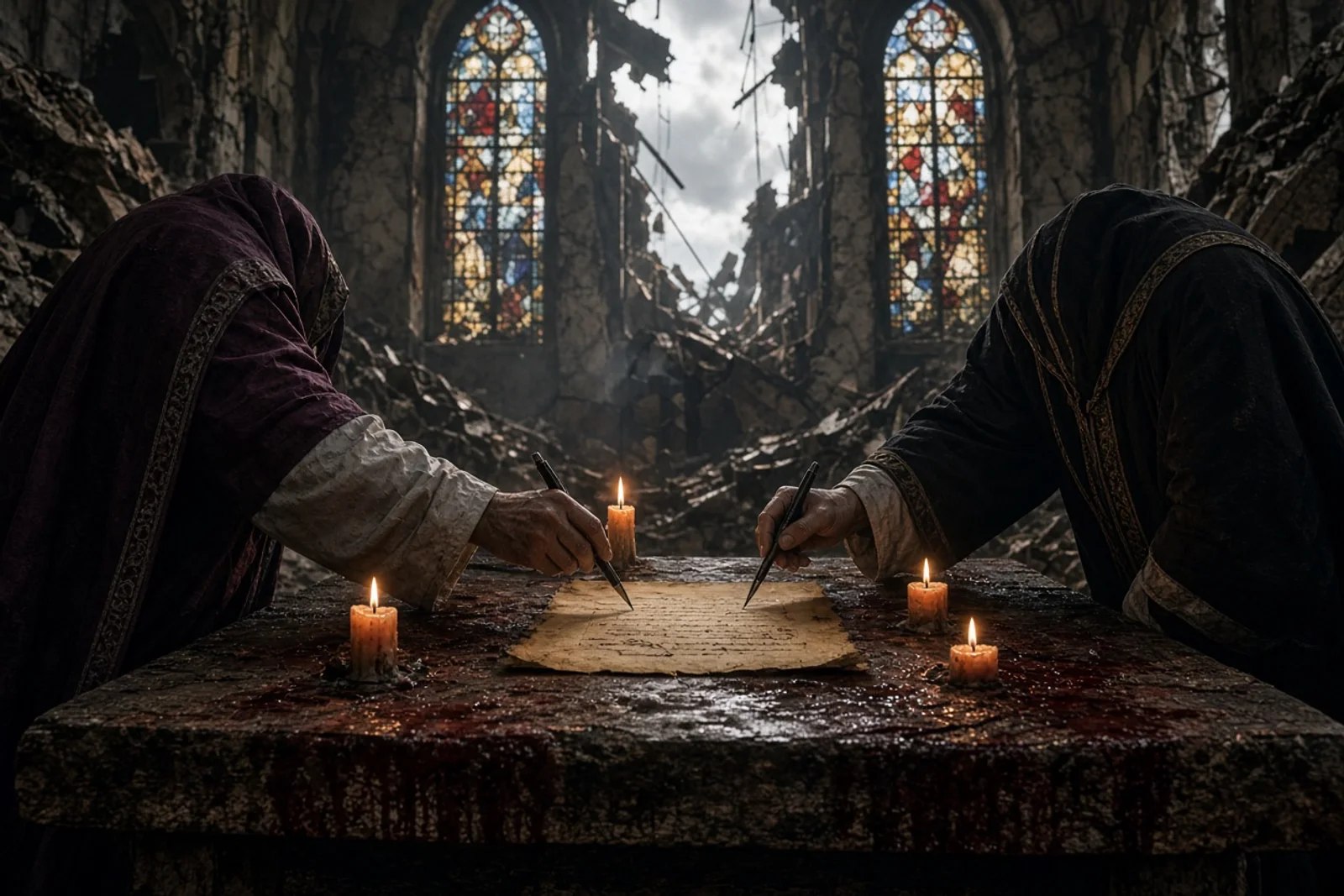
Over the following weeks the same group met again, this time in a smaller room at the edge of town. They drafted a joint statement that confessed the failure to protect those who had sought refuge inside sanctuaries. The text listed four points: a change in teaching, a change in how property and leadership were shared, a change in how survivors and perpetrators would meet face to face, and a change in how the dead would be remembered. Each church present signed its name at the bottom.
I carried copies of that first draft to villages where survivors still slept in the open. In one place an old woman traced the signatures with her finger and asked whether the words would bring back her children. I had no answer. In another village a young man who had carried a machete during the months of killing stood at the edge of the meeting and listened without speaking. Later he returned with two others and asked how they could be included in the work of rebuilding.
By early 1996 the Presbyterian synod prepared a fuller confession to be read in Detmold. The document named the obedience that had replaced responsibility and the ethnic categories that had been taught inside Sunday schools. When the text reached Rwanda, copies were read aloud in several districts. People stood in the doorways of churches that had once been killing sites and heard the words. Some walked away. Others remained and asked what would follow the reading.
The unity council that formed afterward met every month in different locations. They divided tasks: one group tracked missing persons, another arranged joint services on remembrance days, another negotiated the return of land that had been seized during the violence. The Catholic and Protestant representatives sat at the same table with Adventist and Pentecostal leaders. Decisions required every signature before any action moved forward.
One afternoon I watched two pastors from opposing sides of the old ethnic divide lift a beam together to repair a roof damaged in the fighting. Neither spoke much. The sound of hammers carried across the valley until dusk. When the work ended, they washed their hands at the same basin before parting.