




The Reconciliation Walk of 1999
Christians retrace Crusades apologizing to Muslims
FaithTap · Sep 25, 2026 · 10 min read
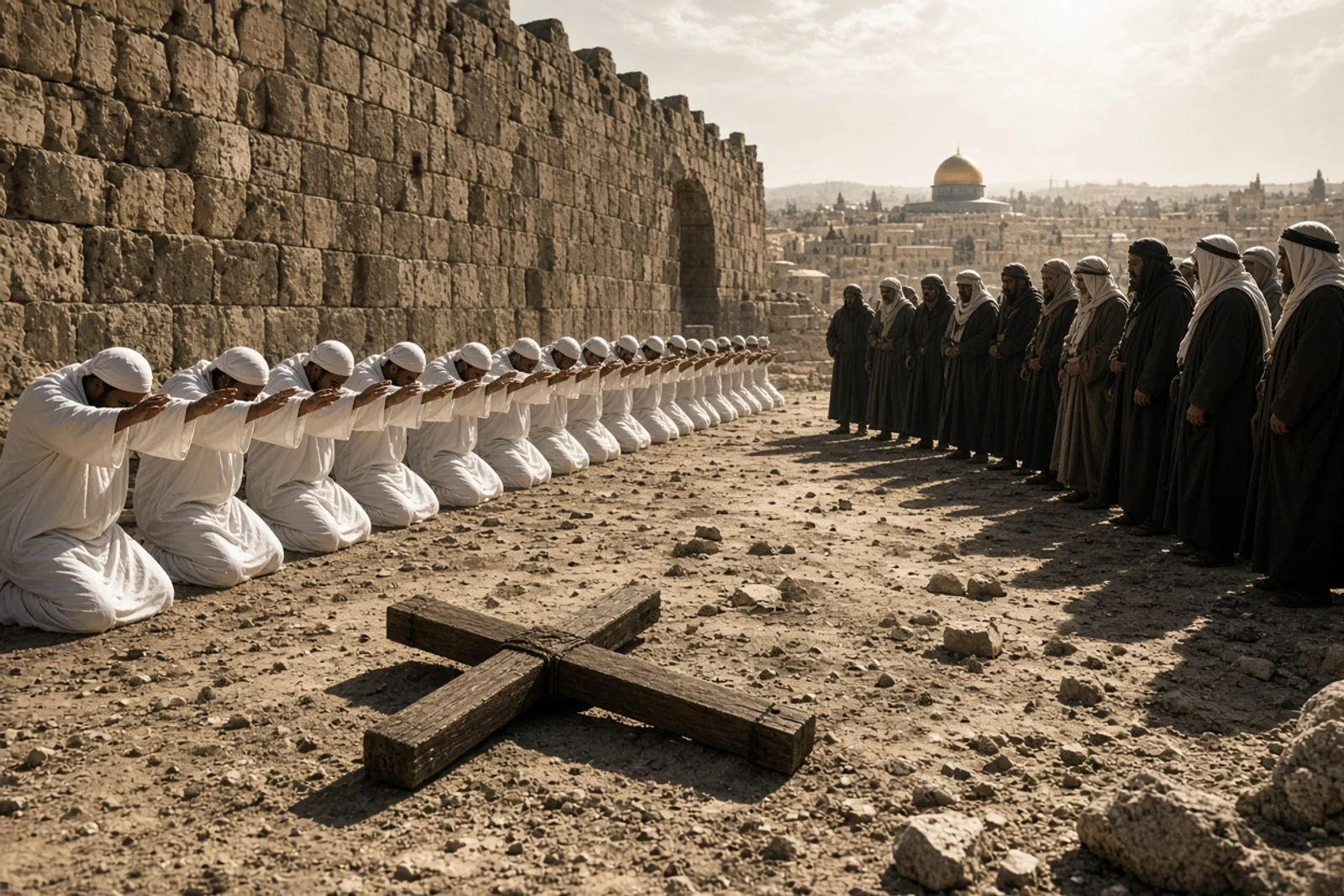
The rampart stones held the day's heat even at dawn. I kept my hand on the wall as we moved single file along the top, the Old City spread below in tight lanes and domes. Four hundred and fifty of us had come for this last stretch, shoes scuffing the same path crusaders once fought over. The air smelled of warm bread and diesel from the streets beneath.
We had walked sections in groups over the months, some of us joining earlier legs through Turkey and Syria. Names passed between us: villages where people stopped to listen, others where doors stayed shut. By the time we reached the Israeli border the stories had grown heavier.
Lynn Green walked a few paces ahead of me that morning. He kept checking the time on a small watch, then looking out over the walls. The plan was simple. Circle once, pray at each gate, then descend to deliver the words we had carried from Cologne.
At the Jaffa Gate we paused. Below us the market was already loud with vendors calling prices. A woman selling spices looked up, shaded her eyes, and watched without waving. I felt the apology we were about to give settle in my chest like a stone that had traveled with us.
We finished the circuit near the Damascus Gate. Sweat ran under my shirt. Someone passed a water bottle down the line. Green gathered us in a loose circle on the stones and read the statement once more, voice low so only we could hear it. The words named the slaughter nine hundred years before, the claim of Christ’s name over killings, the pattern that still shaped how many here saw Western Christians.
Chief Rabbi Yisrael Lau met us inside the Great Synagogue. He stood at the front with the paper in his hands. “You came very late,” he said, “but better late than never.” Then he blessed the group in Hebrew and English from Psalm 118. The sound of it stayed in the room after he finished.
From there we split into smaller groups. One went to the Greek Orthodox Patriarch Diodoros. Another carried the message to Mufti Ekrem Sabri at the Haram. I stayed with the main party heading toward the Church of the Redeemer for the closing service. The narrow streets forced us into single file again.
Cathy Nobles walked beside me on the way. She had spent the past weeks training new arrivals on how to sit in kitchens and listen. “Every house changes something,” she said. “You eat the same food and the picture you carried in your head starts to fade.”
The service inside the church was short. Green thanked the leaders who had accepted the apology and then turned to the rest of us. He spoke about the ordinary encounters, the cafés and shop counters, as the real work. No one clapped. We stood and filed out into the courtyard next to the Holy Sepulchre.