




The Samaritan's Purse Founder Bob Pierce
Evangelist begins child sponsorship after Korean War
FaithTap · Oct 3, 2026 · 10 min read
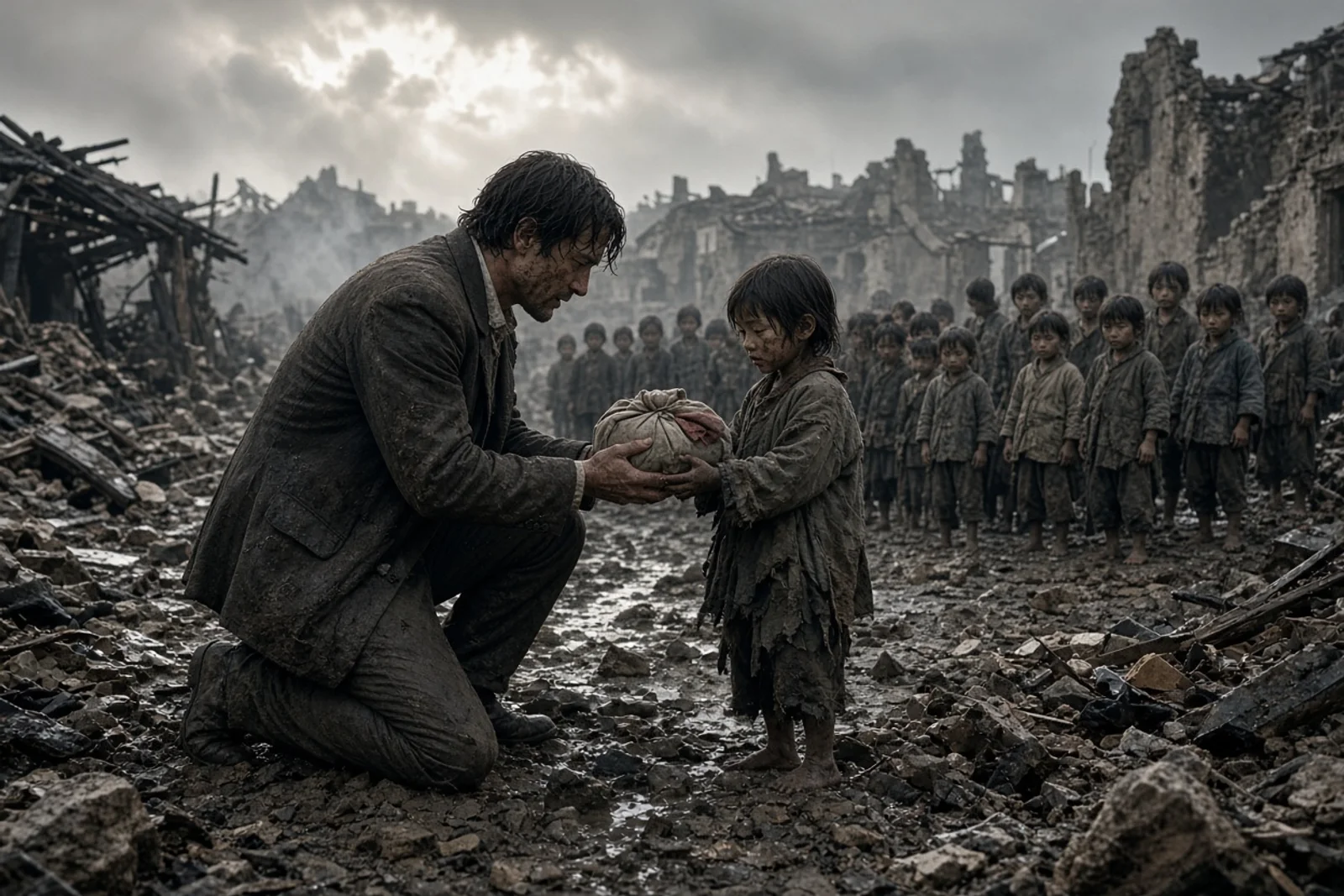
The dust still hung in the air from the last truck convoy when Tena stepped out of the mission doorway holding the girl by the hand. The child’s face was streaked with dried mud and something darker near the ear. Her left foot dragged. Tena looked straight at the tall American who had just finished preaching and said the words that stopped everything else.
I stood three paces behind Pierce, holding the canvas satchel that carried his film reels and the small ledger where he wrote names. The morning was cold for Seoul in early spring, the wind cutting across the river and lifting the edges of the straw mats people used for shelter. Pierce had been up since before light, arguing with a supply sergeant about rice that never arrived. Now he turned, and the girl looked up at him without blinking.
He reached into his pocket and pulled out the last folded bill he carried. Five dollars. He pressed it into Tena’s palm and told her he would send the same amount every month. The girl did not smile. She simply leaned against Tena’s leg as if the standing itself had become too much. I watched Pierce’s hand stay on the money a moment longer than necessary, as though he were afraid to let go of the only thing he still owned outright.
That night the generator coughed and the projector threw its square of light against the side of a half-standing school. Pierce ran the film he had shot in the refugee camps outside the city. Children with bowls, mothers holding infants wrapped in newspaper, a line of boys carrying water past a crater where a church had stood. He narrated in a voice that cracked on certain sentences and never recovered. When the lights came back on, men and women from the churches that still met in tents opened their purses and passed forward whatever they had.
Kyung-Chik Han stood at the edge of the crowd and translated the last appeal into Korean. His own church had already taken in twenty-three children that week. He and Pierce spoke quietly afterward, heads close, while the projector cooled. Han said the need was not going to shrink when the fighting stopped. Pierce nodded once and asked how many names could be written down before the next boat left.
I carried the ledger for the next three weeks while Pierce moved between Seoul and the southern camps. Each evening he added columns for food, medicine, and the monthly pledge he had made to Tena. The numbers grew faster than the money coming in from the churches back home. He began writing letters on whatever paper he could find, sometimes on the backs of military maps. One letter asked for twenty dollars a month for a boy whose ribs showed through his skin. Another asked for ten for a girl who had lost both parents on the road from Pyongyang.
By summer the organization had a name and a board that met in a borrowed office above a tailor shop. Pierce flew to the States with new reels and returned with checks that barely covered the pledges already made. Han kept the distribution lists in Seoul, marking each child’s location and the name of the American who had agreed to write. The system was simple and already breaking under its own weight.
Pierce kept traveling. Ten months out of every twelve. He slept on planes and in mission guest rooms that smelled of kerosene. When he came back to Korea he moved differently, as if the ground itself had become temporary. Han noticed but said little. The work was expanding into other countries now, and the films were reaching more churches than either man had expected.
I stayed with the lists. Over the years I watched the original five-dollar pledge turn into thousands of names. Pierce’s handwriting changed when the cancer started. The letters grew shorter, the signatures harder to read. He resigned from the larger organization in 1967 and took a smaller hunger group that later became Samaritan’s Purse. The same urgency remained, only narrower.