




The Samaritan's Purse Founder Bob Pierce Prays for Asia
Evangelist begins relief work after seeing orphaned children in China and Korea.
FaithTap · Oct 1, 2026 · 10 min read
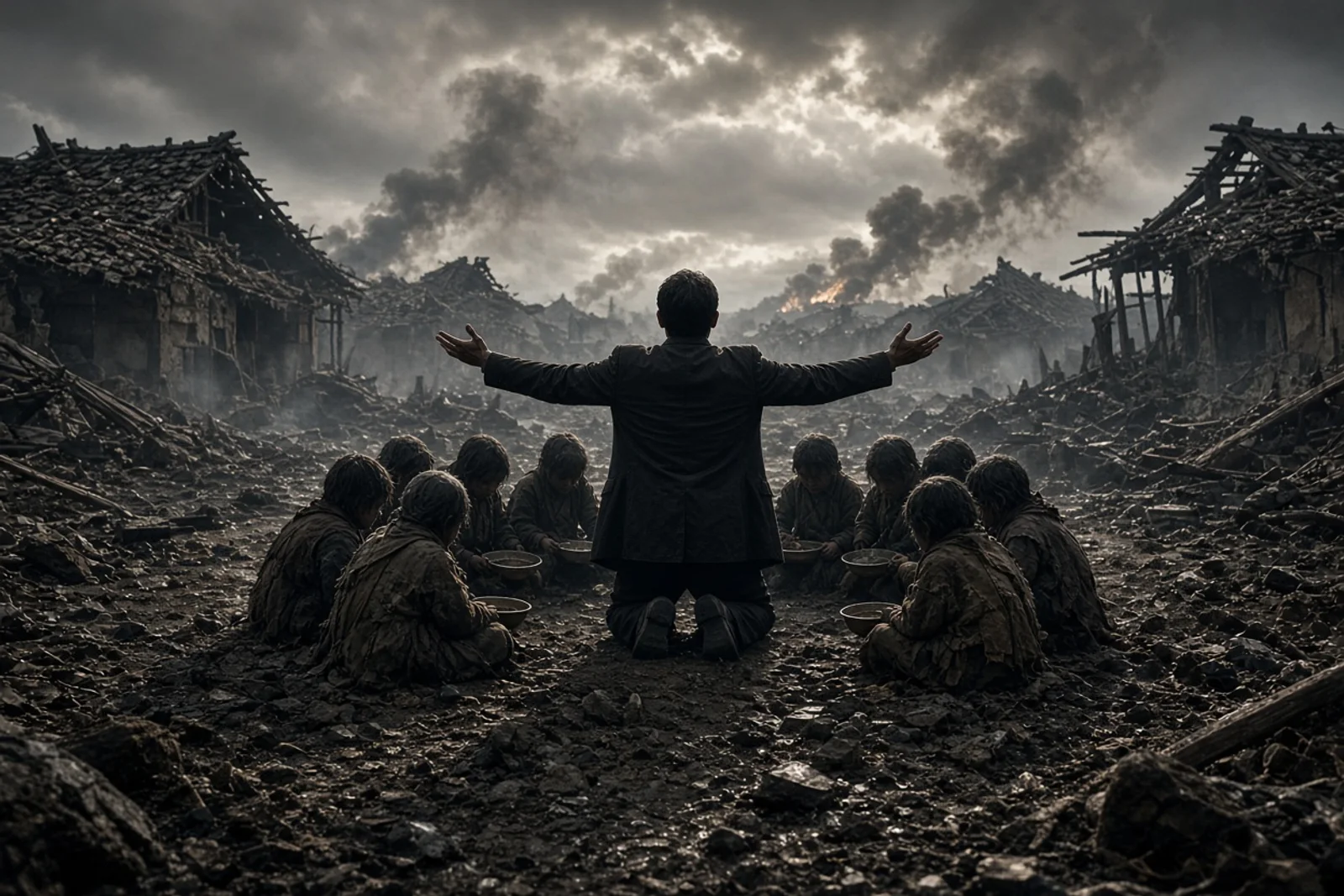
I crouched behind the sandbags at the edge of the airfield outside Seoul, the dust still settling from the last transport plane. Bob Pierce stepped off with his film camera slung over one shoulder and a canvas bag heavy with reels. He moved straight toward the line of children the army had gathered under the wing. None of them had shoes. One girl held a tin cup that rattled with every cough.
I had been sent up from the mission station south of the river to translate and carry messages. That first afternoon Pierce asked no questions about schedules or permissions. He knelt in the dirt beside the smallest boy, felt the heat in the child’s forehead, and told the medic the boy needed quinine now, not later. The medic looked at the supply crate and shook his head. Pierce opened his own bag and pulled out the last of his traveler’s checks.
By dusk the wind had turned cold. We walked the rows of makeshift cots inside the hangar. Pierce stopped at each one, wrote a name in the back of his Bible, and asked the same thing: how many bowls of rice that day. Most answers were none. He did not raise his voice. He only nodded and moved to the next cot, the pencil lead breaking against the page.
Three nights later the first snow came. We stood on the tarmac while the projector threw pictures of Chinese children onto a bedsheet nailed between two poles. Soldiers and refugees crowded close, breath steaming. Pierce spoke without notes. He said the same words he had used in the hangar: these children are not numbers, they have names. When the reel ended he turned the projector off and the sheet went dark. He stayed where he stood, one hand on the metal housing, and began to pray.
The prayer was not for the crowd. It was low, almost private, the way a man speaks when he believes only one listener remains. He asked for a heart that could break at the same things that broke God’s. He named the girl with the tin cup, the boy who needed quinine, the children still on the other side of the river who had no cups at all. Snow collected on his coat sleeves while he spoke. No one moved until he finished.
I walked him back to the mission house after midnight. The road was frozen hard. He kept stopping to listen to the distant artillery. At the gate he asked whether the children would still be alive when he returned from the next city. I had no answer. He wrote something in the margin of his Bible by the light of a kerosene lamp, then closed the book and placed it on the windowsill where the frost had already formed.
In the morning he left for the southern provinces with a list of names and the camera. I stayed to help distribute the first sacks of rice that arrived from the States. The sacks carried labels from churches I had never heard of. Each label had a child’s name written in Pierce’s hand. We matched the names to faces as best we could.
Two weeks later a letter came from the airfield. Pierce had reached Pusan and found another line of children outside a bombed church. He asked the same questions, wrote the same names. The letter ended with the single line he had already written in his Bible. I folded it and put it inside the cover of my own book so the children here could see the handwriting when they asked who had sent the rice.
By spring the airfield had become a permanent depot. Planes landed every day. I kept the lists updated, crossing off names when the children were moved to the new orphanages or when the lists stopped needing updates. Pierce’s name appeared on every manifest. He never stayed more than three days in one place. The camera kept moving.