




The Story of the Blind Pastor Who Translated Braille
Louis Braille adapts code for scripture access
FaithTap · Oct 4, 2026 · 11 min read
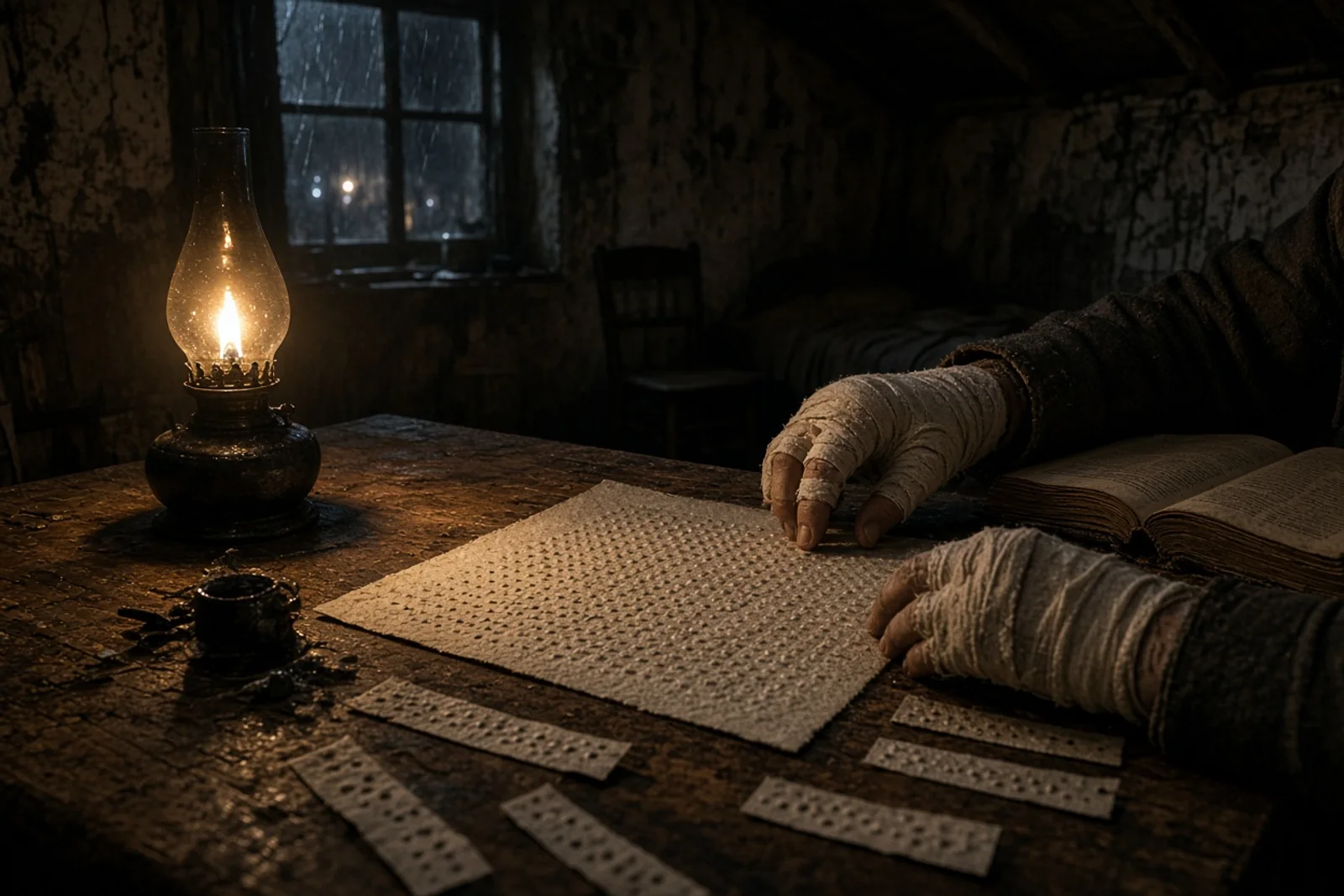
The leather on the bench still smelled of the oak bark they’d soaked it in that morning. I ran my fingers along the edge where the grain lifted under the heat, listening for the scrape of Louis’s awl against the board. He sat two places down from me in the long workroom, the one that faced the courtyard where the chestnut trees dropped their husks. We were both fifteen that winter, though he had already been here five years and I had only just arrived from the village school near Meaux.
The books in the library weighed more than a sack of grain. Each page was thick enough to stand on its own, the letters pressed so high a fingertip could follow the curve of an O or the crossbar of a T. Reading one took the whole afternoon and left the skin raw. There were only three of them. When the master unlocked the cabinet we lined up to touch the same sentences we had touched the week before.
Louis kept a smaller board on his lap after supper. He had taken the idea from the night-writing code the army used, the one with dots arranged in columns that a soldier could feel in the dark. He said the columns were too wide for a hand moving quickly across a page, so he cut them in half and made each letter fit under a single fingertip. I heard the pinpricks he made first with a stylus, then with the tip of a small awl he had filed down himself. The sound was a soft pop, like seeds splitting.
One evening he asked me to sit opposite him at the table. He placed a strip of paper between us. The dots were raised on one side only, small and even. He had numbered the positions in his head: top left one, top right two, middle left three, and so on down to six. He spelled out my name first. Then the name of the street where the institute stood. Then a line from the Gospel of John that someone had read aloud to us earlier that week. I traced it twice before I understood the words were already inside my fingers instead of waiting to be assembled letter by letter.
We tested it on the other boys when the lamps were turned low. Some laughed at the smallness of the marks. Others said the paper would wear smooth after a few readings. Louis answered by making another line, longer this time, and letting them pass it hand to hand until the dots were nearly flat. Then he made a fresh copy from memory and they read it again without stumbling.
The director of the institute came through the dormitory one afternoon and stopped at our table. He ran his hand over the paper, frowned, and said the system looked too simple to be serious. Louis kept his hands still on his lap until the man moved on. Later that night he showed me how the same six positions could stand for musical notes as well, so a blind organist could read a score without someone else reading it first.
By spring the pages he produced were no thicker than ordinary writing paper. He had taught himself to punch the dots from both sides at once so the reverse remained smooth. When visitors came he was asked to demonstrate the old embossed books instead. He did what was asked, but after they left he returned to the small board and the pin.
His letters home grew longer. He described the new alphabet to his father in Coupvray and asked for more leather scraps to practice on. The replies came back in the old raised print, each one taking days to produce at the printer’s. Louis read them slowly, then folded them and placed them at the bottom of his trunk.
One morning the master announced that a new shipment of books would arrive by autumn. The room went quiet while we waited to hear how many. Three more, he said. The same three titles we already knew. Louis did not speak, but that evening his pin moved faster than usual, and the dots he made were set closer together than before.