




The Story of the Child Who Led to Penicillin
Fleming's mold discovery follows a boy's infection
FaithTap · Sep 22, 2026 · 10 min read
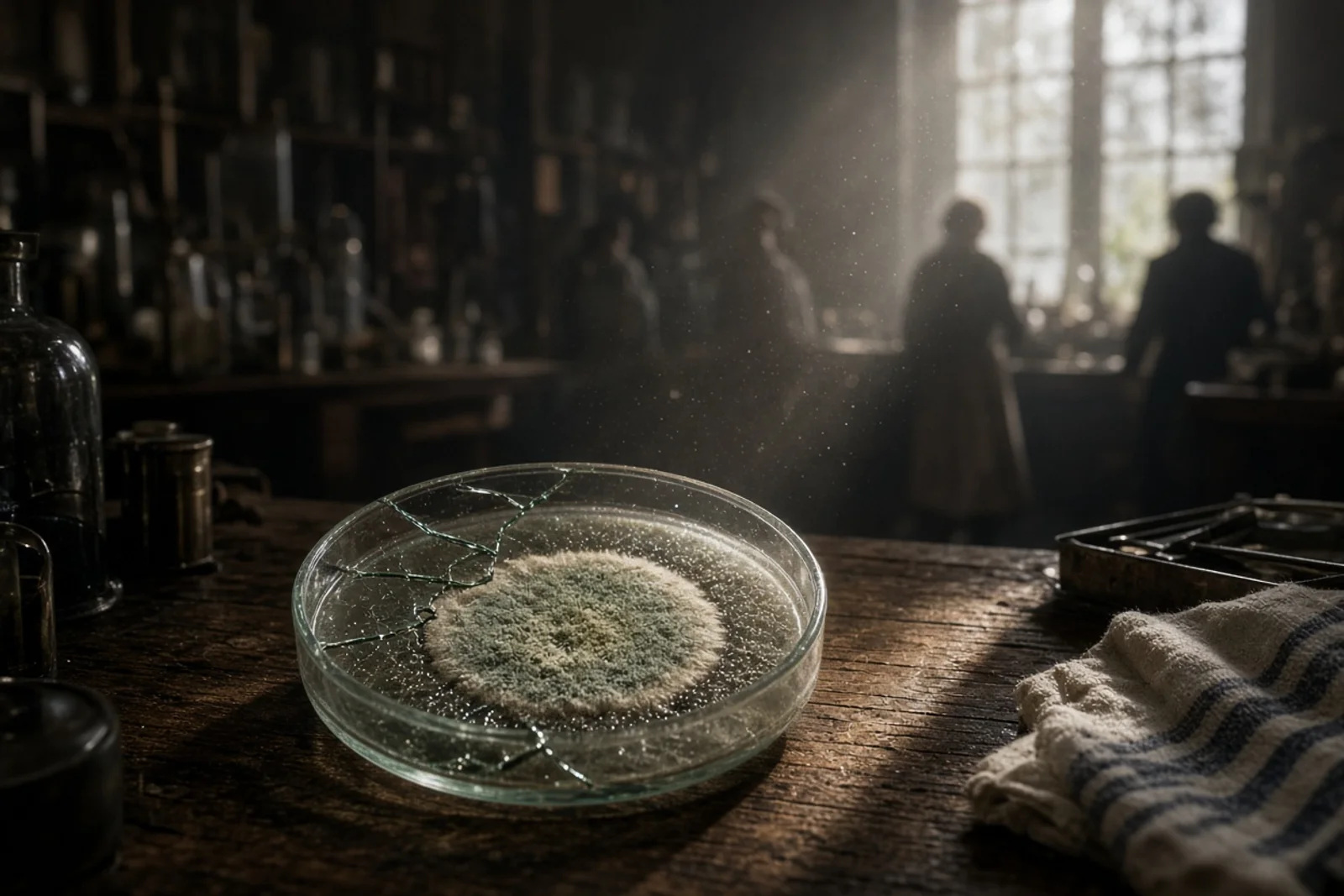
The petri dishes sat stacked on the bench where I had left them two weeks earlier, the glass still warm from the incubator. Fleming walked in from the corridor with his coat over one arm and the morning post under the other. He set the letters down, pulled the first plate toward him, and tilted it under the window light.
Dust had settled on most of the surfaces during his absence. On one plate the staphylococcal colonies had grown thick and yellow except where a pale green mold had taken hold. Around the mold the agar stayed clear, as if something had eaten the bacteria or stopped them cold. Fleming leaned closer, breath fogging the glass for a moment. He called for a slide and a loop without looking up.
I brought them. He scraped a fragment of the mold onto the slide, added a drop of stain, and slid the whole thing under the microscope. The colonies around the mold were gone or broken. He moved the plate to a fresh sheet of paper and wrote the date across the top in pencil. Then he set it aside and reached for the next dish, but his hand stopped halfway.
He asked if anyone had opened the windows while he was gone. No one had. The mold must have drifted in on its own from the mycology room downstairs or from the courtyard air. He left the plate uncovered on the bench for the rest of the morning and went on with the other cultures, yet every few minutes he returned to look at the clear ring again.
By midday the story had passed through the department. Craddock came in from the animal house and stood behind Fleming’s chair. Ridley arrived later with a tray of broth tubes. Fleming told them to try growing the mold in liquid and see what came out. He did not say it would cure anything. He said it might keep other bacteria from overgrowing a specimen when we wanted to isolate one kind.
We worked at it for days. The broth turned cloudy with mold but stayed thin where the staphylococci had been. When we filtered it the liquid still stopped the bacteria on a fresh plate, yet the strength faded within hours. Craddock tried to concentrate it by evaporation; the activity vanished. Ridley tried alcohol precipitation; the same thing happened. The substance was there and then it was not.
Fleming kept the original plate on his desk for weeks. He showed it to visitors who stopped by the bench, pointing out the sharp line between growth and no growth. He never raised his voice about it. When the hospital cases came in with septic fingers or throat swabs, he still reached first for the antiseptics he had tested since the war.
In the evenings the lab emptied early. I stayed to wash the glassware and sometimes sat with the filtered broth under the lamp, watching how quickly the activity dropped. The mold itself grew easily, but whatever it released did not last long enough to move from the bench to a patient. Fleming recorded the observations in his notebook and filed the plates. The clear zone stayed on that one dish long after the others had been cleaned and reused.
Months later the same mold appeared again in another culture, and the same clear ring formed. By then the department had turned back to vaccine work and leukocyte counts. The filtered liquid sat in a row of small flasks on the top shelf, labeled only with the date and the word “juice.” No one moved them for a long time.