




The Story of the Four Chaplains on the SS Dorchester
Clergy of four faiths give life jackets to soldiers
FaithTap · Oct 4, 2026 · 11 min read
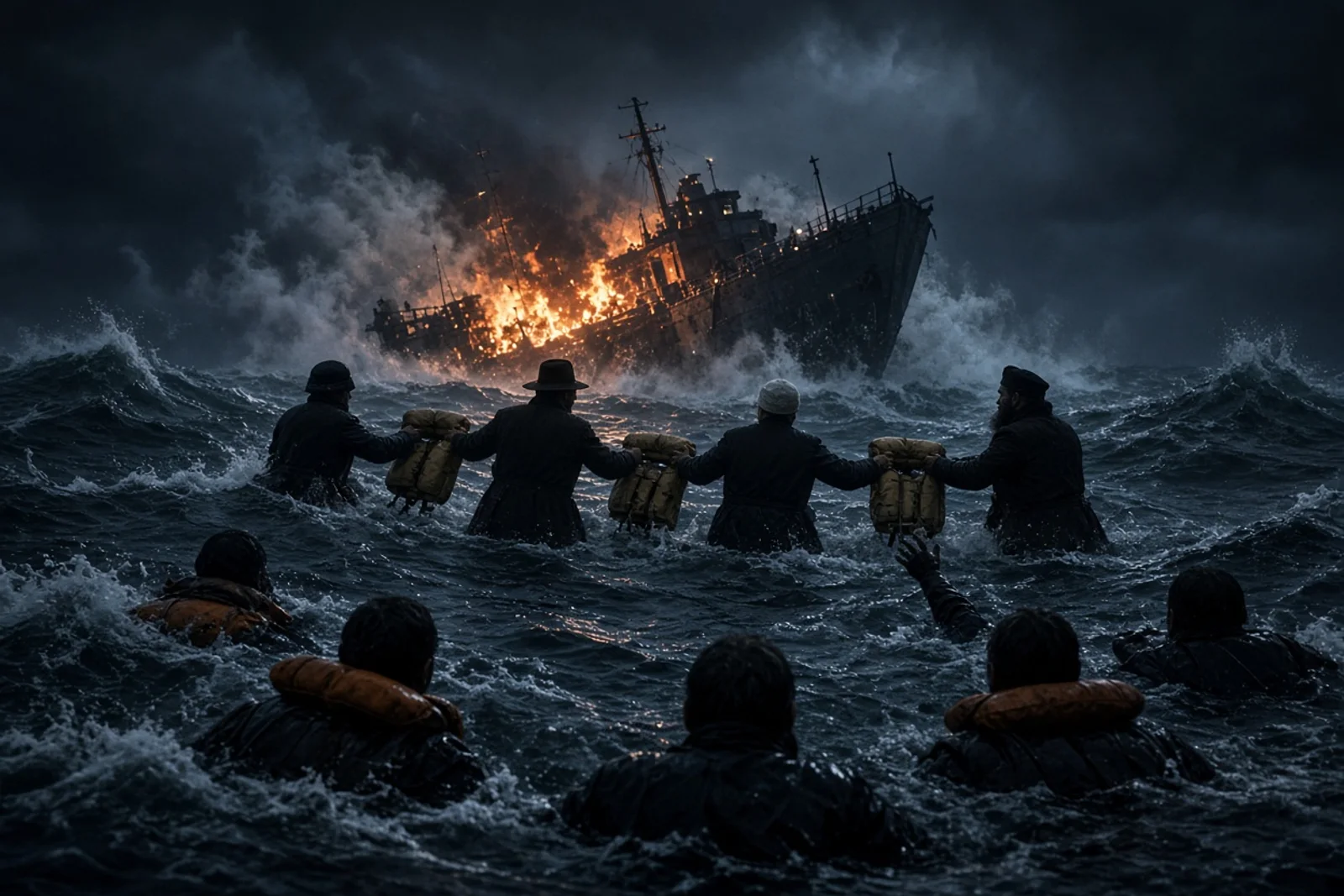
The water hit like a wall of knives. I kicked once, twice, and the life jacket kept my head above the swell, but my legs were already going numb. The Dorchester listed hard to starboard, her lights gone, her stack pouring black smoke into the dark. Flares from the escorts hung in the sky and showed me the deck rail one last time. Four men stood there, arms locked together. I did not count the minutes. I only watched until the bow rose and the stern slid under and the sea closed over them.
We had left New York ten days earlier with nine hundred and two men aboard. The Dorchester was an old coastal liner, narrow and crowded once the bunks went in. Most of us slept in our clothes after the first night out because the captain had ordered it. The engine heat below made the jackets feel like weights. Some men took them off anyway and rolled them under their heads.
The chaplains moved through the compartments the same way they had moved through the convoy at anchor. Fox was the oldest, a Methodist who had already seen one war. Goode kept a small prayer book in his pocket and checked the names on the manifest when he could. Washington carried a worn rosary and stopped to listen when a man wanted to talk. Poling was the youngest, still learning the names of the men in his regiment. They had come aboard together at Boston after the school at Harvard and kept to the same mess table.
On the second of February the Tampa signaled a contact. Captain Danielsen passed the word again: sleep dressed, life jackets on. The sea was flat and the air sat at thirty-six degrees. Below the water line the hold stayed warmer, so some men stripped to their skivvies and tried to rest. At twelve fifty-five the torpedo struck amidships on the starboard side. The explosion knocked the lights out and threw men against the bunks. Steam and oil filled the passageways. Those who could climb reached the boat deck in their underwear, already shaking.
I came up through a hatch near the stack and saw the first lifeboat swing out empty because the falls jammed. Men were shouting for jackets. The storage locker forward had already been opened. Fox stood at one end of the line, Goode at the other. They passed the vests hand to hand without checking names. When the last one was gone, all four of them reached behind their own shoulders and pulled the straps loose. Goode handed his to a young soldier from the 131st who had no gloves. Washington gave his to a man bleeding from the scalp. Fox and Poling turned theirs over without speaking. Grady Clark, the engineer, saw it from the rail and later said he had never seen anything like it this side of heaven.
The ship was settling fast. The bow lifted and the screws came out of the water. I went over the side with a group of men who had no jackets at all. The water took the breath out of me. I swam clear of the hull because the suction would pull a man down. When I looked back the deck was nearly vertical. The four chaplains had moved to the highest point they could reach. Their arms were still linked. One voice carried across the water in Hebrew, another in Latin, the others in English. The words mixed and faded as the stern went under.
The escorts picked up what they could. Comanche took ninety-seven men. Escanaba circled and pulled another hundred and thirty-two from the rafts and the oil. Tampa stayed with the remaining ships. By the time full light came, the water was dotted with bodies kept afloat by their jackets. The temperature had dropped to thirty-four degrees. Men who had made it into boats died anyway from the cold before the cutters reached them.
I was hauled aboard Escanaba with a rope under my arms. My hands would not close. They wrapped me in blankets and set me against the bulkhead with the others who could still speak. No one asked about the chaplains at first. Later, when the count was made, two hundred and thirty men had lived. Six hundred and seventy-two had gone down with the ship or died in the water.
The four bodies were never recovered. Their names went to the War Department with the rest. Each received the Distinguished Service Cross and the Purple Heart. Congress could not award the Medal of Honor because the chaplains had not fired a weapon. Instead it created a single decoration, the Four Chaplains’ Medal, struck once and given to their families on the same day in 1961.