




The Survival of the Donner Party's Children
Children rescued after 1846 snowstorm
FaithTap · Sep 30, 2026 · 10 min read
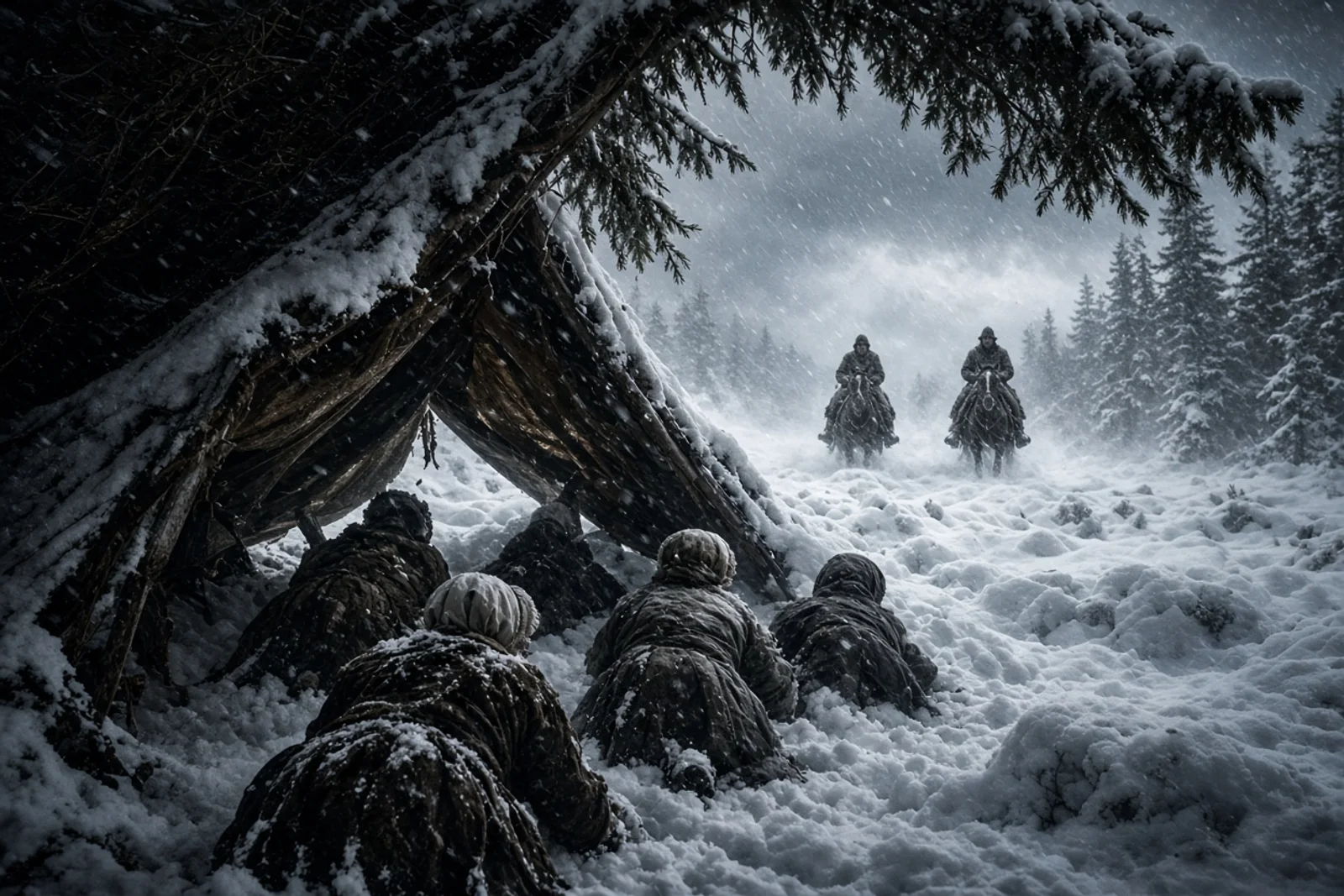
The snow had already swallowed the lower pines when we first caught sight of the lake camp. My boots punched through crust that gave way to slush, and the man ahead of me, a packer named Eddy, called back that the smoke was still rising. We had left the settlements with dried beef and flour, enough for one load, and the trail behind us was already filling in.
At the edge of the clearing the first shelter leaned against a stump. A boy named John Breen stood in the doorway, his face gray as the bark. He held a blanket around his shoulders and did not speak until we reached him. Then he said his father was inside and could still stand. We stepped past him into the dim light. Patrick Breen lay on a pallet of pine boughs, eyes open, watching us count the children around him. There were seven, the youngest wrapped in a shawl that had once been red.
We unloaded what we carried. The children took the pieces of meat without sound, holding them against their mouths until the warmth softened the edges. One of the Murphy girls, Mary, tried to share hers with a smaller child who could not chew. Eddy told her to keep it. She nodded once and turned away.
By the second day we had moved the strongest walkers. Virginia Reed walked between two of us, her hands on our sleeves, counting steps aloud. She said her mother and the younger ones would follow when the snow packed harder. We did not argue. The wind came down the pass in straight lines that cut through wool and canvas.
At the Alder Creek camp the Donners had built a lean-to against the wagons. Tamsen Donner met us at the opening. Her hands were raw from splitting wood, and she carried a kettle that held only melted snow. She asked first for news of the road, then whether we had seen her husband’s hand. George Donner sat inside on a low bench, the bandage black at the wrist. He told us the children were ready. Frances and Georgia stood behind their mother, each holding one of Eliza’s hands. The smallest girl watched our faces without blinking.
We took the three Donner girls that afternoon. Tamsen wrapped them in what remained of a quilt and walked beside the sled until the trees thinned. She stopped at the last rise and watched us go. Snow had begun again, fine and dry, filling the tracks behind us.
The lake camp emptied over the next week. The Breen children left with their parents on the second relief. The Murphy boys followed on the third. Each time we returned, fewer voices answered from the shelters. Some of the men who stayed behind spoke of the bodies left in the snow, but the children who walked out did not ask. They kept their eyes on the next ridge and the next.
Eliza Donner reached Sutter’s Fort in April. She rode the last miles in the arms of a packer named Miller. Her sisters walked the final stretch, holding the straps of the packs. At the fort the women washed their faces with warm water and gave them clean cloth for their hair. Eliza sat on a bench and counted the buttons on her dress, one by one, until she reached the hem.
The relief parties kept lists. Forty-eight names survived the winter. Among them were all nine of the Breen children, the four youngest Murphy children, the three Donner girls, and the Reed daughters. The records note that the parents divided the last rations so the children received the larger share. No commission examined the children beyond the questions asked at the fort. The doctors recorded weights and the absence of frostbite on most of the small hands and feet.