




Vincent de Paul Organizes Daughters of Charity
Priest trains women to serve the poorest.
FaithTap · Sep 22, 2026 · 10 min read
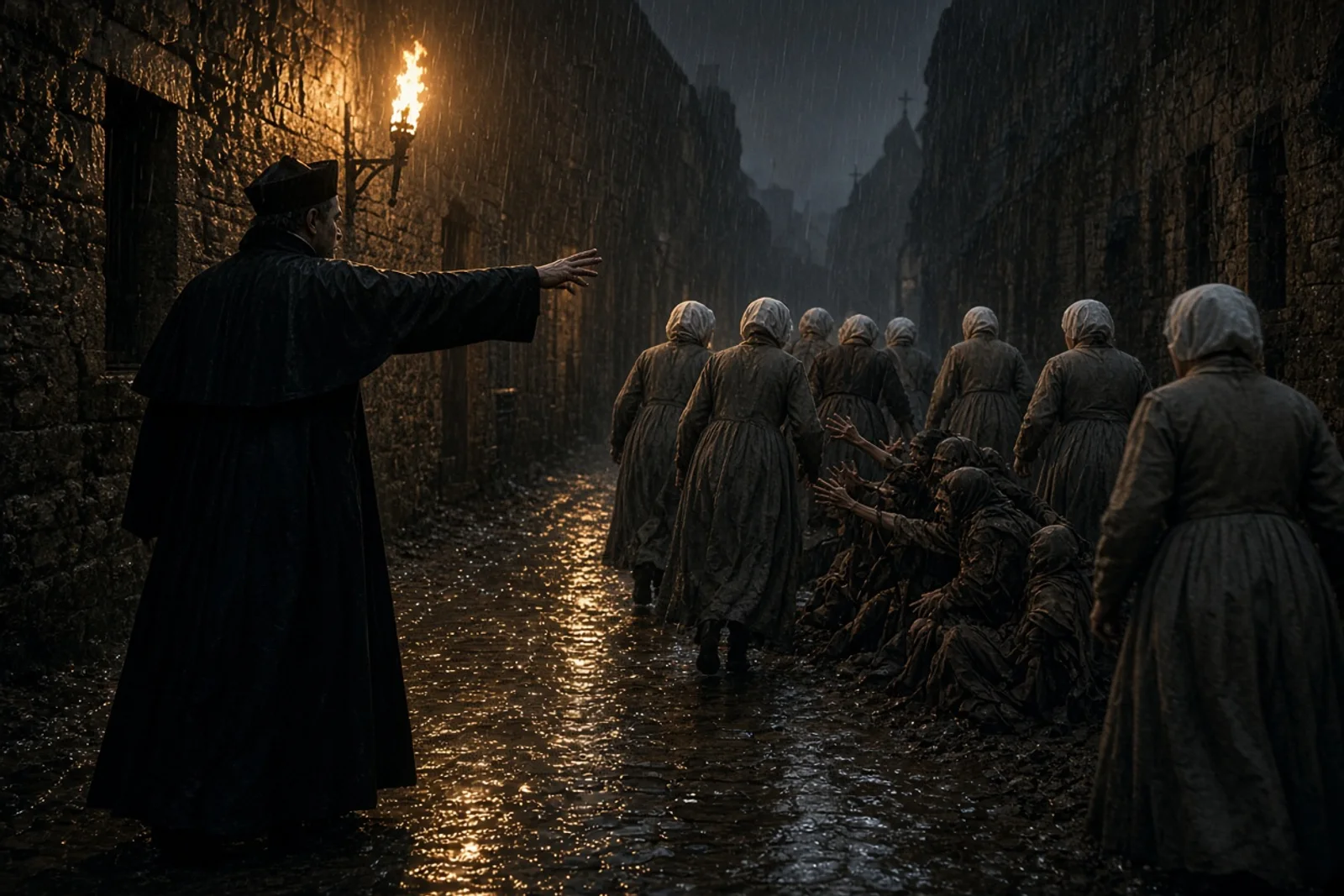
I reached the narrow door on Rue des Fosses-Saint-Victor just after the bells rang for noon. My bundle of spare linen and the small knife for cutting bread weighed nothing beside the ache in my feet from the walk across Paris. A woman in a plain dark gown opened before I knocked twice. She studied my face, then the letter Vincent de Paul had given me in the parish yard two days before.
Louise de Marillac took the paper, read it once, and set it on the table without comment. She asked only how many sick I had tended already and whether I could carry water up three flights without spilling. I told her the truth. She nodded and pointed to a bench by the hearth.
Three other girls arrived before sunset. One had walked from the fields near Châtillon, still smelling of hay. Another carried a basket of dried herbs her mother had pressed into her hands. The fourth arrived last, her shoes split at the seam. Louise counted us without raising her voice. She said we would sleep in the back room and eat what the parish sent. Then she lit the lamp and showed us where the bandages were kept.
Vincent came the next morning while we were still sweeping. He stood in the doorway with his hat in his hand and watched us work. He spoke first to Louise, then turned to us. He wanted to know if we understood that the poor would not thank us and that the streets would be cold. None of us answered. He seemed satisfied and left.
We began each day before light. Louise showed us how to fold linen so it would not crease against a fevered back. She taught us to steep the herbs without wasting any. When one of the girls grew faint from the smell of a wound, Louise made her sit and breathe until the dizziness passed, then sent her back to finish. She never raised her voice, yet the work moved faster after she spoke.
The noblewomen who had once come with baskets of food now sent servants instead. We met those servants at the doors of the sick. They handed over the bread and left. We stayed. Louise said nothing against them, but she made us practice walking the narrow lanes until we could find the poorest houses without asking directions twice.
By the second week the room held only our four pallets and the table where we rolled bandages. Louise kept a small book open on the sill. She read from it each evening after the lamp was lit, then asked each of us what we had seen that day among the sick. The answers were short at first. Later they grew longer. She listened without writing anything down.
Vincent returned on a rainy afternoon. He brought word of a family whose father lay dying in the next street. He asked which of us would go with him. Louise chose the girl from Châtillon and the one with the split shoes. They left carrying the basket of fresh linen. When they returned after dark their aprons were wet and their eyes were tired, but they spoke of how the man had taken the water without protest.
We began to wear the same grey wool each morning. The cloth was heavy enough to keep the wind out yet light enough to move quickly between beds. Louise showed us how to pin the white linen at the throat so it would not catch on door frames. She said nothing about cloisters or bells. She only told us to keep our hands clean and our voices steady when the children cried.