




Vishal Mangalwadi Reads the Bible in Prison
Indian activist finds Christ while jailed.
FaithTap · Sep 27, 2026 · 10 min read
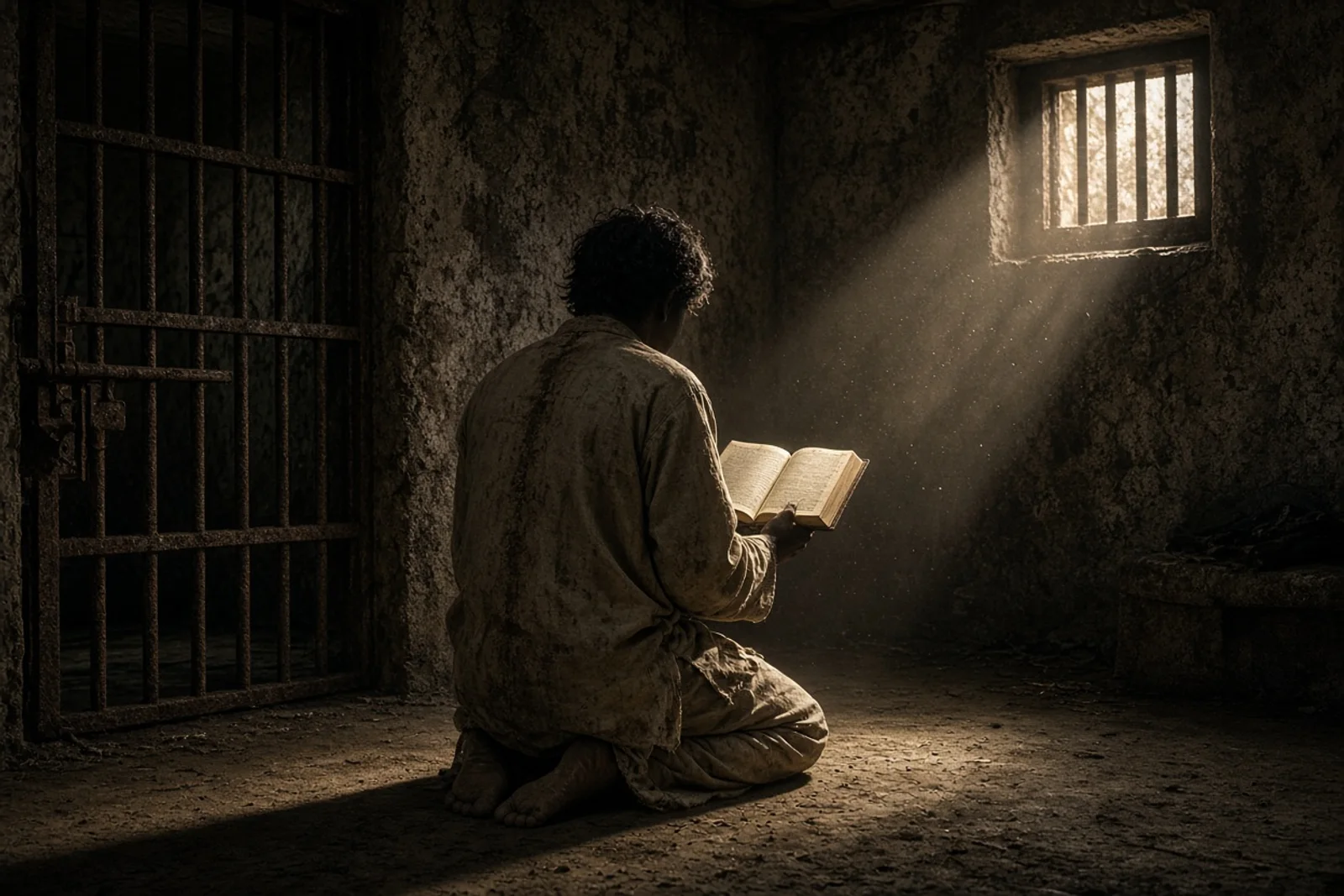
The cell smelled of damp stone and old urine when they shoved me through the door. I landed on my knees, palms scraping the floor, and heard the bolt slam. A single bulb swung overhead. In the corner a man sat cross-legged on a folded blanket, a small black book open on his lap. He did not look up at first.
Vishal Mangalwadi kept reading. His finger moved along the page, slow and steady, as though the words needed weighing. I had seen him once before, outside the village of Gatheora, standing in the dust while Ruth talked to the women. He spoke softly then, the same way he turned the pages now.
A guard passed and rattled the bars. Mangalwadi closed the book but kept one finger inside it. He offered me the blanket without speaking. I shook my head. He nodded once and opened the book again.
Three days earlier we had been taken from the same meeting. The police said we stirred trouble by telling parents not to starve their daughters. They had names for what we were doing, none of them kind. In the truck Mangalwadi had asked the constable whether he had children. The man had not answered.
On the fourth morning they brought thin rice and watery dal. Mangalwadi ate half and pushed the rest toward me. He asked my name and where I was from. When I told him, he said he knew the road. Then he opened the book and read aloud, not loud, just enough for the two of us. The words were about a man born blind and the question of whose sin had caused it. He stopped after a few lines and looked at the wall as if the answer might be written there.
I asked what the book was. He said it was the one that had first made him doubt the stories his village told about fate and rebirth. He had read it years before, after someone gave him a copy in Allahabad. The pages had stayed with him through university and through the months he spent walking between towns.
A week passed. The guards let us sit in the courtyard for an hour each afternoon. Mangalwadi walked the length of the wall and back, the book tucked under his arm. One afternoon he spoke about a child named Sheela whose parents had let her die because another daughter already existed. He described the size of her thighs. He said the same belief that made her death ordinary also made every other death ordinary. The book, he said, taught something else about the worth of a single life.
I watched the guards watch us. They never stopped him from talking. Sometimes they listened.
On the fifteenth day they moved him to another cell. I stayed behind with two men who had been arrested for debt. One of them asked what Mangalwadi had been reading. I said it was a book about a God who noticed the blind and the hungry. The man spat and said no god had noticed him yet.