




William Booth Finds Salvation Army Vision
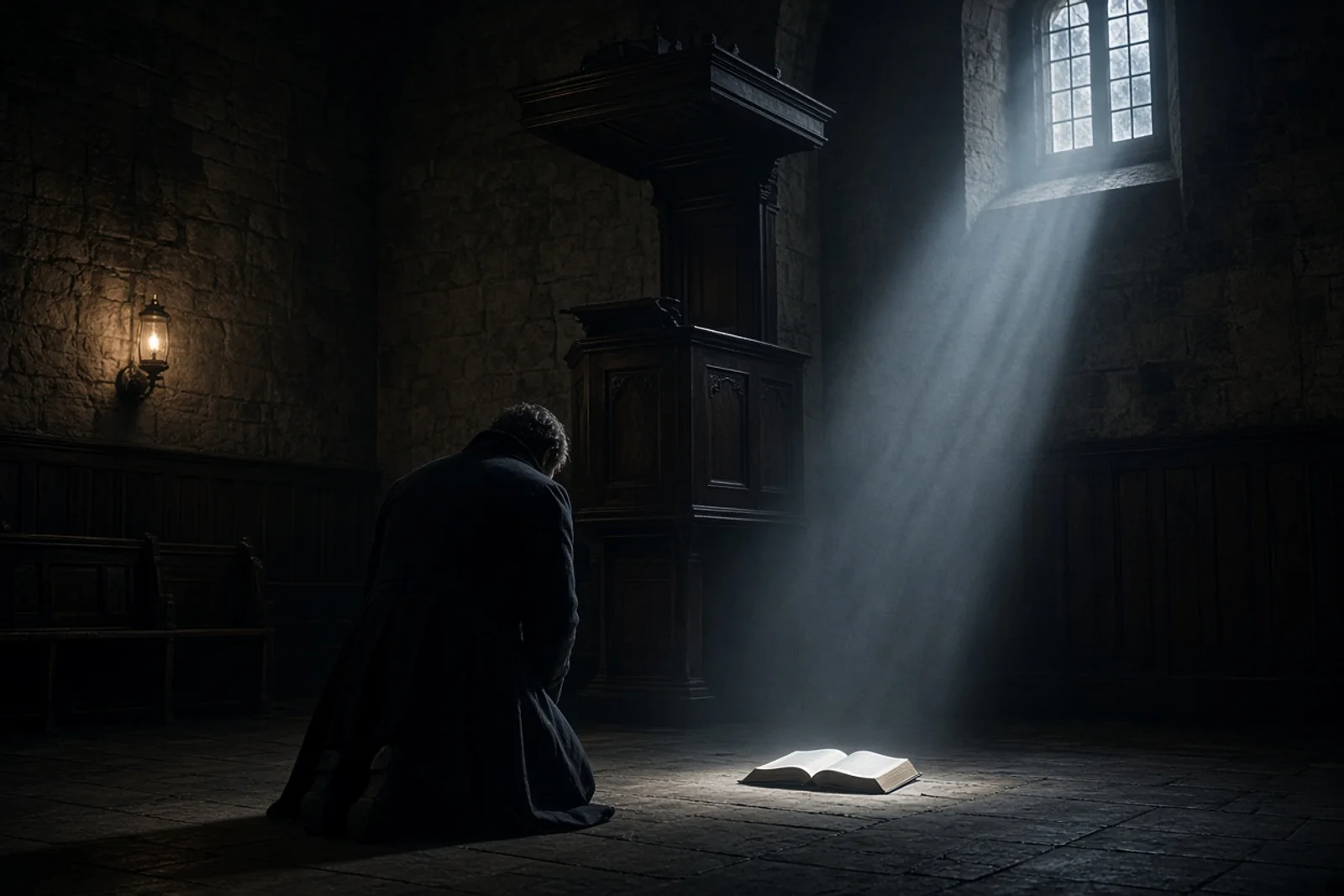
William Booth kneels in a Nottingham chapel and later founds the Salvation Army.
FaithTap · Oct 1, 2026 · 11 min read
The rain had just eased on the narrow street behind the market when William Booth stopped walking. He stood under the gas lamp with his coat open, hands loose at his sides, staring at nothing I could name. I had come out with him after the chapel meeting because the others had gone home and he said he needed air. We had both heard Caughey the week before, and the words still sat heavy. Booth was seventeen, thin from the long days at Eames’s shop, and the sleeves of his coat were already frayed at the cuffs from carrying bundles he hated to touch.
We had passed the same pawn counter where he worked every morning. He never spoke of the ledgers or the faces that came in after dark, but I saw how he looked away when a woman set her shawl on the counter. That night the street was nearly empty. A cart rattled past on the cobbles and the horse’s breath showed white. Booth took one more step, then his knees gave. He went down on the wet stones without a sound.
I stayed close enough to hear him breathe. He did not cry out or raise his hands the way some did at the benches. He stayed low, forehead near the curb, and the only movement was the slow rise of his shoulders. When he finally stood the lamp caught his face. Something had shifted in the eyes. He looked past me toward the empty stalls and said nothing at first. Then he turned and we walked back toward Broad Street without hurry. The change had already begun to settle into the way he held his head.
The next Sunday he asked Greenbury if he could speak on the corner near Kid Street. Greenbury nodded once and told him to keep it short. Booth stood on an upturned crate and spoke for less than ten minutes. His voice carried farther than any of us expected. Two girls from the match works stopped to listen. One of them stayed after the others left and asked what she had to do. Booth told her to come to the chapel the next evening. She came.
He kept the job at the pawnbroker’s for another few months because his mother needed the wages, but every evening after the shutters went up he went out with the rest of us. We carried no instruments then, only the words. Booth learned to speak where the crowd was thickest, near the ale houses when the men came out. He never raised his voice to shout them down. He simply kept going until the last man turned away or stayed to argue.
When the apprenticeship ended he had no work for nearly a year. His mother’s small shop sold needles and thread and the occasional toy, but there was never enough. Booth spent the days reading in the back room and the evenings on the street. He told me once that the worst nights were the ones when no one stopped. He kept walking anyway.
In 1849 he took the coach to London. I saw him off at the yard with a bundle tied in cloth and the address of the Clapham chapel written on a scrap of paper. He wrote back that the city was larger than he had imagined and the poor were packed tighter. Three years later he met Catherine Mumford at a meeting there. She listened to him preach and afterward asked questions no one else had asked. They married in 1855.
The work grew from the same street habit that began in Nottingham. Tents in Whitechapel, then halls, then the decision to give the whole thing a name that would tell people exactly what it was meant to do. Booth chose the military form because orders had to reach every corner without delay. He became General because someone had to decide where the next company would stand.
Catherine died in 1890 and the house in Clapton felt suddenly larger. Booth published the book that laid out hostels and workshops and farms for men who had nowhere else. He left the daily running to Bramwell and returned to the road. The motor tours came later, long after the name Salvation Army had been painted on every banner. He still spoke in the open when the weather allowed, the same way he had stood on the crate in Kid Street.