




William Carey Publishes Enquiry
Cobbler calls church to missions
FaithTap · Sep 27, 2026 · 10 min read
The coach rattled over the last mile of rutted road into Kettering just after noon. I sat opposite Andrew Fuller, watching the dust settle on his coat cuffs while he stared out at the hedgerows. Neither of us spoke of what waited inside Widow Wallis’s house. We had heard the same objections for months: the command belonged to the apostles, the times were not right, money was scarce, languages too many. Carey had answered every one of them on paper and still the men hesitated.
I had first met him three years earlier when he came to preach at Harvey Lane in Leicester. He stood behind the pulpit with ink on his fingers from the shoemaker’s bench he had left that morning. After the service he spread a map across the table in the vestry and pointed to places whose names none of us could pronounce. He asked what we meant to do about them. No one answered.
By spring of this year the map had become a manuscript. He paid a friend to have it printed in Leicester. The pages arrived in plain boards, eighty-seven of them, carrying tables of population and religion for every country he could name. He left a stack at the bookshop and carried the rest himself to the association meetings. Men read the sections on former missions and on the objections, then set the book aside without comment.
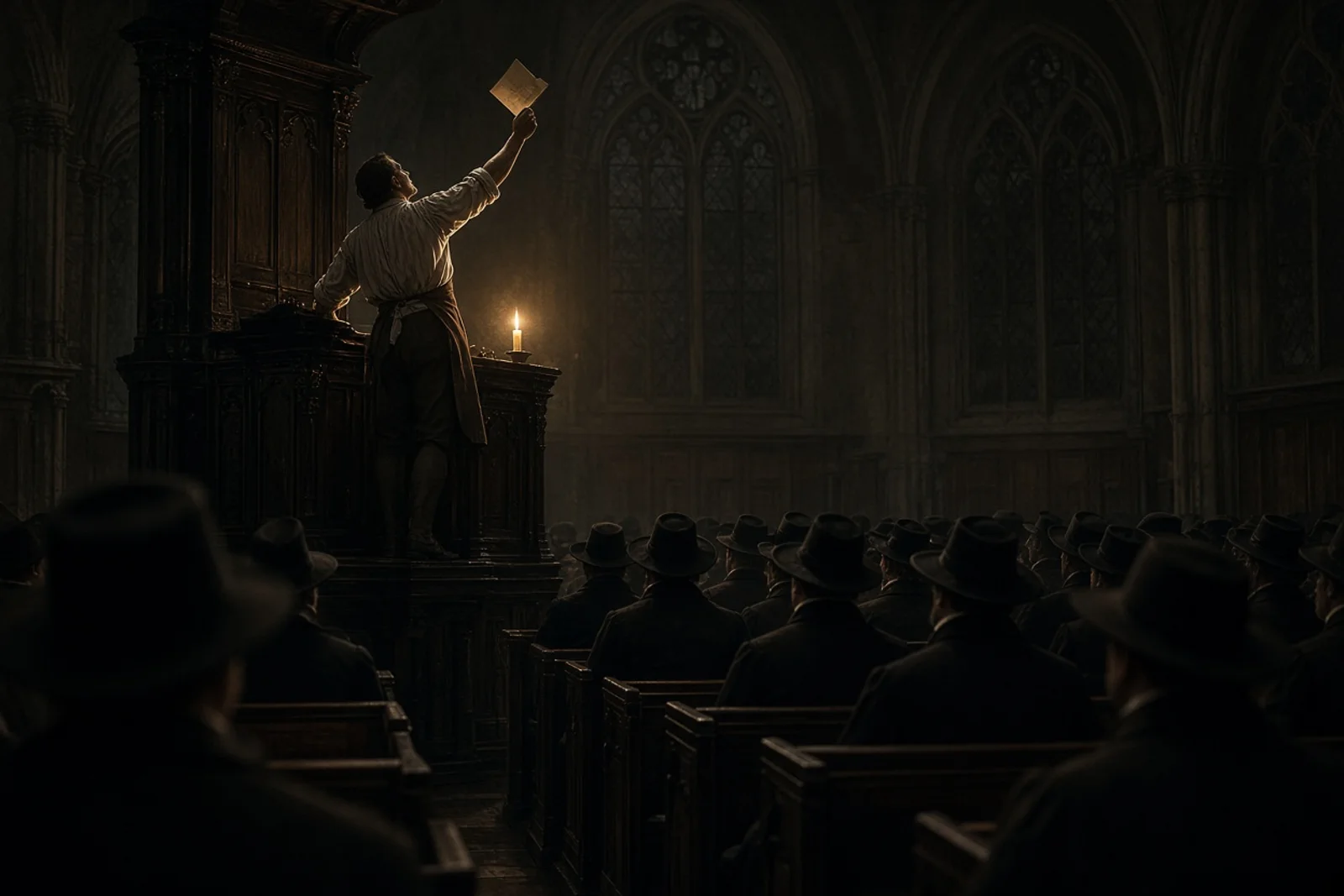
On the thirtieth of May he stood in the pulpit at Nottingham and preached from Isaiah. The text was ordinary enough, yet he kept returning to two short sentences: expect great things from God, attempt great things for God. The congregation stayed quiet through the closing prayer. Afterward several of us walked with him to the gate. He asked whether anyone would move to form a society. The silence lasted until the bell rang for the next service.
We met again in October at Kettering. Fourteen men gathered in the front room of Widow Wallis’s house after the evening service. The fire had burned low. Fuller read the minutes from the last association. Someone coughed. Then Carey opened the parcel he had carried from Leicester and laid the Enquiry on the table. He did not speak of his own work. He asked only whether the Particular Baptists would send even one man if the way opened.
John Ryland spoke first, then Sutcliff. Both agreed the time had come. Hogg offered to keep the accounts. Pearce from Birmingham said he would preach the cause wherever he was invited. The vote was taken without further debate. They called it the Particular Baptist Society for the Propagation of the Gospel Amongst the Heathen. No one knew where the first money would come from or which ship would carry the first man.
Carey stayed behind after the others left. He stood at the window watching the last lantern move down the street. I asked him what he would do now that the society existed. He said he would go himself if they would send him. The words were plain, the same tone he used when he asked for a Greek grammar years before.
The weeks that followed brought small sums from the churches and a letter from a surgeon named Thomas who had already been to Calcutta. The committee met again in December and agreed to support Thomas if Carey would accompany him. Carey wrote to his wife. She refused at first, then consented on the condition that her sister travel with them. The passage was booked for April.
I saw him once more before he sailed. He was still mending shoes in the back room of the Leicester house, the Enquiry lying open on the bench beside the last. He said the book had done its work; the men had only needed to see the numbers written down. Outside the window the lane was empty. A single candle burned on the table. He closed the book, wrapped it in cloth, and placed it on the shelf above the lasts.