




William Cowper's Deliverance from Despair
Poet rescued from suicidal depression through Scripture.
FaithTap · Sep 28, 2026 · 11 min read
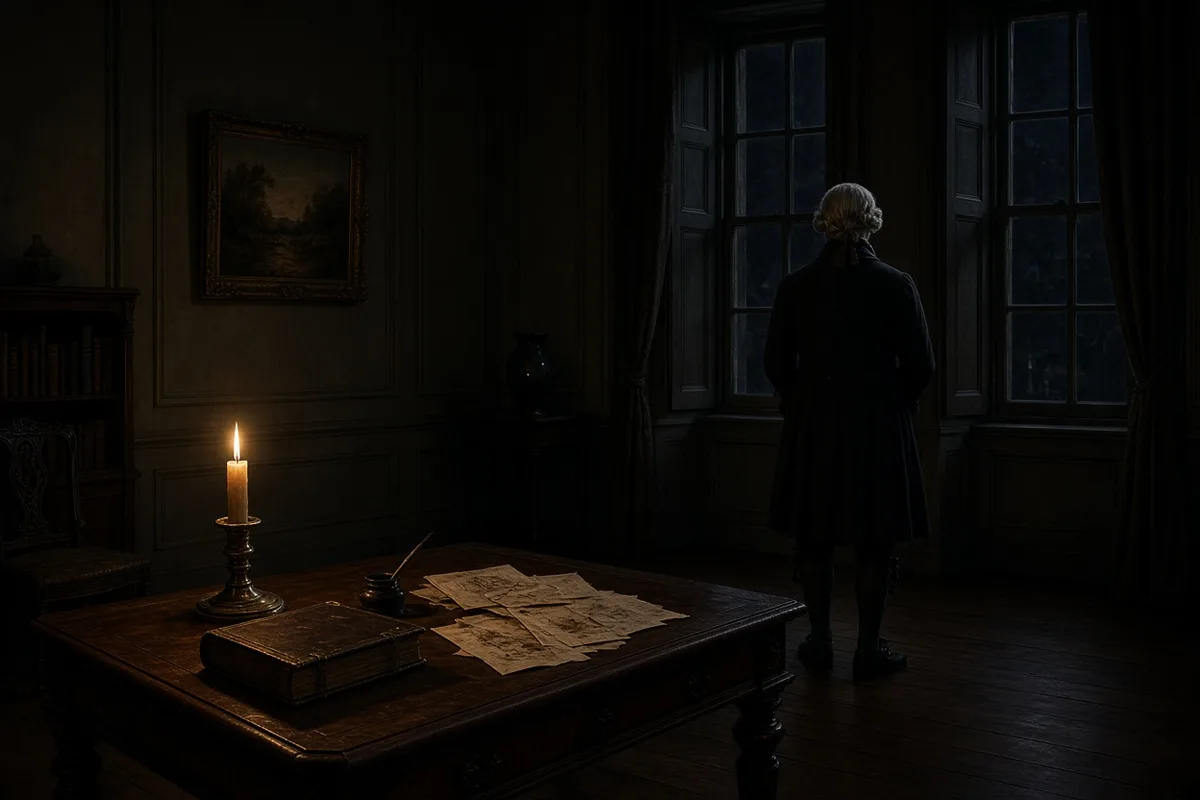
The rain had stopped two days before, but the garden path still held puddles that soaked through my boots as I followed Cowper outside. He walked ahead of me without speaking, the same way he had every morning since winter. His shoulders stayed tight under the old coat, and his eyes stayed fixed on the ground three feet in front of him. Dr. Cotton had told us to keep him in sight but give him room, so I stayed back near the bench and let him go.
He reached the far end of the path and turned. For the first time in months he stopped and looked at the bench itself. A Bible lay there, left open by someone earlier that morning. Cowper stood still, then sat down and drew the book onto his lap. I watched his finger trace down the page. He read for several minutes without lifting his head. When he finally closed the cover his hands stayed on it, but the set of his jaw had changed.
Inside the house the fire had burned low. Cowper came back through the side door and moved toward the window chair without looking at anyone. He sat, opened the Bible again at random, and read. I was carrying wood for the grate and heard nothing at first, only the sound of the page turning once. Then he spoke, not loud, just enough for the words to reach the room.
The verse he had found was the one about the propitiation through faith in his blood. Cowper read it twice. On the second time his voice caught. He set the book on his knees and stared at the window glass as if something outside had moved. I put the wood down and waited. After a while he asked if Dr. Cotton was in the next room. I said he was. Cowper stood, carried the Bible with him, and went through the door.
He stayed with the doctor a long time. When he came out the color had returned to his face in a way none of us had seen since December. He asked for paper and ink. That evening he wrote to his brother. The letter was short, but the hand was steady.
Two weeks later his brother arrived. They walked the same garden path together. Cowper spoke more than I had heard him speak in one stretch since he came to us. He told his brother what the verse had done, how the weight that had sat on his chest since the previous year had lifted between one breath and the next. His brother listened without interrupting. When they came inside Cowper ate a full meal for the first time in days.
Dr. Cotton began to let him take longer walks beyond the garden wall. Cowper still kept to himself, but the mornings no longer started with the same rigid silence. He asked for books other than the Bible and read them at the table instead of in the corner. One afternoon he mentioned the name of a village called Huntingdon and asked whether anyone there kept lodgings for a quiet man. Arrangements were made through family letters.
By the time he left St. Albans the worst of the winter damp had gone from the air. Cowper carried his own small trunk to the coach. He shook Dr. Cotton’s hand and thanked him for the roof and the fire. He did not thank anyone else by name, but he looked at each of us before he climbed in. The coach pulled away at noon. We watched until the dust settled on the road.
Word reached us later that he had settled in Huntingdon with a family named Unwin. He wrote hymns there with another clergyman. Years after that the two of them published a book of those hymns together. One of the pieces carried the date of the first day of 1773. Cowper’s name stood beside the clergyman’s on the title page.