





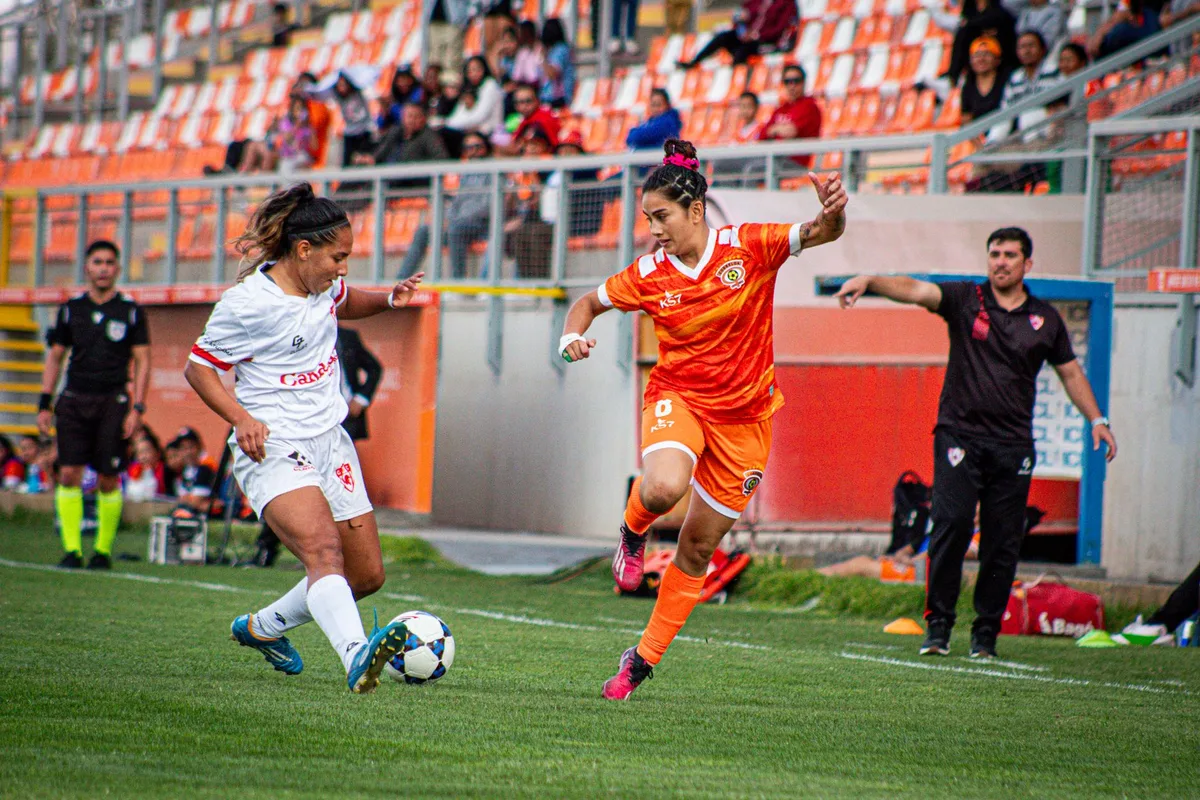
The Union of European Football Associations (UEFA) is the governing body of football in Europe and one of FIFA's six continental confederations for association football consisting of 55 national associations. It runs national and club competitions for men and women, such as the Champions League, the Women's Champions League, the European Championship, and the Women's European Championship as well as the Nations League.
Contents
History and membership
UEFA was officially inaugurated on 15 June 1954 in Basel, Switzerland, after consultation between the Italian, French, and Belgian associations. At the founding meeting, 25 members were present. However, six other associations which were not present were still recognised as founding members, bringing the total of founding associations to 31. UEFA grew to more than 50 members by the mid-1990s, as new associations were born out of the fragmentation of the Soviet Union, Yugoslavia and Czechoslovakia into their constituent states. UEFA's main headquarters after its foundation were located in Paris, but moved to Bern in 1960. Finally, they moved to Nyon, Switzerland, in 1995, opening the organisation's current headquarters in 1999.
Current members
UEFA membership coincides for the most part with recognition as a sovereign country in Europe (48 out of 55 members are sovereign UN member states), although there are some exceptions. One UN member state (Monaco) and one UN General Assembly non-member observer state (Vatican City) are not members. Some UEFA members are not sovereign states, but form part of a larger recognised sovereign state in the context of international law. These include England, Northern Ireland, Scotland, and Wales (UK constituent countries); Gibraltar (UK overseas territory); Faroe Islands (Danish Realm); and Kosovo (state with limited recognition). In the context of these countries, sports governance tends to be carried out at the territorial level coterminous with the UEFA member entity. However, UEFA has declined membership to other polities like Jersey.
Some UEFA members are transcontinental states (Azerbaijan, Georgia, Kazakhstan, Russia, and Turkey), and others are considered part of Europe both culturally and politically (Turkey, Cyprus, and Armenia). Countries which had been members of the Asian Football Confederation (AFC) were also admitted to the European Football Association, such as Israel (because it had been banned from the AFC group in 1974) and Kazakhstan. Involving clubs, some UEFA member associations allow teams from outside their association's main territory to take part in their "domestic" competition, for example, AS Monaco in the French League, various Welsh clubs are in the English leagues, English-based The New Saints in the Welsh League, or Derry City, situated in Northern Ireland, plays in the Ireland-based League of Ireland.
On 28 February 2022, due to the 2022 Russian invasion of Ukraine and in accordance with a recommendation by the International Olympic Committee (IOC), UEFA suspended the participation of Russia. The Russian Football Union unsuccessfully appealed the UEFA ban to the Court of Arbitration for Sport, which upheld the ban. On 26 September 2023 the ban was lifted for the Russia U-17 team enabling them to complete in the 2024 Euro U-17 with UEFA saying "by banning children from our competitions, we not only fail to recognise and uphold a fundamental right for their holistic development but we directly discriminate against them". The lifting of the ban also applied to all teams, men and women, of underage players. This was rejected by the FAs of Ukraine, England, and Sweden, with all three threatening to boycott matches against Russia.
Executive committee
The UEFA executive committee comprises the UEFA president and up to 19 other members: 16 elected by the UEFA Congress (including at least two female members), two by European Football Clubs and one by the European Leagues. All members hold the same rights and duties
List of UEFA office holders
List of presidents of UEFA
List of secretaries general of UEFA
Members
Aspiring future members
Jersey: In December 2015, an application was submitted to UEFA to allow Jersey to take part in international matches, following on from Gibraltar's admission two years earlier. In October 2016, Jersey's bid to join UEFA was rejected, but this decision was appealed to the Court of Arbitration for Sport (CAS) in June 2017. In September 2017, the CAS ordered the UEFA Congress to hear Jersey's case. In February 2018 a majority of the member associations of UEFA voted against admitting Jersey as a member.
"Special Zone"
In 2014 Crimea was designated as a special zone by UEFA until further notice.
Competitions
UEFA continental competitions
Defunct
UEFA runs official international competitions in Europe and some countries of Northern, Southwestern and Central Asia for national teams and professional clubs, known as UEFA competitions, some of which are regarded as the world's most prestigious tournaments.
UEFA is the organiser of two of the most prestigious competitions in international football: The UEFA European Championship and the UEFA Nations League. The main competition for men's national teams is the UEFA European Championship (also known as the Euro), which started in 1958, with the first finals in 1960, and was known as the European Nations Cup until 1964. The UEFA Nations League is the second tournament of UEFA and was introduced in 2018. The tournament largely replaced the international friendly matches previously played on the FIFA International Match Calendar. It will be played every two years.
UEFA also runs national competitions at Under-21, Under-19 and Under-17 levels. For women's national teams, UEFA operates the UEFA Women's Championship for senior national sides as well as Women's Under-19 and Women's Under-17 Championships.
World, Olympic and intercontinental competitions
Beside continental European competitions for national and their junior teams, the UEFA organises various qualification male and female tournaments among European national and their junior teams for World Cups (organised by FIFA) and Olympics (organised by IOC).
UEFA also organised the UEFA–CAF Meridian Cup with CAF for youth teams in an effort to boost youth football. UEFA launched the UEFA Regions' Cup, for semi-professional teams representing their local region, in 1999. In futsal there is the UEFA Futsal Championship and UEFA Under-19 Futsal Championship. Despite the existence of UEFA's Futsal and Beach soccer committee, UEFA does not organise any beach soccer competitions. International and club beach soccer competitions for UEFA members are organised externally by Beach Soccer Worldwide.
The Italian, German, Spanish, French and Russian men's national teams are the only teams to have won the European football championship in all categories.
Club
The top-ranked UEFA competition is the UEFA Champions League, which started in 1955 as the European Champion Clubs' Cup (or simply the European Cup) and initially only gathered the top team of each country; this competition has since been expanded to gather the top 1–4 teams of each country's league (the number of teams depend on that country's ranking and can be upgraded or downgraded).
A second, lower-ranked competition is the UEFA Europa League. This competition, for national knockout cup winners and high-placed league teams, was launched by UEFA in 1971 as a successor of both the former UEFA Cup and the Inter-Cities Fairs Cup (also began in 1955). A third competition, the UEFA Cup Winners' Cup, which started in 1960, was absorbed into the UEFA Cup (now UEFA Europa League) in 1999.
In December 2018, UEFA announced the creation of a third club competition, later named the UEFA Europa Conference League. The competition features 32 teams in 8 groups of 4, with a knockout round between the second placed teams in Europa Conference League and the third placed teams in the Europa League, leading to a final 16 knockout stage featuring the eight group winners. The first edition of the competition was played in 2021–2022.
In women's football UEFA also conducts the UEFA Women's Champions League for club teams. The competition was first held in 2001, and was known as the UEFA Women's Cup until 2009.
The UEFA Super Cup pits the winners of the Champions League against the winners of the Europa League (previously the winners of the Cup Winners' Cup), and came into being in 1973.
The UEFA Intertoto Cup was a summer competition, previously operated by several Central European football associations, which was relaunched and recognised as official UEFA club competition by UEFA in 1995. The last Intertoto Cup took place in 2008.
The European/South American Cup was jointly organised with CONMEBOL between the Champions League and the Copa Libertadores winners.
Only five teams (Juventus, Ajax, Manchester United, Bayern Munich and Chelsea) have won each of the three main competitions (European Cup/UEFA Champions League, European Cup Winners' Cup/UEFA Cup Winners' Cup and UEFA Cup/UEFA Europa League), a feat that is no longer possible for any team that did not win the Cup Winners' Cup. There are currently eight teams throughout Europe that have won two of the three trophies; all but one have won the Cup Winners' Cup, four require a win in the Champions League and four require a UEFA Europa League win.
Sponsors
UEFA national team competitions
UEFA Champions League
Global sponsors
Suppliers and enhanced partners
Note: The UEFA Champions League sponsors are also sponsors of the UEFA Super Cup and the UEFA Youth League.
UEFA Europa League
Global sponsors
Suppliers
Note: The UEFA Europa League sponsors are also sponsors of the UEFA Conference League.
UEFA women's football competitions
FIFA World Rankings
Major tournament records
Legend
1st – Champions
2nd – Runners-up
3rd – Third place
4th – Fourth place
QF – Quarter-finals (1934–1938, 1954–1970, and 1986–present: knockout round of 8)
R3 – Round 3 (2026–present: knockout round of 16)
R2 – Round 2 (1974–1978: second group stage, top 8; 1982: second group stage, top 12; 1986–2022: knockout round of 16; 2026–present: knockout round of 32)
R1 – Round 1 (1930, 1950–1970 and 1986–present: group stage; 1934–1938: knockout round of 16; 1974–1982: first group stage)
Q — Qualified for upcoming tournament
•• – Qualified but withdrew
• – Did not qualify
× – Did not enter / Withdrew / Banned
– Hosts
For each tournament, the flag of the host country and the number of teams in each finals tournament (in brackets) are shown.
Sanctions
Against associations
Lithuania, in 1990 sanctions were imposed due to the secession of the Lithuanian Football Federation from the Football Federation of the Soviet Union
FR Yugoslavia, in 1992–1998 sanctions were imposed due to the Bosnian War (as part of the Yugoslav Wars)
Russia, in 2022 sanctions were imposed due to the 2022 Russian invasion of Ukraine.
Belarus, in 2022 sanctions were imposed due to supporting Russia in its invasion of Ukraine.
Against clubs
Albania, in 1967 special sanctions were imposed against 1966–67 Albanian Superliga due to its political background
England, in 1985–1991 sanctions were imposed against English association football clubs due to the Heysel Stadium disaster by suspending their participation in continental competitions for five years
Italy, in 1974–1975 sanctions were imposed against SS Lazio due to its fans, Italy was restricted from the European Cup to which Lazio qualified
Netherlands, in 1990–1991 sanctions were imposed against AFC Ajax due to its fans, the Netherlands were restricted from the European Cup to which Ajax qualified
Corruption and controversy
Dissatisfied fans across Europe have referred to the organisation as UEFA mafia, including in Russia's top league, in Bulgaria's top league, and in a Champions League group stage match held in Sweden. The term has also been covered for its use outside of stadiums, for example during a protest in Kosovo outside an EU building following the Serbia v Albania (UEFA Euro 2016 qualifying) match. F.C. Copenhagen supporters displayed banners around the city, with slogans such as "UEFA MAFIA – THE PANDEMIC OF FOOTBALL", when UEFA ordered their 2019–20 Europa League round of 16 return leg be played behind closed doors, despite reduced capacity being allowed by the Danish government.
Following the 2015 FIFA corruption case, the then-president of UEFA, Michel Platini, was also involved in the case. Swiss prosecutors accused FIFA president Sepp Blatter of making a "disloyal payment" of $2m (£1.6m) to Mr Platini. Swiss attorney general, Michael Lauber, stated: "We didn't interview Mr Platini as a witness, that's not true. We investigated against him in between as a witness and an accused person". Both Platini and Sepp Blatter were banned from football-related activity. Platini appealed to Court of Arbitration for Sports, which lowered the six-year ban to four years. He further appealed to Swiss courts and the European Court of Human Rights but the courts rejected his appeals.
In 2019 UEFA's decision to host Europa League Cup final in Baku, Azerbaijan left one of the finalists, Arsenal, with a decision to withdraw their Armenian player Henrikh Mkhitaryan out of the competition due to safety concerns, and there has been long-standing debates about the extent to which the elite clubs or UEFA itself should exert the most influence on the game. UEFA's decision to partner with blockchain company Chiliz in February 2022 was criticised and described as 'incomprehensible' by fan groups across Europe.
In July 2025, UEFA sanctioned Crystal Palace F.C. and Olympique Lyonnais for breaching its multi-club ownership rules, due to overlapping ownership by John Textor's Eagle Football Group. Palace, who had qualified for the UEFA Europa League as FA Cup winners, were instead placed in the UEFA Europa Conference League, while Lyon retained the Europa League spot. The Court of Arbitration for Sport rejected Palace's appeal in August 2025.
In July 2026, UEFA made multiple public statements regarding FIFA President Gianni Infantino's proposal to create a $20 billion commercial subsidiary, the FIFA Forward Enterprise, which would be involved with the running of FIFA's major tournaments such as the FIFA World Cup, FIFA Women's World Cup, FIFA Club World Cup, and other tournaments. UEFA initially rejected it completely, calling upon FIFA to stop these plans and to not inject private money into its competitions. The situation escalated on 30 July, when UEFA released a statement in conjunction with all 55 member associations after a vote to boycott all FIFA competitions indefinitely until the commercialisation plans were stopped and assurances were made that they would never be brought up in the future.