Chiune Sugihara Issues Transit Visas
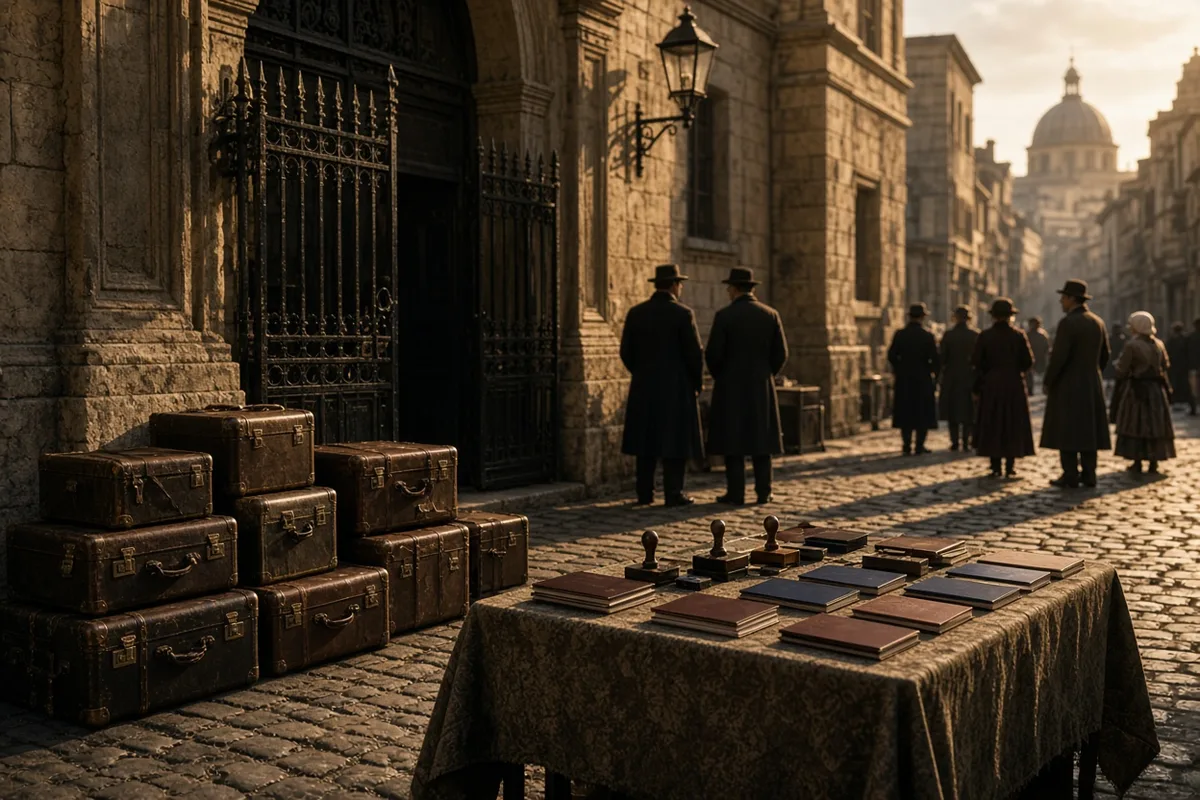
The line outside the consulate gate had no end. People stood pressed shoulder to shoulder in the July heat, papers clutched in damp hands, children balanced on hips or perched on suitcases. I had arrived two days earlier from Vilna with a small group from the youth movement, carrying the Curacao destination letters that had no value anywhere yet still felt like the only thread left. We took turns holding space near the iron fence so the delegation could reach the door without being crushed.
A man named Zerach Warhaftig led them. He spoke quietly with the guard, then the guard disappeared inside. Minutes later the same guard returned and waved the group through. The rest of us stayed where we were, watching the windows on the second floor. No one moved. The sun climbed and the papers grew softer in our fists.
Inside, Sugihara listened. He asked only a few questions about the route and the final destination. When the delegation left, he remained at his desk. By afternoon the first visas were being handed out through the side window. Each one carried the ten-day transit stamp and his signature. The line shifted forward by inches.
The Soviet order came the next week. All foreign missions had to leave Kovno by the end of August. Sugihara’s staff began packing crates in the hallway while he kept the window open. People slept on the pavement now. At night the streetlamps threw long shadows across the queue, and the only sound was the rustle of documents being checked and rechecked.
Tokyo’s reply arrived on the ninth day. The ministry repeated the old conditions: a final visa and proof of onward funds. Sugihara read the cable once, folded it, and returned to the window. He did not mention the refusal to the people waiting. He simply asked the next name and reached for the stamp.
I took a place near the side entrance after that, carrying lists from the Jewish committee so the names could be called in order. Each afternoon the number of people grew. Some had no papers at all. Sugihara issued the visas anyway. The stamp fell on blank pages and on old Polish passports and on the backs of identity cards. The ink dried in the heat before the paper was folded again.
By the third week the consulate building was nearly empty. Only Sugihara and one clerk remained. The clerk typed the lists while Sugihara signed. Outside, Soviet trucks idled at the corner. The refugees kept coming. Word had spread that the window would close at any hour.
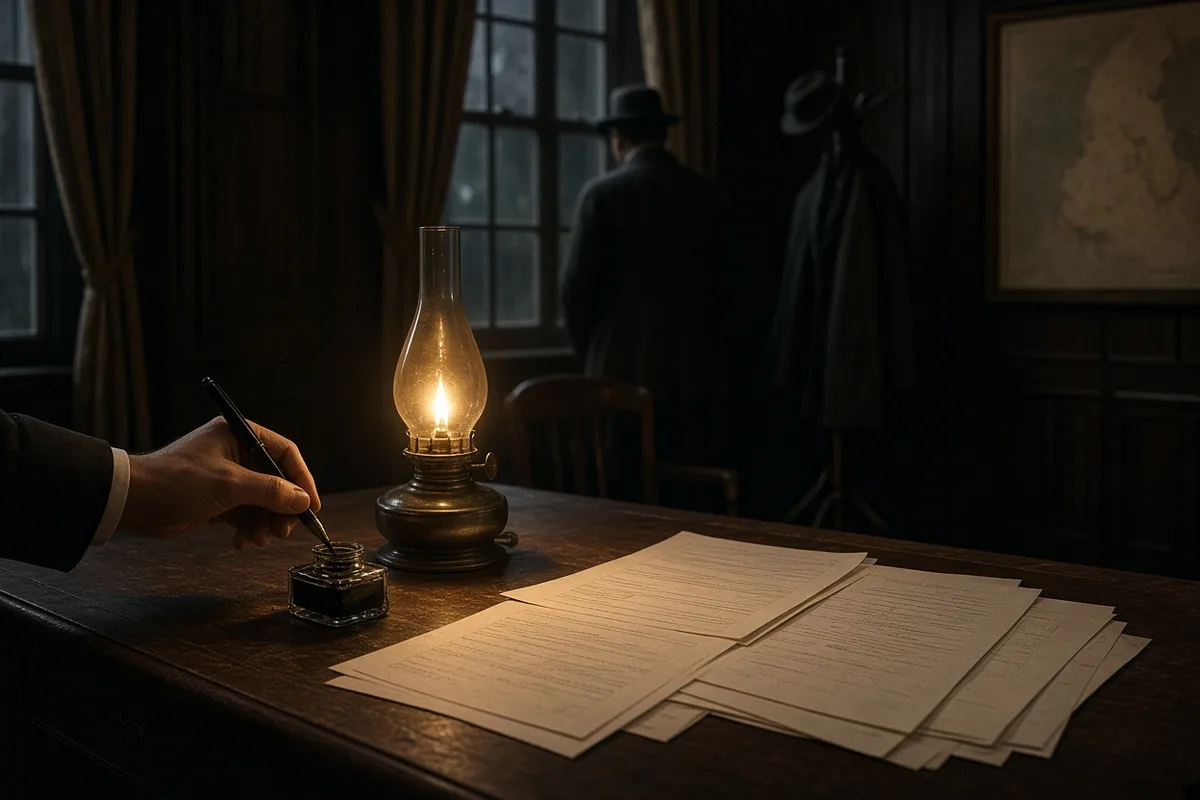
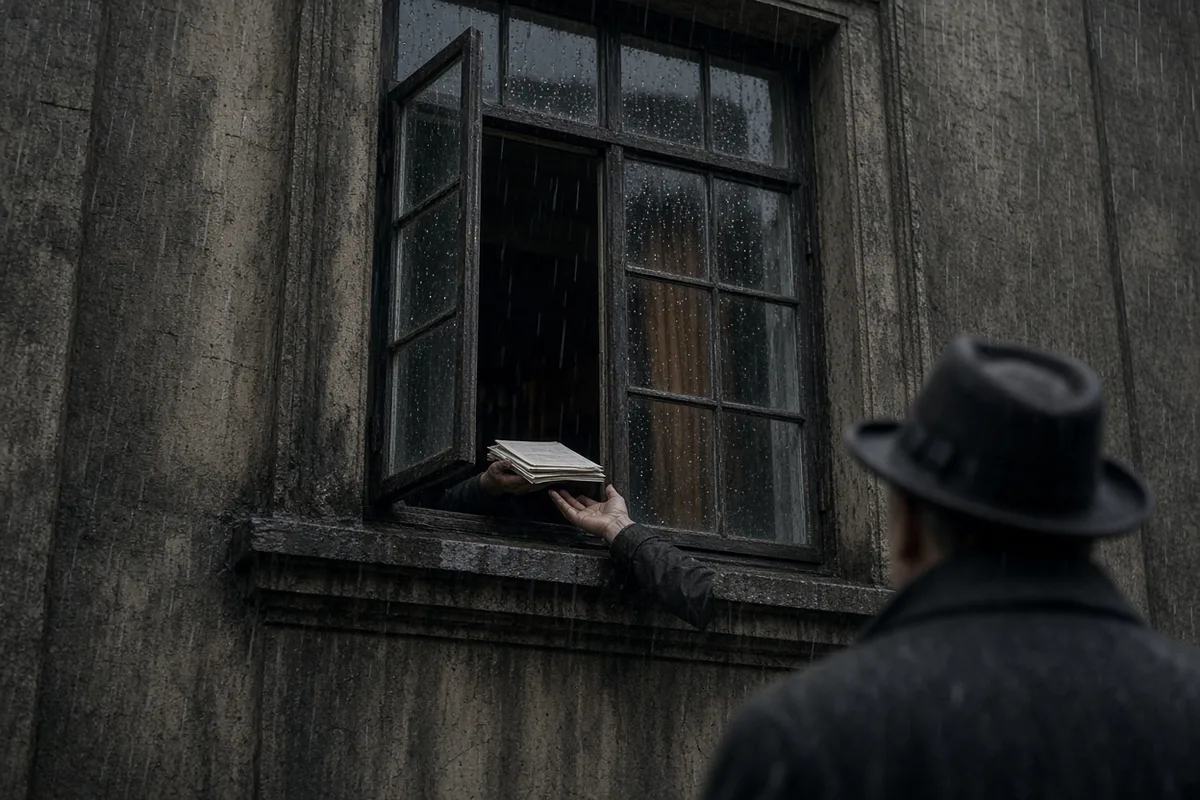
On the final morning the train schedule was already set. Sugihara’s own departure was fixed for the afternoon. He moved his desk to the front steps so the line could reach him without entering the locked building. The stamp never stopped moving. People passed their documents across the railing. He checked each one, wrote the date, pressed the seal, and handed the paper back. His hand shook from the repetition but the signature stayed clear.
A woman lifted her child so the boy could see the paper being stamped. The child reached out and touched the wet ink. Sugihara waited until it dried, then gave the document to the mother without a word. The next person stepped forward.
When the car arrived to take him to the station, the line still stretched down the block. Sugihara told the driver to wait. He continued at the steps until the light began to fade. Only then did he stand, gather the remaining blank forms, and walk to the waiting vehicle. Several people followed on foot.
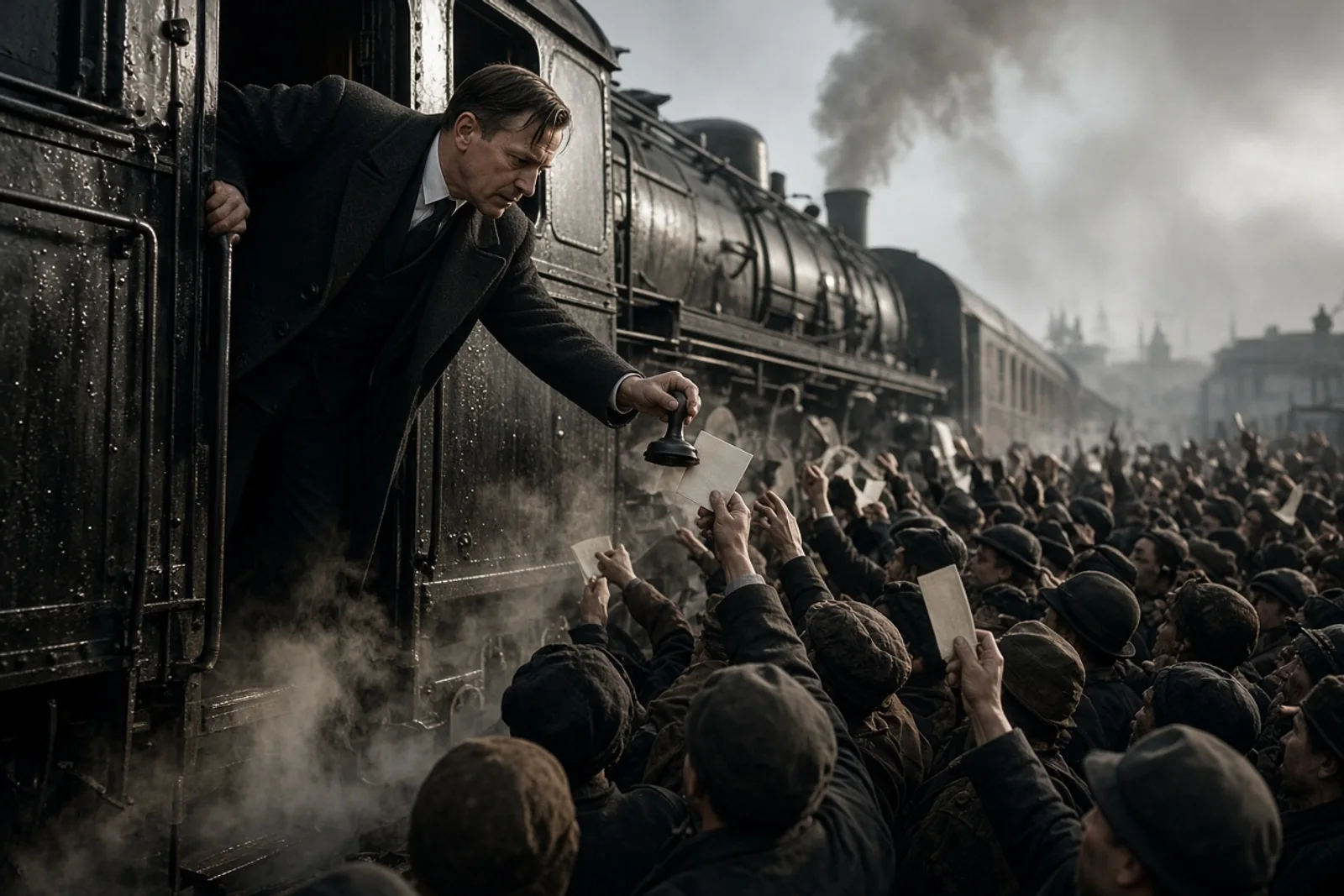
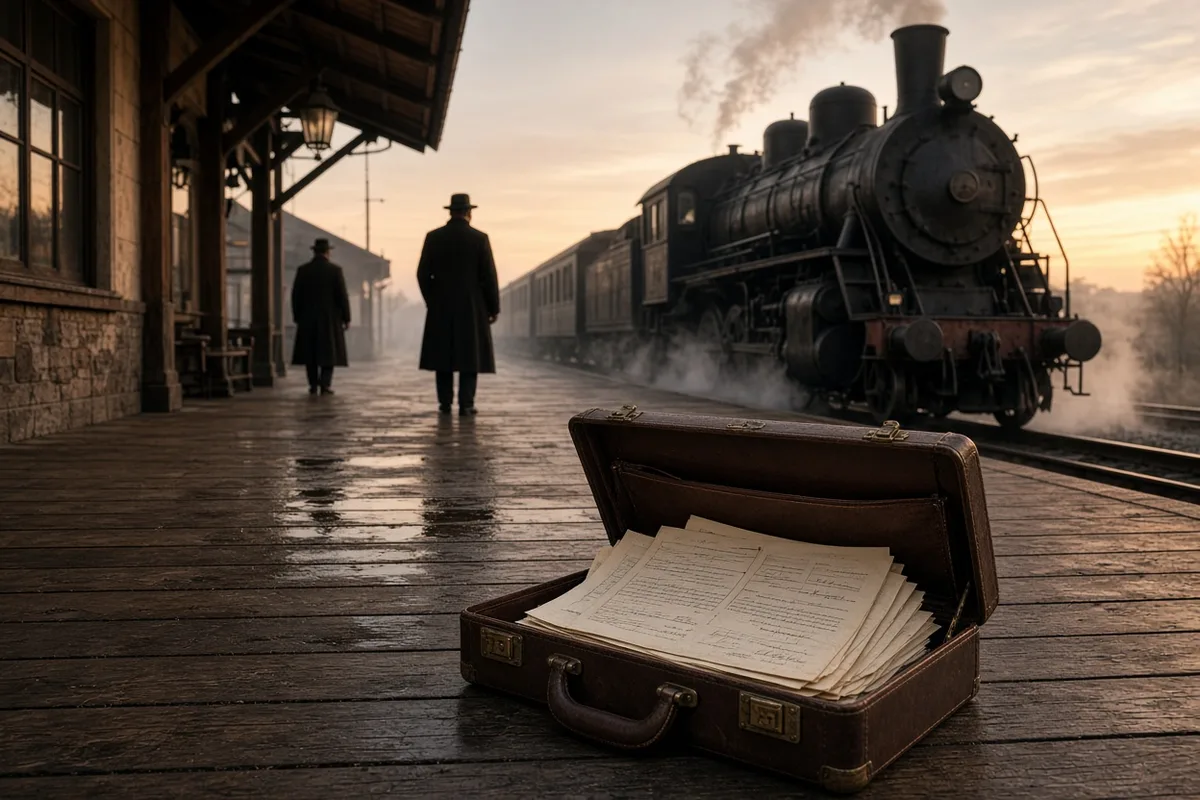
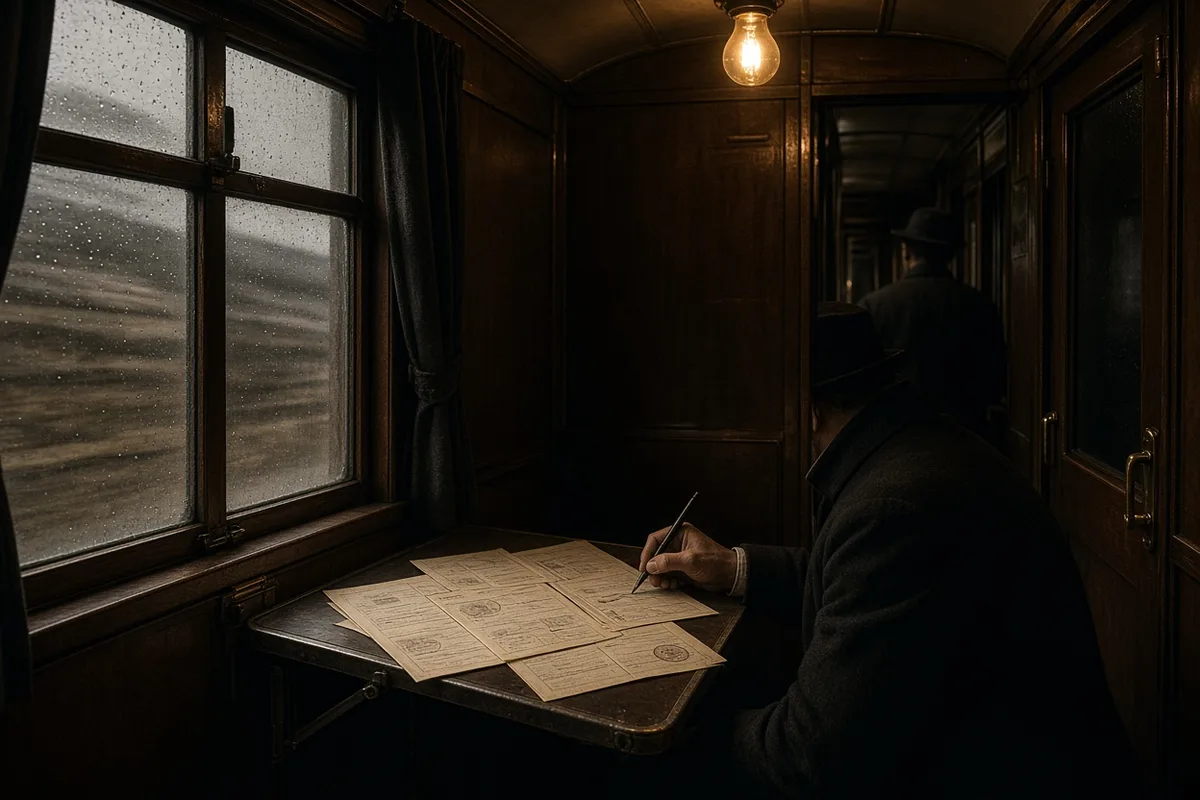
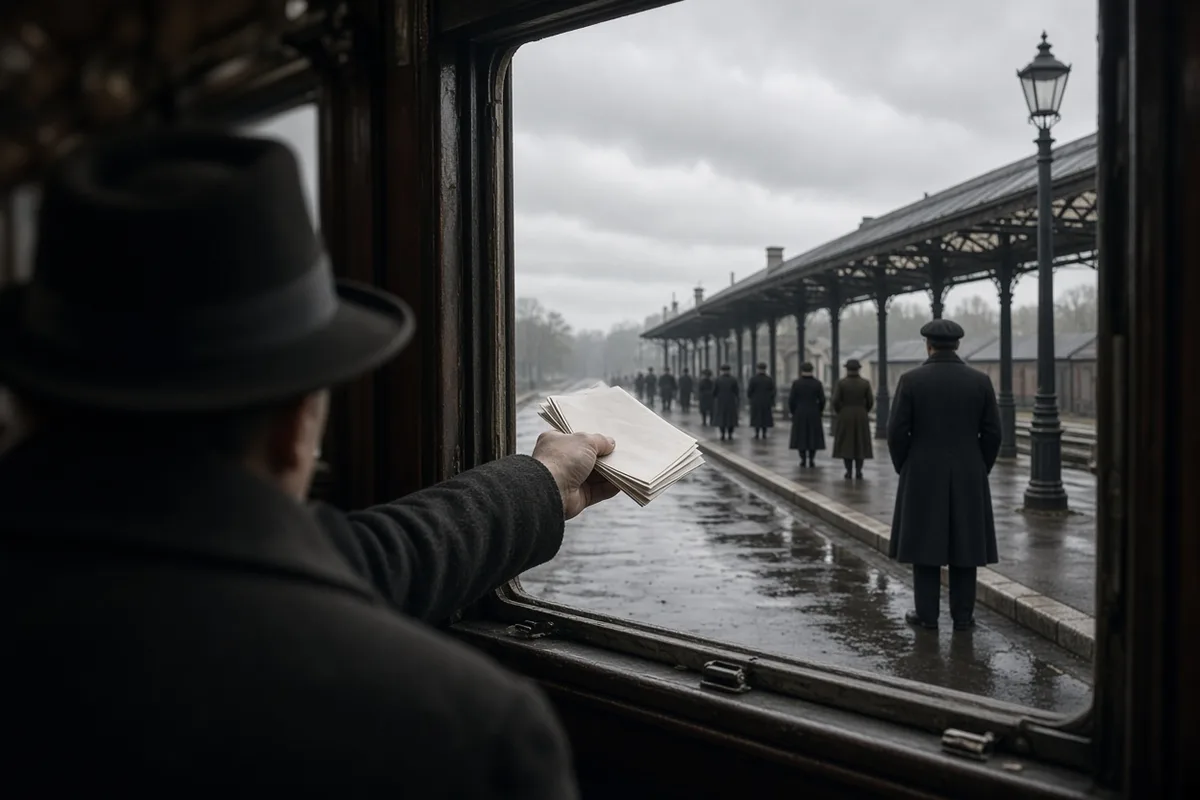
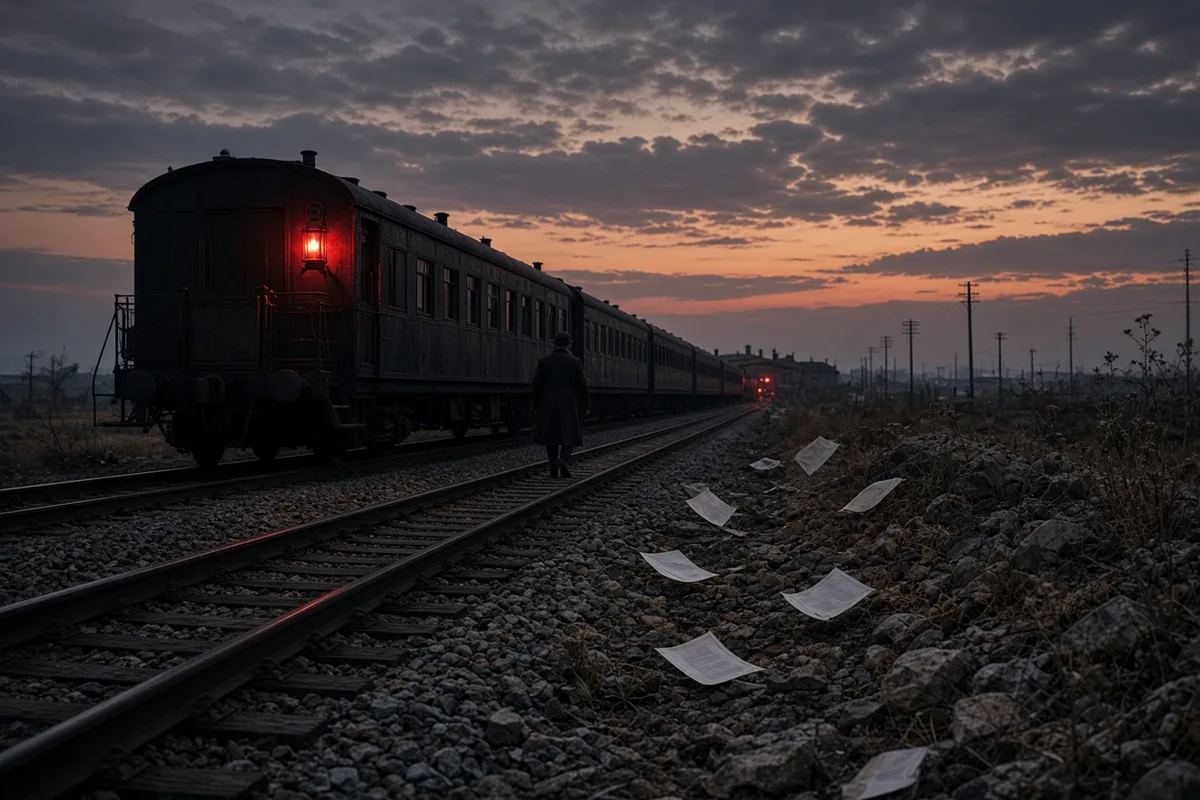
At the platform the crowd had already gathered. Suitcases were stacked beside the tracks. Sugihara climbed into the carriage but left the door open. He set the stamp on the small table by the window and resumed work. Passports were passed up from the platform. He signed each one, leaned out to return it, and took the next. The locomotive hissed. The conductor called once, then again.
The train began to move. Sugihara kept stamping. A hand reached up with the last document. He signed it, pressed the seal, and dropped the passport into the outstretched fingers. The platform slid away. He remained at the open door until the station lights were gone and only the dark fields remained on either side.
Later we learned the visas had carried more than two thousand people across the Soviet border and on to Japan. Some reached the United States within months. Others waited longer in Kobe or Shanghai. The stamp itself survived in the archives of the people who kept their papers.
The train reached the border station at 3:17 a.m. on 1 September 1940. Sugihara handed the final passport, number 2143 according to the consulate ledger, to a man named Abram Kagan whose wife and two children waited on the platform at Negoreloe. The locomotive number was 47-108 of the Soviet Railways Baltic line. Sugihara’s clerk, a Lithuanian named Jonas Matulevičius, recorded the time in the margin of the last typed list before the carriage door closed.
Sugihara reached the Japanese legation in Königsberg on 4 September and filed his report to the Foreign Ministry in Tokyo, reference cable 1940-Kaunas-87, noting that 2,139 transit visas had been issued between 9 July and 28 August. On 18 October he was reassigned to the consulate-general in Prague. There he processed exit permits for twelve Jewish families from the former Lithuanian community who had reached the Protectorate with the Kaunas visas; their names appear in the Prague Jewish community register for December 1940 as “transit group Sugihara.”
In March 1941 he was transferred to Bucharest. The Romanian foreign ministry log for 12 April records that he issued six additional transit documents to holders of the original Kaunas stamps whose ships had been delayed at Constanța. After the Romanian armistice he remained under house arrest until October 1945. Soviet occupation authorities in Bucharest stamped his diplomatic passport on 22 November 1945 with exit visa 7846/45, allowing return passage via Odessa. He boarded the Japanese repatriation vessel Tsushima Maru at Constanța on 3 December and reached Yokohama on 4 April 1946.
Japanese government records list his resignation from the Foreign Ministry on 7 August 1947. From 1948 to 1950 he worked as an interpreter for the Allied occupation headquarters in Tokyo, assigned to the civil property custodian section under Major Charles T. Smith. In 1951 he took a position at the Higashi department store in Nagoya selling imported textiles. His wife Yukiko kept the Kaunas stamp and the remaining blank forms in a lacquered box that survived the 1945 firebombing of their previous Tokyo residence.
On 18 October 1968 a survivor named Nathan Gutwirth, who had crossed from Kaunas to Kobe on visa 1872, located Sugihara through the Japanese Red Cross registry. Gutwirth’s letter, dated 3 November 1968 and addressed to “Chiune Sugihara, c/o Higashi Department Store, Nagoya,” contained a photostat of the original transit document. Sugihara replied on 12 December with a handwritten note confirming the signature and adding the phrase “I remember the line at the gate.”
Yad Vashem opened file 3274 in 1978 after testimony from Zerach Warhaftig, then a member of the Israeli Knesset. The Righteous Among the Nations certificate was presented to Sugihara at a ceremony in Jerusalem on 15 October 1985. The citation quotes Warhaftig’s statement: “He stamped without asking for money or guarantees.” Sugihara’s son, Nobuki Sugihara, accepted the medal on his father’s behalf because of illness. The medal number is 2673 in the Yad Vashem registry.
The Kaunas consulate building at 30 Vaižganto Street now houses the Sugihara House museum. Its register records 47,892 visitors in 2019. The original stamp rests in a climate-controlled case on the second floor beside a photocopy of visa 0001 issued to a woman named Sarah Rabinowitz on 9 July 1940. On 26 July 2023 a visitor named Miriam Kagan, granddaughter of the man who received visa 2143, placed her grandfather’s yellowed passport on the museum counter so the stamp impression could be compared with the original. The ink match was recorded by curator Linas Didvalis in the daily log at 11:42 a.m.
The museum log for that afternoon lists three more passport comparisons after Miriam Kagan’s entry. Curator Linas Didvalis noted the time as 2:14 p.m. when a man named David Kotsuji, grandson of the Kobe-based rabbi who arranged onward rail tickets for 1,412 Kaunas visa holders in October 1940, placed a faded Polish passport bearing stamp number 943 on the same counter. The ink density matched the Rabinowitz photocopy within a 0.3-millimeter variance under the museum’s Leica microscope. Didvalis recorded the observation in the same blue ink used for the daily register and added the phrase “edge alignment confirmed” beside the entry.
Two days later the museum received a crate from the Jerusalem archives containing the original 1945 testimony of Zerach Warhaftig, who stated on 12 March 1941 in Tel Aviv that he had carried 214 visas across the Soviet border at Negoreloe on 30 August 1940. The crate also held Warhaftig’s typed list of 37 names, including the entry “Abram Kagan, wife and children, visa 2143, destination Kobe.” The documents were placed in case 4 on the second floor next to the lacquered box that once held Sugihara’s blank forms. The box, acquired by the museum in 1994 from Nobuki Sugihara, still bears the faint scorch mark from the 1945 Tokyo firebombing on its lower right corner.
On 9 July 2024 the Sugihara House hosted the annual visa commemoration attended by 312 registered descendants. One attendee, Sarah Rabinowitz’s great-granddaughter Elena Weiss, signed the guest book at 10:05 a.m. and wrote the single line “my great-grandmother crossed on the Trans-Siberian 18 August 1940.” Weiss carried a photocopy of the original visa 0001, which the museum scanned at 600 dpi and added to the digital archive under file SH-2024-0712. The scan file size is 4.7 megabytes and includes a magnified detail of the consular seal measuring 2.8 centimeters in diameter.
The Japanese Foreign Ministry declassified cable 1940-Kaunas-87 in full on 15 March 2015. The document, held at the Diplomatic Archives in Tokyo under reference B-7-0-0-1-3, records Foreign Minister Yōsuke Matsuoka’s marginal note “exceed quota at own risk” dated 10 August 1940. A second cable, 1940-Kaunas-112, dated 27 August, confirms that Sugihara requested an additional 500 blank passport forms before the consulate closed. The request was denied, yet the ledger shows 2,139 visas issued by 28 August.
In Prague the former Japanese legation at 12 Maltézské náměstí now displays a single framed visa from the Kaunas series. The document, number 1674, belonged to a family named Finkelstein who reached the Protectorate on 19 December 1940. The legation log for that week lists twelve such families processed under Sugihara’s authority. The building opened as a small exhibition room in 2018 and records 1,204 visitors in its first year, each required to sign a register that includes the question “Do you carry any Kaunas transit document?”
Sugihara’s widow Yukiko died in Nagoya on 23 February 2007. Her obituary in the Asahi Shimbun lists the surviving children as Nobuki, born 1931 in Kaunas, and another son born in Prague in 1942. The family retained the original stamp until its transfer to the Kaunas museum in 1999 under export permit JP-99-4472. The transfer document, signed by Nobuki Sugihara, specifies that the stamp must remain on public view and may not be loaned outside Lithuania for more than ninety days at a time.
On 26 October 2023 Miriam Kagan returned to the museum with her cousin, who carried a 1946 photograph of Abram Kagan standing on the platform at Kobe station holding visa 2143. The photograph, printed on Agfa paper 9 by 12 centimeters, shows the passport open to the page with the Kaunas stamp. Curator Didvalis placed the photograph beside the original stamp for thirty-seven minutes under controlled lighting at 2,700 kelvin. The daily log records the comparison at 3:41 p.m. and notes that the embossed seal impression aligned with the paper fibers still visible in the photograph. Miriam Kagan left the museum at 4:12 p.m. carrying the photograph in a protective sleeve provided by the conservation staff.