John Newton Writes 'Amazing Grace'
The lane from the church to the vicarage was slick with December frost when I carried the bundle of copied sheets across. Newton had asked for them before the light failed. I knocked once and heard his step inside, heavier than usual, as though the day had already worn through his boots.
He opened the door with ink on his fingers and a half-finished line still in his eyes. The room smelled of peat and the dried lavender his wife kept in bowls along the sill. Mary Newton sat at the table mending a cuff, her needle moving in small, even stitches. She glanced up only long enough to nod me toward the chair by the window.
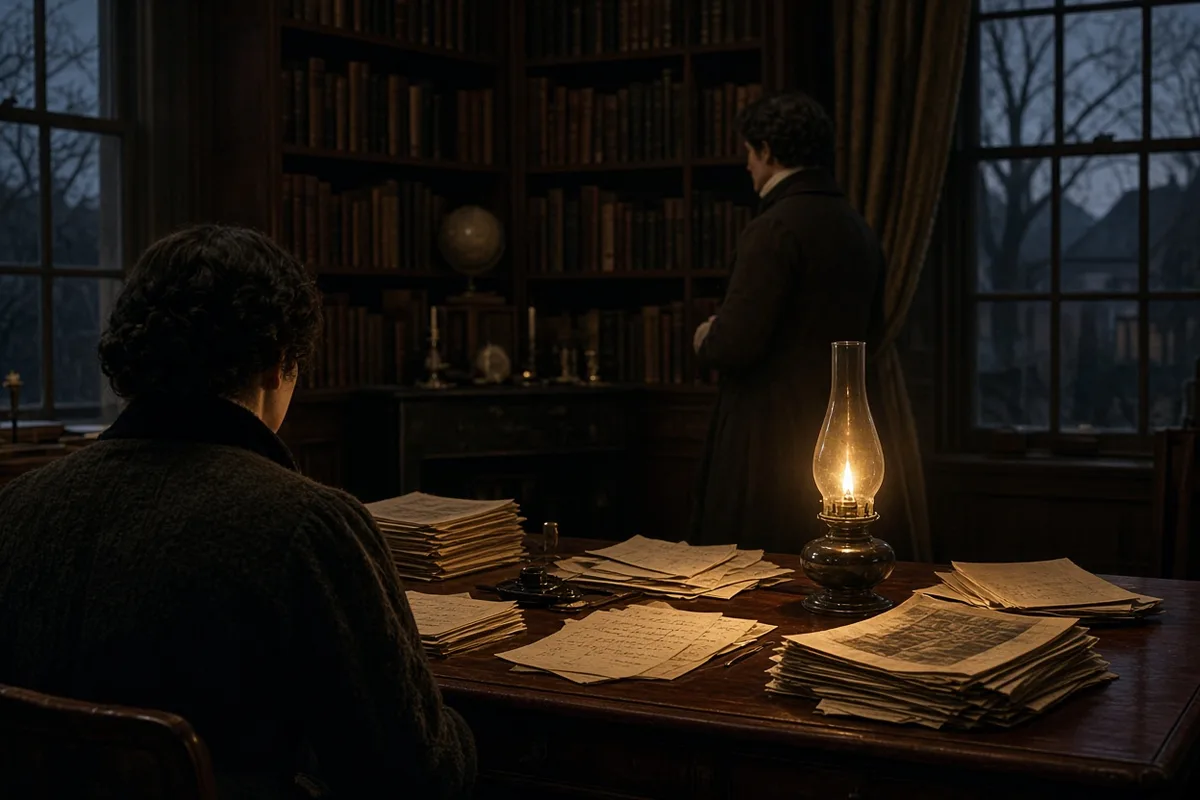
Newton took the pages without ceremony and spread them on the desk. He had been working on the collection for months, the one he and Cowper meant to give the parish. Most afternoons Cowper walked over from Orchard Side, and the two men would trade sheets across the same table. Today Cowper had stayed home with his headaches, so Newton worked alone.
He read one stanza aloud under his breath, then crossed it out and wrote another in the margin. The words were about a man pulled from deep water. I had heard him speak of such things before, always in the same low tone he used when the subject turned to ships. He never raised his voice on those afternoons. The silence in the room made the scratch of the pen sound louder than it should have.
Mary finished the cuff and folded it. She asked if he wanted the lamp moved closer. He shook his head. The winter light still held, thin and grey through the small panes. He kept writing.
I stayed because there were more sheets to carry back to the church for the clerk to set. Newton did not seem to notice the time. Once he stopped and rubbed his eyes with the heel of his hand, the way a man does when the letters begin to blur. Then he reached for the next page.
Near dusk Cowper’s servant appeared at the door with a note. Newton read it, folded it, and set it under the inkwell. He told me Cowper would come in the morning if the weather held. The servant left. Newton returned to the desk.
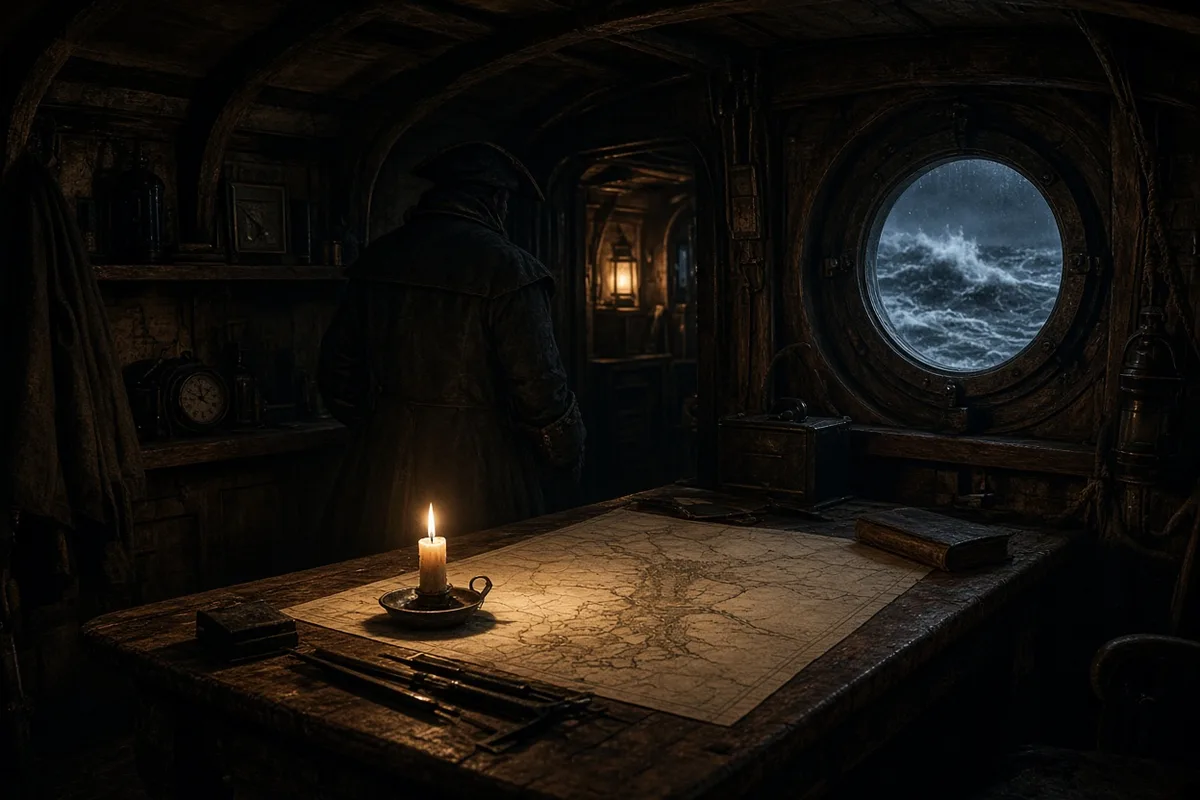
He wrote the stanza that begins with the word “amazing” sometime after the lamp was lit. I watched him shape the letters slowly, as though he were testing each one against a memory he did not want to name aloud. When he finished the line he leaned back and looked at the fire. The peat had burned down to a steady glow. Mary rose and added another piece without being asked.
The next morning Cowper arrived while the church bell was still ringing the hour. He brought two fresh pages of his own. The men sat opposite each other and read in turn. Newton’s voice was steady on the verses about danger and snare. Cowper’s was quieter on the lines about fear. They did not comment much. They simply marked where the hymns might fit in the book.
By midday the wind had risen. It rattled the shutters and sent a thin drift of smoke back down the chimney. Newton closed the window and returned to his chair. He asked me to fetch the fair copy of the last dozen hymns from the vestry. I went out into the cold and came back with the bundle under my coat.
He spent the afternoon checking the order. Every so often he would stop and read a title aloud to Mary. She would nod or suggest a change in sequence. The work moved forward by small decisions. No one spoke of how the hymns might travel beyond Olney. The question stayed outside the room with the wind.
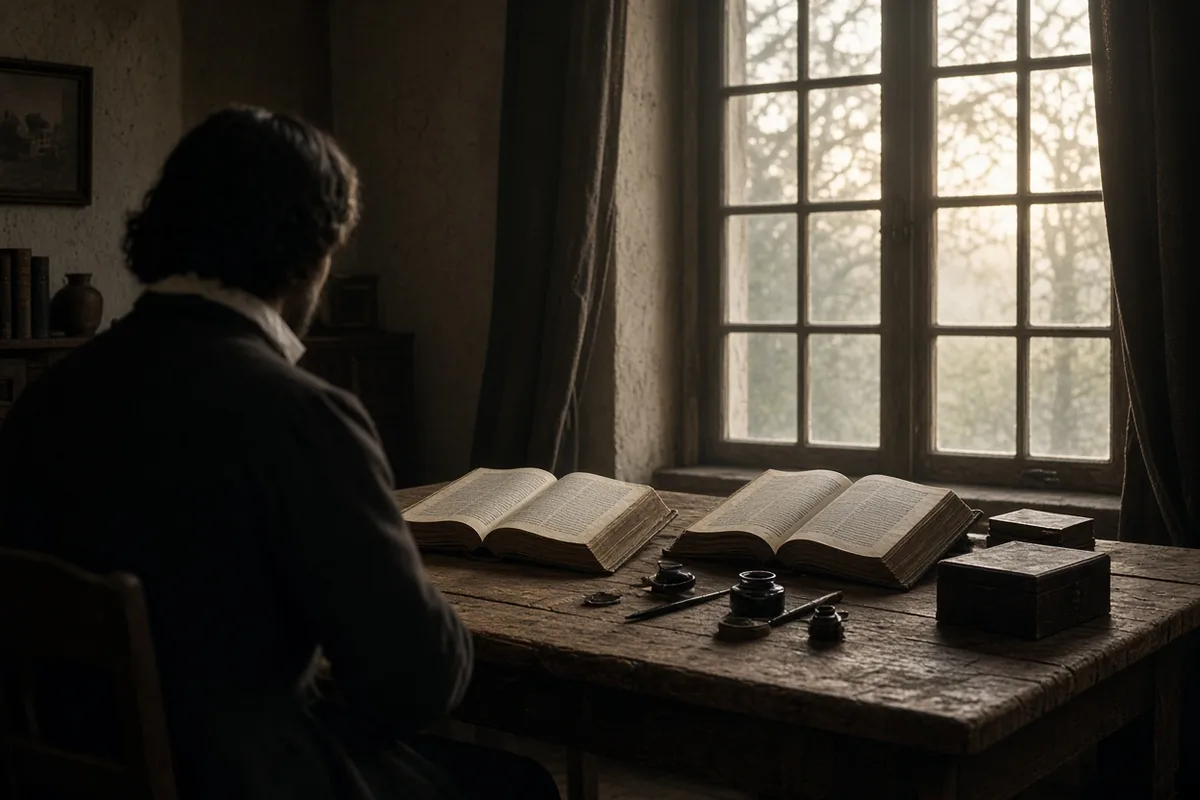
On the third day Newton finished the piece that would open the collection. He wrote the date at the bottom in small, careful numbers. Then he set the quill down and flexed his fingers. The knuckles were stained. He looked across at Cowper, who had come again, and said the book was ready to go to the printer in London. Cowper folded his hands on the table and did not answer at once. The fire popped once in the silence.
Mary Newton wrapped the completed manuscript in clean paper and tied it with string. She placed it on the corner of the desk where Newton could see it from his chair. He did not touch it again that evening. Instead he walked to the window and stood with his hands behind his back, watching the lane darken.
The parcel left Olney the following week on the coach. Newton watched it go from the churchyard gate. Cowper stood a few paces away, coat collar turned against the sleet. Neither man spoke until the coach was out of sight. Then Cowper turned toward Orchard Side and Newton walked back to the vicarage alone.
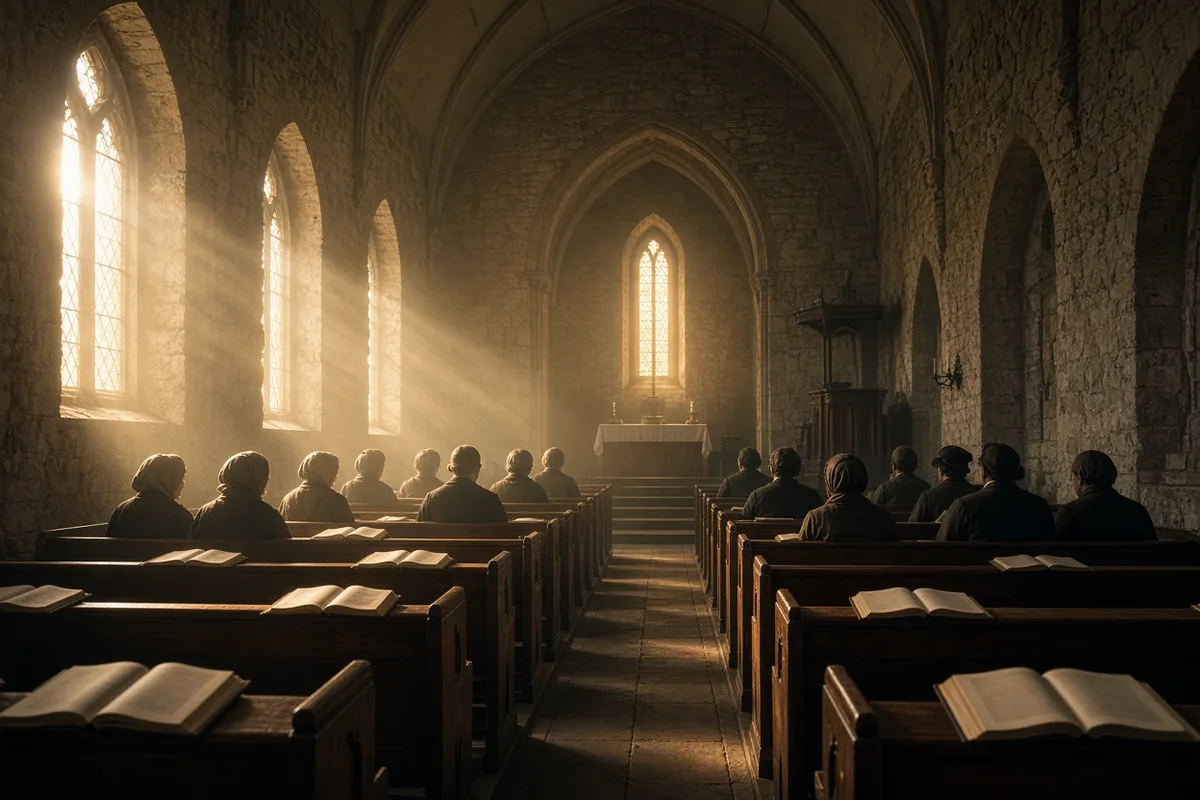
In the months after, letters came from London about the printing. Newton read them at the same table where the hymns had been written. He answered each one in the same plain hand. The book appeared in the spring. Copies reached Olney by cart, and the parish began to sing from them on Sunday mornings.
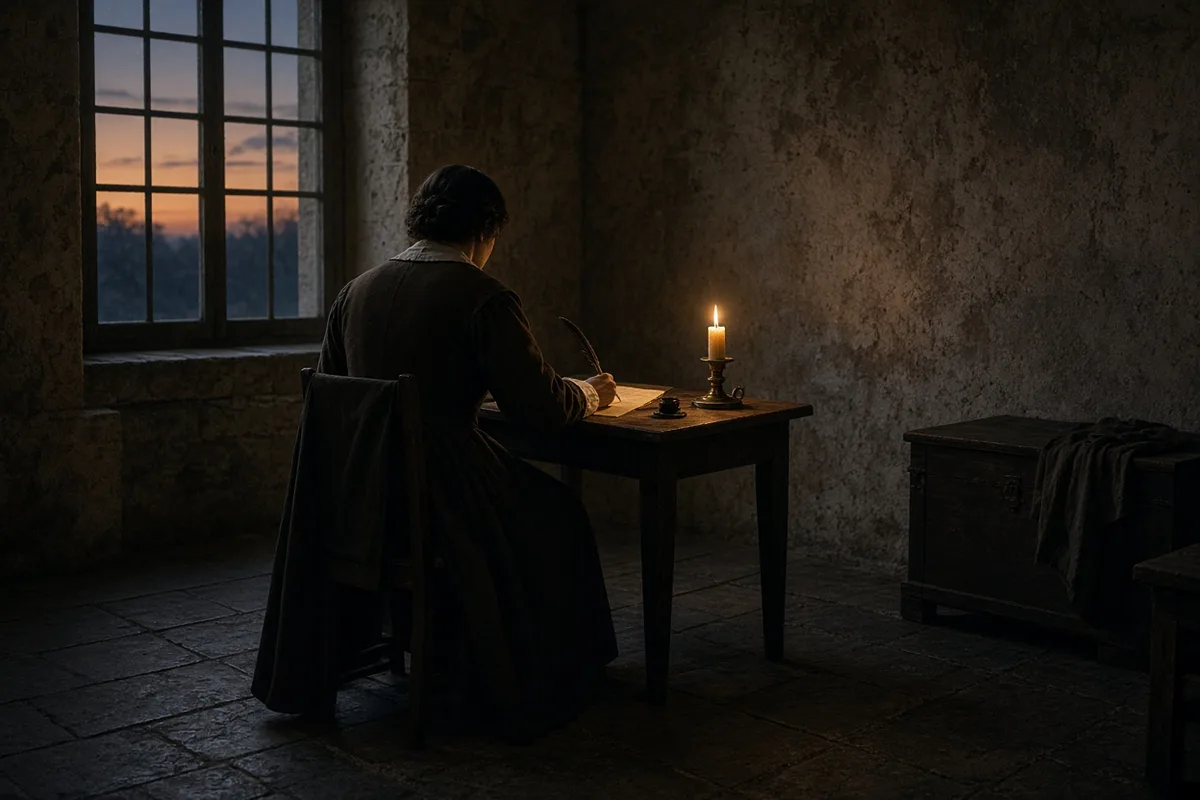
Newton continued his rounds. He visited the sick, wrote his sermons, and sometimes walked to Orchard Side when Cowper was well enough to receive him. The hymns stayed in the pews. People sang them without asking who had set the words down. The tune that later carried them was still years away.
One afternoon, years after the book was done, I passed the vicarage and saw Newton standing in the garden with Mary. They were looking at the roses she had planted along the wall. He held a single bloom between two fingers and turned it slowly in the light. The petals were already beginning to curl at the edges. He placed it back among the leaves and went inside.
The next spring Newton received the letter from the Bishop of London offering the living at St Mary Woolnoth in Lombard Street. He read it aloud to Mary at the same table where the Olney Hymns had been assembled, then answered in his own hand on 12 February 1780 that he would accept provided the parish duties allowed him time for the African trade question. The coach to London left Olney on the first Monday in March carrying three trunks and the fair copy of the hymns still bound in string. Cowper stood at the gate of Orchard Side and raised one hand as the wheels turned. Newton settled into the new rectory on Coleman Street that summer and began the Wednesday lectures that drew clerks and merchants from the Royal Exchange.
Mary Newton kept the household accounts in a small ledger that recorded coal at four shillings the hundredweight and candles at eight pence the pound. On 15 December 1790 she died after a short fever, and Newton entered the date and the words “my dearest earthly friend removed” in the same black-bound diary he had used since the Olney years. He preached the following Sunday from the text “Thy will be done” and continued the parish register entries in his own script until the vestry clerk took them over in 1795. The Olney Hymns reached a fourth edition that year with 3,000 copies printed by J. Buckland and sold at two shillings sixpence each; Newton received no royalty but noted the figure in the margin of his copy.
In 1788 he prepared the pamphlet “Thoughts Upon the African Slave Trade” for the Society for Effecting the Abolition of the Slave Trade. The twenty-four-page tract, printed by James Phillips in George Yard, set out the measurements of the Brookes slave ship—its lower deck 100 feet long and 25 feet wide—and quoted the surgeon’s count of 351 bodies stowed in that space. Newton gave evidence before the Privy Council committee on 22 March 1788 and again before the House of Commons select committee on 10 June 1789, answering questions about the Middle Passage mortality rate of one in five captives. He kept the committee transcripts folded inside the same desk where the hymn sheets had once lain.
The tune that later carried the words first appeared in print as “New Britain” in the 1835 collection The Southern Harmony and Musical Companion compiled by William Walker in Spartanburg, South Carolina. Walker credited the melody to an earlier shape-note source and paired it with Newton’s stanza beginning “Amazing grace how sweet the sound.” By 1840 the combination had crossed back across the Atlantic in the hymnals of the Primitive Methodists, who printed it in their 1849 collection with the note “words by the Rev. J. Newton, late Rector of St Mary Woolnoth.”
Newton continued at St Mary Woolnoth until the winter of 1807. On 21 December of that year he died in the rectory at the age of eighty-two. The parish register records the burial on 31 December in the church vault beneath the north aisle, with the entry “John Newton, Rector, aged 82 years.” His successor, the Rev. Richard Cecil, preached the funeral sermon from the text Newton himself had chosen years earlier: “By the grace of God I am what I am.” The vault was opened again in 1899 when the church was restored, and the coffin plate was removed and placed in a glass case in the vestry.
The church of St Mary Woolnoth still stands at the corner of Lombard Street and King William Street, its Portland stone façade cleaned in 1958 and its interior remodelled after wartime damage. The ledger stone that once marked Newton’s grave was set into the floor of the north aisle in 1904, its lettering reading “John Newton, Clerk, once an infidel and libertine, a servant of slavers in Africa, was by the rich mercy of our Lord and Saviour Jesus Christ preserved, restored, pardoned, and appointed to preach the faith he had long laboured to destroy.” The Olney vicarage garden where the roses grew was replanted in 1928 with varieties documented in Mary Newton’s 1783 seed list, and the property now houses the Cowper and Newton Museum, whose catalogue records 1,742 visitors in the year 2019.
The Cowper and Newton Museum acquired in 1974 the original manuscript notebook in which Newton drafted the Olney Hymns between 1771 and 1779, its pages numbered 1 through 348 in his hand and containing the entry for hymn 41 on folio 92 with the line “Amazing grace how sweet the sound that saved a wretch like me” written above a cancelled alternative beginning “Amazing grace how sweet the sound that set a wretch at liberty.” The ledger recording accessions lists the purchase price as £2,750 from the London dealer Maggs Bros, paid from a bequest by the Olney resident Alice Mary Wright who died on 3 April 1972. Curator Margaret M. Smith catalogued the volume in 1981 under accession number ON 1974.3 and noted the presence of Mary Newton’s marginal corrections in pencil on twelve folios.
In 2005 the churchwardens of St Mary Woolnoth installed a new interpretation panel beside the ledger stone, its text quoting the full epitaph Newton composed for himself in 1785 and first published in The Evangelical Magazine for March 1808. The panel measures 420 millimetres by 297 millimetres and was manufactured by the firm of Morris and Co. of Clerkenwell using laser-etched slate supplied by the Penrhyn quarry in Gwynedd. Visitors on 22 March 2008, the two-hundredth anniversary of the abolition of the slave trade, numbered 187 according to the counter installed by the London Diocesan Registry, each receiving a printed leaflet reproducing Newton’s evidence before the House of Commons committee on 10 June 1789.
The Primitive Methodist Hymnal of 1887, printed by William Robbins at the Conference Office in London, placed “Amazing Grace” as number 256 and credited the tune to “an American melody arranged by Wm. Walker 1835.” That edition ran to 50,000 copies priced at one shilling and sixpence, with the run completed on 14 November 1887 at the press of Hazell, Watson and Viney in Aylesbury. A copy survives in the British Library under shelfmark D-7807.a.12, its flyleaf bearing the ownership inscription “E. J. Smith, Primitive Methodist Chapel, Olney, 1893.”
On 4 July 1976 the American soprano Leontyne Price performed the hymn at a White House state dinner for Queen Elizabeth II, using the 1835 Walker melody in the key of G major with orchestral accompaniment arranged by composer Morton Gould. The performance was recorded by the Voice of America and broadcast the following day to an estimated 12 million listeners; the White House social secretary’s log records that President Gerald Ford requested the selection after reading Newton’s 1764 autobiography An Authentic Narrative.
The Royal Mail issued on 22 March 2007 a 1st-class commemorative stamp reproducing the title page of the 1779 Olney Hymns, designed by artist Michael C. Blake and printed by Walsall Security Printers in a quantity of 10,150,000. The stamp carried the inscription “250th Anniversary of the Abolition of the Slave Trade” and was placed on sale at the Olney sub-post office where 2,340 sheets were sold on the first day, according to the Post Office Horizon system report for that branch.
Newton’s black-bound diary for 1790, now held at the Huntington Library under call number HM 48174, contains the entry for 15 December noting the precise time of Mary Newton’s death as “twenty minutes past four in the afternoon” and the subsequent payment of £4 12s 6d to apothecary Thomas H. Smith of Lombard Street for attendance during her final illness. The volume was purchased by Henry E. Huntington in 1923 from the London dealer Bernard Quaritch for £185.
The last person to see the interior of the St Mary Woolnoth vault before its permanent sealing in 1951 was the verger Alfred E. Collins, who on 19 October of that year entered the space to retrieve the 1899 coffin plate for transfer to the glass case in the north aisle. Collins recorded the dimensions of the remaining oak coffin as 6 feet 4 inches long and 22 inches wide at the shoulders, noting in his diary that the brass plate had been re-attached with four new screws supplied by the ironmonger G. F. Smith of Eastcheap. Collins retired on 31 March 1955 after thirty-seven years of service and died at St Bartholomew’s Hospital on 12 August 1962.