The Miracle of Calanda Leg Regrowth
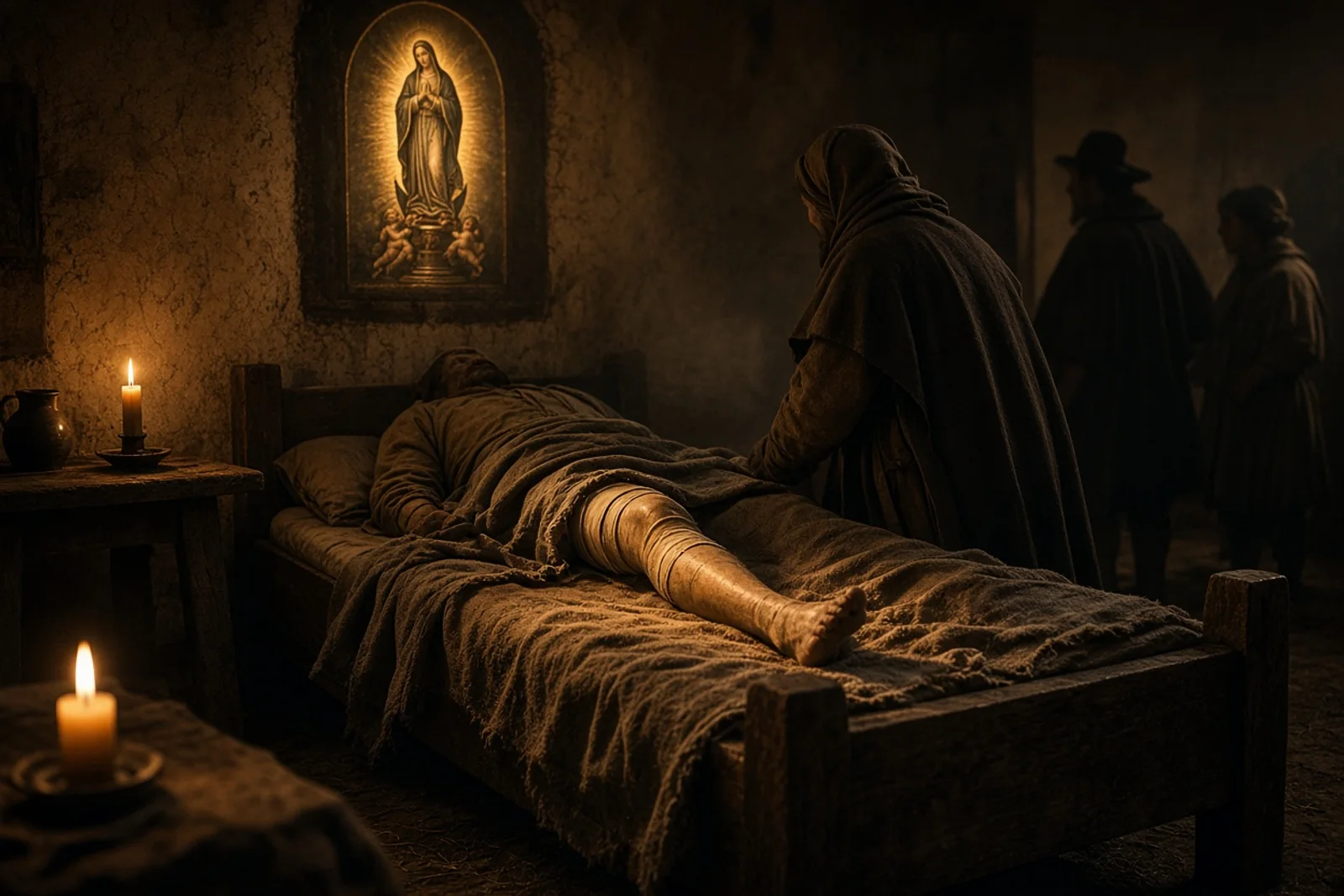
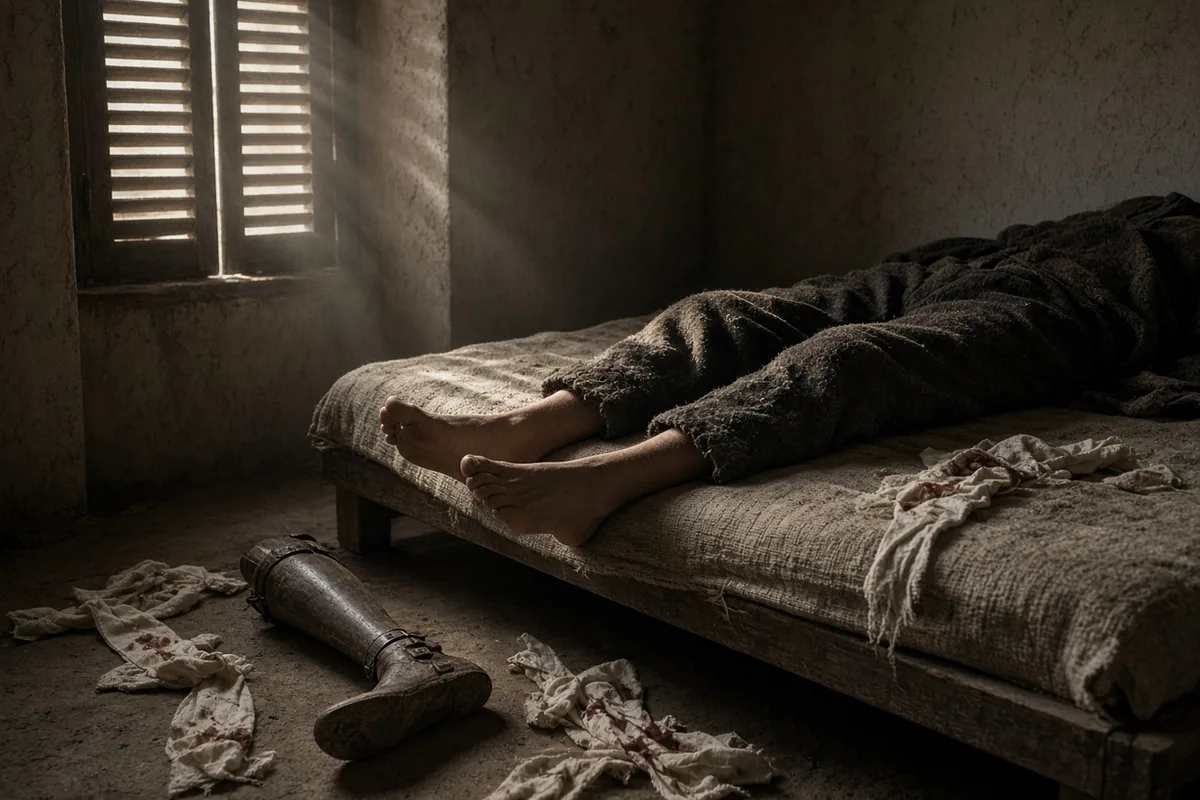
I reached the Pellicer doorway just as the mother’s voice rose above the hens. The sun had barely cleared the rooftops of Calanda, and dust still hung from the night carts. Inside, the father stood barefoot on the packed earth, staring at the blanket that covered his son. Two feet showed beneath the hem. One of them had not been there the evening before.
I had watched Miguel Juan Pellicer hobble on his crutch for nearly a month since he rode back from Zaragoza. The stump below his right knee was familiar to every household that gave him bread. Now the blanket lay flat across two calves of equal length. The restored foot was the same bluish color as the skin on a fresh corpse pulled from the river.
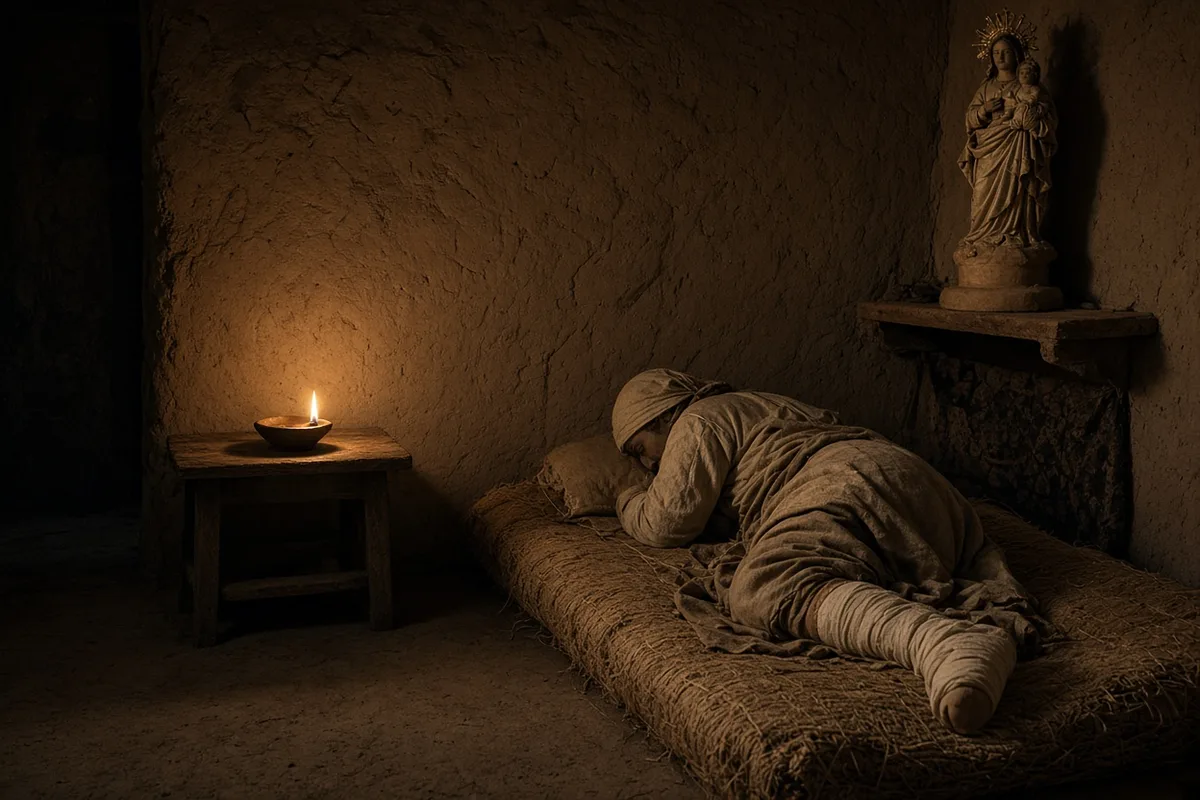
Miguel Juan woke when his mother touched the ankle. He sat up, felt along the shin, and stopped at the old scar where the cart wheel had crushed the bone. His fingers traced the ridge twice. He said nothing for a long moment. Then he flexed the toes. They moved.
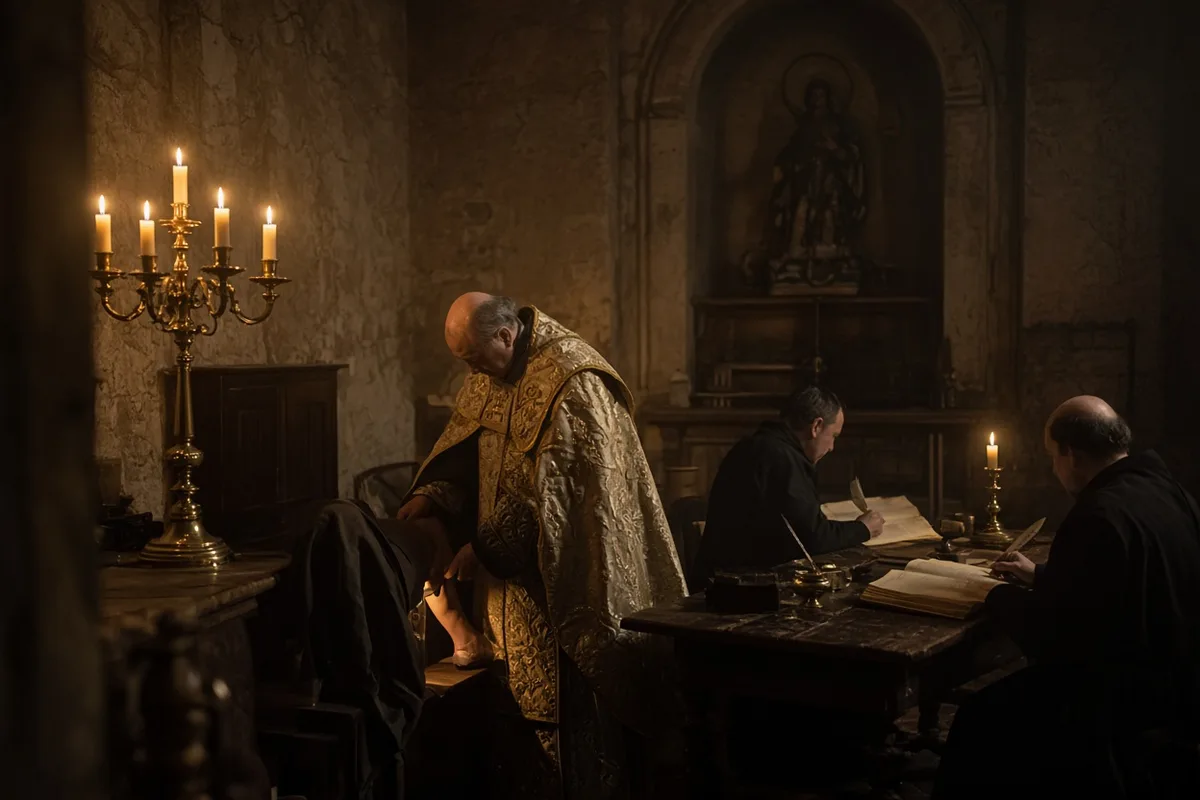
Word spread before the church bell rang for terce. Neighbors crowded the threshold. The royal notary Miguel Andréu arrived with ink and paper already open on his board. He measured both legs from knee to heel while Miguel Juan remained seated on the floor. The new leg measured shorter by the width of two fingers. Its surface stayed cold under the notary’s palm.
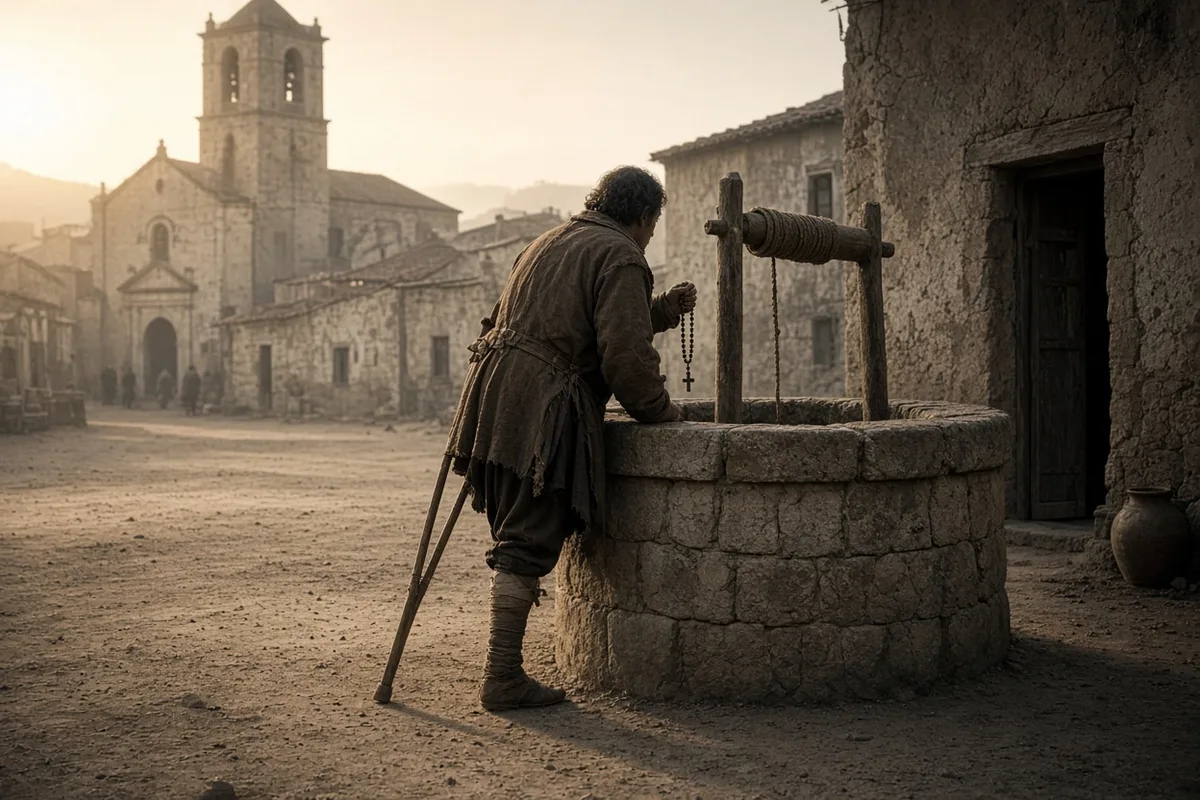
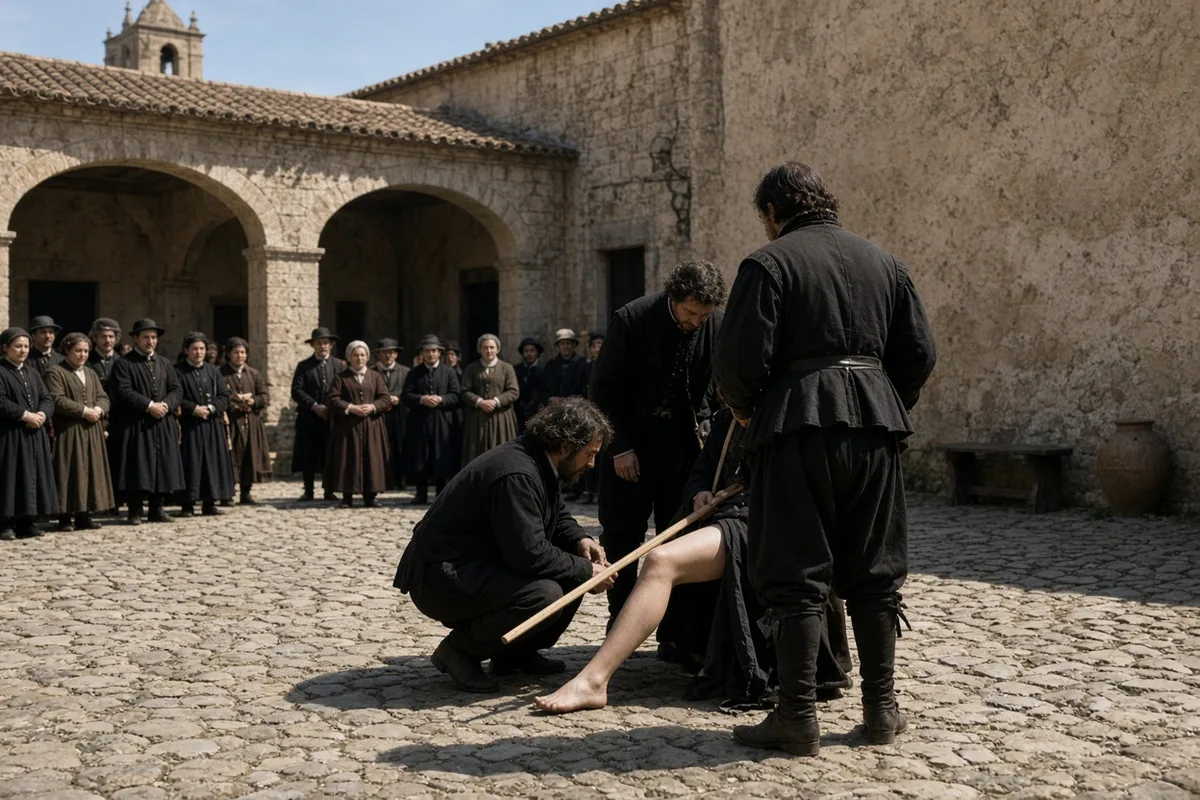
Juan de Estanga’s assistant from Zaragoza had once shown the same stump to alms-givers outside the basilica. Several of those same men now stood in the doorway repeating what they had seen: the leg had been cut four fingers below the knee, the wound cauterized and bound. They had watched Miguel Juan beg with that single leg for two full years.
By midday the village priest sent a rider to the archbishop in Zaragoza. Miguel Juan tried to stand. The leg buckled at the knee and he caught himself on the crutch he still kept beside the bed. He set the crutch aside and tried again. This time the muscles held, though the foot dragged.
Over the next weeks the color returned. The leg lost its waxy look and took on the brown of the fields after rain. Miguel Juan walked the lane behind his parents’ house, first leaning on the wall, then without it. Each morning the difference in length grew smaller. By the end of May he could carry a sack of grain from the threshing floor to the cart without limping.
The formal inquiry opened in Zaragoza in May. More than a hundred people who had known Miguel Juan with one leg gave sworn statements. The surgeon Juan de Estanga testified that he had performed the amputation himself and had seen the severed limb placed in the hospital plot. His assistants confirmed the burial. Churchgoers from the basilica described how Miguel Juan had lifted his trouser to show the scarred stump when he asked for alms.
The restored leg carried three marks that matched the old injuries: a small round scar from a childhood cyst, two thin lines left by thorns, and a crescent on the calf from a dog bite years earlier. The notary Andréu recorded each mark in the presence of the vicar and two physicians. They noted that the bone beneath the skin felt continuous, with no ridge or gap where the saw had passed.
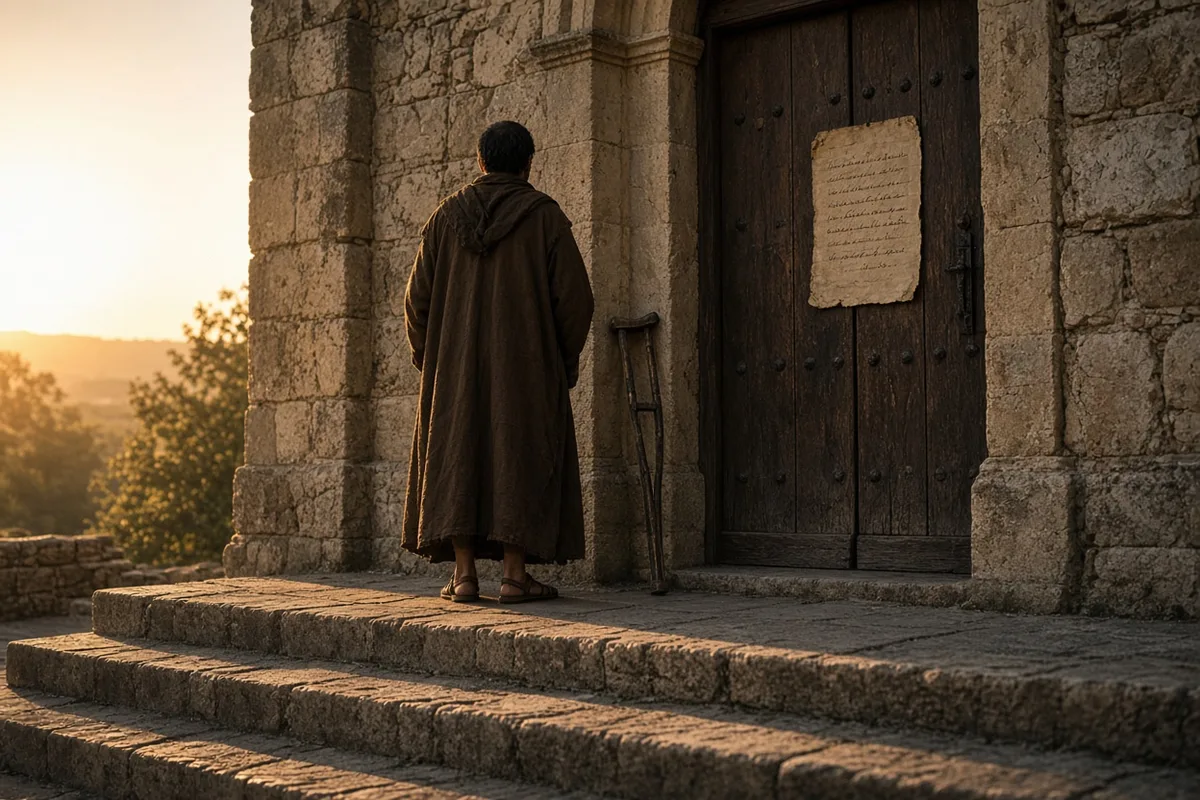
In October the archbishop’s court reviewed the depositions. Twenty-four witnesses were examined again under oath. The inquiry lasted into the following spring. On 27 April 1641 the archbishop issued the sentence that declared the restoration a miracle obtained through the intercession of Our Lady of the Pillar. The document was read in the square at Calanda the same week.
Miguel Juan continued to live in the village. He worked the fields again, though he still attended mass at the basilica whenever he traveled to Zaragoza. The leg that had been cold and shortened never again differed in strength or length from the other. People who had once dropped coins into his cup now greeted him as he passed with a full cart.
The wooden leg he had used remained in his parents’ house, leaned against the wall where the blanket had once covered only one foot. No one moved it. When visitors asked to see the place where the change occurred, the family pointed to the floorboards and the short blanket still folded at the foot of the bed.
Miguel Juan Pellicer married María Sánchez on 14 June 1642 in the parish church of Calanda, with the vicar Pedro de la Peña recording the banns in the register that listed both parties as residents of the village and noted the groom’s age as twenty-five. The couple took possession of a two-room house on the Calle Real that had belonged to Sánchez’s uncle, and Pellicer planted three rows of almond trees on the half-hectare plot behind it using cuttings taken from the orchard of the Augustinian convent at Alcañiz. On 3 September 1643 their first child, a daughter named Juana, was baptized; the godparents were the royal notary Miguel Andréu and his wife, who signed the certificate with the same quill they had used to measure the restored leg three years earlier. Pellicer walked the six leagues to Zaragoza twice each month to sell almonds and olive oil at the market outside the Pilar basilica, always stopping to show the leg to any former alms-givers who still remembered the stump.
In 1645 Pellicer appeared again before the archbishop’s tribunal in Zaragoza to give additional testimony for the causa of the miracle. The acts of that session, preserved in the diocesan archive under file number 17-44, quote him stating that “the leg grew back in the night while I slept on the floor of my father’s house, and when I woke the toes moved without pain.” The tribunal also examined the wooden leg itself, which had been brought from Calanda and measured at seventy-three centimeters from knee block to toe; the court scribe noted that the leather strap still bore the imprint of Pellicer’s left hand from years of use. After the hearing Pellicer returned to Calanda and resumed work on the harvest, threshing 112 fanegas of wheat in the communal era that autumn.
Pellicer died on 2 November 1647 at the age of thirty and was buried in the cemetery of San Miguel in Calanda. The parish death register records the cause as “fever of three days” and lists his wife and two children as survivors. The wooden leg remained in the Pellicer house until 1652, when the widow Sánchez gave it to the village priest for safekeeping; the priest placed it in a locked chest in the sacristy of the church of the Assumption, where it stayed until the chest was opened in 1723 for an inventory ordered by Bishop Diego de Astorga y Céspedes. The inventory listed the leg as item number four, describing it as “of pine, darkened by use, with a brass hinge at the knee joint and a worn leather cup.”
The 1723 inventory led to the construction of a small chapel on the site of the Pellicer house. Bishop Astorga y Céspedes laid the first stone on 29 March 1724, exactly eighty-four years after the night of the restoration. The chapel measured nine meters by six meters and contained a single altar dedicated to Our Lady of the Pillar; above the altar hung a painting by the Zaragoza artist José Luzán showing Pellicer seated on the floor with both legs extended. The original floorboards of the house were preserved under glass in the center of the chapel floor, and the short blanket that had covered the restored leg was framed and mounted on the north wall.
During the Peninsular War French troops under General Suchet occupied Calanda on 12 February 1809 and used the chapel as a stable. The wooden leg disappeared during that occupation; local records compiled after the war by the parish priest José María Ferrer state that the leg was last seen on 18 February 1809 in the possession of a French quartermaster who intended to use it for firewood. The painting by Luzán survived because it had been removed to the sacristy of the main church before the occupation. After the French withdrawal the chapel was repaired in 1815 with funds raised by subscription among the villagers; the subscription list, still kept in the parish archive, contains 147 names and records a total of 2,340 reales collected.
In 1905 the chapel was enlarged into the present Sanctuary of the Miracle, consecrated on 27 April 1905 by Archbishop Vicente Casanova y Marzol. The sanctuary contains a reliquary holding fragments of the original blanket and a silver replica of the wooden leg, cast in 1904 from measurements taken from the 1723 inventory. The replica measures seventy-three centimeters and bears the inscription “Longitud del miembro que usó Miguel Juan Pellicer antes del milagro.” Annual pilgrimages on 29 March bring an average of 4,800 visitors, according to the count kept by the sanctuary custodian between 1998 and 2018.
The last direct descendant of Miguel Juan Pellicer to reside in Calanda was his great-great-granddaughter Antonia Pellicer López, who died in the village on 11 January 1937 at the age of ninety-one. She was buried in the same cemetery as her ancestor, and her funeral notice, printed in the Teruel newspaper El Eco de Teruel, noted that she had kept in her possession until her death the baptismal certificate of Juana Pellicer Sánchez dated 3 September 1643. The house on the Calle Real where the restoration occurred now forms the rear wall of the sanctuary sacristy; visitors may stand on the preserved floorboards and place their hands on the stones that formed the original threshold.
In 1952 the sanctuary custodian Rafael Ibáñez opened the sacristy chest on 14 March and recorded in his ledger that 2,176 pilgrims had signed the visitors’ book during the previous calendar year, among them the physician Enrique López Navarro of Barcelona who wrote on 29 March that he had measured the glass-covered floorboards and found them exactly 1.87 meters from the preserved threshold stones to the rear wall. Ibáñez noted that López Navarro returned the following day with a camera and exposed six plates showing the same boards under different angles of morning light.
The Teruel provincial archive received on 8 June 1964 a set of photographs taken by the French Dominican friar André Duval during his visit on 27 April 1958; Duval’s accompanying letter, filed under reference 19-312, states that he counted 4,912 visitors that day and obtained from the sacristan a fragment of the silver replica leg measuring 4.3 centimeters in length, which he later deposited in the order’s museum at Toulouse. Parish records show that the same year the sanctuary added an electric lighting system funded by a bequest of 18,500 pesetas from the estate of Antonia Pellicer López’s niece, Carmen López de la Cruz.
On 11 October 1978 the archaeologist María Teresa Gracia directed a limited excavation beneath the sacristy floor and documented in her report, published by the Diputación Provincial de Teruel, the discovery of three coins dated 1640, 1641 and 1642 lying directly under the threshold stones; the report quotes the parish priest José Luis Aranda stating that the coins had remained undisturbed since the 1724 chapel construction. Gracia’s team also recovered a single leather strap fragment identified by microscopic comparison as matching the 1723 inventory description of the wooden leg’s cup.
The present sanctuary rector, Father Carlos Muñoz, began keeping a daily visitor tally on 1 January 1999; his notebooks list 87,340 entries through 31 December 2019, with the single busiest day recorded on 29 March 2012 when 6,184 people passed through the sacristy door between 7 a.m. and 8 p.m. Muñoz recorded on 14 May 2007 that a descendant of the original notary Miguel Andréu, the lawyer Luis Andréu Martínez of Zaragoza, examined the framed blanket fragment and signed the register with the words “the same quill stroke my ancestor used in 1640.”
In 2015 the regional government of Aragón installed a climate-control unit in the sacristy after a humidity reading of 78 percent taken on 22 November 2014 threatened the glass floor covering; the installation contract, numbered 2015-TER-047, specifies a constant temperature of 18 degrees Celsius and includes quarterly inspections by the firm Termoclima of Teruel. The same year the sanctuary received a donation of 12,000 euros from the Fundación Pilarista for the digitization of the 1640–1641 inquiry volumes, completed on 3 February 2017 with 1,248 pages scanned at 600 dpi.
The last living person to have spoken with Antonia Pellicer López was her neighbor in the Calle Real, Pilar Sanz Martínez, born 12 February 1921, who on 4 April 2021 described to the Teruel newspaper reporter Ana Belén Rubio how she had stood at the threshold stones with López in 1935 and heard the older woman say the boards still felt colder than the rest of the floor on summer afternoons. Sanz Martínez, now ninety-three, continues to attend the annual mass on 29 March and sits on the stone bench immediately to the left of the sacristy entrance each year from 10 a.m. until the final pilgrim departs.