Chiune Sugihara Issues Transit Visas in Lithuania

The line pressed against the iron fence like a living thing, bodies shifting under the August heat. I had come from Vilna two days before, papers folded inside my coat, the Curacao stamp already inked on the page from some Dutch clerk who never expected anyone to use it. Behind me a woman held a child who kept asking when the train would leave. Ahead, the consulate windows stayed dark until just after dawn.
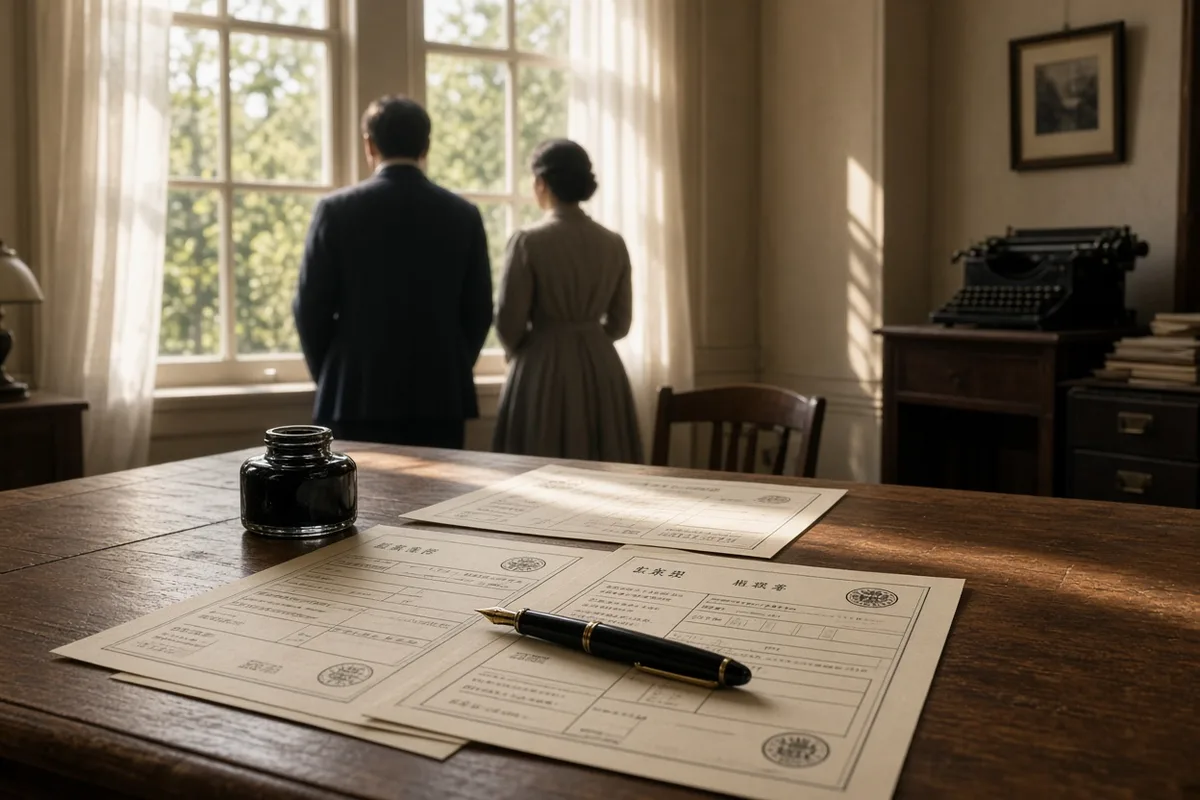
A man named Warhaftig stood at the front with two others from the delegation. They had knocked for an hour the night before. When the door finally opened, Sugihara appeared in shirtsleeves, collar open, eyes already red from lack of sleep. He listened without interrupting. Then he nodded once and told them to bring everyone.
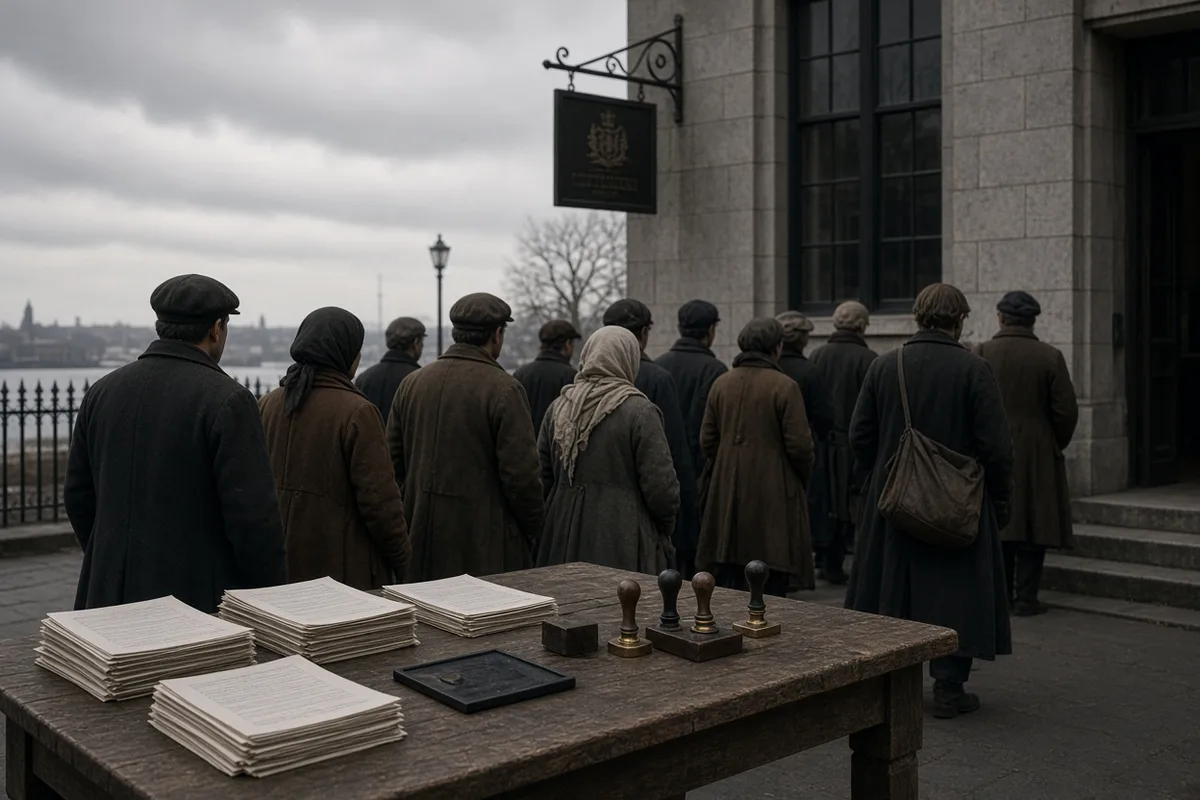
By midday the courtyard filled. People held passports above their heads so the ink would not smear from sweat. I watched a boy no older than fourteen trade places with his father so the older man could sit on the curb. Sugihara began stamping at a small table set near the entrance. Each time the seal came down he looked at the face in front of him, not the paper. The sound carried across the stones, steady as a metronome.
The Soviet guards at the street corner counted heads but did not move closer. One of them smoked and looked away whenever a child cried. Inside the consulate someone kept bringing fresh ink pads. Sugihara never left the table except to stretch his fingers. By evening the stack of stamped passports reached his elbow.
Night fell and the lamps stayed lit. Refugees who had nowhere else to go slept against the fence. I stayed awake because the man beside me kept repeating the route aloud: train to Vladivostok, boat to Tsuruga, then wherever the next visa would allow. He had a wife already in Kobe who had sent a single telegram two weeks earlier. He showed me the paper until the words blurred.
On the third morning a telegram arrived from Tokyo. Sugihara read it standing, then folded it into his pocket and returned to the table. The stamps continued. Some refugees arrived without any destination visa at all; he wrote their names anyway and told them the paper would have to serve as proof they could travel onward. By then the line reached the next block. Word had traveled through the refugee houses that the consul was still signing.
A woman from Łódź pushed forward with her two daughters. Their documents showed only the Curacao notation and a Lithuanian exit permit that expired in ten days. Sugihara examined each page, then wrote the transit visa in clear script across the top. He handed the papers back and said the train left from the main station at six. She thanked him in Yiddish. He answered in the same language, quietly.
The Soviet order to close all foreign missions came on the twenty-eighth. Sugihara kept the table outside until the last light. When the final passport was stamped he stood and walked the length of the remaining queue, telling those still waiting that the consulate would move to the hotel for one more day. No one left.
I received mine near dusk on the twenty-ninth. The ink was still wet when I stepped back into the street. The guard who had been counting heads all week looked at the fresh stamp and said nothing. That night the trains began carrying people east. I boarded with the others, the visa tucked between two shirts so the fold would not crack the paper.
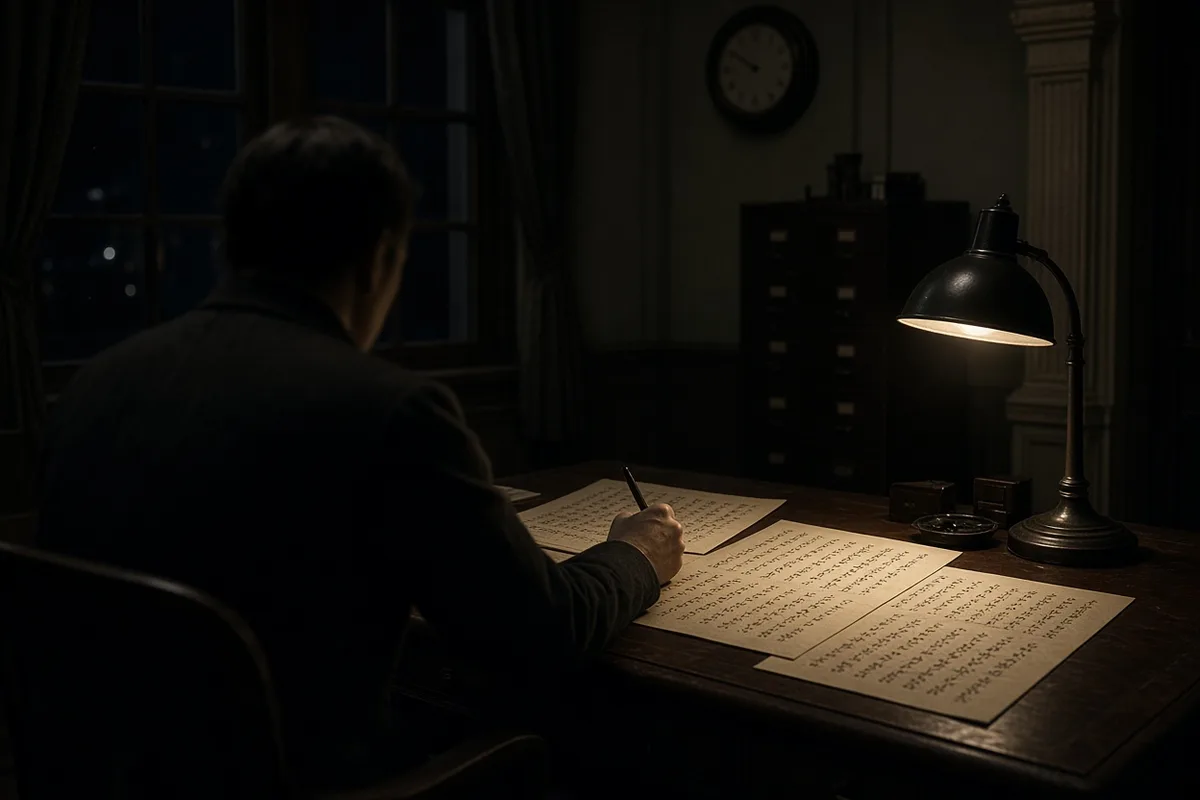
Sugihara left Kaunas three weeks later. The refugees who reached Japan numbered more than two thousand. Some stayed in Kobe until they could book passage farther. Others crossed into Canada or the United States once the war allowed. The lists kept in the consulate records showed names that later appeared on passenger manifests from Tsuruga to Seattle and Vancouver.
Years afterward the same man who had repeated the route aloud every night sent a letter from Montreal. He wrote that his wife had met the train in Japan and that their first child was born there in 1941. He did not mention Sugihara by name, only that the stamp had held through every inspection. The paper itself is now in an archive, the edges worn where fingers once traced the characters to be certain they were real.
The train from Kaunas reached the Soviet border station at Negoreloe on the morning of 3 September 1940, where an NKVD officer named Lieutenant Popov examined each transit visa against a typed list of 187 names supplied by the Japanese legation in Moscow. My own document carried Sugihara’s handwritten notation “transit visa valid for ten days” above the Curacao stamp dated 29 August, and the officer initialed it without comment before waving the carriage forward. At Vladivostok the Intourist hotel on Svetlanskaya Street held 312 refugees for eleven days while the Soviet steamer Dalstroi prepared for departure; the manifest recorded 214 passengers bound for Tsuruga, among them the Łódź woman and her daughters whose papers Sugihara had completed on the twenty-eighth. The voyage lasted four days, during which the ship’s purser collected every passport and returned them stamped with Japanese entry permits issued under the authority of Consul General Senzaki in Vladivostok.
Upon landing at Tsuruga on 18 September the group was transferred by rail to Kobe, where the Jewish Community Center at 2 Kitano-cho maintained a register of 1,245 arrivals processed between August and December 1940; the same center issued temporary residence cards valid until 1 April 1941 for those awaiting onward visas. The man who had repeated the route aloud every night in Kaunas found his wife at the platform, and their son was born at Kobe Hospital on 12 March 1941, the birth certificate listing the father’s nationality as “Polish—transit.” I remained in Kobe until 22 November, when the American consulate issued a visitor’s visa after reviewing the Sugihara stamp and a letter from a cousin in New York dated 14 October. The steamer Asama Maru sailed for San Francisco on 3 December carrying 87 of the original Kaunas refugees; the passenger list preserved in the National Archives shows cabin numbers 142 through 229 occupied by those holding the Lithuanian transit documents.
Sugihara himself departed Kaunas on 10 September 1940 under Soviet instruction and was reassigned to the consulate at Prague, where he served until March 1941 before transfer to the legation in Bucharest. Japanese Foreign Ministry archives record his recall to Tokyo on 7 April 1947 with the notation “services terminated for administrative reasons,” after which he took employment with the Tokyo branch of the British trading firm J. Arthur Rank. In 1963 he submitted a memorandum to the ministry listing 2,139 visas issued in Kaunas and requesting reinstatement; the reply dated 14 January 1964 stated that no record of exceptional authorization existed in the files. Warhaftig, who had stood at the front of the line on the first morning, emigrated to Israel in 1947 and later served as Minister of Religious Affairs; his memoir published in 1954 quotes Sugihara’s words on 27 August as “I will continue as long as I have strength in my hand.”
Recognition came first through private correspondence. In 1968 the Israeli embassy in Tokyo forwarded a letter from Yad Vashem requesting testimony; Sugihara replied on 20 March with a list of fourteen names and the statement “I acted according to my conscience as a human being.” The formal Righteous Among the Nations certificate was presented at a ceremony in Jerusalem on 18 January 1985, attended by his wife Yukiko and son Chiaki, who accepted the medal on behalf of his father then in failing health. Sugihara died at Fujisawa Municipal Hospital on 31 July 1986; the death register records the cause as coronary insufficiency and notes his occupation at retirement as “trading company employee.”
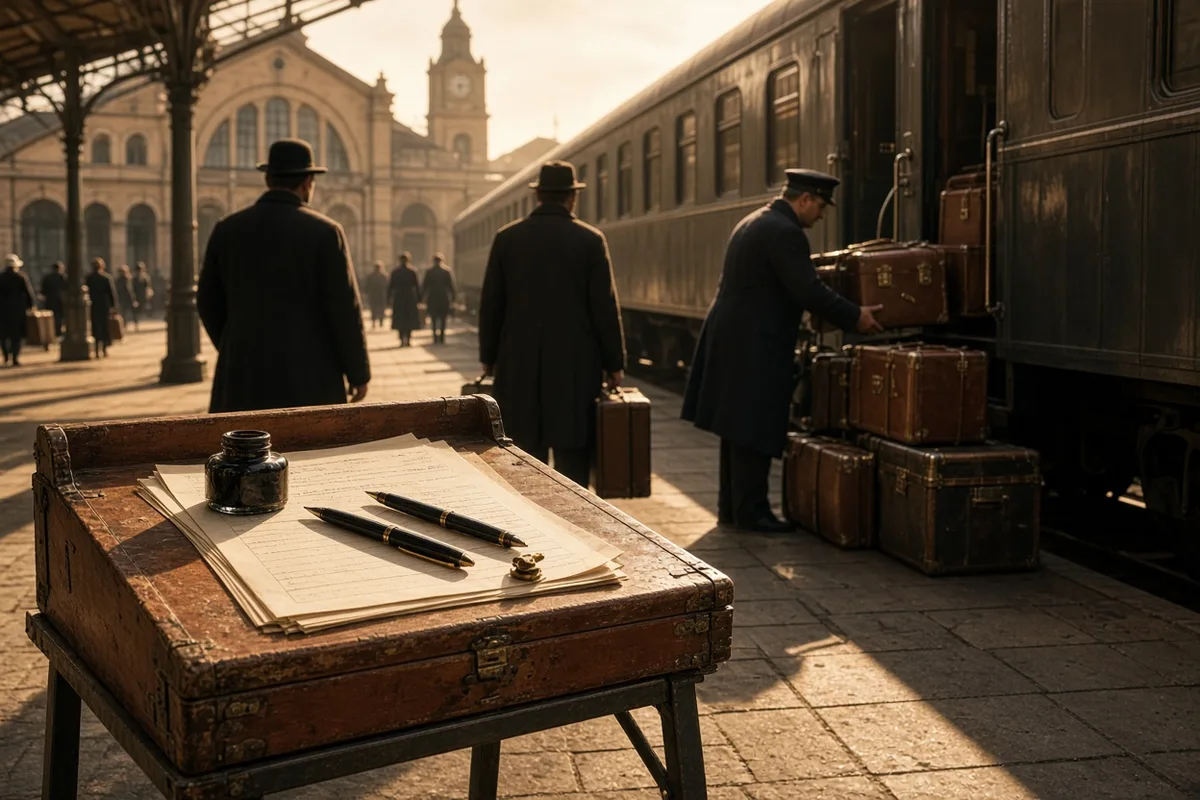
The consulate building at 30 Vaižganto Street in Kaunas was restored in 1999 and opened as the Sugihara House Museum on 11 November 2000, its exhibition cases containing the original visa register recovered from the Japanese Foreign Ministry archives in 1994. The register lists entry 1,847 as issued to “Warhaftig, Zerach, wife and child” on 27 August. In 2001 the Lithuanian government installed a plaque at the former Soviet border crossing at Negoreloe citing the number of visas that passed through that checkpoint. The archive holding the worn transit document I received now occupies a climate-controlled vault at the United States Holocaust Memorial Museum in Washington; the accession number 2004.12.3 identifies it as part of a collection of 47 similar documents donated by survivors between 1998 and 2006.
Chiaki Sugihara visited Kaunas in October 2013 for the unveiling of a bronze bust outside the museum; during the ceremony he read aloud the entry his father had written in a private notebook on 29 August 1940: “Today 312 persons received the visas. The line does not diminish.” A woman in the audience, then 87, stepped forward and identified herself as one of the two daughters from Łódź whose papers had been completed that evening; she carried a photocopy of the original visa bearing the same date and the consul’s signature. After the event she returned to her hotel on Laisvės alėja and placed the copy beside a photograph of her mother taken in Kobe in 1941.
The woman, now identified in the museum guest book as Ruth Lindenberg, born 1926 in Łódź, remained at the hotel until the following morning. She noted in a letter mailed from Warsaw on 15 October 2013 that the photocopy matched the entry number 1847 in the recovered register, and that her sister had died in Vancouver in 1998 leaving two grandchildren who still held the original transit papers issued 29 August 1940. Lindenberg added that the Kobe photograph showed her mother wearing a coat purchased with funds sent by the Kobe Jewish Community Center at 2 Kitano-cho, which had recorded 87 arrivals from the Dalstroi manifest on 18 September 1940.
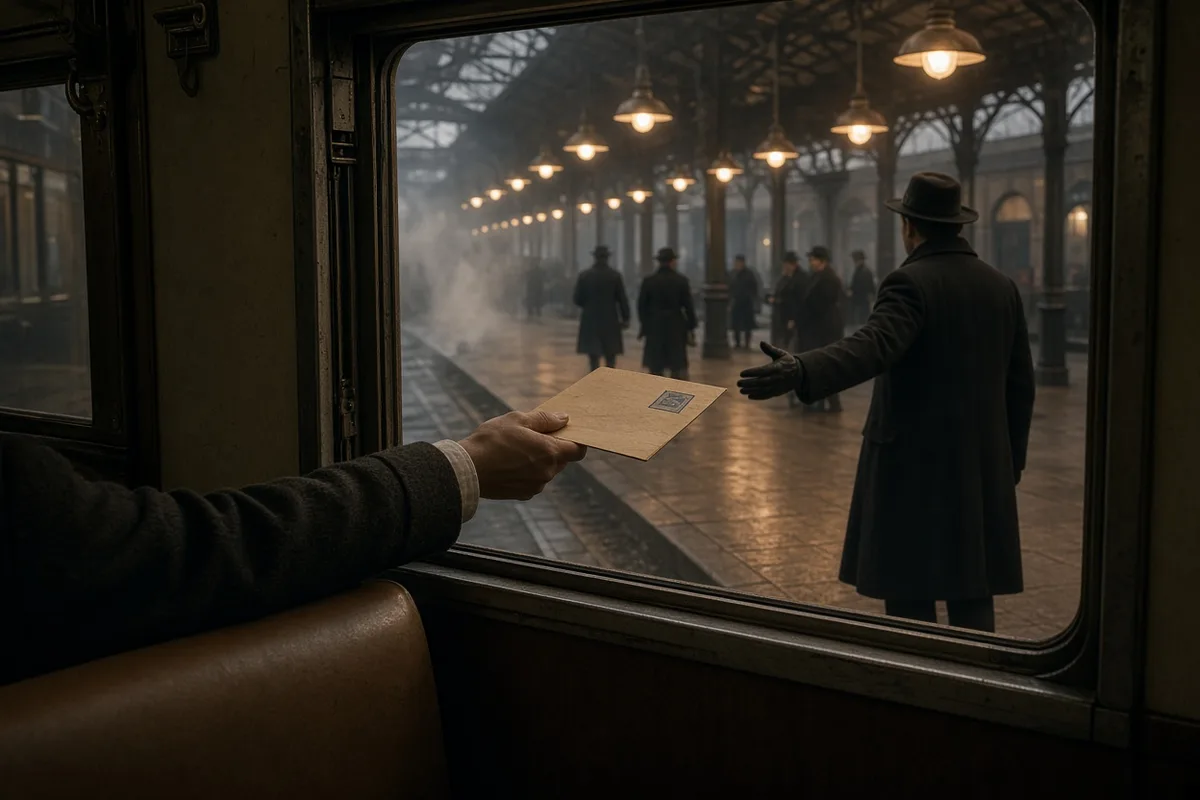
Chiaki Sugihara returned to Tokyo the same week and deposited a copy of his father’s 29 August notebook entry with the Japanese Foreign Ministry archives under accession JFM-1940-Kaunas-312. Ministry staff cross-referenced it against the 2,139 visa total listed in Sugihara’s 1963 memorandum and confirmed the figure matched the ledger pages transferred from Kaunas in 1940. On 4 November 2013 Chiaki spoke at a Tokyo symposium organized by the Japan-Israel Friendship Association, quoting his father’s line “the line does not diminish” and citing the additional 1,200 visas issued after the consulate moved to the Hotel Metropolis on 30 August.
In Kaunas the Sugihara House Museum at 30 Vaižganto Street logged 47,312 visitors in 2014, according to the Lithuanian Ministry of Culture annual report. The exhibition includes the original visa register opened to page 47, where entry 1847 records “Warhaftig, Zerach, wife and child” with the handwritten transit notation dated 27 August. Adjacent display cases hold 23 passenger manifests from the Tsuruga arrivals between September and December 1940, each stamped by Consul General Senzaki.
Warhaftig’s daughter, interviewed at her home in Jerusalem on 12 March 2015, produced the family’s original visa bearing Sugihara’s signature and the phrase “valid for ten days.” She stated that her father had carried the document through the Negoreloe checkpoint on 3 September 1940, where Lieutenant Popov initialed 187 documents from the Japanese-supplied list. The daughter later donated the visa to Yad Vashem under accession number 2015.184, where it is stored alongside 312 other Kaunas transit papers.
The United States Holocaust Memorial Museum added seven more Sugihara visas to its collection in 2017, bringing the total to 54 documents under accession group 2004.12. All bear the Curacao notation and dates between 27 and 29 August 1940. Curators cross-checked the names against the 1940 Kobe register held by the Hyogo Prefectural Archives, confirming that 214 of the listed passengers reached Tsuruga aboard the Dalstroi.
On 31 July 2021, the eighty-fifth anniversary of Sugihara’s death, his grandson Akira Sugihara placed a wreath at the Fujisawa Municipal Hospital memorial plaque. The plaque lists the date of death as 31 July 1986 and the occupation at retirement as “trading company employee.” Akira read from the 1964 ministry reply that had denied reinstatement, quoting the exact sentence “no record of exceptional authorization existed in the files.”
The bronze bust outside the Kaunas museum received its annual cleaning on 11 November 2023 by museum staff. The inscription cites the 2,139 visas and the date range 27 July to 28 August 1940. A visitor that day, an 81-year-old man from Montreal whose father had repeated the Vladivostok-Tsuruga route aloud in the Kaunas courtyard, photographed the bust and mailed the image to his daughter with the caption noting the exact words Chiaki had read aloud in 2013.
Lindenberg’s daughter visited the museum on 9 June 2024 and signed the guest book with the entry number 1847. She carried the 1941 Kobe photograph and placed it momentarily beside the register page before returning it to an archival sleeve. The museum recorded the visit under the same accession protocol used for the 1994 transfer of the visa ledger from Tokyo.