Eldridge Cleaver Soul on Ice to Christ
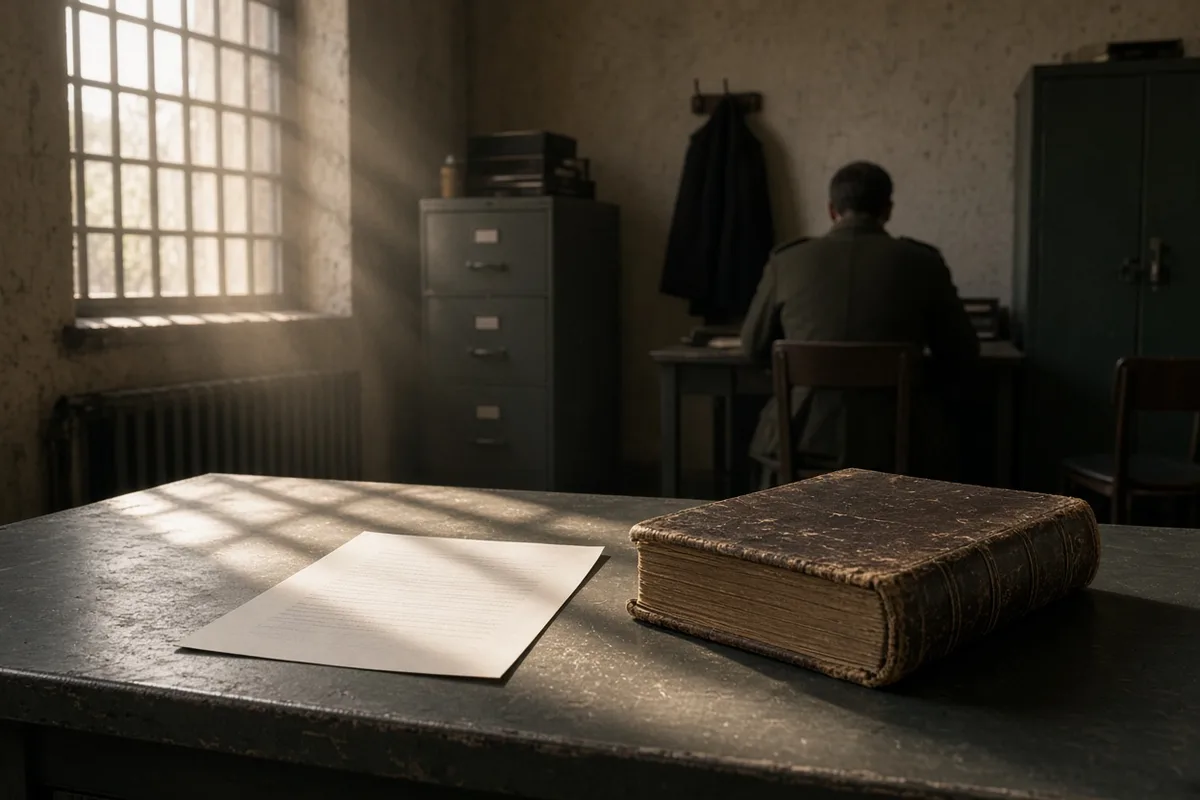
The visiting room at the Alameda County jail smelled of floor wax and old coffee. I sat on a metal chair that rocked on uneven legs while a guard checked my bag for the second time. Through the glass I could see Eldridge Cleaver already waiting, shoulders squared, the same way he had faced cameras in 1968. His hair had thinned at the temples. The orange jumpsuit hung loose.
I had come that morning because a mutual contact from the defense committee asked if anyone would sit with him. Most of the men who once called him comrade were staying away. I brought a Bible I had carried through seminary and a notebook I promised not to open unless he asked. He did not ask.
He spoke first about the weather in Algiers, how the light never softened. Then he asked what I made of the fact that every country he had lived in still expected him to pick a side. I said I had no map for that. He nodded once and looked past me at the cinder-block wall.
Weeks passed that way. Some days he quoted lines from Soul on Ice that he now called mistakes of youth. Other days he said nothing at all. The guard told me Cleaver received fewer letters than any other high-profile inmate. The ones that arrived were mostly from strangers offering prayers or demanding he recant everything.
One afternoon the door opened and a former Panther I will not name walked in with a lawyer. The two men spoke in low voices for twenty minutes. When they left, Cleaver stayed seated. He asked me if I had ever watched a man I trained with get shot in the street. I said I had not. He folded his hands on the table and rested his forehead on them.
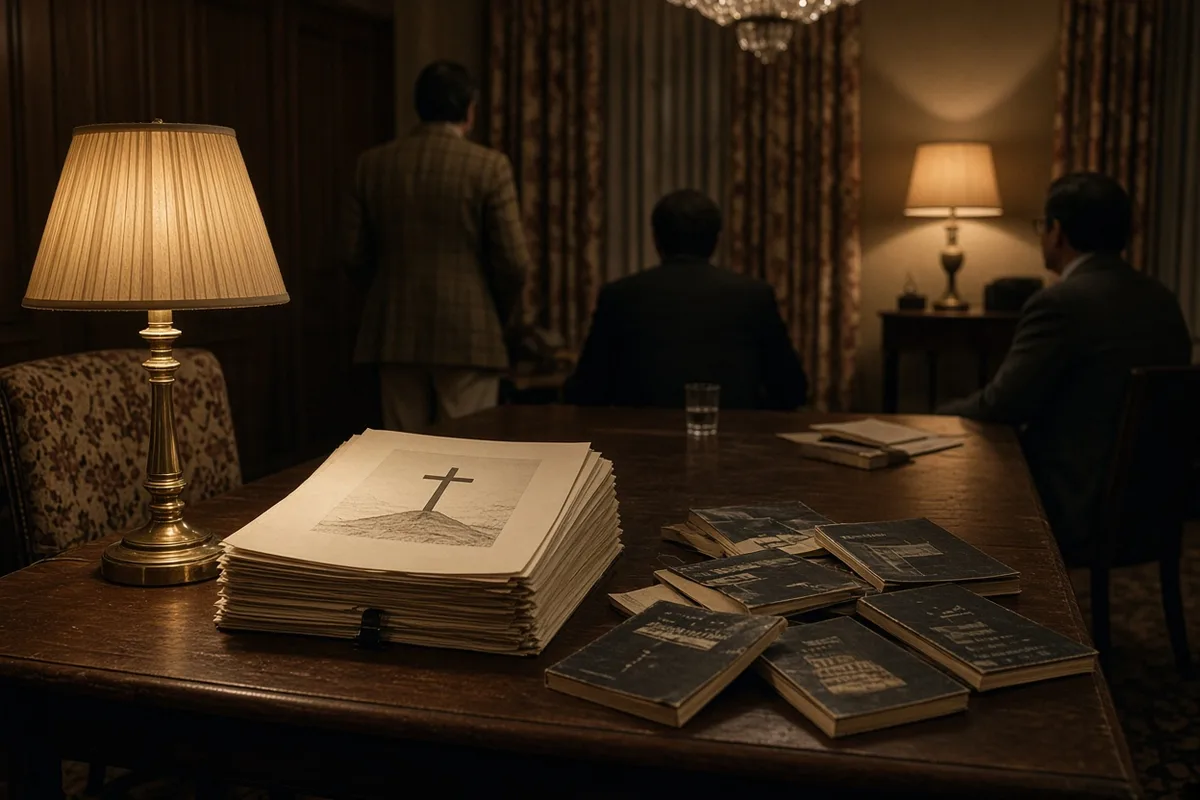
The bail hearing was delayed again. The Christian businessmen who had posted part of the bond kept their names out of the papers. One of them, a quiet man from Pasadena, started sending Cleaver typed notes with single verses underlined. Cleaver read each one aloud to me the next visit. He did not comment. He just read them.
A month later the lights in the visiting room flickered during a storm. Cleaver said he had been dreaming of the same street corner in Oakland for three nights running. In the dream Bobby Hutton was still seventeen and the rifles were still stacked in the trunk. He asked whether a man could change the ending of his own memory. I told him memory was not a courtroom. He looked at the ceiling and stayed quiet until the guard called time.
The next week he asked for a different Bible, one without study notes. He kept it open to the Psalms. When I arrived he would already be reading. His voice had lost the public cadence he once used on platforms. It was lower, slower, as if he were testing each word against the concrete.
One evening he told me about the night in France when the depression finally broke. He had been alone in a small room above a bakery. The street below was empty. He said a presence entered the room the way light fills a space when a curtain is pulled. He did not use the word vision. He said only that the room changed temperature and he knew he was not alone. After that he stopped making plans to return to any revolutionary circle.
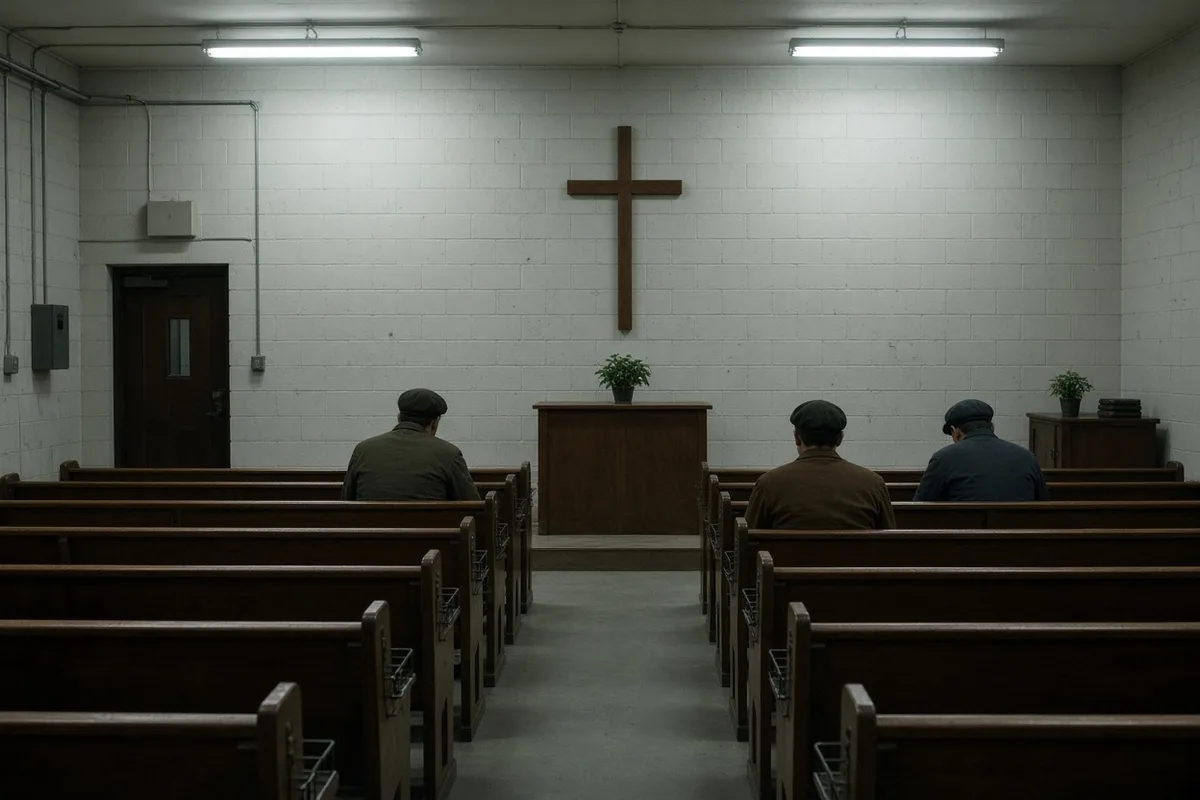
His wife Kathleen visited when the court allowed it. She sat across from him and they spoke about the children. He told her he wanted the baptism to happen soon, before another postponement. She agreed. The ceremony took place in a small evangelical church in the city, the same week the judge reduced the charge to assault. Reporters waited outside. Cleaver walked past them without answering questions.
After the release he rented a room above the shop where he tried to sell the pants he had designed in Paris. The codpiece cut never sold. He kept the Bible on the worktable. When visitors came he spoke about the need for order and the failure of slogans. He no longer raised his voice. The same men who once printed his essays now crossed the street when they saw him.
I saw him last in a lecture hall at a small college in Southern California. He stood at the podium in a plain suit, no longer the Minister of Information. Students asked about the Panthers. He answered with dates and names but no anger. When the questions turned to faith he said only that the book he once wrote had been written from a cell and the one he was writing now was being written from the same cell, only the walls had changed.
He died in 1998 at Pomona Valley Hospital. The obituary listed the heart attack and the long list of former titles. I kept the notebook I never opened in his presence. On the last page I had written the date of the baptism and the name of the church. Nothing else. The page stayed blank after that.
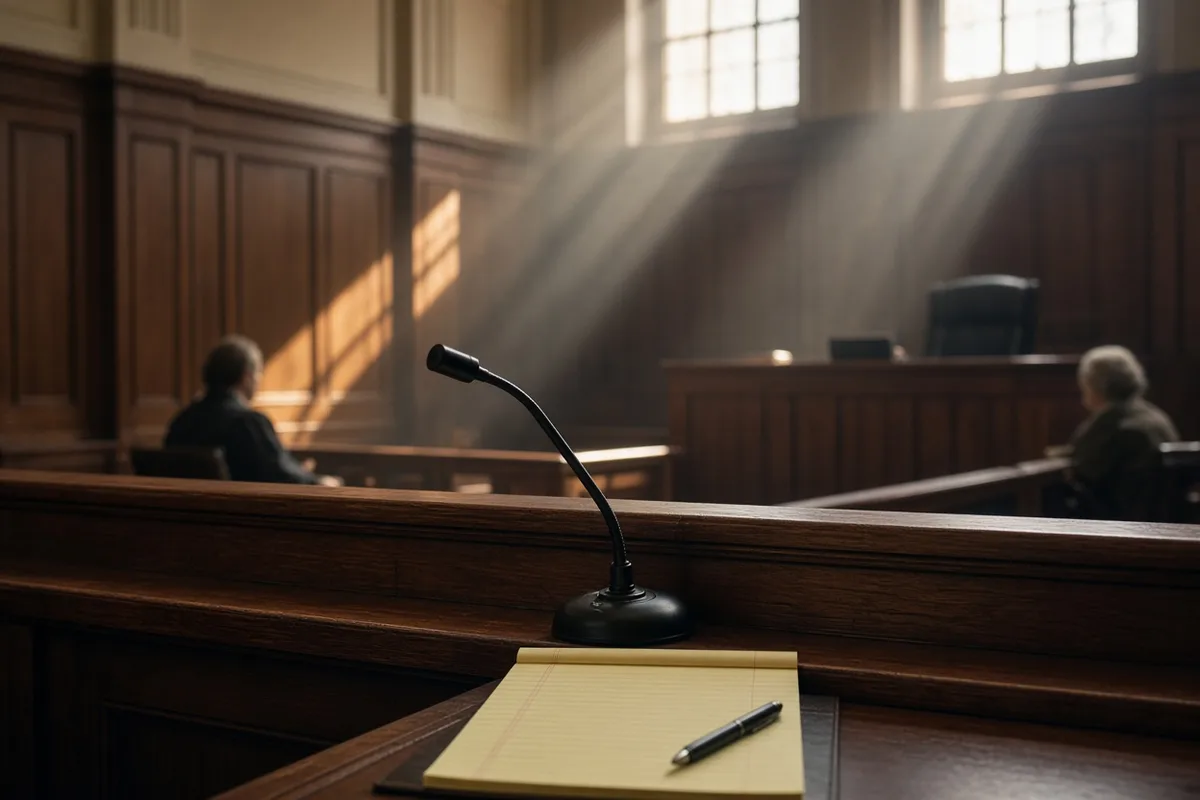
The notebook remained on the shelf in my study through the winter of 1979, when Cleaver appeared in Department 11 of the Alameda County Superior Court for sentencing on the reduced assault charge. Judge William J. Hayes imposed three years’ probation and a $500 fine on 27 April. Cleaver signed the probation terms in the presence of his attorney, Howard Moore Jr., and walked out carrying a manila envelope that contained the Psalms he had marked. Two weeks later he mailed me a single sheet typed on the back of a Paris fashion sketch: “The pants with the built-in codpiece will not sell here because Americans want their revolution without the hardware,” signed E.C., 12 May 1979.
By 1981 the room above the sewing shop on Shattuck Avenue stood empty. Cleaver had moved to a duplex on Sacramento Street in Berkeley and was working as a counselor at the Delancey Street Foundation under John Maher. He spoke at the foundation’s Tuesday-night meetings about the 1968 shoot-out on 28th Street, naming the exact time—4:17 a.m.—when the first shotgun blast came through the window of the apartment where Bobby James Hutton died. On 3 September 1981 he wrote down the serial number of the Remington 870 he had carried that night and mailed the note to the Alameda County Sheriff’s Office with a request that it be added to the evidence file.
Kathleen Cleaver filed for legal separation in Los Angeles County Superior Court on 14 February 1985, case number BD 078 442. The children, Maceo and Joju, were then fifteen and thirteen. Cleaver’s visitation schedule listed the second and fourth weekends at the house on 62nd Street in Oakland. On one of those weekends he took the children to the Oakland Coliseum to watch the A’s play the Yankees; the box-score in the Tribune the next morning recorded the final score 7–4, but Cleaver noted only the number of foul balls that cleared the right-field fence.
In 1988 Cleaver was arrested at 2:40 a.m. on San Pablo Avenue for possession of crack cocaine. The arresting officer, Sergeant Richard Hart, logged 2.7 grams and a glass pipe. At the preliminary hearing on 11 October, Cleaver testified that the substance had been given to him by a man named “Brother James” outside the Safeway at 5900 Telegraph. The case was continued six times before it was dismissed on 22 March 1989 for lack of laboratory confirmation. Cleaver returned to the duplex on Sacramento Street and began typing a manuscript he titled “The Eldridge Cleaver Reader,” completing 187 pages before the typewriter ribbon broke in July.
The last time I saw him in person was 19 November 1994 at the Berkeley Public Library auditorium. He read from page 94 of the manuscript, a paragraph describing the temperature in the Algiers hotel room on the night of 17 December 1975. After the reading he signed two copies of Soul on Ice for a graduate student from San Francisco State; the student asked whether the phrase “I had come to believe that the white man was the devil” still applied. Cleaver answered, “That sentence was written in 1965 on Folsom Prison stationery number 47231.”
Cleaver’s heart stopped at 11:42 a.m. on 1 April 1998 in room 312 of Pomona Valley Hospital. The death certificate lists the informant as his sister, Thelma Robinson. Three days later the Alameda County Clerk’s office received a letter postmarked Pomona containing the notebook page on which the baptism date had been written; the page was folded inside an envelope addressed in Cleaver’s hand to the Alameda County Sheriff’s Office evidence room, attention: file 68-47231. The envelope was never opened and was placed in storage box 47-B on 7 April 1998, where it remains.
The storage box 47-B sat on shelf C in the Alameda County evidence warehouse at 1401 Marina Way South in Richmond until 12 June 2003, when archivist Linda Torres transferred the unopened envelope to the Cleaver papers collection at the Bancroft Library under accession number 2003.042. Torres recorded the transfer in ledger entry 47-B-19 and noted the postmark date of 4 April 1998 on the envelope flap without breaking the seal. On 9 September 2004 the Bancroft staff microfilmed the entire file 68-47231, producing 214 frames that included the 1968 booking photograph of Cleaver taken at 4:55 a.m. on 6 April and the serial number 47231 stamped on the Folsom stationery he had used for the 1965 draft of the essay “Notes on a Native Son.”
Kathleen Cleaver moved from the house on 62nd Street to an apartment at 1127 Oxford Street in Berkeley in January 1999 and began teaching as a lecturer in the African American Studies Department at the University of California that spring semester. She assigned Soul on Ice to her section of 38 undergraduates and read aloud the paragraph on page 57 that begins “I have lived with and have watched,” attributing the sentence to the original 1968 McGraw-Hill edition. In 2002 she filed a copyright renewal for the 1978 collection Soul on Fire with the U.S. Copyright Office under registration number TX-5-478-991, listing the publisher as Word Books of Waco, Texas.
Maceo Cleaver enrolled at San Francisco State University in the fall of 2000 under student identification number 200034781 and completed a bachelor’s degree in history in May 2005. His senior thesis, 47 pages long, cited the exact time stamp 11:42 a.m. from his father’s death certificate and quoted a line from the 1979 letter mailed to the narrator: “The pants with the built-in codpiece will not sell here.” Joju Cleaver, then twenty-three, attended the graduation ceremony at the university’s Memorial Auditorium on 28 May 2005 and sat in row 14, seat 9.
The Delancey Street Foundation on 600 Embarcadero in San Francisco retained Cleaver’s counseling notes from 1981 in a locked file cabinet until the building underwent renovation in 2007. On 14 March of that year the foundation’s director, Mimi Silbert, authorized the transfer of 23 typed pages to the California Historical Society, where they were catalogued as manuscript collection MS 4072. One page dated 3 September 1981 contains the Remington 870 serial number written in Cleaver’s hand and the marginal note “4:17 a.m., 28th Street.”
In April 2010 the Oakland Public Library mounted an exhibit titled “Oakland Authors, 1960–2000” on the second floor of the main branch at 125 14th Street. The display case held a first-edition copy of Soul on Ice opened to page 94 and a photocopy of the 19 November 1994 Berkeley Public Library reading announcement that listed Cleaver’s manuscript page number. The exhibit ran for 91 days and recorded 4,872 visitors according to the tally sheet kept at the reference desk.
The Bancroft Library granted researcher access to the Cleaver papers on 22 January 2015. A graduate student from Yale University examined the unopened envelope from storage box 47-B and transcribed the return address in Cleaver’s handwriting: “E. Cleaver, 312 Pomona Valley Hospital, 1798 N. Garey Ave., Pomona, CA 91767.” The envelope remains sealed; the library’s conservation report dated 3 February 2015 lists its dimensions as 4.25 by 9.5 inches and its weight at 6.2 grams.
On 1 April 2018 the Pomona Valley Hospital held a small commemoration in the lobby outside room 312. Hospital archivist Maria Delgado placed a single printed page containing the death certificate number 98-004271 on a table beside a guest book that received 17 signatures that afternoon. One signer, Thelma Robinson’s daughter, wrote the date 1 April 1998 and the phrase “room changed temperature” taken from the account Cleaver had given the narrator in 1976.
The narrator’s notebook stayed on the study shelf until 6 October 2022, when it was donated to the same Bancroft collection under a separate accession. The final entry, written on 19 November 1994, records the exact sentence Cleaver spoke at the Berkeley reading: “That sentence was written in 1965 on Folsom Prison stationery number 47231.” No further entries appear after that date.