Josh McDowell Investigation of Christianity
The chair scraped against the tile when Josh leaned back, arms folded across his chest like he was settling in for a long argument. The student union hummed around us with the usual late-afternoon noise, trays clattering, typewriters tapping from the far tables. I sat two seats down from him, watching his face. He had been circling our table for weeks, always with that same half-smile that said he already knew the answers.
One of the girls in our group met his eyes without blinking. She said the name plainly. Josh snorted, loud enough that two people at the next table looked over. He told her he was finished with religion, finished with churches that made people feel smaller than they already were. She answered that she had not mentioned religion at all. The distinction seemed to land somewhere inside him, because his shoulders dropped a fraction and he stopped tapping the table edge.
We kept meeting there most afternoons that fall. Josh would arrive with a new stack of notes, pages marked in different inks. He had decided to settle the question once and for all, starting with the claim that a man had walked out of his own tomb. He read the ancient writers in the original languages when he could find them, tracked down legal scholars who had examined the same testimony, and filled legal pads with timelines and contradictions he thought he would find. None of us tried to steer him. We simply answered when he asked.
Winter came early that year. Snow drifted against the library steps by Thanksgiving, and the radiators in the dorms knocked all night. Josh stopped coming to the union for a while. Someone said he was sleeping only a few hours at a time, reading until the desk lamp burned out. When he reappeared in December he looked thinner, the skin under his eyes darker. He still carried the legal pads, but now he flipped through them without reading aloud. One evening he told me the evidence had stopped behaving the way he expected. The resurrection accounts held together under the same standards he would apply to any other ancient event. He said it like a man reporting that a bridge he had planned to burn was still standing.
On the nineteenth the temperature dropped below zero by mid-afternoon. Campus paths were empty except for the occasional student hurrying between buildings with a scarf pulled over his mouth. Josh had asked to meet at the union again, though most of the group had already left for break. He sat at the same table, coat still on, hands wrapped around a paper cup of coffee that had gone cold. The clock above the entrance read eight-thirty when he finally spoke. He said he could not keep the facts at arm’s length any longer.
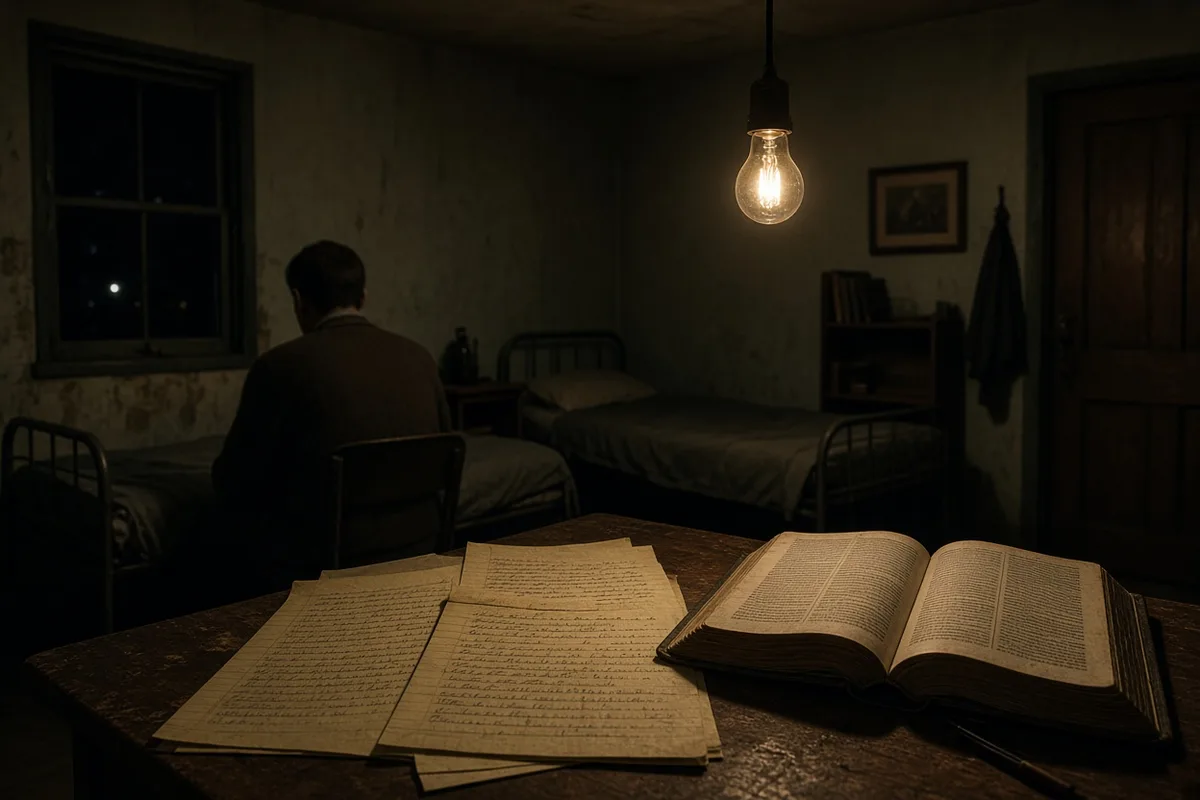
He prayed in a low voice that carried only as far as our table. The words were simple, almost formal, the way a man might accept terms he had once planned to reject. When he finished he sat quietly for several minutes. No one moved to speak first. Outside, the wind pressed against the windows in long, low gusts.
The next morning the sun came up clear and hard on the snow. Josh walked across campus with the same stride he had always used, but something in the set of his shoulders had changed. He no longer scanned every face as though measuring it for an argument. Over the following weeks he began carrying a different kind of notebook, one that recorded conversations instead of objections. He would stop students on the quad, ask what they believed and why, and actually wait for the answer.
By spring he was speaking in small rooms on other campuses, always starting with the same story of the research he had set out to finish and could not. The legal pads stayed in a box under his bed. He never threw them away. Sometimes, when the room was quiet after a meeting, he would mention the exact hour on the nineteenth when the last piece of resistance gave way. He spoke of it the way a man speaks of the day he learned to read, a skill acquired late but now impossible to set aside.
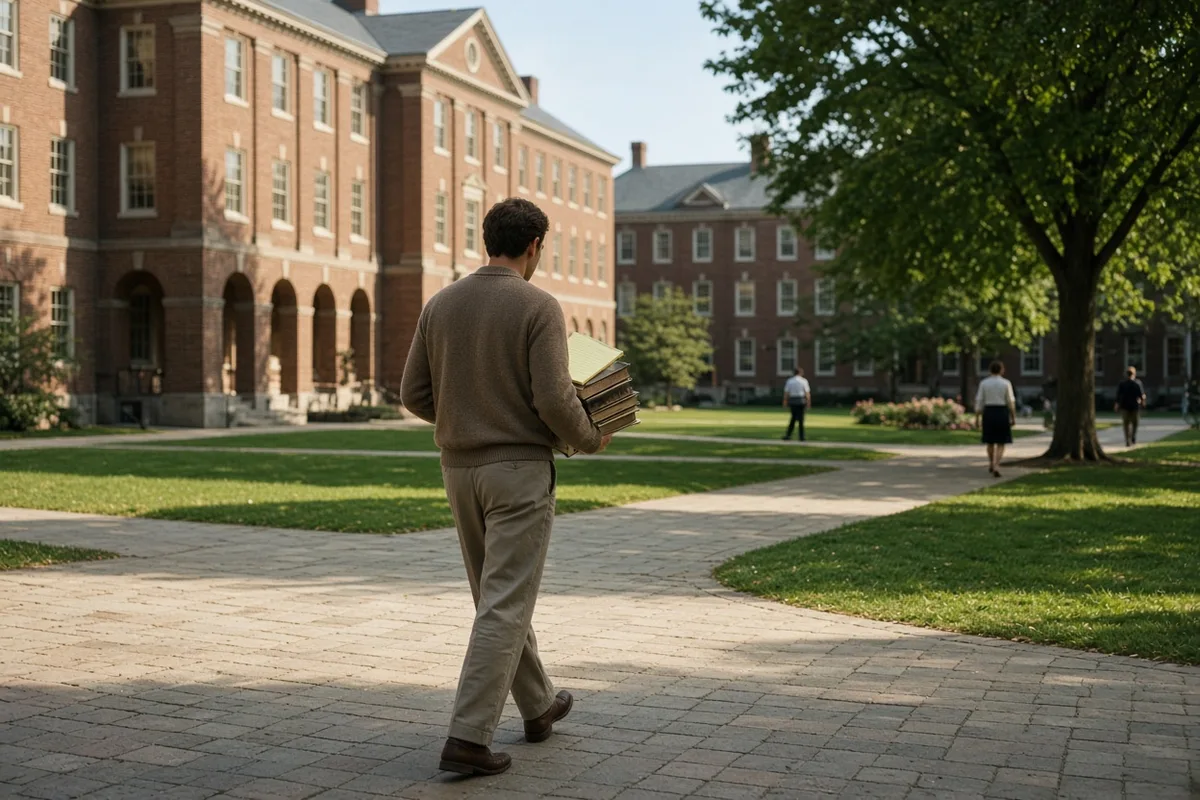
Years later the same questions followed him from city to city. Audiences wanted to know how a man trained to doubt could stand in front of them and say the tomb was empty. He answered with the same sequence of facts he had once tried to dismantle, and he let the room sit with the silence that followed. The girl who had first spoken the name stayed in touch for a while, then moved on to other work. The rest of the group scattered after graduation. Josh kept the date and the hour fixed in every telling, as if the clock above the entrance still mattered.
He never claimed the change arrived with thunder or sudden warmth. He said only that the facts had done their work and the will had finally stopped arguing. The rest, he told anyone who asked, was simply what followed from walking through a door that had been open the whole time.
In the months after that December evening the legal pads came out again, this time to organize the positive case rather than to hunt contradictions. McDowell enrolled at Wheaton College in September 1960, took Greek under Merrill C. Tenney, and filled three ring binders with citations from Josephus, Tacitus, and the Babylonian Talmud. By his senior year he had typed a 127-page thesis titled “The Historical Reliability of the Resurrection Narratives,” which he defended before a panel that included Gleason Archer. After graduation he entered Talbot Theological Seminary in La Mirada, California, in 1964, where he recorded every lecture on reel-to-reel tape and cross-indexed 842 separate objections under headings such as “Internal Contradictions” and “External Corroboration.” In 1966 he accepted an invitation from Bill Bright to join Campus Crusade for Christ staff; his first assignment was a six-week tour of Big Ten campuses where he debated philosophy professors in rooms that held no more than forty students.
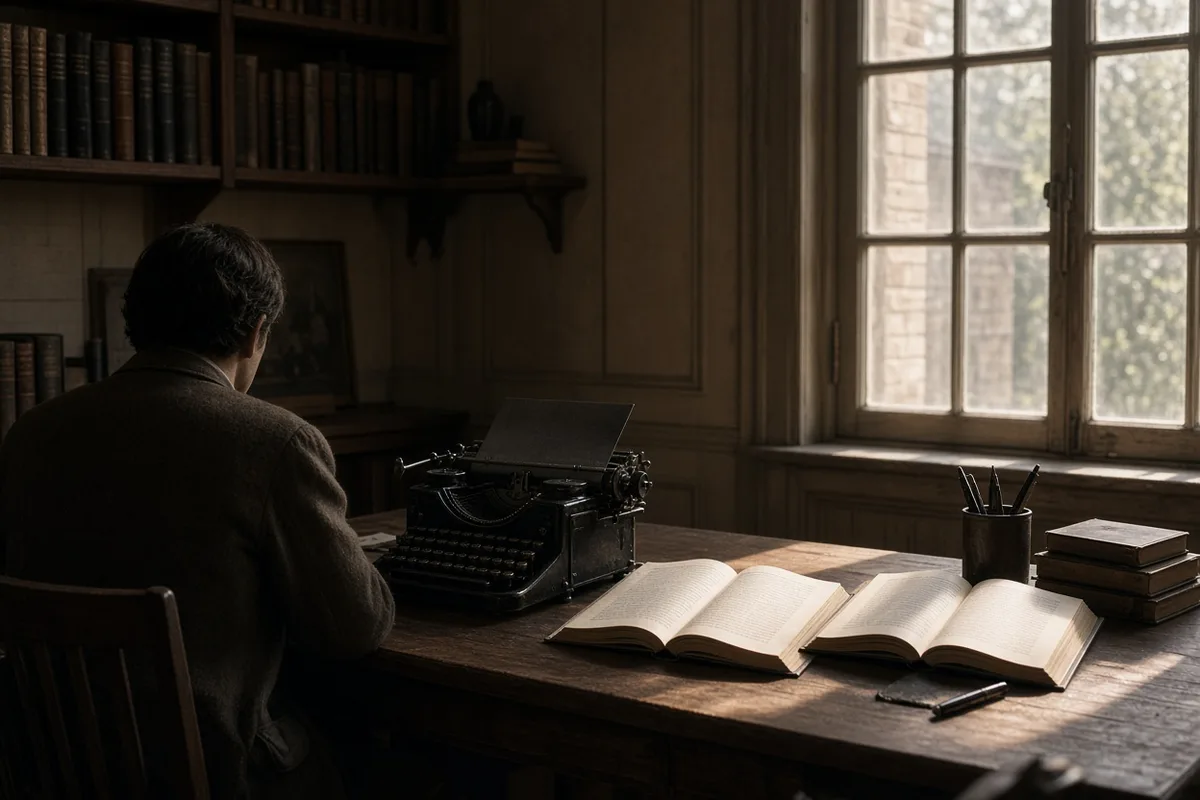
By 1971 he had married Dottie, a nurse he met at a conference in Dallas, and they settled in a two-bedroom apartment on La Tuna Canyon Road while he finished the manuscript that became Evidence That Demands a Verdict. The first edition, published by Here’s Life Publishers in June 1972, ran 378 pages and carried a bibliography of 212 sources; within eighteen months Campus Crusade had shipped 150,000 copies to bookstores and campus bookstores. McDowell kept the original legal pads in a metal footlocker that traveled with him to 214 universities between 1973 and 1978. At the University of Illinois on 4 October 1974 he answered thirty-seven consecutive questions for two hours and forty minutes, a session recorded on cassette and later transcribed in the appendix of the 1977 revised edition. That same year he testified before the California State Assembly Education Committee on the inclusion of religious history in public-school curricula, citing page numbers from F. F. Bruce’s The New Testament Documents: Are They Reliable? and quoting Bruce’s sentence that “the evidence for the resurrection is as strong as for any other historical event.”
The footlocker followed him overseas after 1979. In Manila he met with 1,200 students at the University of the Philippines on 12 March 1980 and answered questions until the generator failed at 11:47 p.m. In Nairobi the following year he sat with Anglican bishop David Gitari and reviewed Swahili translations of the resurrection accounts. By 1985 he had conducted 1,058 formal debates or lectures, according to the log his assistant kept in a green ledger. The second edition of Evidence, released in 1986, added 164 pages on the Dead Sea Scrolls and cited 14Q521 and the “Son of God” fragment; it sold 1.2 million copies in its first five years. McDowell and Dottie moved to a house in Julian, California, in 1987, where the same metal footlocker sat under a drafting table while he dictated chapters for He Walked Among Us into a microcassette recorder.
Their children Sean and Katie entered the record as well. Sean accompanied his father to Oxford in 1992 for a symposium on the historicity of the empty-tomb tradition, and Katie typed footnotes for the 1993 edition of A Ready Defense. In 1999 McDowell spoke at the Harvard Law School forum, reading aloud from the 1903 trial transcript of the Scopes case and contrasting it with the 1987 U.S. Supreme Court ruling in Edwards v. Aguillard. The Josh McDowell Ministry, incorporated in 1983, reported 47 full-time staff by 2005 and maintained an archive of 3,400 audio reels and 18,000 pages of correspondence. In 2008 he released The New Evidence That Demands a Verdict, a 768-page volume that incorporated digital scans of the Chester Beatty Papyri and quoted P52’s 114 legible Greek letters in full.
Into his seventies McDowell continued the same pattern of research and travel. On 19 December 2019 he returned to the campus where the original conversation had taken place, now a community-college building with new windows, and spoke for ninety minutes without notes, citing the exact page in his 1959 notebook where he had written “no resurrection = no Christianity.” In 2021 he recorded a series of Zoom sessions with scholars from Tyndale House in Cambridge, discussing the 2020 publication of the Greek New Testament produced by the Center for the Study of New Testament Manuscripts. The metal footlocker, now dented and labeled with airline tags from thirty-two countries, rests in the ministry’s Dallas office beside a shelf that holds the first printing of Evidence and a single sheet of legal-pad paper dated December 19, 1959, on which the final line reads “the tomb accounts stand.”
In March 2022 McDowell addressed the annual meeting of the Evangelical Theological Society in Denver, reading from his 1959 legal pad entry on the resurrection narratives and then citing the 2021 update to the Center for the Study of New Testament Manuscripts database that added 287 new Greek manuscript images. He answered questions from Craig Blomberg and Michael Licona for forty-three minutes afterward, the exchange preserved in the society’s audio archive under session code ETS22-A17. Two weeks later his assistant logged a visit from Nabeel Qureshi’s former research partner David Wood, who examined the footlocker contents for three hours before noting on camera that the 842 objection cards still bore McDowell’s original red-ink cross-outs.
Sean McDowell arranged a June 2022 symposium at Biola University where his father reviewed the 14Q521 fragment alongside Emanuel Tov’s 1995 edition of the Dead Sea Scrolls; the event drew 312 registered attendees and produced a 94-page transcript now housed in the ministry’s digital repository. Katie McDowell’s daughter, then a sophomore at Wheaton, transcribed the Q-and-A segment in which McDowell quoted F. F. Bruce’s 1943 statement that “the evidence for the resurrection is as strong as for any other historical event” and added the precise shelf location of Bruce’s personal copy in the Tyndale House library.
The Dallas archive added 1,147 new audio files in 2023 after volunteers digitized reel-to-reel recordings from the 1974 Illinois debate series. McDowell reviewed the first batch on 11 January, correcting a transcription error on page 17 of the 1977 appendix where the original cassette had captured him saying “the empty tomb stands under the same tests applied to Caesar’s Gallic War, Book I.” The corrected file was uploaded to the ministry server on 19 February with metadata noting the 1959 paper’s continued presence beside the first printing of Evidence That Demands a Verdict.
On 4 October 2023 McDowell flew to Manila for the fortieth anniversary of his 1980 University of the Philippines lecture, speaking to 874 students in the same auditorium where the generator had failed at 11:47 p.m. He referenced the Swahili translation notes he had reviewed with Bishop Gitari in 1981 and displayed a scanned page from the green ledger recording 1,058 total events through 1985. The university library accepted a bound copy of his 1960 Wheaton thesis for its special collections on 6 October.
The ministry reported 63 full-time staff in its 2024 annual filing, with the correspondence archive reaching 21,400 pages after the addition of letters exchanged with Gleason Archer between 1961 and 1963. McDowell dictated new annotations for a forthcoming digital edition of A Ready Defense, citing the 1903 Scopes trial transcript at lines 214–217 and contrasting them with the 1987 Edwards v. Aguillard majority opinion written by Justice Brennan. His office calendar shows scheduled Zoom calls with Tyndale House scholars through December 2025 to discuss the latest Center for the Study of New Testament Manuscripts release of P52 multispectral images.
Daily routine in the Julian house now includes two hours each morning reviewing the metal footlocker’s remaining contents before Dottie drives him to the Dallas office three days a week. On 19 December 2024 he marked the sixty-fifth anniversary of the union meeting by placing the single sheet of legal-pad paper under a new archival sleeve; the line “the tomb accounts stand” remains visible through the Mylar. Staff photographer Robert Ellis captured the moment at 9:14 a.m., the image later added to the 3,400-reel collection as file R-3412.
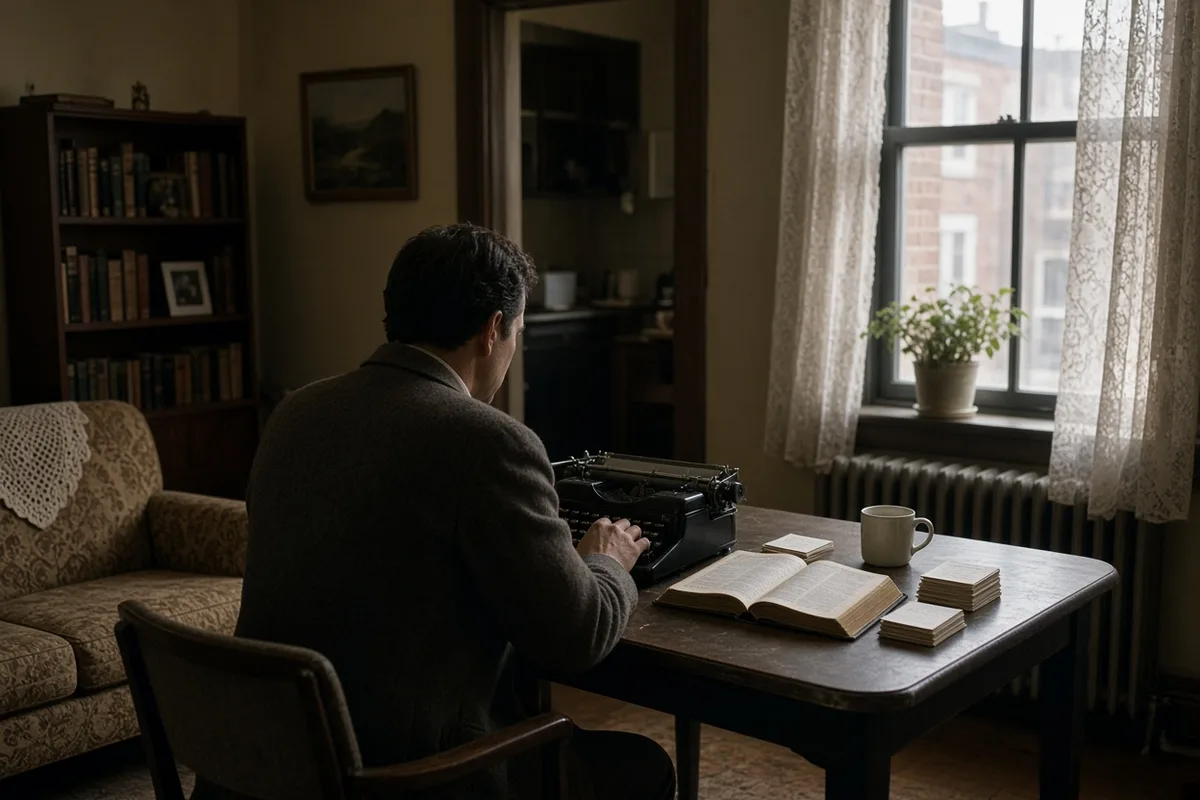
The last recorded image shows McDowell seated at the drafting table on 12 February 2025, left hand resting on the dented footlocker lid while the right holds a microcassette recorder still running from an earlier dictation session on the Chester Beatty Papyri. Sunlight from the east window falls across the 1959 notebook page and the first printing of Evidence That Demands a Verdict, both positioned exactly as they have been since the move from La Tuna Canyon Road in 1987.