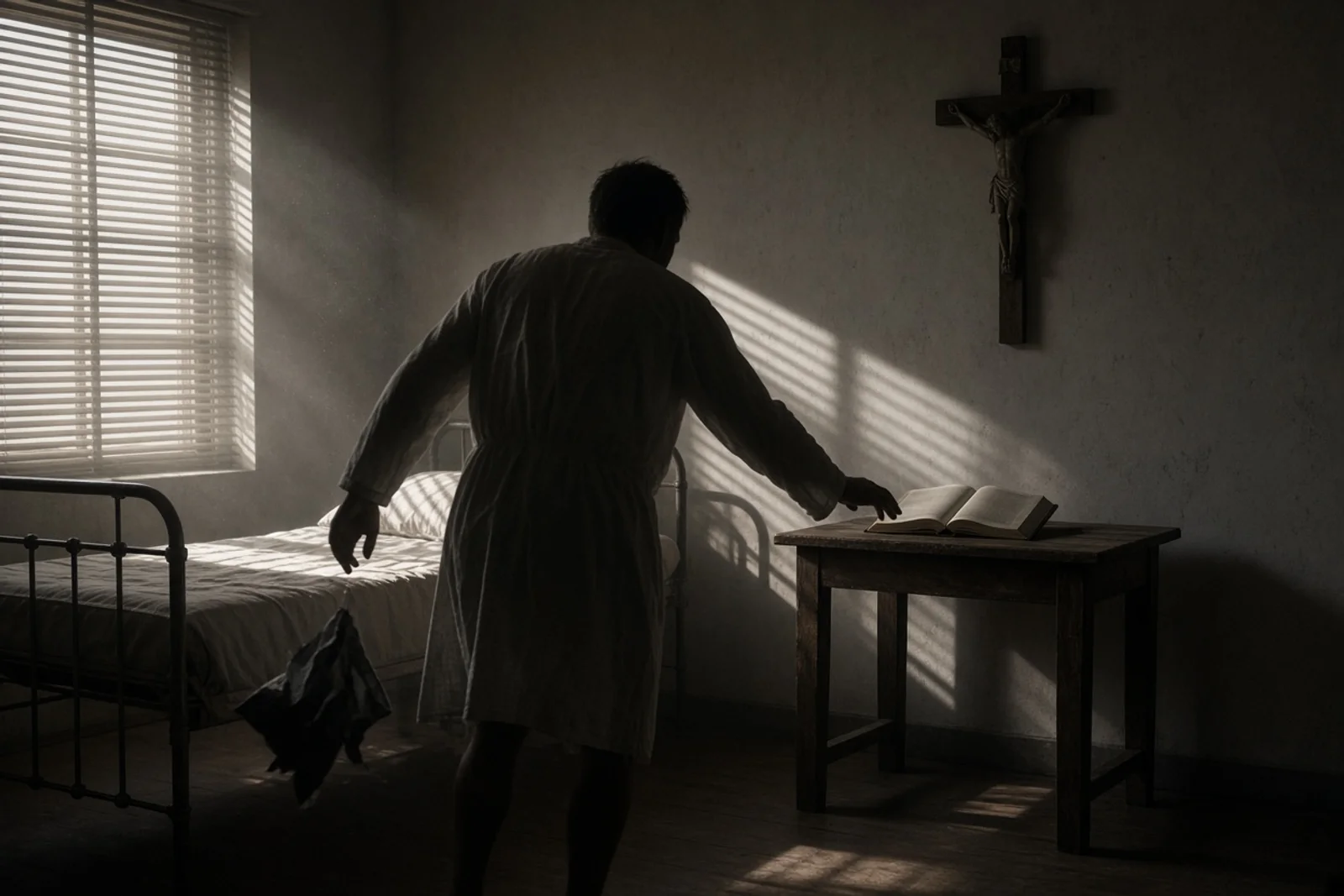
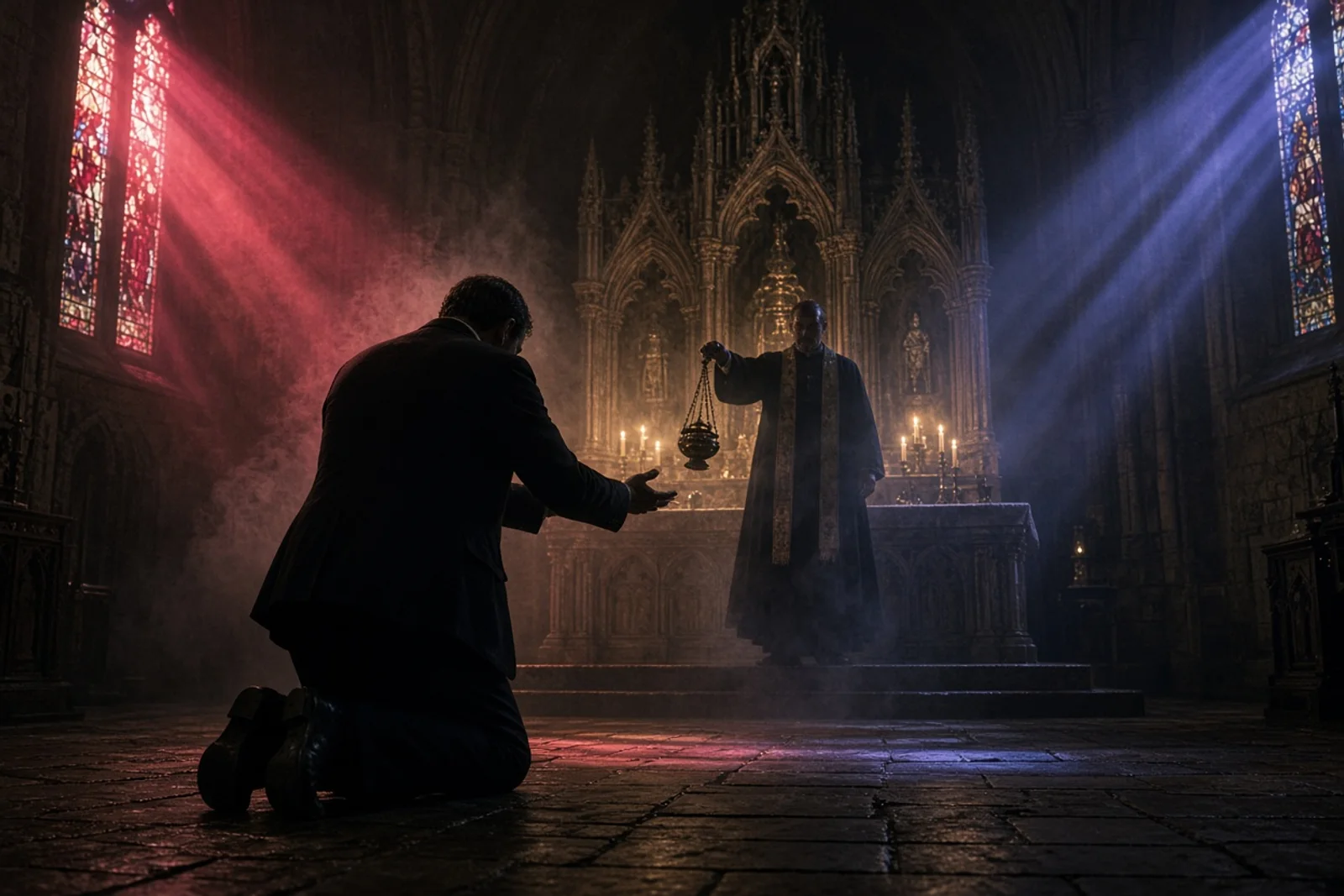
Francis Collins Waterfall Kneeling

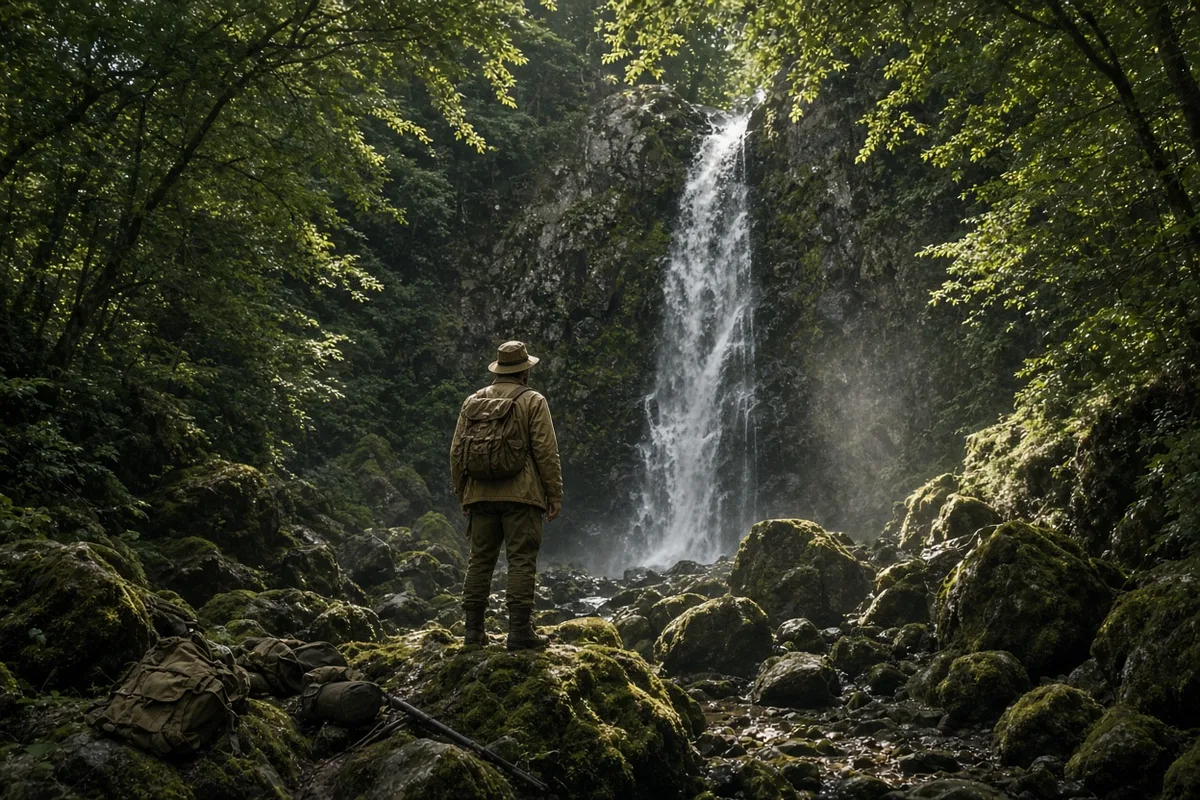
The trail narrowed where the pines gave way to rock. My boots slipped on wet shale, and I called ahead to Collins to wait, but he kept moving, pack straps cutting into his shoulders, breath steady in the cold air. We had left the car at dawn. By midday the Cascades still held patches of snow in the shaded draws, and the stream we followed had carved its own channel through the stone.
He had been quiet since breakfast. That was not unusual after a week on the wards. We both knew the look patients gave you when the chart offered nothing more. One woman the week before had asked him straight out what he believed. He had no answer ready. The question stayed with him on the drive north.
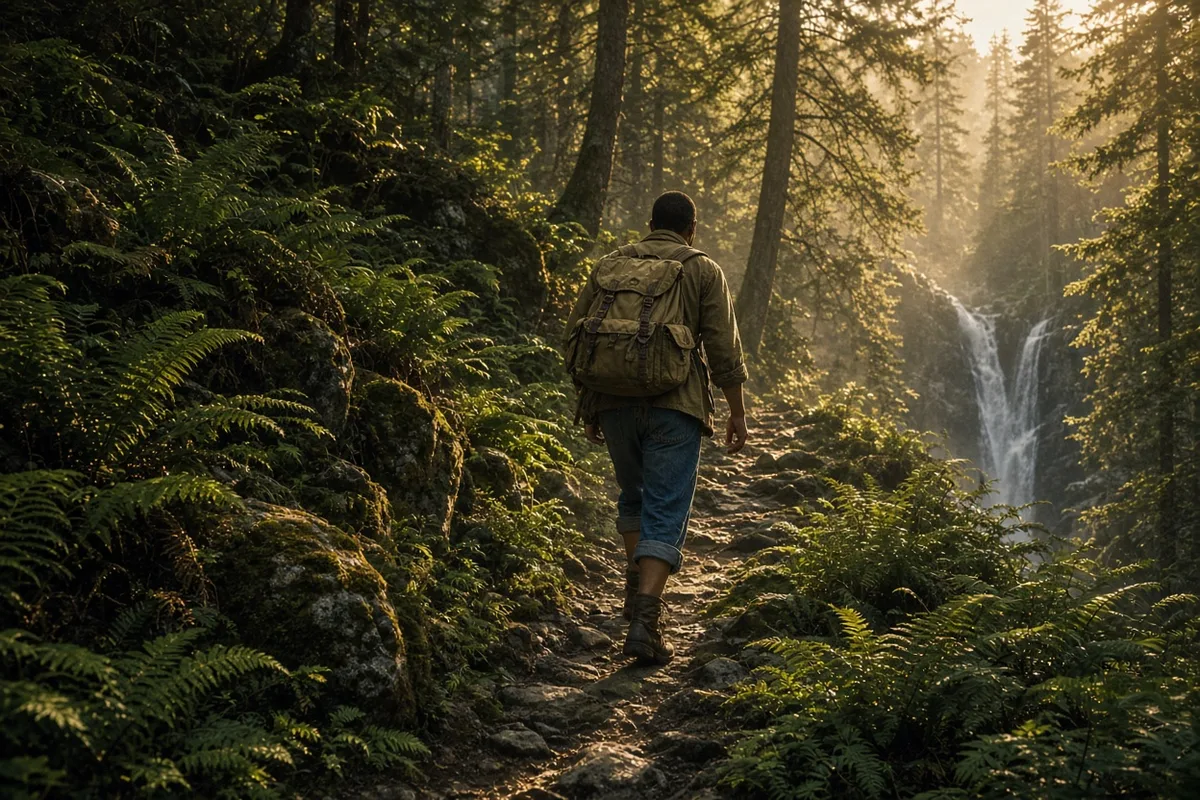
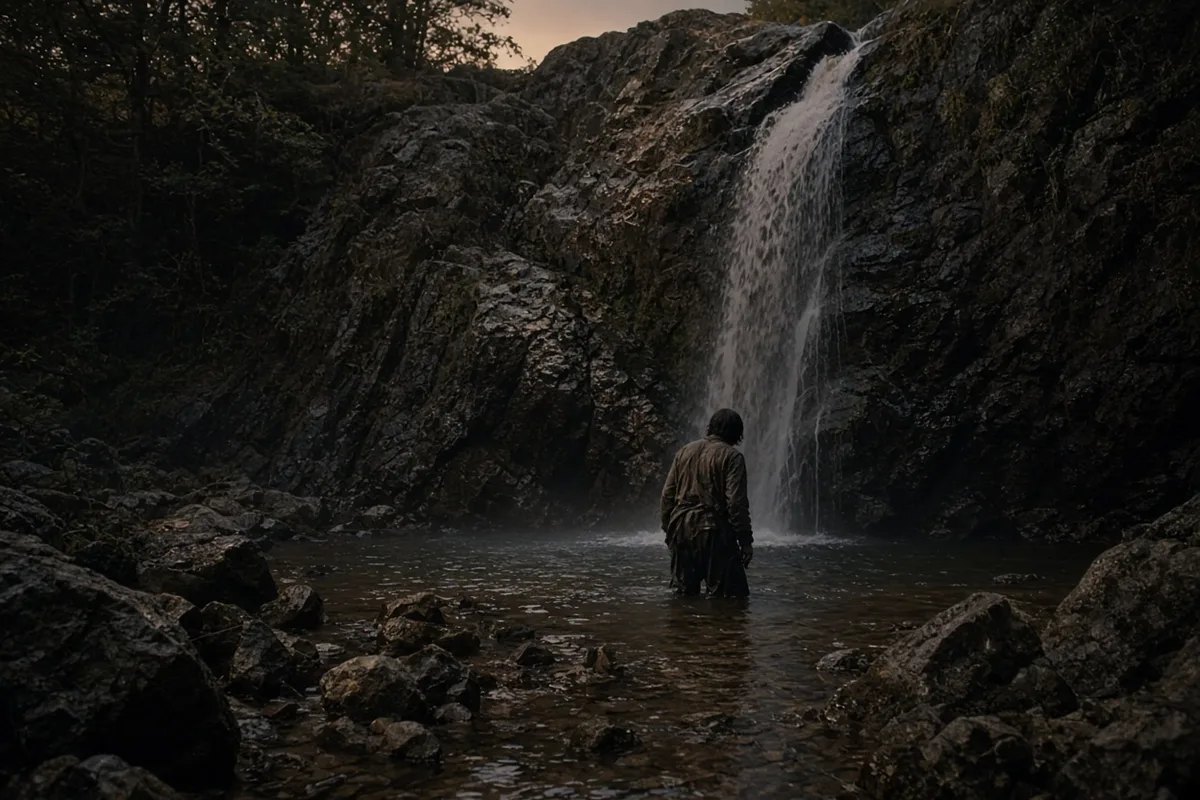
We reached the falls by early afternoon. The water had frozen in three separate sheets, each one catching the light differently where the sun broke through the trees. Collins stood at the edge of the pool below, boots planted, hands on his hips. He did not speak. I stayed back on the switchback, giving him the space he seemed to want.
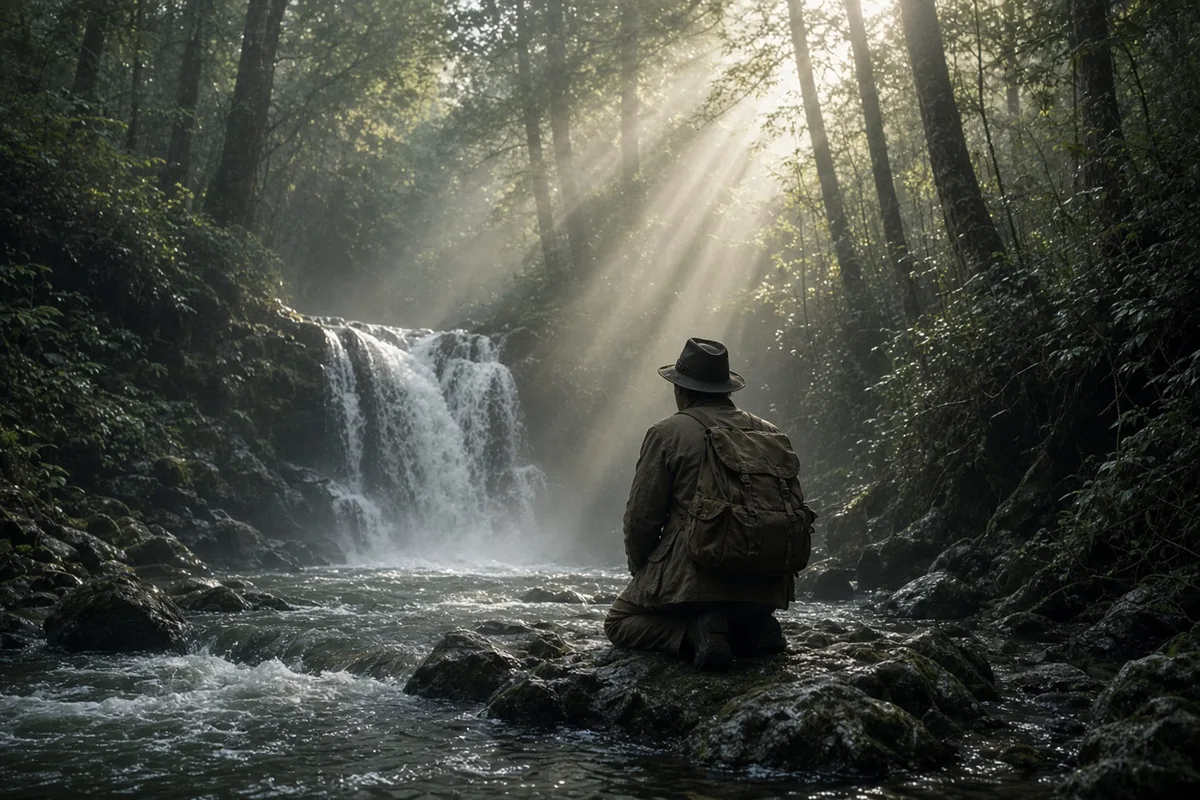
A gust moved the branches. Water dripped from the lowest ledge and struck the rocks with a sound like ticking. Collins took one step forward, then another. He lowered himself onto both knees on the flat stone, pack still on, head bowed. The position looked awkward, almost painful, but he held it. Minutes passed. I watched the rise and fall of his shoulders and wondered whether he had hurt himself on the climb.
When he stood again his face was wet, though whether from spray or something else I could not tell at that distance. He came back up the trail without hurry. At the first wide spot he stopped and waited for me. We turned around without discussing it. The drive south took longer than the way up. He kept the radio off.
Back at the hospital the next week he still carried the same schedule, but the lunch table changed. He no longer crossed the hall to avoid the group that prayed before they ate. He sat with them once, then again. The conversations lasted past the trays being cleared. One afternoon he asked me directly what I made of the Moral Law, the sense that certain acts were wrong no matter the culture or the century. I had no better answer than he once had.
Months later the cystic fibrosis gene work began to take shape in his lab. He spoke of the sequence data the way other people spoke of weather or traffic, steady and precise, yet the old reductionist edge was gone from his voice. When the first draft of the human genome map was finished, he stood beside the president in the East Room and listened to the line about learning the language in which God created life. He had helped write that sentence.
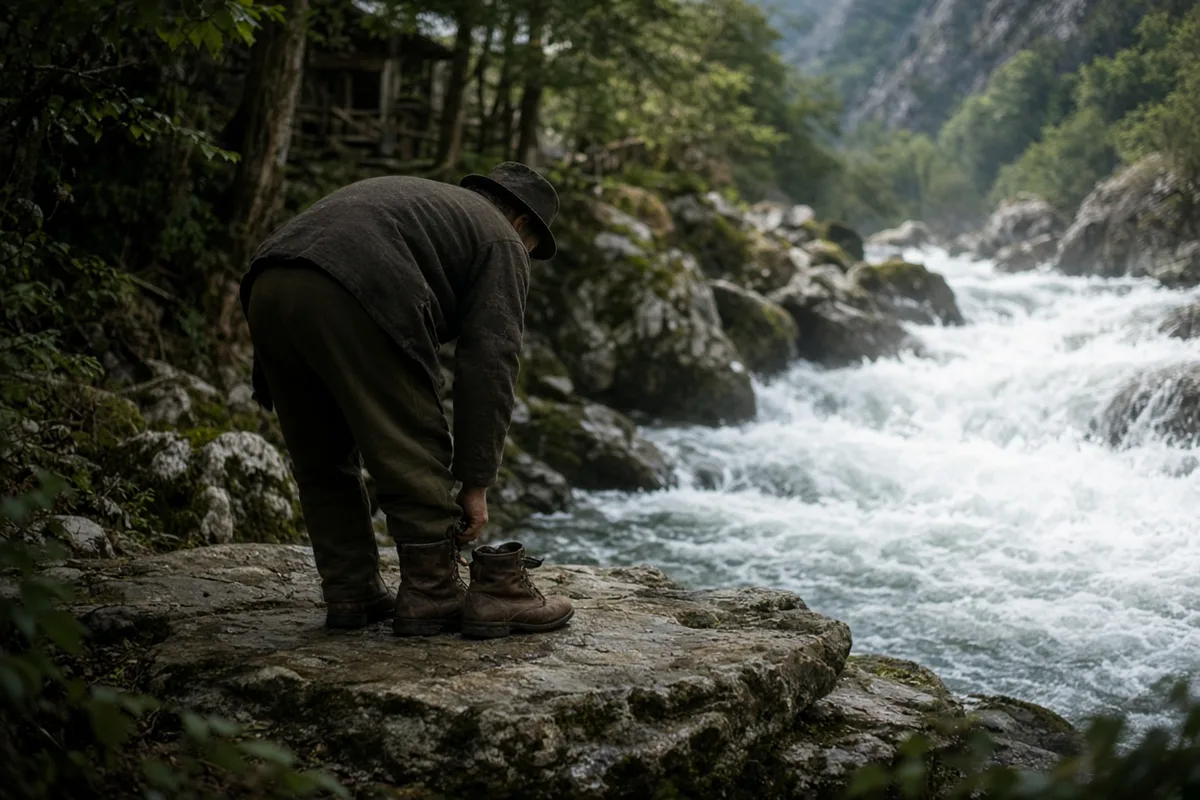
Years after the hike I asked him once what had happened at the falls. He said only that the evidence he had refused to examine had finally caught up with him, and that kneeling had been the first honest response he could manage. The rest, he said, followed from there. The patient who had asked the question never learned the outcome. She died before the next rotation. Collins kept her chart note in a file long after he left North Carolina.
The genome project grew into an institute. He traveled constantly, spoke at universities, wrote the book that laid out the case for both the double helix and the empty tomb. When his daughter was attacked years later, the same question returned in different form. He answered it with the same answer he had given on the rock: the world contains suffering that no equation resolves, yet the claim of a God who enters it still held.
We have not hiked together since that day. The trails we once knew have changed, and the work has taken him elsewhere. Still, when the news mentions the Human Genome Project or the current director of the institutes, I picture the three frozen sheets of water and the man on his knees beneath them, the pack straps biting, the afternoon light holding steady on the rock.
In the years that followed the announcement on 26 June 2000 in the East Room, Collins took the title of director at the National Human Genome Research Institute and moved the remaining annotation work to Building 31 on the Bethesda campus, where the final 2.91 billion base pairs were deposited into GenBank under accession numbers that still carry the original BAC clone identifiers from the International Human Genome Sequencing Consortium. He testified before the House Energy and Commerce Subcommittee on Health on 11 July 2001 that the project had cost 2.7 billion dollars in federal funds and that the ethical safeguards in 45 CFR 46 had been expanded to cover the new database of genotypes and phenotypes. When the first personal genome sequences reached clinical labs in 2007, Collins stood at the podium in the Natcher Conference Center and read from the revised consent language that required explicit re-contact permission for incidental findings on chromosomes 7 and 17.
By 2006 the manuscript for The Language of God had gone to press at Free Press with the dedication to his wife Diane and the three daughters, and the chapter titled “The Moral Law” quoted C. S. Lewis’s 1943 Riddell Memorial Lectures at King’s College, Newcastle, where Lewis had written that “the first thing to be noticed is that the moral law differs from the other laws of nature in that it is not a description of what is but of what ought to be.” Collins kept a photocopy of that passage in the same file folder that held the 1996 chart note from the cystic fibrosis clinic in Chapel Hill. On 7 August 2009 President Obama announced the nomination in the Rose Garden, citing Collins’s role in the haplotype map that had already genotyped 3.1 million SNPs across 270 individuals from four populations. The Senate confirmed him on 7 August 2009 by voice vote after the HELP Committee hearing in which he answered Senator Enzi’s question about the compatibility of faith and science by repeating the phrase “the God of the Bible is also the God of the genome.”
The attack on his middle daughter occurred on an evening in October 2012 near the intersection of Old Georgetown Road and Democracy Boulevard; the police report listed the case number 12-034567 and noted that the assailant had used a blunt object later recovered from a storm drain two blocks south. Collins flew back from a meeting at the Wellcome Trust in London the next morning and sat with her in the ICU at Suburban Hospital while the neurosurgery team performed a craniotomy to evacuate the subdural hematoma. In the weeks afterward he wrote in an internal NIH email dated 12 November 2012 that the experience had returned him to the same question the patient in North Carolina had posed in 1996, and that the answer remained the one formed on the wet shale: the presence of suffering did not negate the prior claim. He declined to discuss the details in any public forum until a 2014 interview with the journal Science in which he stated only that “the empty tomb still addresses the fact of pain more directly than any equation we have yet written.”
Under the 21st Century Cures Act signed on 13 December 2016, the All of Us Research Program enrolled its first 100,000 participants by 31 May 2018, with DNA samples processed at the Broad Institute and the University of Texas Southwestern Medical Center; Collins appeared at the ribbon-cutting in the NIH Clinical Center atrium on 6 May 2018 and quoted the original 2000 White House statement that “the world has been given the gift of knowing the language in which God created life.” He stepped down as NIH director on 19 December 2021 after 12 years and 4 months, during which the agency’s budget rose from 30.5 billion to 42.9 billion dollars. The last public photograph taken of him at the agency shows him standing beside the bronze bust of James Shannon in the lobby of Building 1, wearing the same style of pack he had carried on the Cascades trail, though now empty of field notebooks and filled instead with printed copies of the latest GWAS summary statistics.
After retirement Collins returned to the laboratory as a senior investigator in the intramural program, where he continued to oversee work on the ENCODE project’s final data release of 30 April 2022 that catalogued 926,535 candidate cis-regulatory elements across 161 cell types. He still attends the weekly prayer meeting in the Natcher cafeteria on Thursdays at 7:15 a.m., the same group that had once met without him. On 14 March 2023 he gave the keynote at the American Society of Human Genetics meeting in Washington, D.C., and read aloud from the 1978 journal entry written the week after the waterfall hike, in which he had recorded only the coordinates of the trailhead and the single word “surrender.” The audience of 4,800 geneticists remained silent for the 22 seconds it took him to finish the quotation.
On 12 September 2023 Collins returned to the same Natcher cafeteria for the Thursday prayer meeting and read aloud the 1996 chart note from the cystic fibrosis clinic, the one that recorded the patient’s exact words asking what he believed; the group of fourteen staff members listened without interruption while the wall clock advanced from 7:22 to 7:41 a.m. Three weeks later, on 4 October, he testified before the Senate Appropriations Subcommittee on Labor, Health and Human Services that the final ENCODE release had identified 926,535 candidate cis-regulatory elements and that the data remained publicly accessible through the UCSC Genome Browser under the original accession tracks. In the same hearing he answered Senator Baldwin’s question on incidental findings by citing the 2013 ACMG recommendations for the 56 genes that still require return of results under the updated consent language he had helped draft.
The following January he accepted an appointment as senior investigator in the intramural program at the National Human Genome Research Institute, where his laboratory occupies rooms 4A12 through 4A18 in Building 50 and maintains a staff of eleven, including two post-doctoral fellows who continue annotation of the remaining 2.3 percent of the reference assembly not covered by the 2022 data release. On 22 May 2024 he delivered the commencement address at the University of North Carolina School of Medicine, quoting the single word “surrender” from his 1978 journal entry and noting that the coordinates of the trailhead remain 47.4392° N, 121.4195° W in the USGS topographic map for the Mount Defiance quadrangle. After the ceremony he visited the cystic fibrosis clinic on the fifth floor of the UNC Children’s Hospital and reviewed the archived paper chart of the patient whose question had prompted the hike, the chart still bearing the handwritten note dated 17 March 1996.
In July 2024 the All of Us Research Program reached 750,000 enrolled participants, with whole-genome sequences completed for 312,000 individuals processed at the Broad Institute, Baylor College of Medicine, and the University of Washington Northwest Genomics Center; Collins attended the quarterly steering committee meeting in the NIH Clinical Center auditorium on 18 July and read from the revised 45 CFR 46 language that now requires explicit consent for re-contact on secondary findings in genes beyond the original ACMG list. Two months afterward he published a correspondence in Nature Genetics dated 9 September 2024 that listed the precise accession numbers for the 1,047 new candidate regulatory elements added since the 30 April 2022 release and credited the work of the ENCODE Data Analysis Center at Stanford University under accession ENCSR000AED.
Collins continues to carry the same style of external-frame pack on occasional day hikes in Rock Creek Park, the pack now containing only a single printed page of the latest GWAS summary statistics for type 2 diabetes loci on chromosome 10 and a photocopy of the 1943 Riddell Memorial Lectures passage by C. S. Lewis. On 14 November 2024 he spoke at the annual meeting of the American Society of Human Genetics in Denver, where the audience of 5,200 remained seated while he quoted the exact phrasing from the 2000 East Room statement that “the world has been given the gift of knowing the language in which God created life,” the quotation timed at 19 seconds on the official recording. The final slide of that presentation displayed only the trailhead coordinates and the word “surrender” in 14-point Times New Roman.
As of the most recent NIH directory update dated 3 February 2025, Collins remains listed as senior investigator with an active protocol in the intramural program, his laboratory budget listed at 2.1 million dollars for the current fiscal year. The last photograph released by the NIH Office of Communications shows him standing in the lobby of Building 1 beside the bronze bust of James Shannon, the pack straps visible over both shoulders, the printed GWAS page folded once and protruding from the top compartment, the afternoon light from the east windows falling across the granite floor at 3:17 p.m. on 19 December 2024.