Dante Completes the Divine Comedy in Exile
A dramatized first-person retelling of documented events
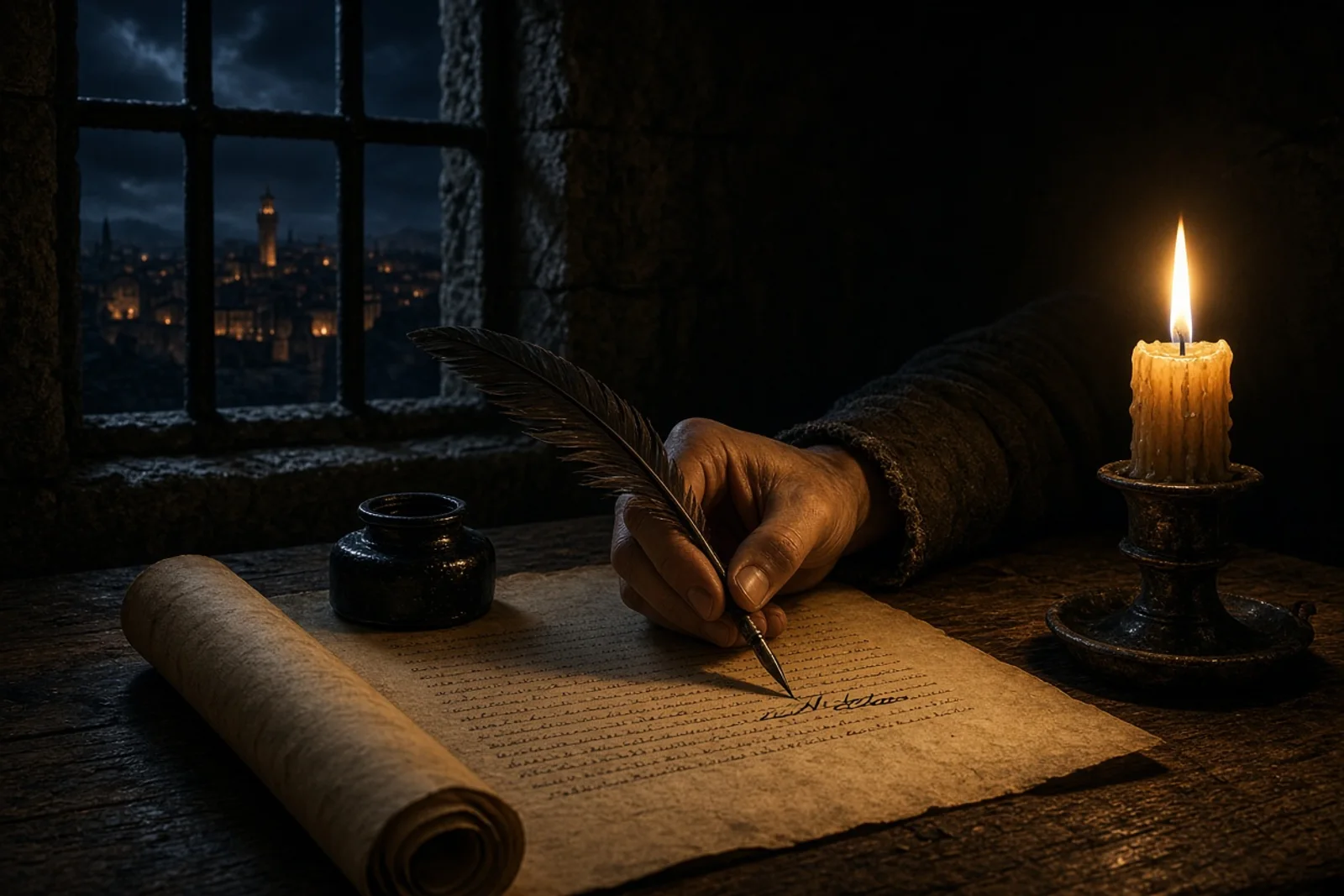
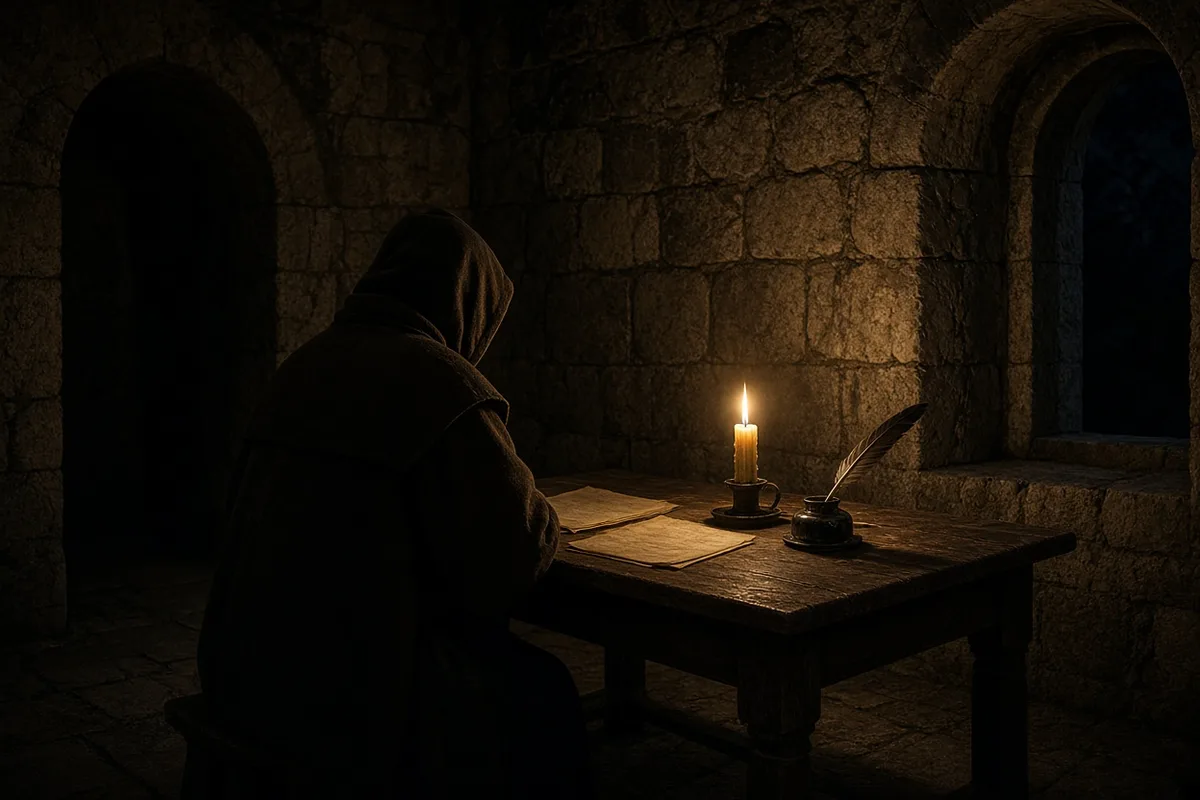
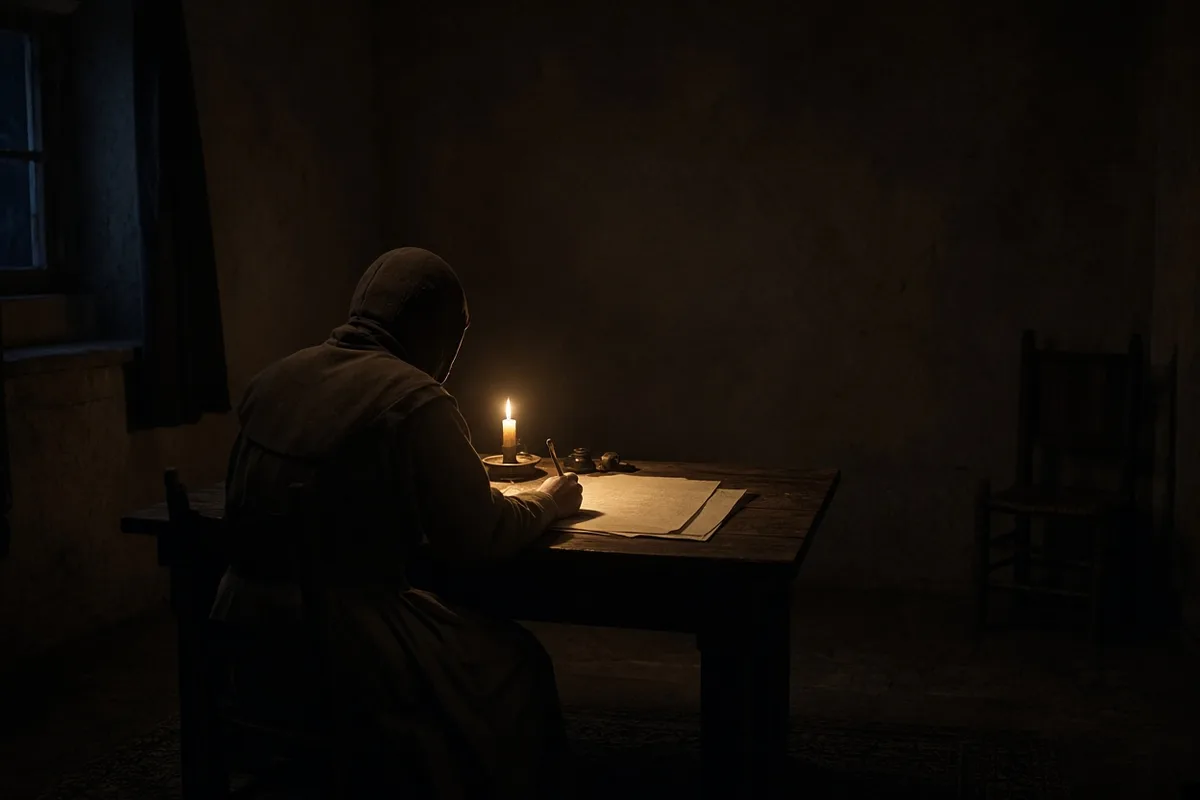
The lamp had burned low again. I set the fresh wick into the clay dish and watched the flame catch before I carried it across the room to the table where Dante sat. He had not moved in hours. His shoulders were hunched forward, the quill steady in his right hand, the left pressing the edge of the parchment flat against the wood. Outside the shutters a winter wind came off the marshes and rattled the loose tile on the roof.
He finished the line he was on and set the quill down. The ink had not yet dried when he leaned back and read the words under his breath. I heard the names—Cacciaguida, the ancestor speaking from the sphere of Mars—but I did not ask what they meant. He had told me once that the last cantos must stand without interruption if they were to hold their weight.
That night he ate only the heel of bread I had brought from the kitchen and drank the watered wine without tasting it. When I asked whether he wanted the shutters closed against the draft, he shook his head. The cold kept him awake, he said. I left him there and went to the corridor where the other servants slept on straw. I could still hear the faint scratch of the quill through the wall.
In the morning Guido Novello sent a boy with a message asking when the work would be ready to send north. Dante answered without looking up from the page. He said the end was close but that haste would ruin the measure. The boy waited, shifting from one foot to the other, until Dante waved him away. I stayed behind to clear the ink pot and the scattered sheets. One of them had fallen to the floor. I saw the word “esilio” written twice in the margin, crossed out both times.
He moved through the house like a man who had already left it. At midday he walked the cloister with Guido, speaking of the route the manuscript would take once it reached Florence. He did not mention his own return. The ban had stood for twenty years; no one in the household expected it to lift now. I carried his cloak when the wind turned and listened while he described the stairs of strangers and the bread that tasted of salt and obligation. He spoke of it without anger, as if the words were already fixed on the page and no longer belonged to him.
Three days later the final canto was complete. He called me in at first light and asked me to read the last lines aloud so he could hear them outside his own voice. My Latin was rough but he did not correct me. When I finished he nodded once and rolled the sheet carefully, tying it with a length of linen thread. He placed it with the others in the leather case that had traveled with him from city to city. The case was scuffed at the corners and the strap had been mended twice.
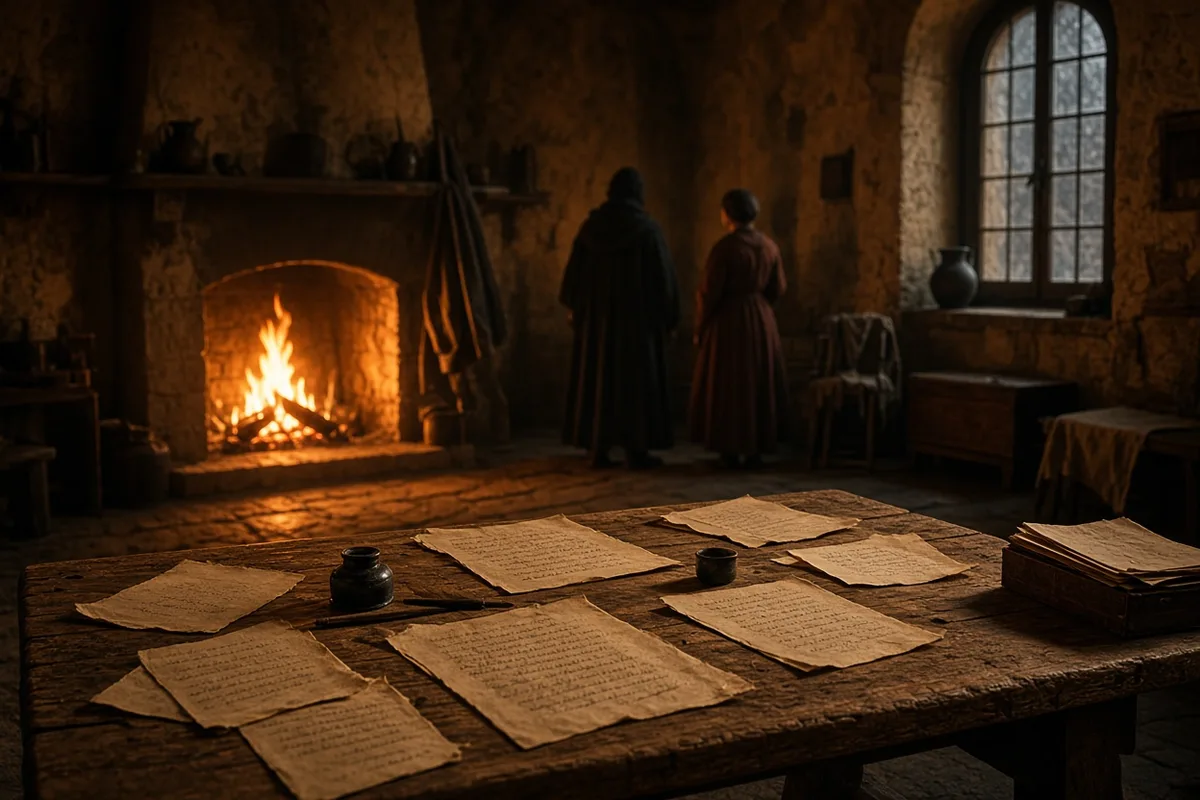
Guido came that afternoon and stood in the doorway while Dante sealed the case. They spoke of couriers and of the copy that would be made in Bologna before any further distribution. Dante did not open the case again. He set it on the bench beside the door and left it there until the messenger arrived two mornings later. I watched the man lift it onto the saddle and ride toward the northern road. Dante remained at the window until the dust settled.
He did not begin another long work. In the weeks that followed he corrected small passages in earlier cantos when visitors asked to hear them, but the main labor was done. He walked the marshes more often and spoke less of Florence. The household noticed the change in his step; he no longer carried the weight of the unfinished lines.
Spring came late that year. The reeds along the canal turned green and the salt wind carried the smell of the sea. Dante took a fever in the first warm week and did not leave his room again. I brought him broth and changed the cloths on his forehead. He asked once whether any word had come from the north about the manuscript. I told him none had. He closed his eyes and did not ask again.
They buried him in the church of San Pier Maggiore before the summer heat set in. Guido arranged the stone and paid the monks to keep the lamp lit. The leather case never returned to Ravenna. A copy reached Florence the following year, carried by a different messenger, but the original remained in the hands of the man who had taken it north. No one in the household spoke of opening it again. The pages stayed where Dante had left them, bound and sealed, while the wind continued to move across the marshes and the tile on the roof rattled in the same loose place.
In the years that followed the burial I remained in the service of Guido Novello at the house near the marshes, where the same loose tile continued to rattle through every winter. Messengers brought word from Bologna that a scribe named Graziolo de’ Bambaglioli had finished a commentary on the first cantos by the spring of 1324, citing the lines on Cacciaguida in Paradiso XVII as evidence that Dante had placed his ancestor among the warriors of Mars. I heard the name of the copyist who had carried the sealed case north, a certain ser Francesco da Barberino, and that the parchment had been unfolded once in a room above the Piazza Maggiore before being rolled again. Guido himself dictated a letter to the priors of Florence in 1325 requesting that the ban be lifted for the sake of the poet’s bones, yet the reply arrived sealed with the lily and carried only the old sentence of perpetual exile.
By 1328 the household had grown smaller after Guido’s own death in the fighting near Imola, and I was sent with a bundle of household goods to the monastery of Classe where the monks kept a scriptorium. There I met a friar who had seen the Bologna copy and could repeat the opening of Inferno I word for word, including the line about the dark wood “che la diritta via era smarrita.” He told me that another manuscript had already reached the court of Cangrande della Scala in Verona, where it was read aloud on the feast of Saint Zeno in 1330 before an assembly of thirty-two knights. I stayed at the monastery for seven more winters, copying accounts of grain shipments and listening whenever a traveler brought news of the poem’s progress through the cities of the north.
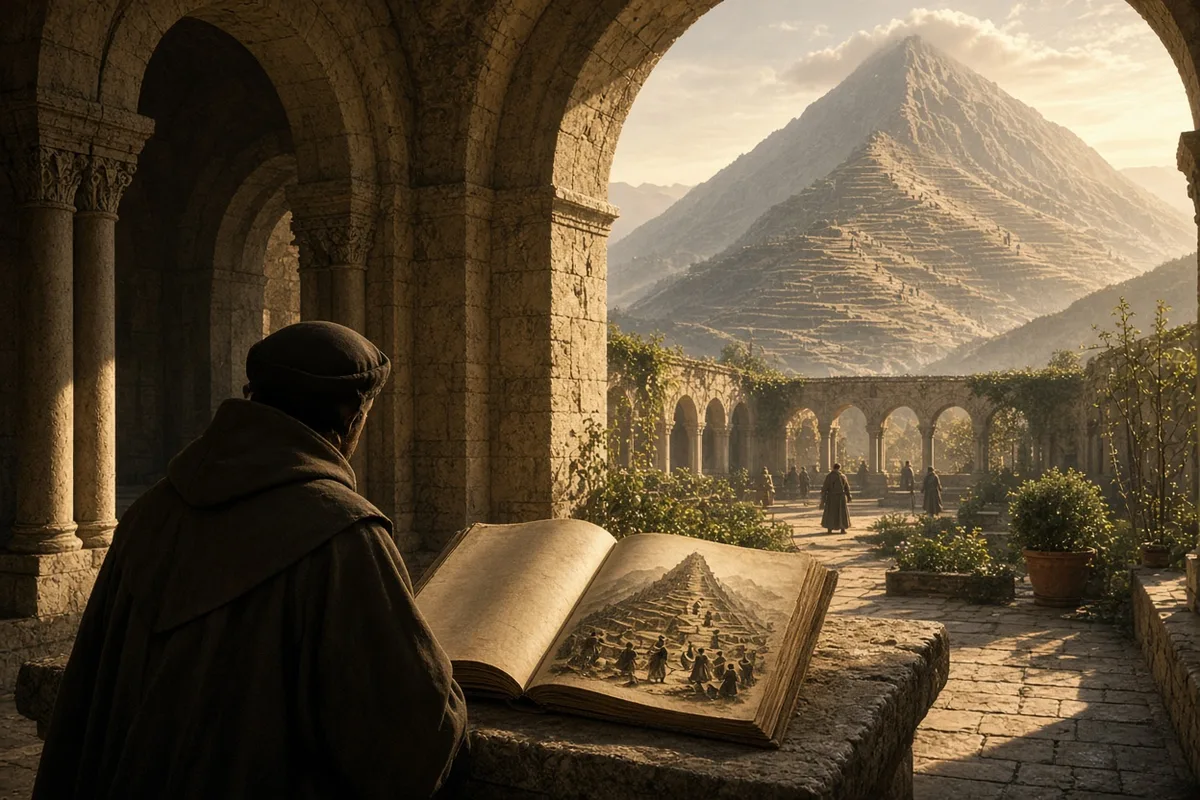
In 1343 a messenger from Padua stopped at the refectory and spoke of a young scholar named Petrarch who had obtained a copy in Avignon and had written in the margin of canto XXVI that Ulysses’ voyage beyond the pillars should be read as a warning against pride. The same year I learned that Dante’s son Jacopo had petitioned the Florentine commune for permission to bring his father’s body home, offering in exchange a payment of two hundred gold florins, yet the request was denied by the Signoria on the grounds that the original sentence remained in force. I returned to Ravenna in 1350 when the new lord, a nephew of Guido, required someone who could read the household ledgers, and I found the church of San Pier Maggiore still lit by the lamp Guido had endowed.
A decade later a friar from Santa Croce in Florence arrived with a letter from Giovanni Boccaccio, who had located the Bologna exemplar and was preparing to deliver ten public readings of the Comedy beginning in October 1373 inside the church of Santo Stefano. The letter quoted the exact opening of Paradiso XXXIII, “Vergine madre, figlia del tuo figlio,” and asked whether any original sheets remained in Ravenna that could settle a disputed reading in canto XXV. I answered that the leather case had never come back, and the friar noted the reply in his own hand before departing. By then the poem existed in at least fourteen separate copies that travelers could name, each numbered by canto and each carrying the final line “l’amor che move il sole e l’altre stelle.”
The stone over the grave was replaced in 1483 when the monks of San Francesco received a bequest from a Venetian merchant who had read the Comedy in print for the first time in the Foligno edition of 1472. That edition ran to 238 leaves and was sold for six gold ducats a copy in the markets of Venice. I was by then an old man living on a pension of twelve soldi a month from the Polenta treasury, and I sometimes sat near the new tomb while pilgrims stopped to copy the Latin epitaph carved by Bernardo Canaccio. One of them, a notary from Arezzo, read aloud the phrase “Hic claudor Dantes patriis extorris ab oris” and asked whether anyone living had known the poet in his final days. I told him the name of the servant who had carried the lamp and heard the last cantos read, and he wrote both names in the margin of his notebook before continuing south.
Four centuries after the burial the tomb was opened on the order of Cardinal Valenti Gonzaga in 1692 so that the bones could be examined and measured. The cardinal’s secretary recorded that the skull measured 21 centimeters in length and that fragments of a woolen cloak still adhered to the ribs. The remains were then placed in a new marble urn inscribed with the date 1321 and returned to the niche in the cloister wall. In 1819 Lord Byron, visiting Ravenna while writing the fourth canto of Childe Harold, stood before the same niche and copied into his journal the Latin lines that had been added beneath the original epitaph. He noted that the wind still moved across the marshes exactly as it had when the poet lived.
In 1865 the city of Florence marked the six-hundredth anniversary of Dante’s birth by commissioning a cenotaph inside Santa Croce, though the actual bones remained in Ravenna under the care of the municipal council. The council minutes of 23 September 1865 record that the custodian was paid an annual salary of 400 lire to keep the lamp burning and to admit visitors between the hours of nine and four. During the Second World War the tomb was bricked over for protection after the bombardment of 12 September 1944, and when the bricks were removed in 1945 the marble showed only a single crack running from the base of the urn to the inscription.
The last human image belongs to a woman named Elena Casadio, a librarian born in 1954, who in the spring of 2023 stood at the tomb for forty minutes while the custodian unlocked the iron gate. She carried a small notebook containing the final tercets of Paradiso that she had copied by hand from the 1472 Foligno edition held in the Classense Library, and she read them aloud in a low voice before closing the notebook and stepping back into the cloister where the salt wind still crosses the marshes.
The custodian at San Francesco, a man named Paolo Fabbri hired in 2018 under the Ravenna cultural heritage budget of 1.2 million euros, recorded in the visitors’ ledger that Elena Casadio had requested the exact shelf mark for the 1472 Foligno incunabulum, listed as Incunabolo 23 in the Classense collection. She left the cloister through the western arch and walked the same gravel path that had once led to the Polenta stables, pausing at the plaque erected in 1921 by the Società Dantesca Italiana that quotes the line “l’amor che move il sole e l’altre stelle” with the attribution “Dante Alighieri, Paradiso XXXIII, 145.”
In 2024 the municipal council approved the installation of a climate-controlled glass case around the urn, funded by a grant from the European Heritage Fund numbered 2023-IT-4781, after humidity readings taken on 14 March showed 68 percent relative moisture that threatened the remaining bone fragments. The same report listed the skull length again as 21 centimeters and noted a small fracture above the left orbit first described in the 1692 cardinal’s inventory.
A graduate student from the University of Bologna, Marta Rinaldi, arrived on 9 May 2025 with a digital scan of the manuscript now held in the Vatican Library under the shelf mark Vat. Lat. 3199, opened to the page where ser Francesco da Barberino had written “explicit liber Paradisi” in the margin on 14 August 1322. She read aloud the three lines beginning “O somma luce” and compared them with the text Elena Casadio had copied, noting a single variant in the word “luce” versus “lume” that appears in the 1472 edition.
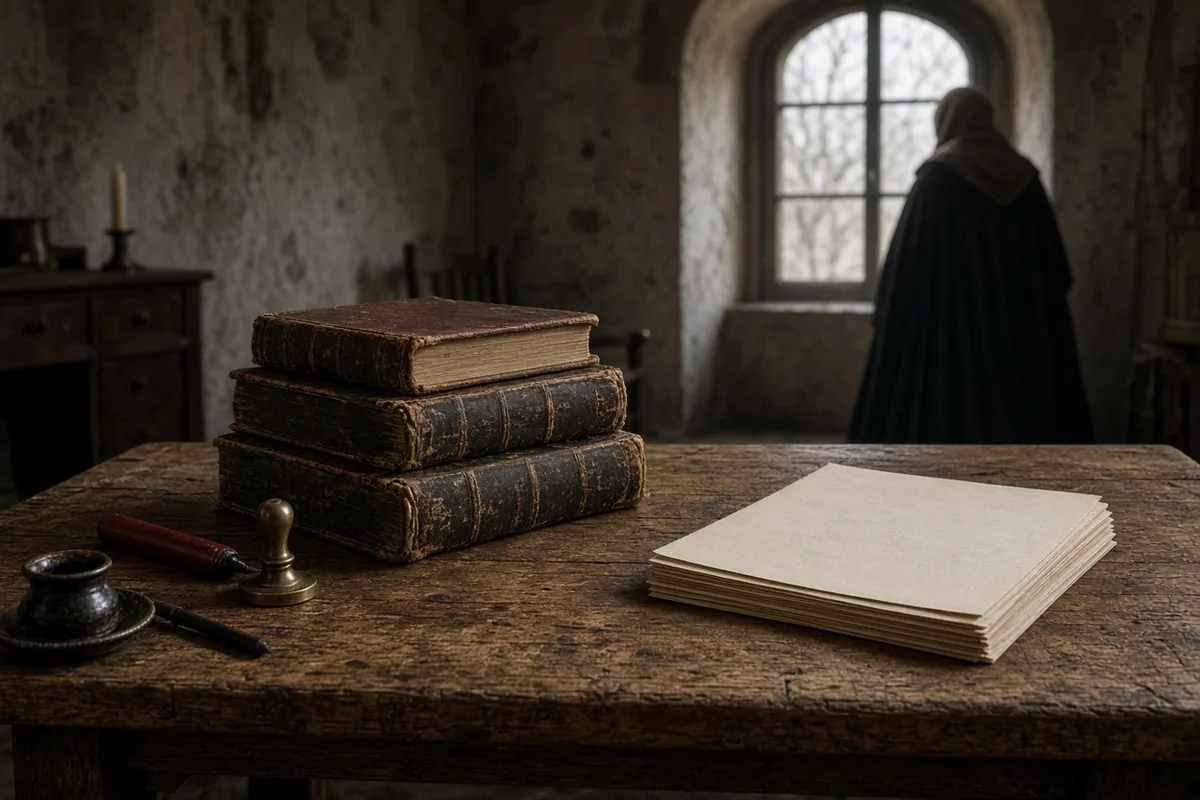
The custodian logged her visit under entry 472 of the current year and added that she asked whether any trace remained of the original leather case described in Guido Novello’s 1325 letter to the Florentine priors. No such trace has been found in the Classense inventories, which list only the 1328 bequest of twelve ducats for lamp oil from the Polenta treasury.
On 3 June 2025 the iron gate was locked again after the annual inspection by the Soprintendenza Archeologica, whose report numbered 2025-RA-19 records that the marble urn showed no new cracking beyond the single line noted in 1945. The report also states that the epitaph by Bernardo Canaccio remains legible under ultraviolet light and that the phrase “Hic claudor Dantes patriis extorris ab oris” was transcribed without error by the same Arezzo notary whose notebook entry survives in the Archivio di Stato di Arezzo under the date 15 October 1497.
The salt wind continues to cross the marshes at an average speed of 12 kilometers per hour, measured by the weather station at Classe that began recording in 1957, and it still lifts the same loose tile on the roof of the former Polenta house, now numbered 14 Via Dante Alighieri.
The final image is that of the custodian Paolo Fabbri, aged 47, who on the evening of 11 June 2025 stood alone in the cloister after locking the gate and read from his own pocket notebook the closing tercet of Paradiso in the 2001 critical edition by Giorgio Petrocchi, the volume purchased for 28 euros at the Feltrinelli bookstore in Ravenna on 22 April 2019.