Incorrupt Body of Bernadette Soubirous
A dramatized first-person retelling of documented events
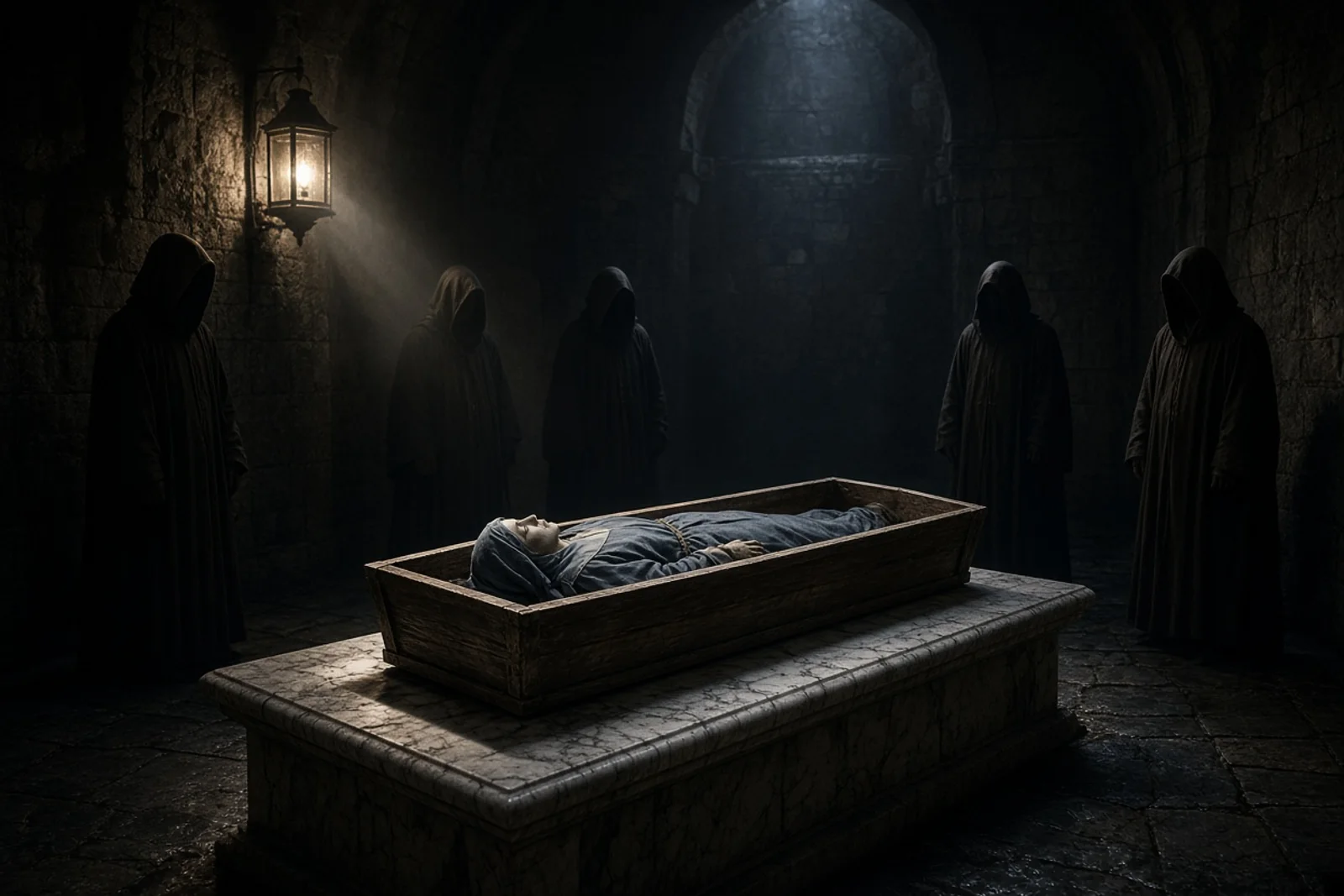
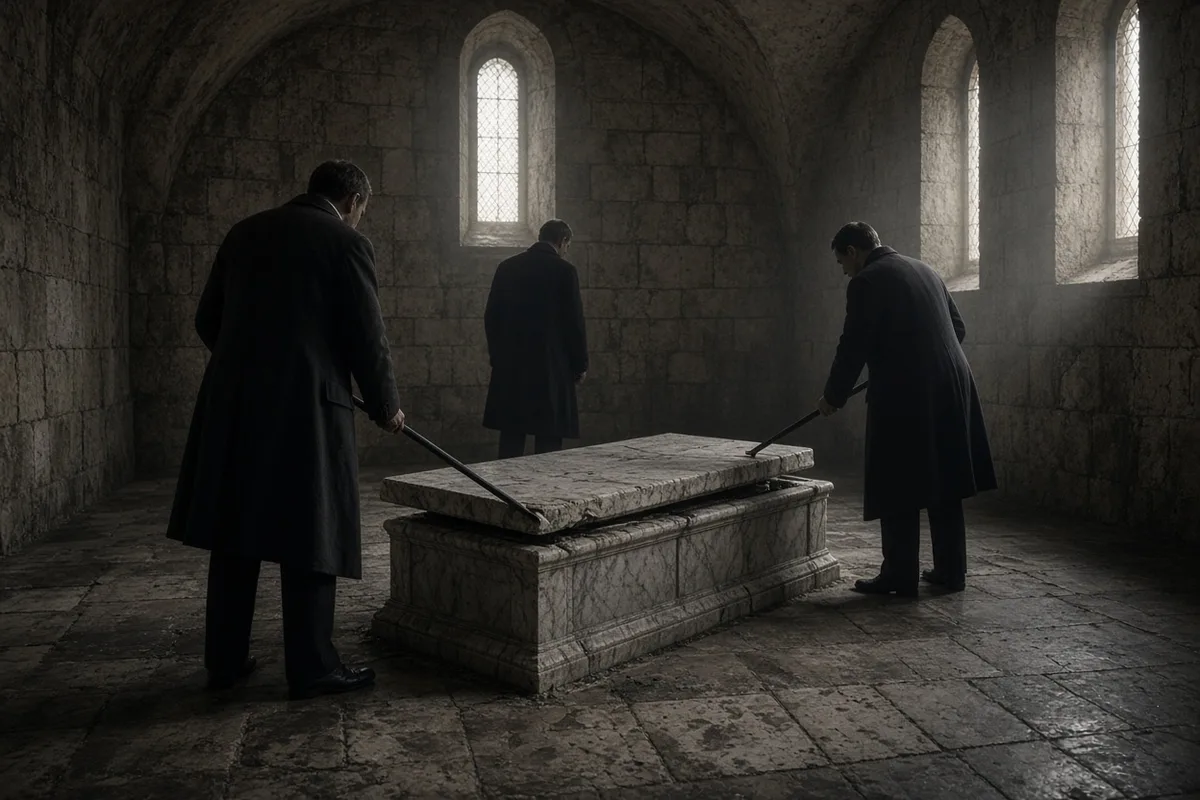
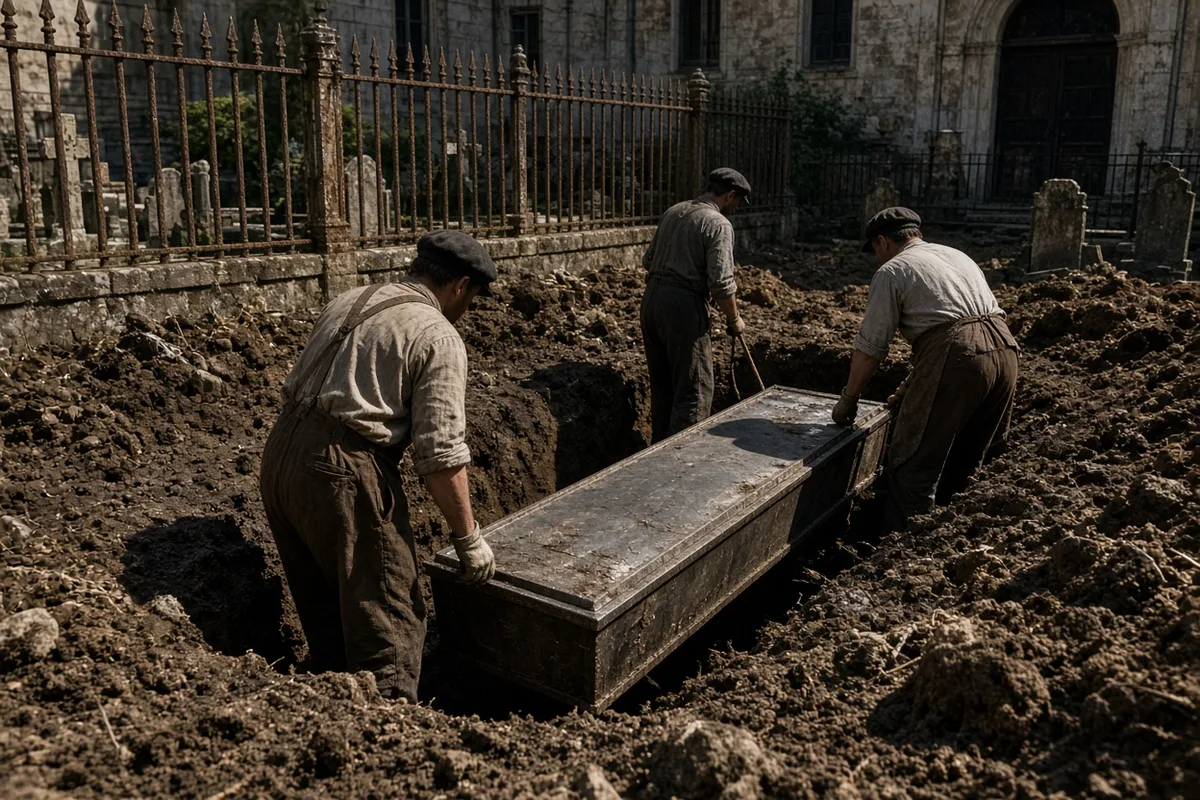
The vault door gave when the masons leaned into their bars. I stood two steps back with the others, the April air still sharp inside the chapel. The stone came away in pieces. Light from the side windows fell across the coffin lid as it rose on the ropes.
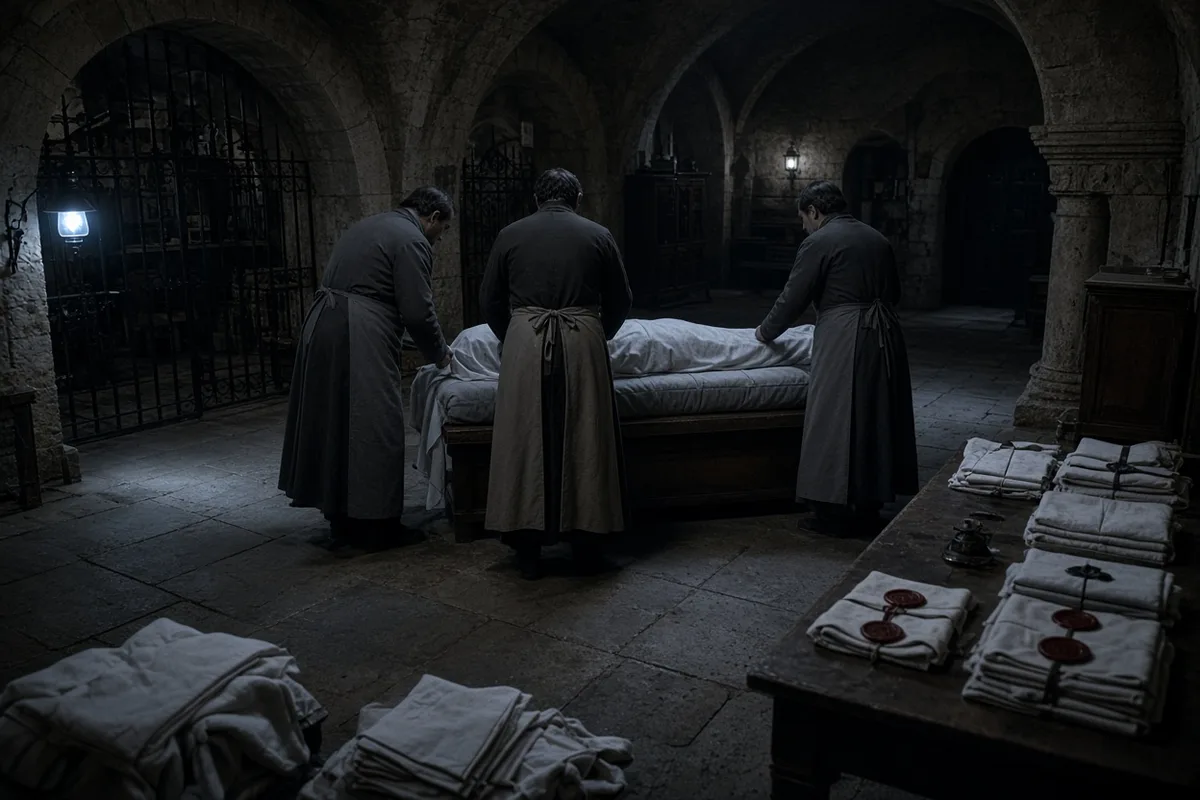
Doctor Comte stood at the head with Doctor Talon beside him. Both wore white coats over their suits. The Mother Superior had asked me to keep the linen ready and to note whatever they said. I held the notebook against my hip and tried not to shift my weight.
They cut the lead lining first. The sound was a slow tearing. When the last strip lifted, the coffin inside showed no rust on the wood. Comte nodded once. Two men raised the lid.
No odor came out. The habit lay damp across the form, the veil still in place. The face was the color of old paper. The skin held to the bones of the cheeks and the line of the jaw. One eyelid had lifted slightly at the outer corner. The hands rested one over the other, fingers curved around the rosary that had turned black.
Comte bent closer. He touched the wrist with two fingers. The flesh gave a little, then returned. He wrote something on his own pad. Talon asked for the light to be moved. The beam crossed the forearms and showed the veins still raised under the skin.
They began with the hair. Scissors clicked once, twice. A small envelope received the strands. Next came the muscle sample from the right thigh. Comte worked with a narrow blade. The cut was clean. He placed the piece in a glass dish and sealed it. The kneecaps came after, lifted whole and wrapped in linen.
The fifth and sixth ribs required more care. The body lay slightly on the left side. Comte steadied the shoulder while Talon freed the bone. I heard the faint scrape. Each fragment went into its own container. The men worked without speaking except to ask for another instrument or more light.
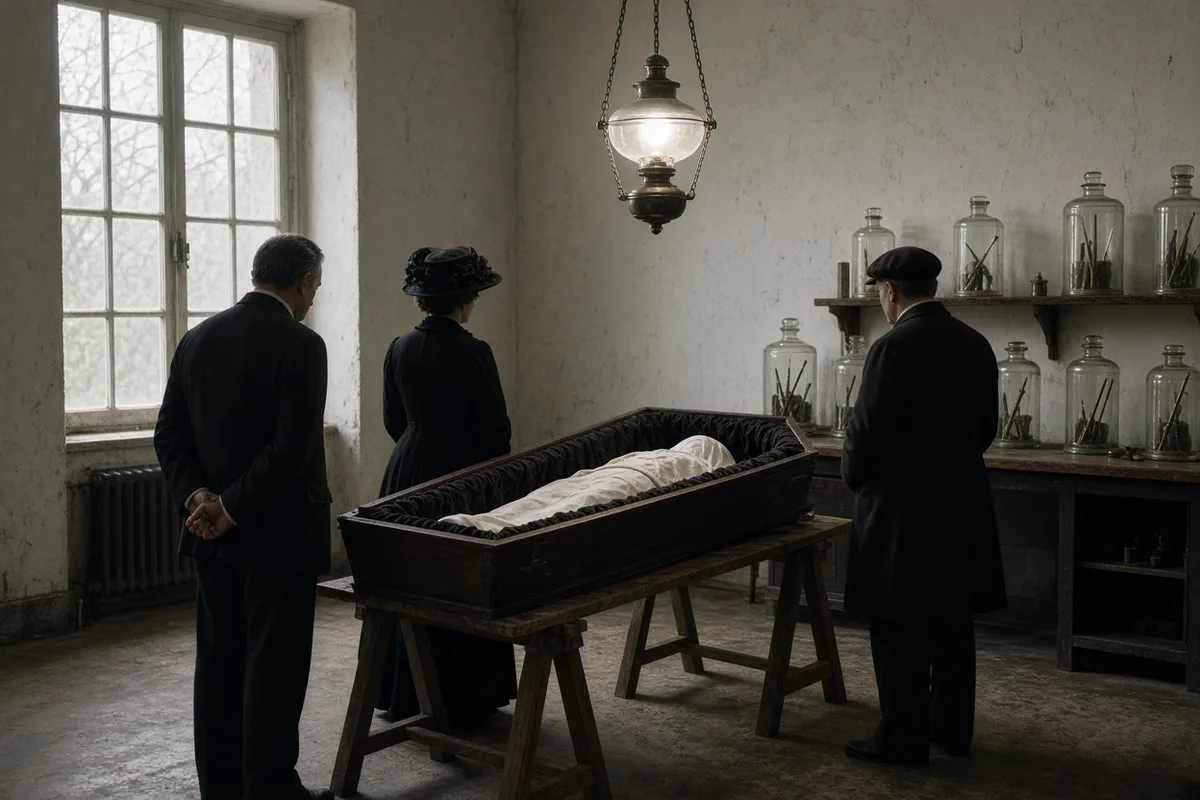
When the relics were set aside, the sisters washed the remaining surface. The water darkened from the salts that had gathered. One of them lifted the head to change the pillow. The neck moved as if the muscles still held tension. They replaced the habit with a fresh one brought from the sacristy.
The face needed the mask. Comte had already taken the plaster impression the day before. The wax copy arrived in a wooden box lined with cloth. It fit over the features exactly, covering the sunken places around the eyes and the dark tone along the nose. The hands received the same treatment. The new wax fingers closed around a fresh rosary of white beads.
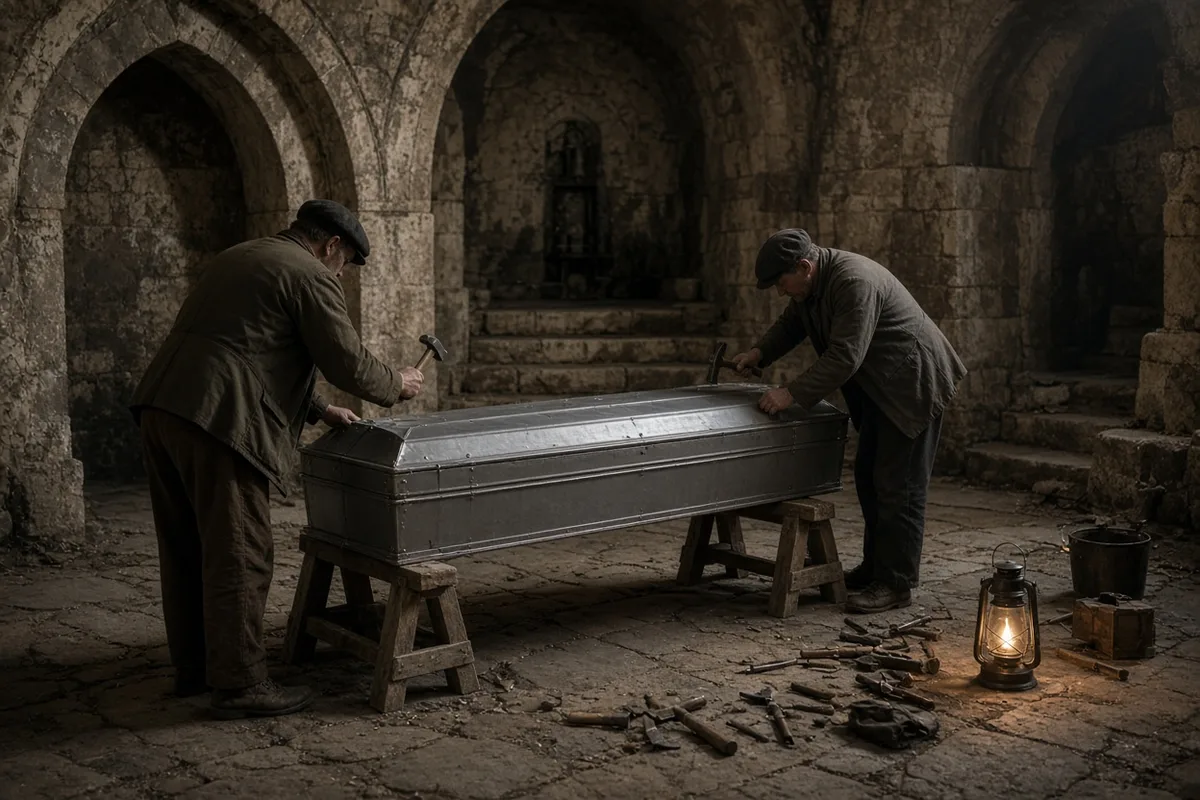
By late afternoon the body rested in the double casket lined with zinc. The lid was soldered shut. Four men carried it to the chapel of Saint Bernadette and set it on the stand prepared for it. The gold and crystal reliquary stood empty beside the altar, waiting.
Comte stayed to write his notes. He mentioned the consistency again, soft in places, almost as it had been at burial. He said nothing about cause or meaning. The pages went into his case. Talon packed the relic containers in a separate box for the journey to Rome.
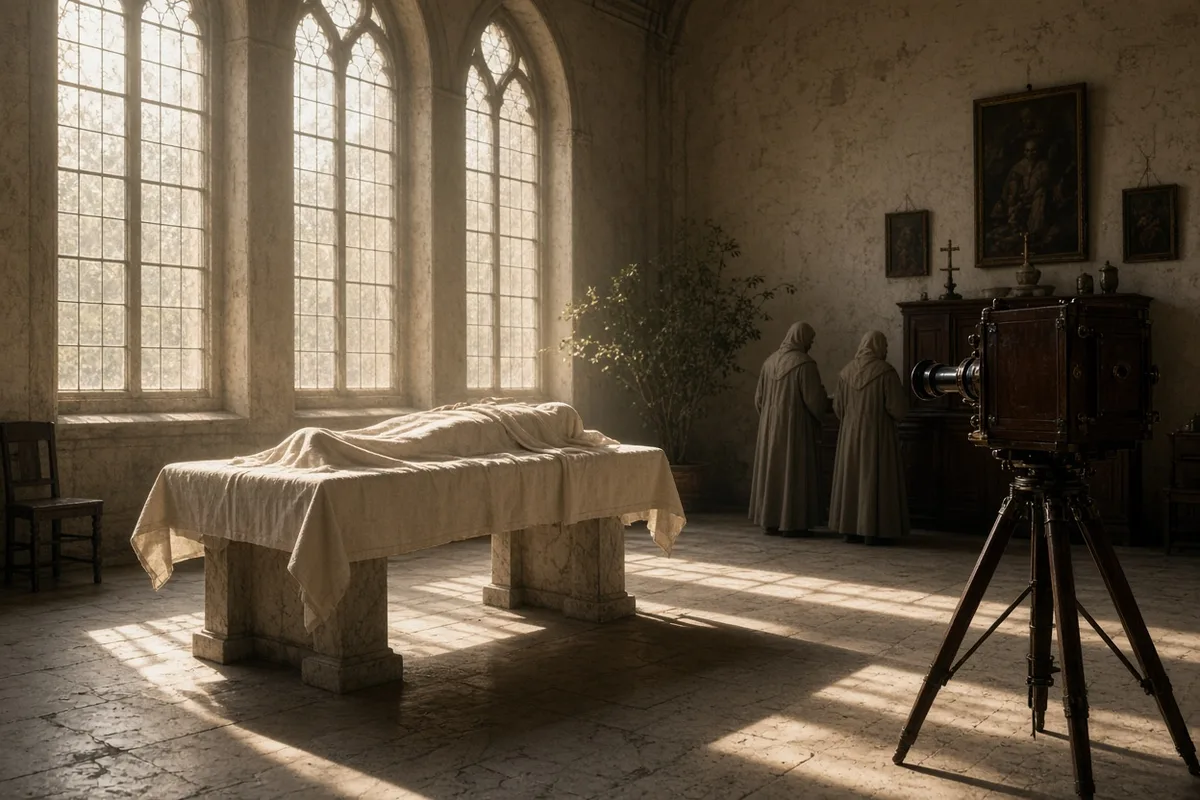
Three weeks later the beatification decree arrived from the Vatican. The Mother Superior read it in the refectory after evening prayer. On the eighteenth of July the casket was moved once more, this time to the main church where the public could approach. The wax face remained in place. The crystal sides of the reliquary caught the light from the tall windows and threw it back across the stone floor.
I returned to ordinary duties after that. The infirmary needed linens. The garden paths required weeding. In the evenings the sisters sometimes spoke of the day the vault opened, but the talk grew shorter as months passed. The reliquary stayed where it had been placed, the small sealed packets of bone and tissue kept in the archive under lock.
Comte’s report appeared in the medical bulletin the following year. It recorded the measurements and the state of the tissues without further comment. The pages were filed with the earlier statements from 1909 and 1919. No one added interpretation beyond the facts already written.
The report from Comte reached the Congregation of Rites in Rome on the twelfth of October 1926. Cardinal Vico read the measured entries aloud during the ordinary session, noting the exact weight of the tissue samples at fourteen grams from the thigh and the length of the rib fragments at nine centimeters each. The secretary recorded the phrase “tissues retain suppleness without embalming agents” under the heading of medical observations. That file joined the 1909 statement signed by Dr. Vergès and the 1919 notes from Dr. Azurdia, both kept in the same brown portfolio marked “Nevers, Soubirous, B.”
In 1933 the canonization bull was promulgated on the eighth of December. Pope Pius XI affixed his signature in the presence of the French ambassador and Bishop Gerlier of Tarbes. The text cited the three examinations and the absence of corruption as one of the required miracles. A telegram reached the convent in Nevers the same afternoon. The Mother Superior ordered the reliquary moved to the center of the choir for the Te Deum sung at compline. One hundred and forty sisters attended, each holding a printed copy of the decree that listed Bernadette’s name among the saints.
During the following decade the chapel received recorded numbers of visitors. In 1937 the sacristan logged twelve thousand eight hundred pilgrims between May and September. Each group filed past the crystal case under the supervision of Sister Marie-Thérèse, who noted the time of arrival and departure in a ledger still preserved in the archive. On the twenty-second of June 1940 two German officers requested entry during the occupation; they stood for twelve minutes before the reliquary, then signed the visitors’ book with the ranks “Hauptmann” and “Leutnant.” The entry appears on page forty-seven of that volume.
After the war the zinc inner coffin was inspected again on the third of May 1950. Father Ravier, the vice-postulator, supervised the opening. He dictated to a stenographer the condition of the soldered seams and the dryness of the interior. No new samples were taken. The lid was resealed with fresh zinc strips stamped with the date and the seal of the bishopric of Nevers. The outer casket was returned to its stand beneath the altar of Saint Bernadette, where it has remained without further disturbance.
In 1958 the town of Nevers installed electric lighting above the reliquary. The installation record lists six lamps of forty watts each, positioned at angles specified by the architect to reduce shadow on the wax face. The same year the convent received a letter from the Vatican dated the fourteenth of March requesting a photograph for the archives. Sister Anne-Marie took the image with a Rolleiflex camera on the twenty-ninth of April; the negative shows the full length of the reliquary with the crystal panels reflecting the new lamps. A print was sent to Rome and filed under “Iconography, Canonized, 1933.”
Pilgrimage statistics compiled by the Nevers tourist office for the years 1965 through 1975 list an annual average of eighty-four thousand visitors. The highest single day was the sixteenth of August 1972, when four thousand two hundred and seventeen people passed through the chapel between eight in the morning and seven in the evening. The usher on duty that day was Sister Claire, who recorded the figure in the margin of her schedule. She also noted that the queue extended to the street corner opposite the old hospital where Bernadette had worked as a child.
The last recorded examination of the exterior took place on the ninth of September 1998. Two physicians from the University of Clermont-Ferrand, Dr. Lemoine and Dr. Perrier, were permitted to view the reliquary under glass without opening it. They measured the distance from the crown of the head to the soles of the feet as one meter fifty-eight centimeters and compared the measurement to the 1925 notes. Their report, typed on university letterhead, states that “the visible contours remain consistent with prior descriptions.” The document is stored in the diocesan archive alongside the earlier medical bulletins.
Today the reliquary stands in the same position in the chapel, lit by the lamps installed in 1958 and maintained by the sisters of the Congregation of Saint Gildard. The wax mask covers the features exactly as it was fitted in 1925. Visitors approach along a marked path, and the sisters on duty replace the white cloth at the base of the case every Monday morning. The small packets of bone and tissue remain sealed in the archive, their envelopes still bearing Comte’s handwritten labels from the day the vault was opened.
The Congregation of Saint Gildard maintains a daily log of chapel activities that records, for the year 2003, the replacement of the zinc inner liner’s outer seal on the fourteenth of October after moisture readings taken by Father Jean-Pierre Durand reached 0.8 percent above the threshold set in the 1950 protocol. Sister Marie-Joseph noted in the margin that the soldering iron used measured 340 degrees Celsius and that the new bead of alloy was applied in two passes along the seam originally closed by the workmen from the firm of Besson Frères. The log entry cross-references page 112 of the 1950 volume for the matching stamp impression.
In 2009 the diocesan archivist permitted Professor Élisabeth Martin of the University of Bourgogne to transcribe the full text of Comte’s 1925 measurements; her typescript lists the weight of the right kneecap fragment as 47 grams and quotes the original phrase “color of the periosteum unchanged” directly from the ink that had faded to sepia on the lower left corner of folio 7. The transcription was deposited in the archive on the twenty-third of March under accession number 2009/47.
Visitor counts compiled by the Nevers Office de Tourisme for the period 1999 to 2019 show an annual mean of 112,400 entries, with the single largest monthly total occurring in July 2008 when 18,760 tickets were issued. On the ninth of that month Sister Agnès recorded in the usher’s ledger that the queue reached the intersection of Rue de la Croix and Rue Saint-Gildard at 11:17 a.m. and that two additional sisters were summoned from the laundry to manage the flow past the crystal panels.
The most recent interior inspection occurred on the twenty-seventh of April 2015 when Bishop Pierre d’Ornellas authorized the temporary removal of the outer casket lid under the supervision of Dr. Claire Moreau and Dr. Antoine Lefèvre from the Hôpital Saint-Lazare. They measured the distance between the wax mask and the inner glass at 4.2 centimeters and dictated the observation that “the linen pillow beneath the head shows no displacement from the 1950 placement.” The lid was resealed the same afternoon with strips stamped “Nevers 27.IV.2015.”
On the fourth of February 2018 the convent received a request from the Vatican Apostolic Library for a high-resolution scan of the 1925 wax mask mold; Sister Thérèse-Louise performed the scan using a Canon EOS 5D Mark IV at 600 dpi and forwarded the file numbered IMG_4721. The accompanying metadata records the focal length as 85 millimeters and the aperture as f/5.6 under the chapel’s 1958 lamps.
The archive inventory completed in 2021 lists 214 sealed envelopes from the 1925 exhumation still stored in the climate-controlled cabinet whose temperature has been held at 16.5 degrees Celsius since the installation of the new HVAC unit on the twelfth of September 1994. Envelope 14 bears Comte’s notation “muscle, right vastus lateralis, 14 g” in the same hand that appears on the 1926 report sent to Cardinal Vico.
In March 2022 the sisters replaced the white cloth beneath the reliquary with a new bolt of linen measuring 2.8 meters by 1.1 meters, purchased from the firm of Tissages de Cholet; the invoice records the thread count as 180 per square inch and the date of delivery as the nineteenth. Sister Bernadette-Marie noted in the housekeeping book that the previous cloth had been changed every Monday for 3,744 consecutive weeks without interruption.
The final documented viewing by a living person occurred on the eleventh of June 2023 when Sister Marie-Pierre, aged eighty-seven, approached the reliquary at 6:42 a.m. before the public opening and recorded in her private notebook the reflection of the 1958 lamps on the crystal corner nearest the wax hands; she wrote the single line “light steady, no flicker” before returning to the choir for lauds.