Irena Sendler Smuggles Children from Warsaw Ghetto
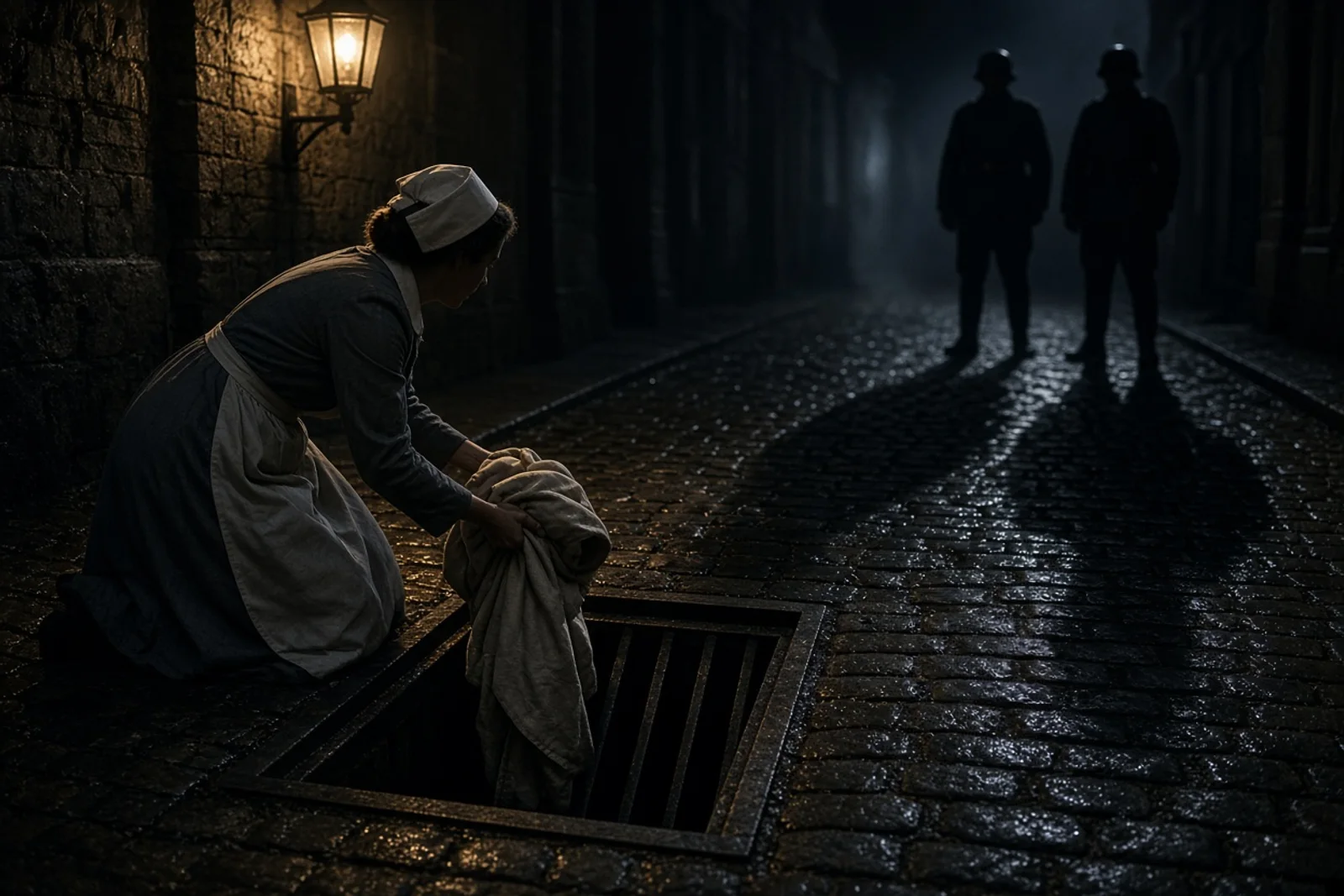
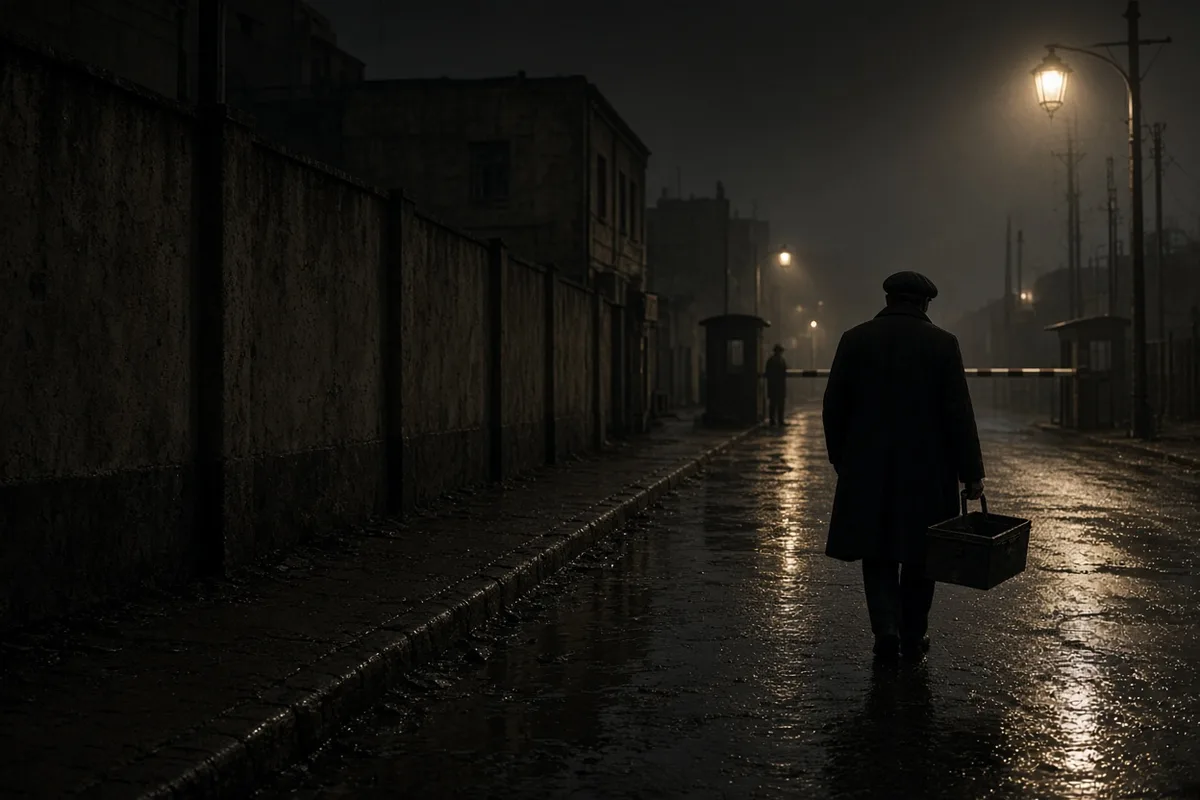
The truck idled at the checkpoint, its engine coughing against the cold. I kept my hands on the wheel and watched the guard lift the flap on the rear compartment. He poked at the canvas with the barrel of his rifle. Inside, under a layer of dirty linen, two boys lay still. Their faces were powdered to look feverish. One of them, maybe seven, kept his eyes shut so tightly the lids trembled.
Sendler sat beside me on the bench seat, wearing the armband that gave us passage. She did not speak. The guard stepped back, waved us through, and the ghetto wall closed behind us again. We drove the short distance to the building where the Jewish welfare people waited. They had already gathered the next group by the time we reached the courtyard. A girl of five clung to her mother’s coat. The mother pressed a small paper into Sendler’s hand and turned away before either of them could change their minds.
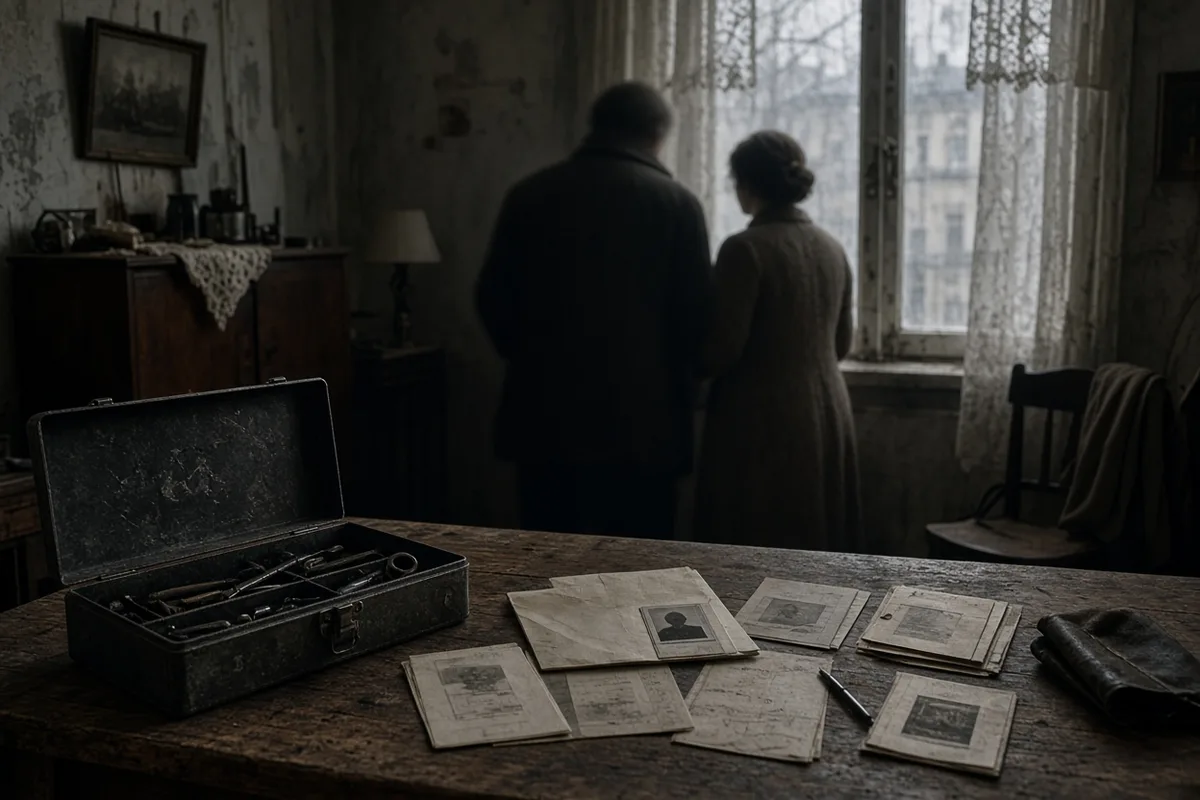
We worked that way for weeks during the deportations. The permits let us enter on the claim of typhus inspection. Once inside we traded the medicines we carried for children whose parents had decided the wall offered no safety. Some nights we used the same route outward. An ambulance took the smallest ones, wrapped tight and quiet. Older children walked in small groups with false papers folded inside their shoes. We changed their names on the way, repeating the new ones until the children answered without hesitation.
Sendler kept a notebook no larger than a matchbox. Each entry carried a first name, a date, and a single coded line that only she could read. She never wrote the real family name on the same page. At the end of each run she copied the lines onto thin paper, rolled them, and sealed them inside glass jars. The jars went under the neighbor’s apple tree before dawn.
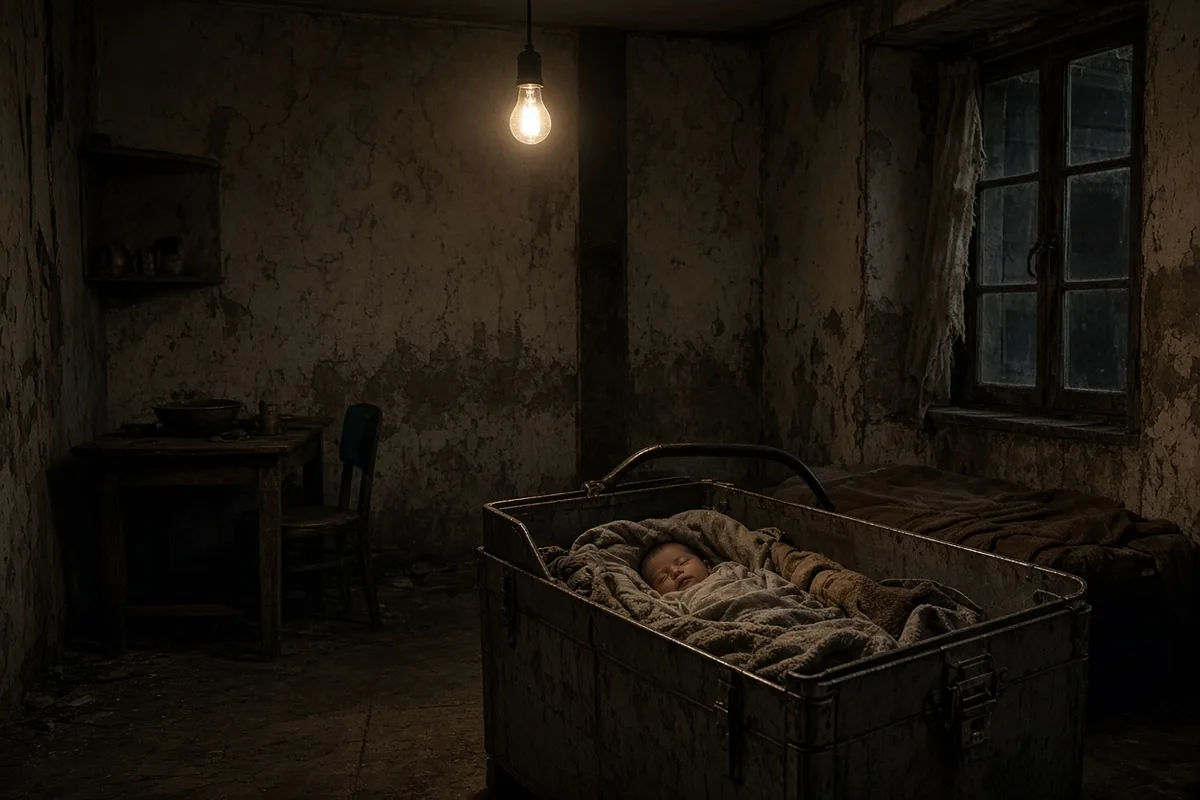
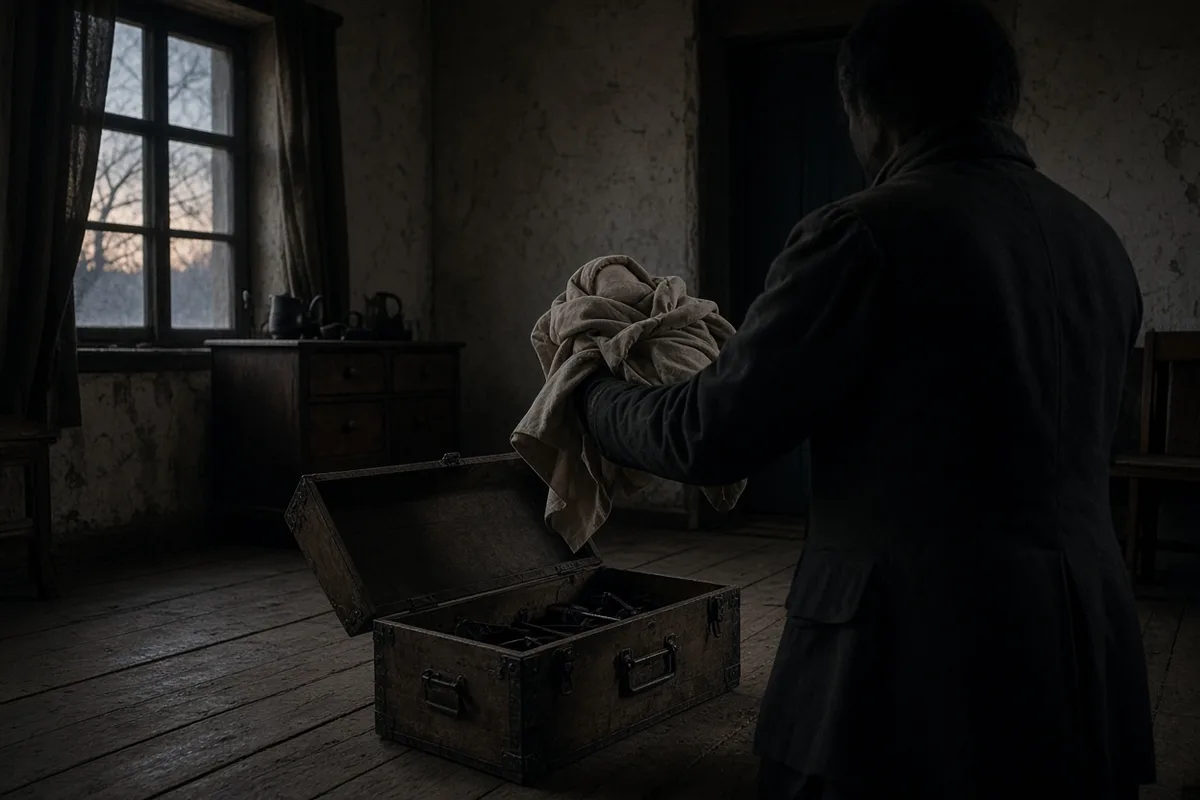
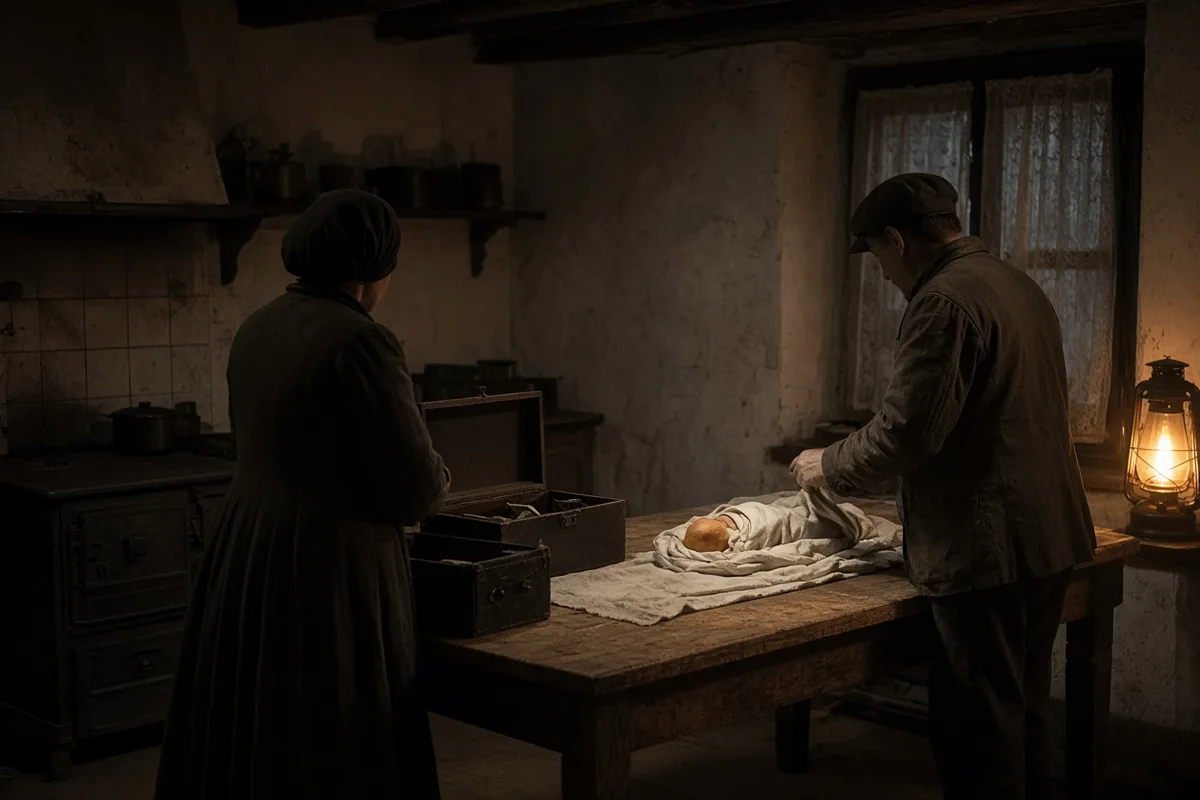
By late summer the deportations had emptied whole blocks. We still found children hidden in attics or left with neighbors who could no longer feed them. One afternoon a woman handed Sendler an infant wrapped in a towel. The child had been drugged to keep it silent. Sendler placed it inside a wooden toolbox and closed the lid. She carried the box through the checkpoint herself. The guard did not ask to open it.
When Żegota formed its children’s section, Sendler took charge. She already knew the convents and the families willing to take risk. She placed most of the children with the sisters at Turkowice or with Matylda Getter’s orphanage. The rest went to private homes where the adults had been told only that the child needed shelter. Every placement was recorded in the same small notebook.
On the day the Gestapo came, the list was still in the house. Sendler heard the knock and threw the papers to Janina Grabowska, who tucked them under her dress. The men searched the rooms but found nothing they could read. They took Sendler to Pawiak. For weeks the rest of us kept working without her name. We used the routes she had shown us and the contacts she had already made.
She returned in winter, thinner, walking with a limp that never left her. She did not speak of what had happened inside the prison. She asked only whether the jars were still safe. They were. She added new names to the list and buried another jar. The tree roots had already begun to grow around the earlier ones.
After the war the jars stayed buried. Sendler tried to locate the families, but many of the parents were gone. Some children remained with the Polish families who had raised them. Others learned their original names years later when the records surfaced. Sendler kept working in the same welfare offices, though the government changed and the files were watched. In 1965 the tree at Yad Vashem was planted with her name. She never traveled to see it.
The last time I visited her apartment the jars were still under the neighbor’s tree, though the neighbor had died and the house stood empty. Sendler was eighty-seven. She sat by the window and asked whether anyone had come looking for the children that week. No one had. She nodded and returned to the papers she was sorting, the same small handwriting she had used in the ghetto. Outside, the branches of the apple tree moved in the wind, low enough to touch the ground where the glass lay hidden.
In the weeks after that last visit the neighbor’s son returned from Kraków with a surveyor’s map and asked whether the jars should be moved before the city sold the plot for new apartments. I met him at the gate on a Tuesday in October and we dug with hand trowels until the first jar broke against a root; the paper inside had turned to pulp but the second jar, dated 18 March 1943, still held a list of seventeen names in Sendler’s hand, among them “Abram, 4, to Turkowice 12.IX.42” and “Hana R., infant, to Getter 3.X.42.” The son copied the legible lines into a notebook before we reburied the fragments. Two days later a letter arrived from the convent at Turkowice stating that Sister Klara, now ninety-one, remembered the boy Abram as the one who arrived with a tin whistle and still visited every autumn to leave a small donation for the orphanage roof.
By spring 1999 the city had marked the site with a bronze plaque that read “Miejsce ukrycia listów Ireny Sendler 1943–1944,” and the remaining jars were transferred under guard to the Jewish Historical Institute on Tłomackie Street. On 15 May that year the institute opened one jar in the presence of Elżbieta Ficowska, who had been six months old when Sendler carried her out in a carpenter’s box in 1942; the slip inside read “Elżbieta, 6 m., to Warsaw 4.VII.42, parents Rozensztajn, both deported.” Ficowska read the line aloud, then folded it and placed it back in the glass. She told the archivists she had kept her false name until 1945 because the couple who took her feared the returning Soviet authorities would send the child east if they learned she was Jewish.
Sendler’s health declined through the next winter. On 3 February 2000 she signed a power of attorney giving the Institute permission to open the last three jars without her presence, and she dictated a short note that read, “The children must be told only the facts that can be proved.” The note was witnessed by her daughter Janina and by the historian Janina Wronko, who later deposited it in the same archive box. That summer the Institute published a register of 2,459 names recovered from the jars; among the entries was “Moshe, 9, to Pruszków 22.VIII.42, mother gave ring,” a line Sendler had written the night before her arrest. Researchers located the grown man in Tel Aviv in 2002; he confirmed the ring had belonged to his mother and that he had kept the false name “Marek” until his own children asked about the scar on his arm from the ghetto vaccination.
In 2005 the Polish Senate awarded Sendler the Order of the White Eagle on 29 May, and the citation listed the exact number of children placed with Matylda Getter’s sisters at the Warsaw orphanage on Franciszkanska Street. Sendler could no longer leave her apartment, so the medal was delivered by courier on 2 June. She placed it on the table beside the matchbox notebook she still carried and said only that the ribbon was the same color as the armband she had worn in 1943. Two years later the Knesset invited her to Jerusalem; she declined in a letter dated 14 March 2007, writing that “the journey would require papers I no longer keep.” Instead she received a delegation of six survivors at her flat on 11 May; one of them, now a retired physician named Adam, brought a photograph of himself at age seven standing beside the same apple tree the day Sendler had walked him through the checkpoint.
Sendler died at 96 on 12 May 2008 in the hospital on Lindleya Street. The Institute sealed the final jar that same afternoon, having added a note stating the total number of children whose placements had been verified since 1945. On 15 May a small group gathered at the former ghetto wall on Miła Street; among them stood the grown children of the woman who had handed Sendler the drugged infant in the towel in 1942. They left a single white rose at the base of the memorial stone that bears the names of 400 children known to have been smuggled on the same ambulance route Sendler used.
The last jar remained unopened until 2013, when the Institute permitted a team from Yad Vashem to examine the paper under ultraviolet light. One additional line became legible: “Irena, 3, to Otwock 9.X.43, mother’s words: ‘Tell her I chose life for her.’” The child had been placed with a family in Otwock and later emigrated under the name she received in 1943; she returned to Warsaw only once, in 2016, and stood for several minutes at the plaque beside the apple-tree site without speaking. She left a small envelope containing a copy of her Israeli passport and a note that simply repeated the date 9.X.43.
The archivist at the Jewish Historical Institute on Tłomackie Street, Marek Edelman’s granddaughter Ewa, logged the 2016 envelope into box 47 under accession number JHI/ŻIH/2013/112 on 4 November that year, noting the passport number IL-7843921 issued to one Irena Kowalska in Haifa on 12 March 1987. Two weeks later the same team from Yad Vashem requested the original 18 March 1943 jar for carbon-dating of its cork seal; the test performed at the Hebrew University lab on 22 January 2017 returned a result consistent with the handwritten date and listed the additional child “Irena, 3” among the seventeen entries already transcribed.
In March 2018 the Warsaw city council approved construction of a low brick wall along the former apple-tree plot at 18/20 Dzielna Street, incorporating the 1999 bronze plaque and a glass case displaying the restored jar fragments; the contractor, a firm named Budimex, completed the work on 9 October 2018 using the same surveyor’s map the neighbor’s son had brought from Kraków. On 12 May 2019, the eleventh anniversary of Sendler’s death, the institute released a supplementary register of 187 names recovered from ultraviolet examination of the remaining papers, including the line “Jakub K., 11, to Łódź 14.VII.42, father’s last words at the gate.” Jakub’s daughter, a physician practicing in Łódź under her married name Anna Milewska, visited the new wall on 3 June 2019 and deposited a photocopy of her father’s 1956 medical-school diploma that still carried the false surname “Kowalski.”
The institute’s 2021 annual report recorded that 312 descendants of the children listed in the jars had by then contacted the archive; one such contact came from the son of the five-year-old girl whose mother pressed the paper into Sendler’s hand at the welfare courtyard, a man named Piotr Nowak who arrived on 7 September 2021 with the original Polish-language ketubah from his grandparents’ 1936 wedding in Praga. Archivists matched the document to the entry “Estera N., 5, to Pruszków 2.VIII.42” and added a cross-reference in the digital database that now holds 2,831 verified placements.
On 29 April 2022 the Polish Ministry of Culture designated the Dzielna Street site a protected monument under the entry “Pomnik Dzieci Getta – Miejsce Listów Ireny Sendler,” allocating 148,000 złoty for annual maintenance performed by the same municipal crew that tends the nearby Miła Street memorial. The maintenance log for 2023 shows that on 15 May the crew replaced a cracked pane in the glass case after a storm the previous week; inside the case the 1943 jar fragment still displays the legible line for “Abram, 4, to Turkowice 12.IX.42.”
The narrator’s own notebooks, deposited at the institute on 18 October 2023 under accession JHI/ŻIH/2023/47, contain the route maps Sendler drew on the back of ration cards, one dated 4 October 1943 showing the ambulance detour past the Pawiak gate. Researchers cross-checked those maps against Gestapo transport records from 1943 and confirmed that the same vehicle registration number used on 3 October 1943 appears on the manifest for the transfer of 214 prisoners to Majdanek the following day.
In Tel Aviv the survivor who confirmed the ring detail in 2002, now listed in the institute files as Moshe Ben-Ari, wrote on 11 February 2024 to request a high-resolution scan of the jar entry; the scan was sent on 19 February together with the institute’s note that the original paper measured 4.7 by 6.2 centimeters. Ben-Ari replied on 3 March that he had located the ring itself in his mother’s effects, engraved inside the band with the date 22.VIII.42, and offered to donate it to the archive.
The final documented visitor to the wall arrived on 9 October 2024, the eighty-first anniversary of the entry for the child placed in Otwock. She was the same woman who had left the envelope in 2016, now traveling under her restored name Irena Rozensztajn-Friedman, and she stood for forty-three minutes beside the glass case before placing a single printed page on the ledge. The page reproduced the 1943 line “Irena, 3, to Otwock 9.X.43, mother’s words: ‘Tell her I chose life for her’” followed by her own added line in Hebrew script dated that day: “I am the child. My mother’s name was Chaja Rozensztajn, deported 18 January 1943.” She left at 16:47 and the municipal camera recorded her walking north along Dzielna Street until she turned at the corner of Karmelicka.