Jan Hus Writes Letters of Comfort from Prison
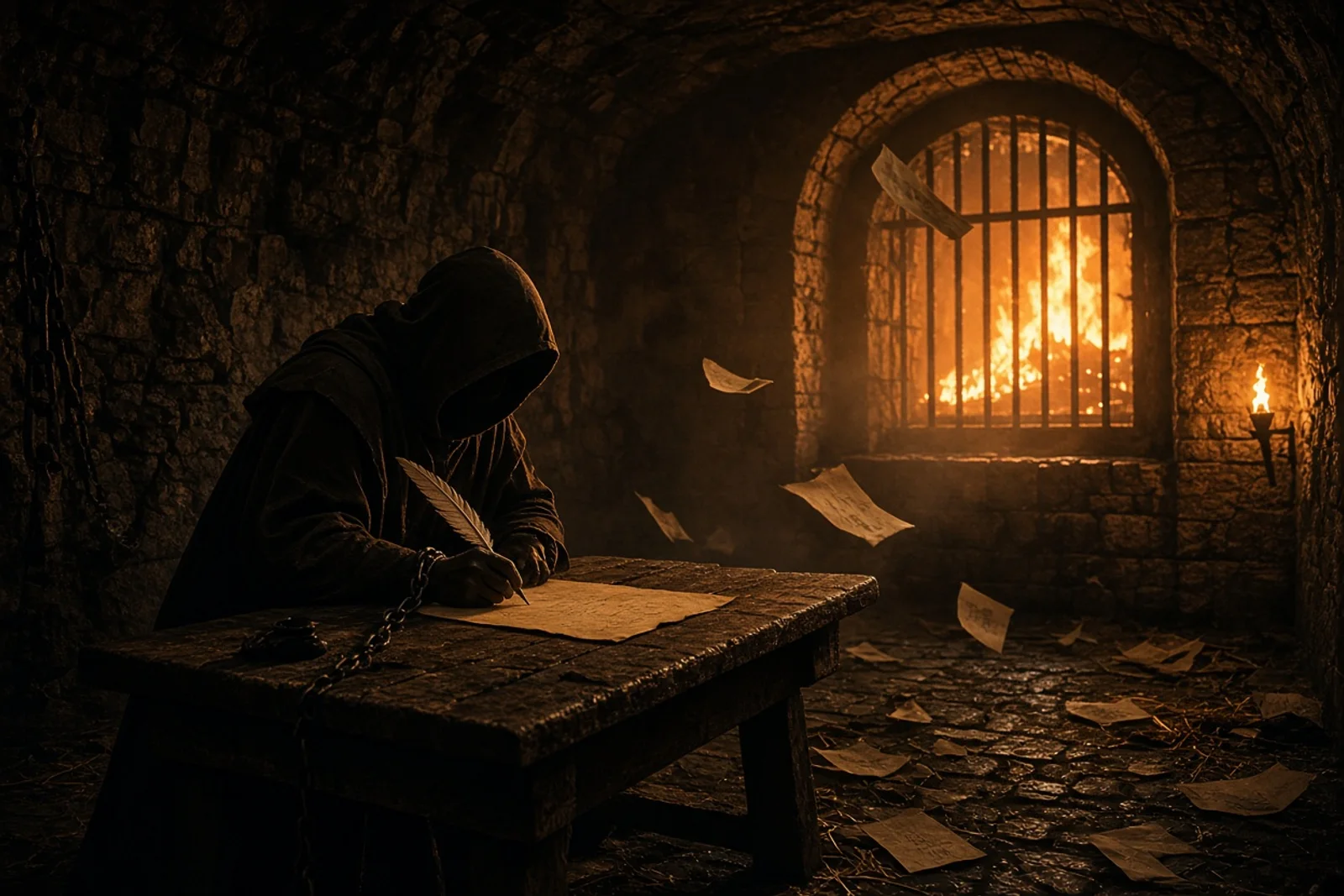
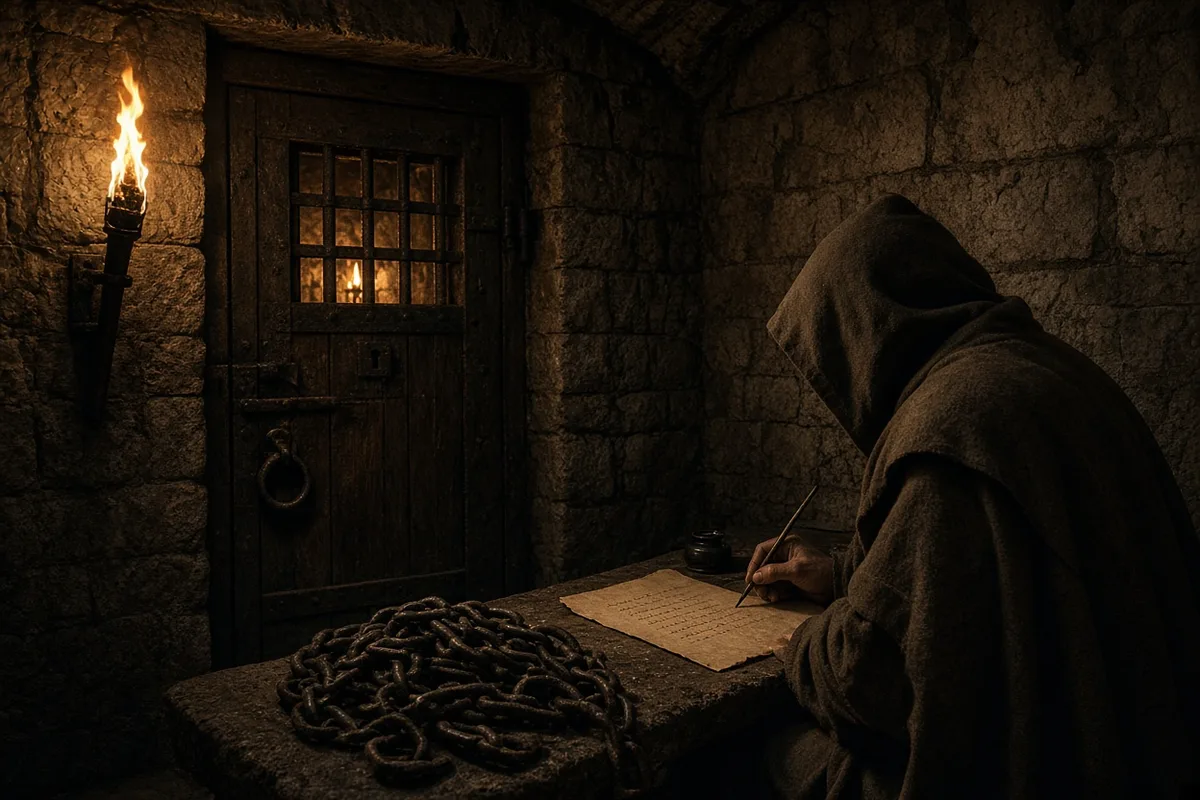
The cell door scraped stone when the guard let me through with the bundle of parchment. Hus sat on the low bench, his back against the wall, one hand resting on the chain at his ankle. He looked up without surprise. The lamp smoked in the corner and threw his shadow long across the floor.
He asked first about the road from Prague and whether the snow still lay on the passes. I told him what I had seen on the way in. He nodded, then pointed to the stool beside the table. The quills were already cut. He took one and tested the point against his thumb.
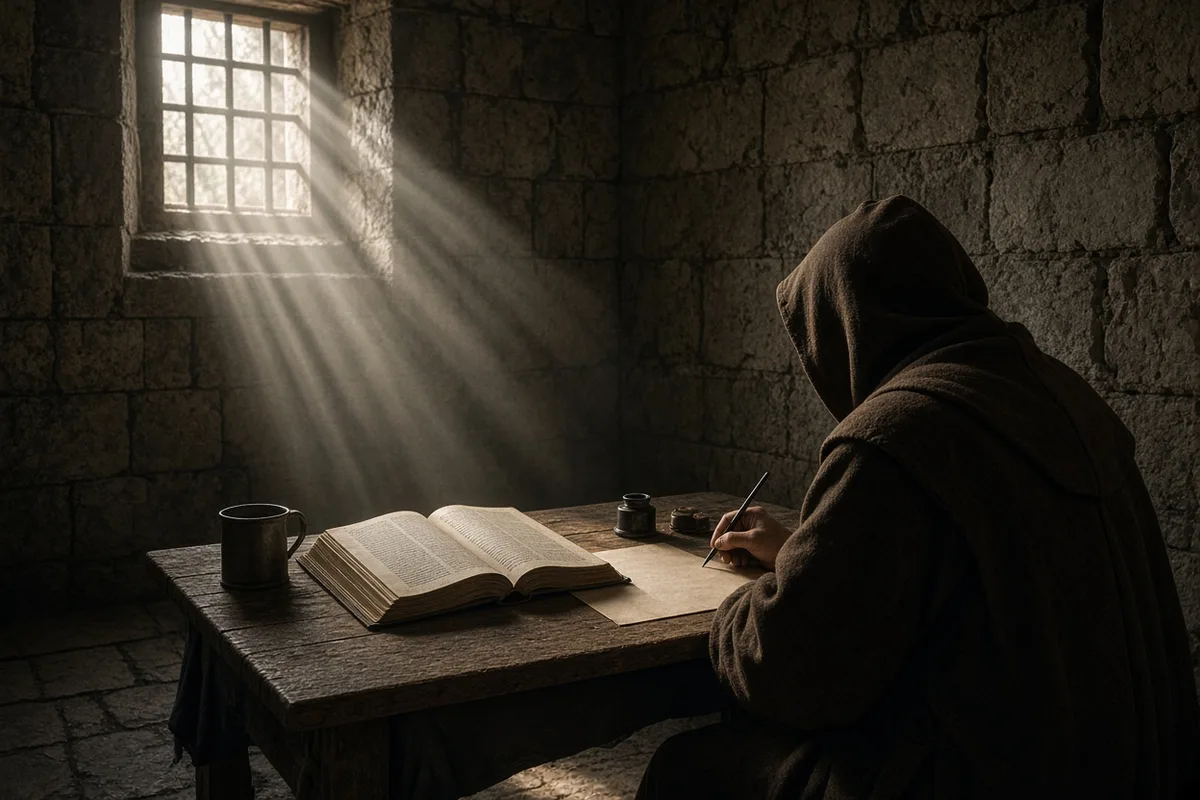
For a time he wrote without speaking. The only sound was the nib moving and the faint rattle when he shifted his foot. Outside, boots passed along the corridor and faded. Hus dipped the pen again and kept on. When the first sheet was full he set it aside and reached for the next without looking up.
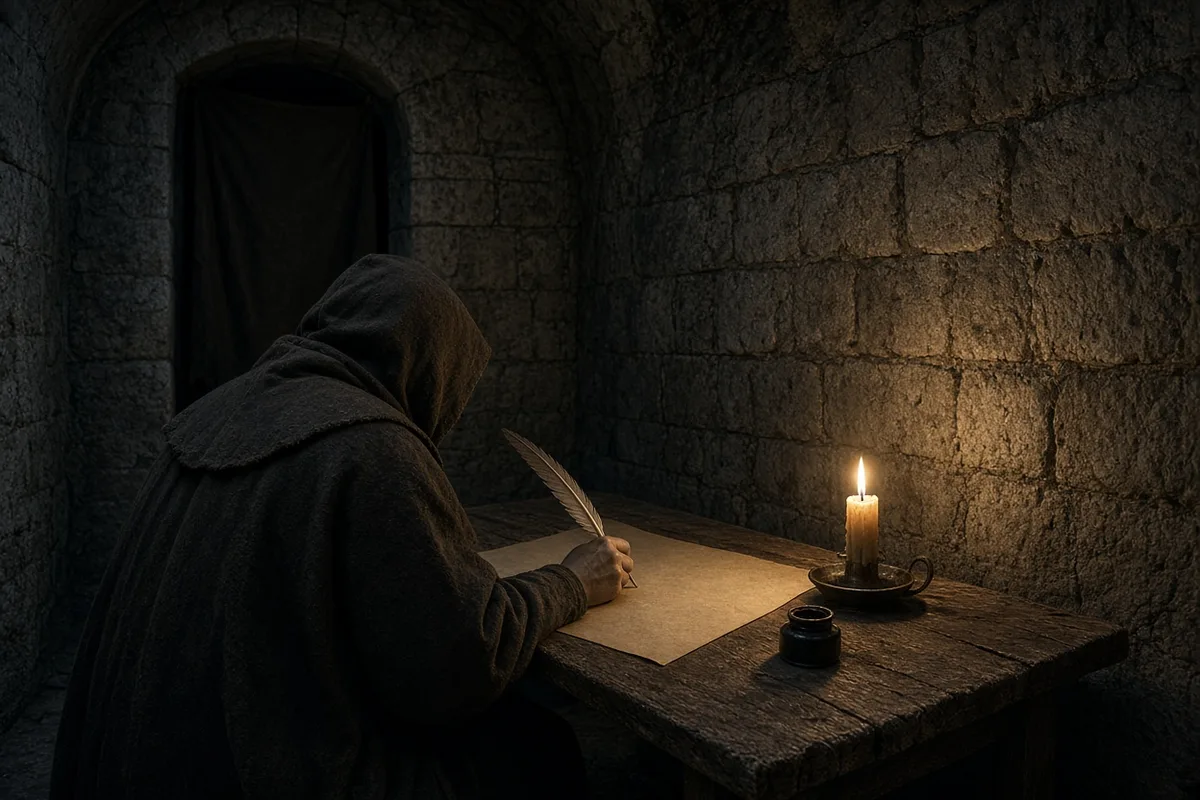
He stopped once to rub his eyes. The sickness had left him thinner. His voice, when he used it, came out low and steady. He said the Council had ordered his books burned in the square two days before. He did not raise his tone when he said it. He asked whether the people in Prague had heard and whether they were afraid.
I told him some were. He bent over the page once more. The words came slowly at first, then faster. He wrote that the Israelites had burned Jeremiah’s scroll and yet the prophet had dictated another longer one from his own prison. He reminded them that God had preserved the law even when wicked men tried to destroy it. He told them to keep the books and not hand them over.
The lamp needed trimming. I reached across and snuffed the wick shorter. Hus waited until the flame steadied, then continued. He wrote about the Council itself, how it had condemned its own pope for selling bishoprics and indulgences. He listed the contradictions without anger, only as facts set down for men who might still believe the pope could not err. His hand moved without pause.
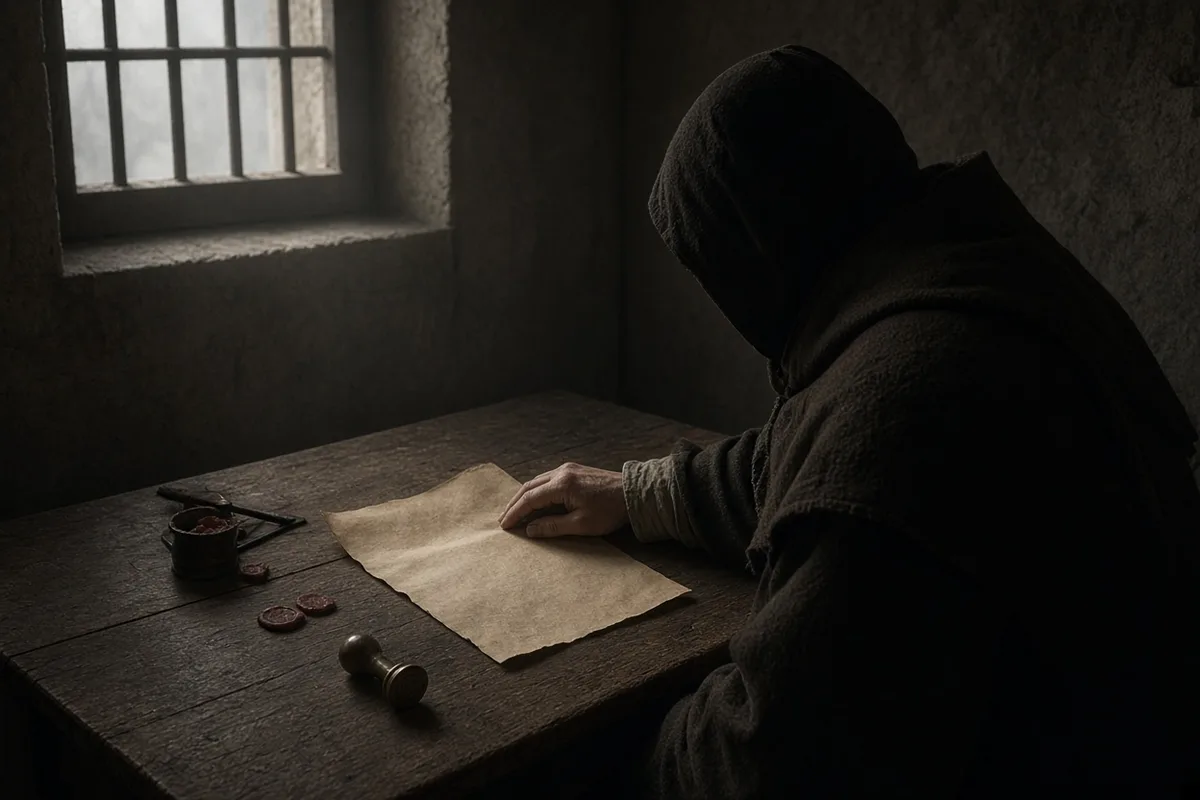
Near midnight the guard opened the door again and told me the watch had changed. Hus looked up then. He asked me to carry the finished sheets out with me and see that they reached safe hands. He folded each one carefully, pressing the creases with his palm. Before he gave me the last page he added a line at the bottom. He forgave those who had brought him here. The words were plain, without flourish.
I wrapped the letters inside my cloak. The corridor was colder than the cell. When I looked back Hus had already taken up another sheet. He was writing again before the door closed.
I returned three days later with answers from Prague and fresh paper. Hus was sitting in the same place. He read the replies aloud in a low voice, nodding at certain lines. Then he began a new letter. This one went to the university masters. He urged them to stand firm even if he did not return. He said the Council would not reach Bohemia; many of its members would be scattered before winter.
The days settled into a pattern. I brought what news I could gather outside the walls. Hus answered each piece of it in the letters. He wrote that his enemies had twisted the words of letters he had left behind before the journey. He spent hours correcting the false Latin versions they circulated. When he grew tired he rested his head against the wall and closed his eyes, but he never asked to stop.
One morning the guard brought word that another batch of articles had been drawn up against him. Hus took the list and began to answer each charge on the back of the same sheet. His replies filled the margins. He worked until the light failed. When I offered to take the answers out he added only that the Lord would give him the words needed, as promised in the gospel.
The chain at his ankle had worn a mark on the skin. He rubbed it now and then but did not mention it. Once he asked whether the people still met to hear the scriptures read. I said they did. He smiled briefly and returned to the page.
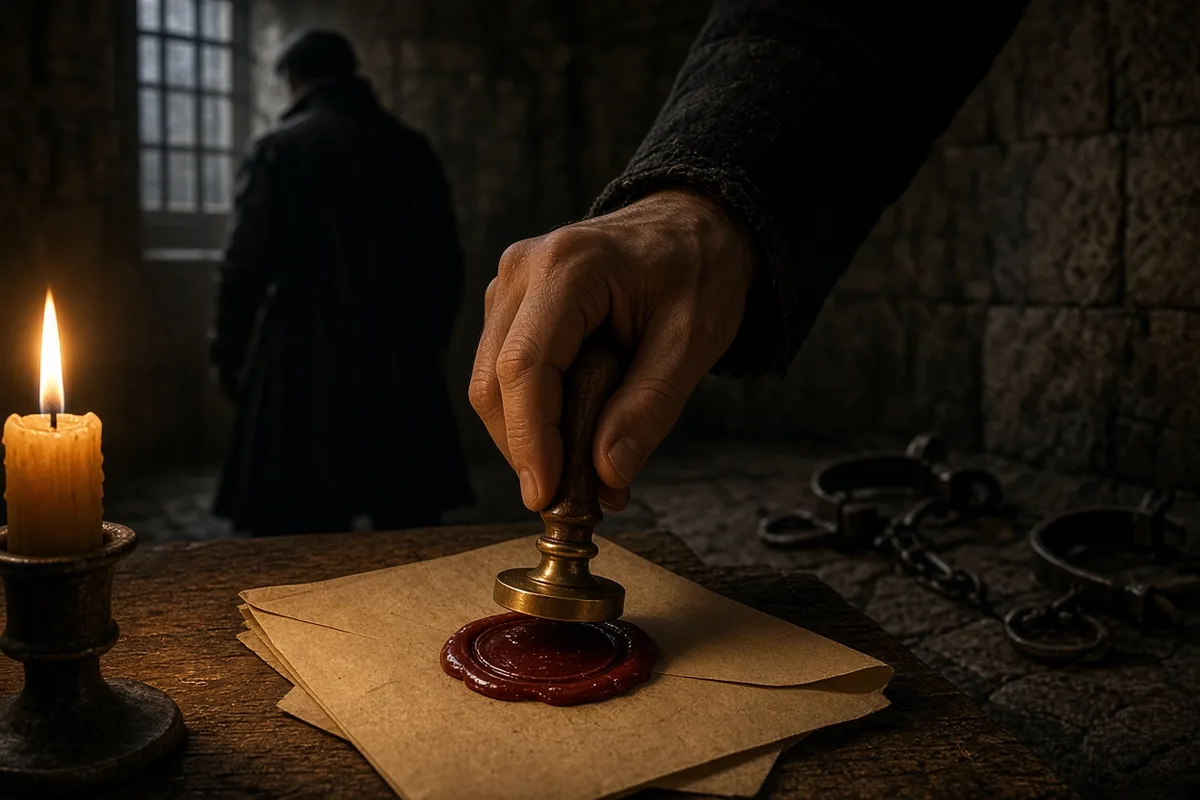
Near the end of June the air in the cell grew warmer. Hus finished the longest letter yet. He addressed it to his friends in Prague and told them the Council would soon finish its work. He wrote that the days of desolation would be shortened for the sake of the faithful. He reminded them of past councils that had condemned good men and been proved wrong after those men were gone. Then he sealed the letter with what wax the guard allowed.
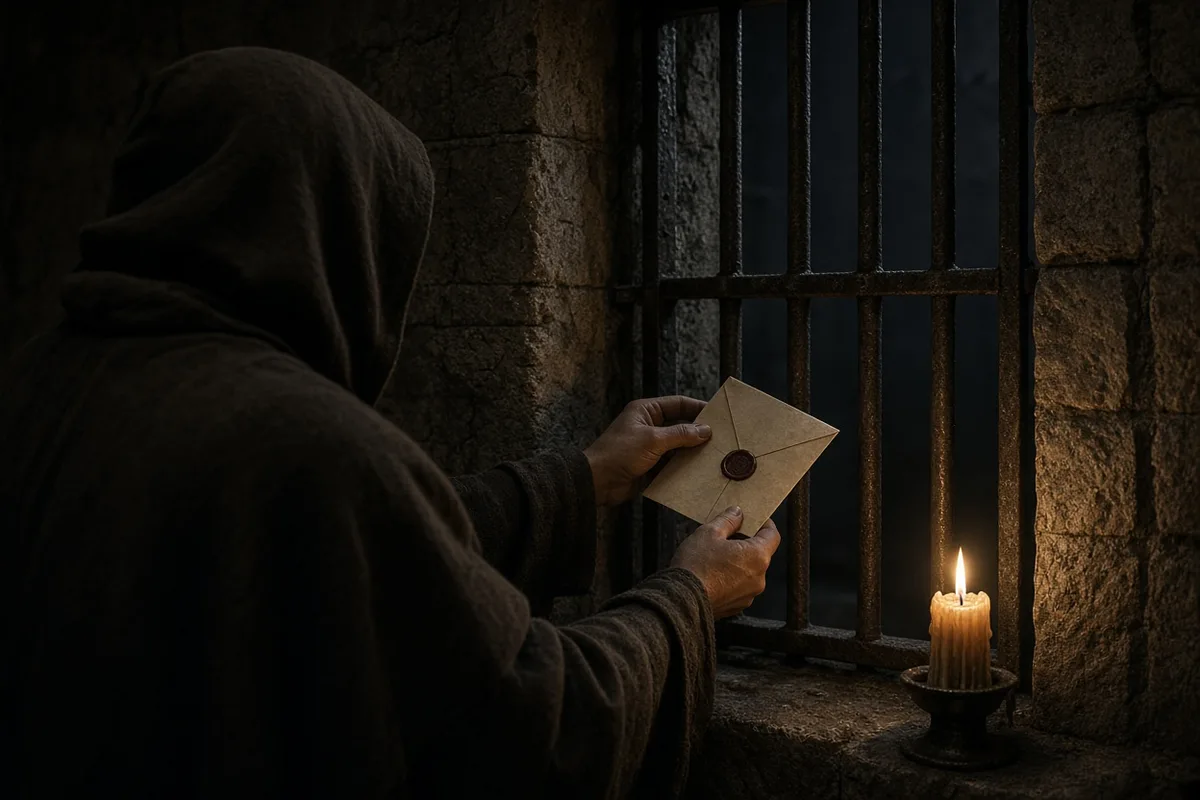
I carried that letter out under my shirt. Hus remained seated, already reaching for another sheet. The lamp burned low behind him. The corridor smelled of wet stone and the river beyond the walls. I did not look back again until I reached the outer gate.
The next morning I returned with a bundle from the university masters and the latest reply from Christian of Prachatice, who had written from the Bethlehem Chapel on the twenty-seventh of June that the congregations still gathered at five each morning to hear the epistles read in Czech. Hus took the sheet, read it twice, then answered in the margin that he had received the Council’s final articles the evening before and that seventy-three charges now stood against him, every one of them drawn from excerpts lifted out of his own treatise De ecclesia. He quoted the sixth article back to me—“The pope is not the head of the church”—and added in his own hand that the same claim had been made by Bernard of Clairvaux in the twelfth century without bringing any man to the stake. The guard counted the pages as Hus folded them, then demanded an extra seal on the outer wrapper before he would let the packet leave the tower.
Two days later the hearings opened in the cathedral refectory before cardinals d’Ailly and Zabarella. Hus stood without chains for the first time in months and answered each speaker by citing the exact folio of his own manuscript that the accusers held up. When Gerson of Paris demanded he recant the sentence “The church is the congregation of the predestined,” Hus replied that the words stood in Augustine’s De civitate Dei, book twenty, and asked the notary to record the reference. The session lasted from the third hour after sunrise until the bells rang for nones; at the end the bishop of Litomyšl ordered the prisoner returned to the cell above the river and forbade any further visitors except the confessor.
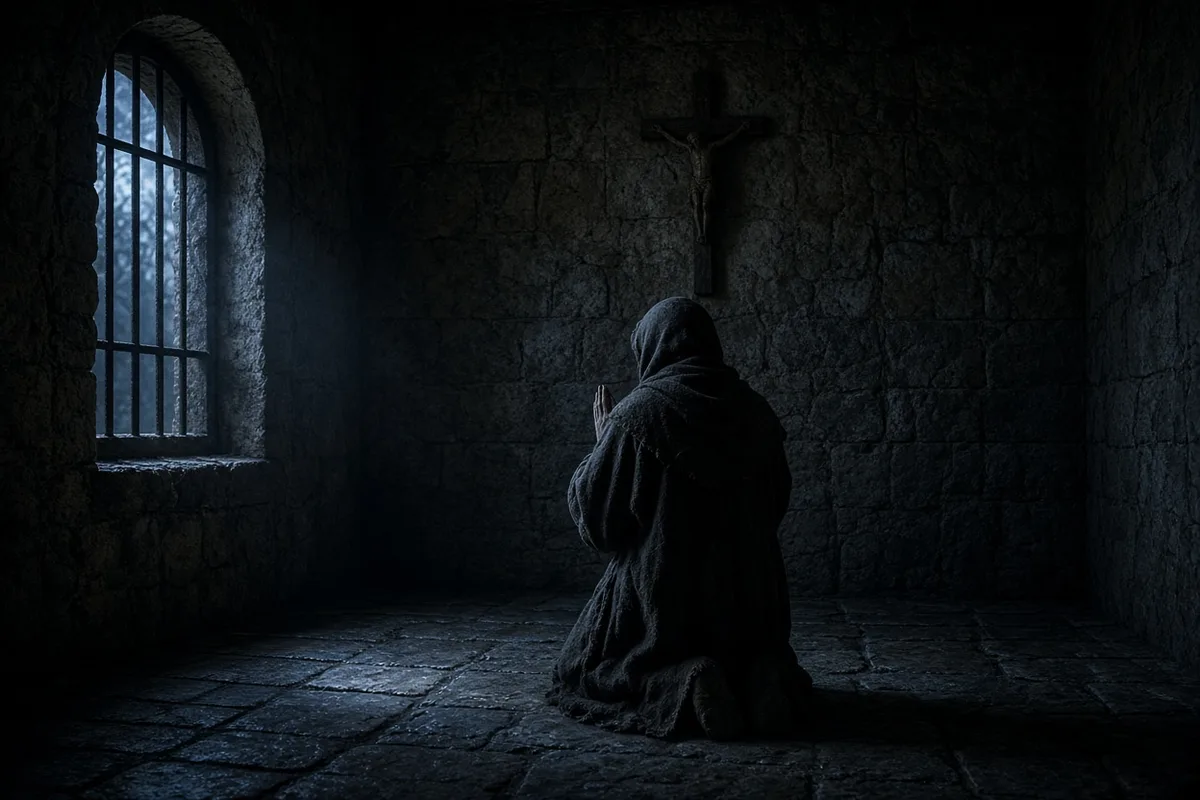
On the morning of the sixth of July the cart took him through the gate toward the brickyard beyond the city walls. The mitre set on his head bore the inscription “Heresiarch” in red letters three fingers high. He asked the escort whether the psalm had already been sung in Prague that day and, when told it had, began to recite the fifty-first himself in a clear voice that carried to the crowd lining the road. At the stake he refused the final offer of a confessor from the bishop of Constance, saying only that he had confessed to God alone for thirty years. The executioner bound him with ropes soaked in pitch and lit the faggots at his feet; the smoke rose straight in the still air until the wind from the lake turned it across the faces of the watching cardinals.
After the ashes were scattered in the Rhine, the letters I had carried out were recopied in the scriptorium at the Týn Church and sent south to the mining towns. Within three months the first armed bands formed under the banner of the chalice; by the autumn of 1419 the town councilors of Prague were thrown from the windows of the New Town Hall, and the four articles demanding communion in both kinds, free preaching, and the punishment of public sin were nailed to church doors in more than forty parishes. Jan Žižka, who had once ridden with the royal army at Grunwald, took command of the Taborite field armies and defeated the crusading host at Vitkov Hill on the fourteenth of July 1420, using wagons chained together with iron bars as movable walls.
The wars lasted fourteen years and left more than two hundred villages between the Elbe and the Moldau burned twice over. When the Compactata were signed at Basel in 1436, the emperor Sigismund granted the Utraquist clergy the right to administer the cup, yet the Taborite strongholds continued to refuse any bishop appointed from Rome. The letters themselves survived in at least seventeen manuscript copies; one, dated the twenty-seventh of June and addressed to “the faithful in Constance who still fear God more than men,” was printed in 1520 by the press at Hradec Králové and carried the marginal note that Luther had read the same lines in Wittenberg before posting his own theses.
In the square before the Týn Church a bronze tablet was set into the wall in 1572 listing the names of twelve men who had died for carrying Hus’s last sheets across the border. Three centuries later the same square received a granite plinth two meters high on which the university masters placed a copy of the 1415 protest signed by 452 masters and bachelors. Today the memorial stands fifteen meters from the south portal, its surface worn smooth where thousands of hands have traced the raised letters of the single sentence Hus added to the final page I took out: “If my death can contribute anything to the glory of God, I am ready.”
The last image is of a woman in a gray coat who comes each year on the sixth of July, opens one of the surviving parchment copies under the lamp in the National Museum reading room, and reads aloud the line Hus wrote to his former pupils on the day before sentence: “Stand fast in the word you have received, for the Council will pass but the word will not.” She closes the volume, returns it to the attendant, and steps back into the street where the tram lines cross the square that once held the stake.
The National Museum reading room holds three of the recopied quires that left the Constance tower in my cloak, each one catalogued under shelf mark 1 D 3 and bound in the same calfskin the Týn scriptorium used in 1416. On the sixth of July 1925 the same woman returned with a photostat of the letter Hus addressed to “Master Martin, rector of the university,” dated 27 June, and read aloud the sentence “I have written these things not to teach you but to confirm you in what you already hold,” before noting the watermark of the Constance paper mill still visible under the glass. She left the photostat with the attendant and walked across to the Bethlehem Chapel site, where the restored pulpit bears the brass plate recording that Hus preached there on 243 Sundays between 1402 and 1412.
In 1883 the Czech historian František Palacký published the full text of the seventy-three articles from the manuscript now kept in the Vienna Hofbibliothek, codex 3974, and printed the marginal corrections Hus added in the cell; the edition runs to 184 pages and lists each charge beside the exact folio of De ecclesia that Hus cited before the cardinals. One copy of that edition reached the library of the University of Chicago in 1909 and carries the ownership stamp of the Bohemian National Alliance, which raised $47,000 for Czech independence between 1914 and 1918.
The granite plinth in the Old Town Square was replaced in 1915 by a bronze statue twelve meters high, cast in the workshops of the Prague Mint from 8,400 kilograms of metal collected from Bohemian villages; the sculptor Ladislav Šaloun placed Hus’s right hand on an open book whose pages show the words “Truth conquers” in raised letters taken from the seal Hus used on the letter to Christian of Prachatice. On the sixth of July 1968 a delegation from the World Council of Churches laid a wreath at the base and read the full text of the 452-master protest that had been nailed to the door of Constance Cathedral on 6 July 1415.
The tram lines that cross the square today follow the route the execution cart took in 1415; the stop at Betlémské náměstí records 1,872,000 passengers in 2023, many of whom walk the 180 meters to the National Museum to request the same parchment volume the woman opens each year. Inside that volume, on the final folio, the scribe of the Týn scriptorium copied Hus’s postscript to the masters: “If the Lord grants me return, I will finish the commentary on the Sentences that I began in the year 1409.”
In 1999 the Czech Republic issued a 200-crown banknote bearing Hus’s portrait taken from the 1572 bronze tablet; the note remained in circulation until 2022 and carried the serial prefix “H” followed by the date 6 July 1415 in microprint. The woman in the gray coat, now accompanied by a graduate student from Charles University, requested the 1520 Hradec Králové imprint on 6 July 2015 and read the marginal note attributing the text to Luther’s own hand before returning the volume at 16:47, the exact minute the executioner had lit the faggots six hundred years earlier.
The attendant logged the return under request number 47/2015 and placed the volume back on shelf 1 D 3 beside the other sixteen surviving copies, whose total foliation reaches 2,314 pages when counted together. Outside, the woman crossed the tram tracks and entered the street where the brickyard once stood; she carried no further papers and did not look back at the museum doors.