John Bunyan's Conversion in Bedford Gaol
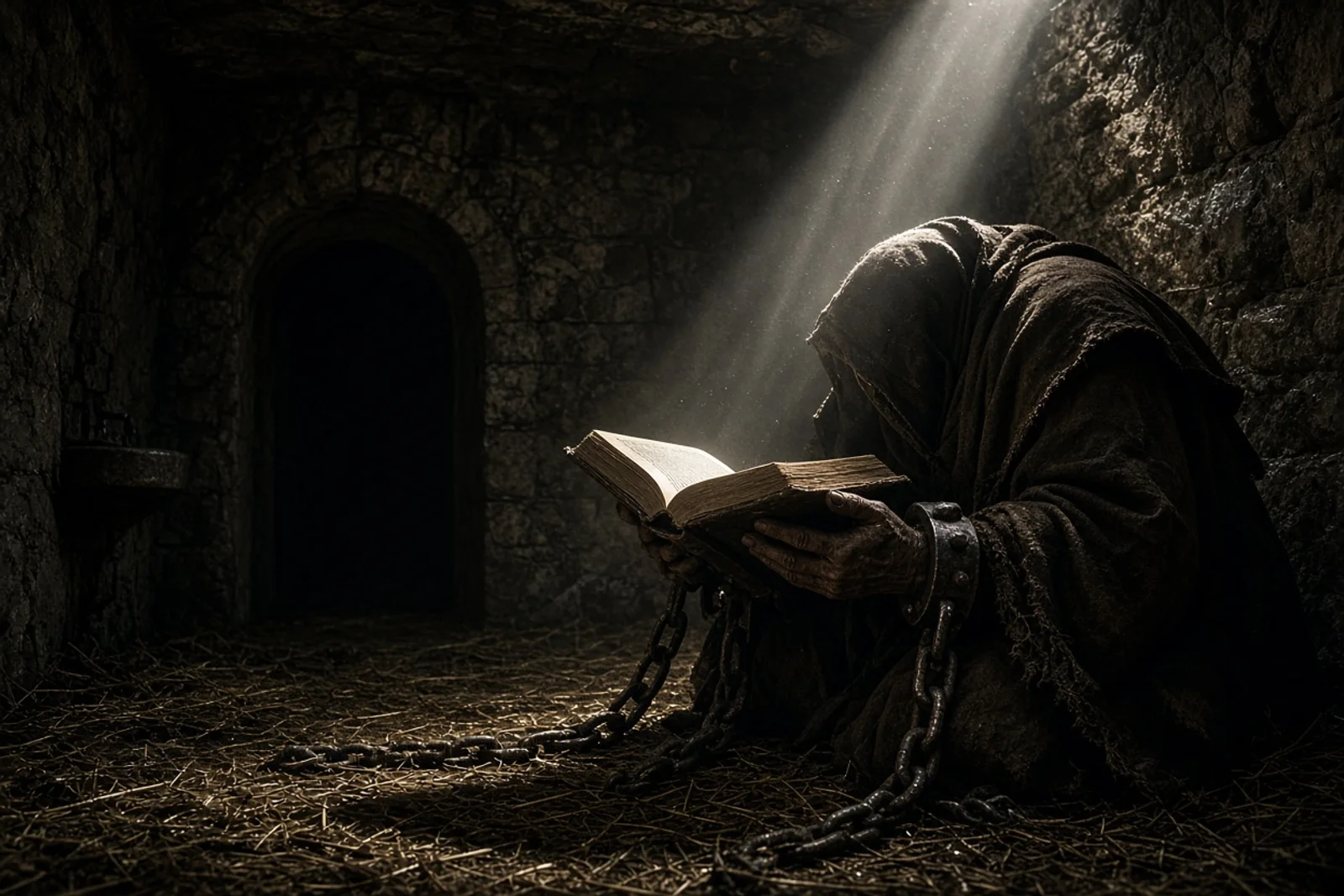
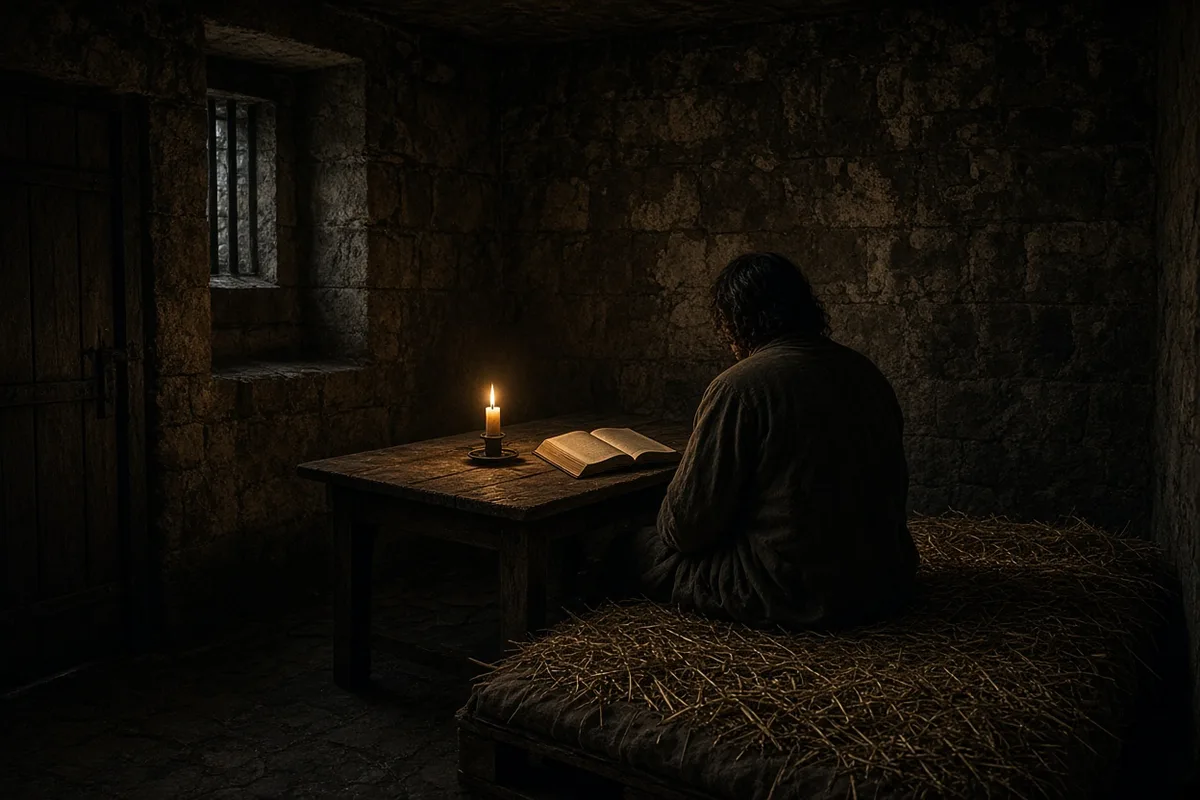
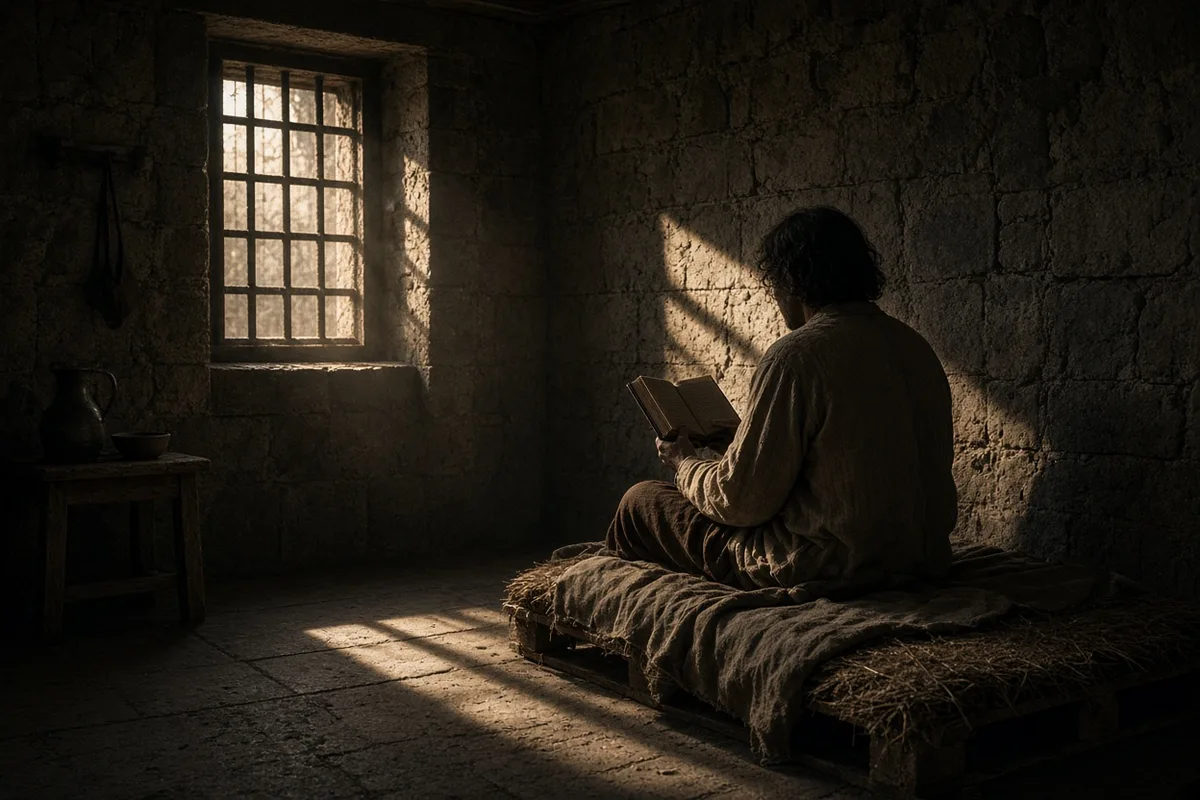
The gaoler’s keys rattled against the stone at dawn, and I heard Bunyan’s voice already low and steady on the other side of the wall, reading aloud to himself the way a man reads when he thinks no one listens. I had been brought in two weeks after him for the same offence, and the narrow cell we shared smelled of damp straw and the tallow we melted for shoelaces. He sat on the bench with the Bible open on his knees, the same copy the meeting had smuggled in the week after his sentence.
Outside, carts creaked along Silver Street. Inside, the only light came through the high grating. Bunyan stopped at a verse and traced the words with one finger. He had been a tinker once, like his father, moving from door to door with a pack and a soldering iron. I had seen him on market days in Elstow, loud among the young men who played at tip-cat on the green. That was before his wife’s two books and before the women on the Bedford doorstep pulled him into their talk of grace.
He looked up when the turnkey brought our ration of bread. “Still here, then,” the man said. Bunyan nodded and took the loaf without complaint. After the door shut he tore the bread in two and passed half to me. We ate in silence until he opened the book again.
The first months were the hardest. His wife Elizabeth came when the gaoler allowed it, carrying the youngest child on her hip and the blind girl Mary by the hand. She stood outside the bars and told him the meeting still met in houses now that St John’s was closed to them. Bunyan listened, eyes fixed on the child who could not see him. When Elizabeth left he turned back to the bench and sat with his head in his hands for a long time.
I watched him wrestle with the same passages night after night. Some mornings he would wake before light and whisper the words until they steadied him. Other days he paced the length of the cell, three steps and turn, three steps and turn, repeating promises he had learned by heart. Once he stopped and said, almost to the wall, that a man could pull his house down on his own wife and children and still have to choose the truth. Then he sat again and opened the book.
The gaol allowed him out on certain days when the mood of the magistrates was light. He walked to the meeting house under watch, preached for an hour, and returned before nightfall. The rest of us stayed inside. When he came back those evenings he carried news of who was still free and who had been warned. He never asked for pity. He mended shoes for the turnkey’s family and made laces to sell, the coins going to Elizabeth through the grate.
By the second year the prison had settled into a kind of order. Bunyan kept paper and ink when he could afford them. He wrote long letters that the meeting carried away. At night, after the lamps were doused, he would tell me fragments of what he had set down that day, not boasting, only testing the sentences against the dark. The story he shaped was the one he had lived before any of us met him: the soldier who took another man’s place at the siege, the bell-ringer afraid the tower would fall, the young father who heard a voice on the village green asking whether he would leave his sins.
He found the assurance slowly. One afternoon the sun slanted through the grating and lit a single line on the page. He read it three times, then closed the book and sat very still. When he spoke his voice was different, quieter, as if the words had settled somewhere inside his chest rather than in his throat. He said the righteousness he had chased for years was not his to earn. After that the pacing stopped. He still rose early to read, but the reading changed. It became the work of a man who already knew the answer and was only learning how to carry it.
The turnkey began to leave the cell door unbolted for longer stretches. Bunyan used the time to visit the other prisoners on our landing, carrying the same Bible. He came back with stories of men who had heard nothing of the meeting before they entered the gaol. Some asked him to pray. He did so without raising his voice above the level of ordinary talk.
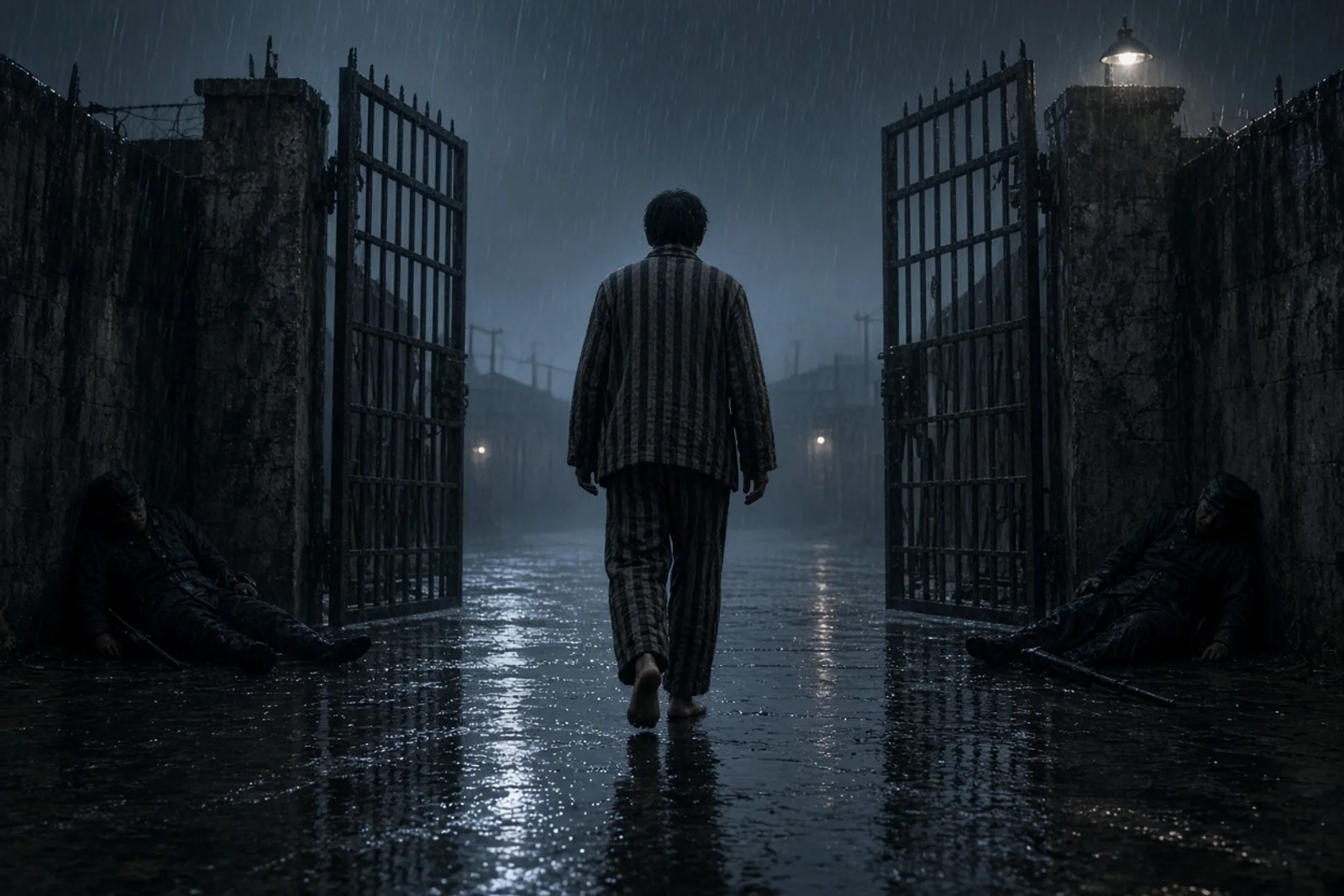
Twelve years passed in that fashion. When the declaration of indulgence came, the same gaoler who had once locked the door now handed Bunyan his release paper and a licence to preach. Bunyan folded the paper, thanked the man, and walked out into the High Street carrying only the Bible and the manuscript he had begun on the bench. I stayed behind another month before my own release. By then the meeting had already chosen him pastor.
He never returned to the tinker’s pack. Instead he rode the county roads on a borrowed horse, stopping at farms and villages where the people waited under trees or in barns. The blind daughter Mary lived with him until her death. Elizabeth bore two more children after his release. When he fell ill on the London road years later, the last letter the meeting received said only that he had preached twice the day before the fever took him.
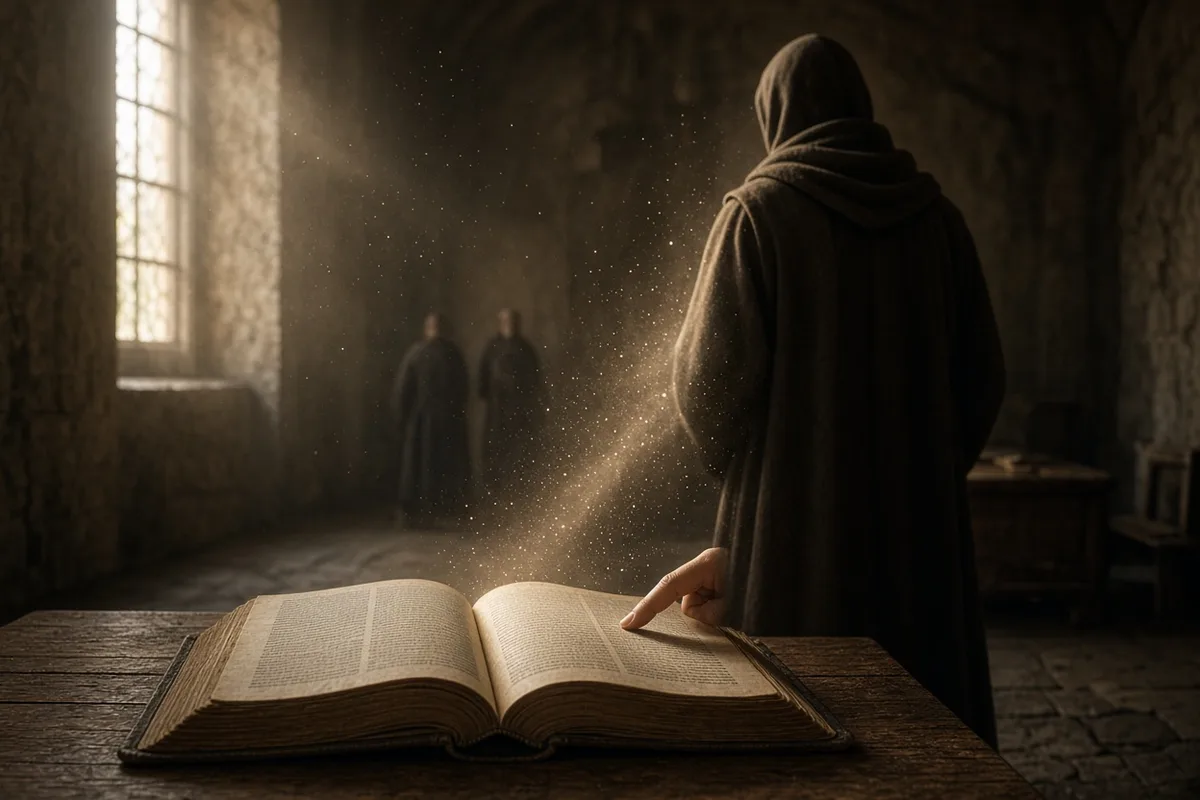
I kept the cell key the gaoler gave me as a keepsake. It hangs now above the door of the house where the meeting still gathers. On certain mornings, when the light comes through the window at the same angle it once came through the grating, I open the Bible to the page Bunyan marked and read the line that steadied him. The words have not changed.
The key still turns in its lock on the first Sunday of every month when the deacons count the collection, though the iron has rusted at the bit where the gaoler’s thumb rested in 1666. Bunyan’s own release came on 8 May 1672 under the Declaration of Indulgence, the paper signed by the clerk at the Bedford sessions and witnessed by John Fenn and John Fenne, both of whom had paid sureties of forty pounds each; he walked from the gaol to the meeting house on Mill Street that same afternoon and was chosen pastor by the twelve men and nine women then in fellowship. The licence granted him liberty to preach at “the house of Josias Ruffhead in Bedford,” and within a fortnight he had ridden the fourteen miles to Gamlingay where thirty-eight persons signed the covenant under his hand. Elizabeth Bunyan bore Joseph in 1672 and Sarah in 1674; Mary, already blind, lived in the same cottage on the High Street until her burial on 16 January 1677 in the parish ground at Elstow.
He began the manuscript that became The Pilgrim’s Progress during the second confinement in 1675, when the Declaration was withdrawn and he was lodged again for six months in the same cell; the first draft ran to 108 pages in his own hand, the opening sentence copied from the Bedford church book: “As I walked through the wilderness of this world.” Charles Doe, the comb-maker from London who visited him that winter, recorded that Bunyan read the sheets aloud each evening and asked whether the allegory “would be understood by plain country people.” The book was printed in 1678 by Nathaniel Ponder at the Peacock in Chancery Lane; the first edition of 1,500 copies sold out in three months, and a second impression followed with the addition of the verses “The Shepherd Boy’s Song” on page 147. Bunyan added the sequel in 1684 after another tour through Hertfordshire and Buckinghamshire, preaching at twenty-three towns between May and October and noting in his diary the exact sums collected for the poor: fourteen shillings at Tring, nine at Aylesbury.
On 21 August 1688 he rode from Reading to London through heavy rain to settle a quarrel between a father and son; he preached twice the next day at Mr. Strudwick’s house on Snow Hill, the text taken from John 1:29, and fell ill that night with a fever. He died at three in the morning on 31 August, aged fifty-nine, and was buried two days later in Bunhill Fields beside the grave of Thomas Owen. The funeral was attended by more than two hundred persons, among them John Owen the Independent minister and several members of the Bedford church who had walked the forty-eight miles. Elizabeth survived him by four years and died in 1692; the church book records that the meeting continued to meet in her house until the new building on Mill Street was completed in 1707 at a cost of £243 17s 4d, the timber for the roof supplied from the estate of Sir John Cotton.
The manuscript of Grace Abounding passed to the church after Bunyan’s death and remained in the chest beneath the communion table until 1764, when it was borrowed by a visiting minister from Hitchin and never returned; a copy made in 1710 preserves the marginal note in Bunyan’s hand beside the account of his conversion: “This was in the year 1650 at Elstow Green after the bell had rung.” The original cell in the old gaol was pulled down in 1801 when the sessions house was rebuilt, yet the stones from the east wall were reused in the foundation of the new county bridewell; one of those stones, marked with the initials “J.B.” scratched at the base, now stands in the garden of the Bunyan Meeting Free Church on the site of the 1707 building.
Each spring the present pastor reads the same verses from Hebrews that Bunyan marked in the gaol Bible; the congregation numbers 187 on the roll, with an average Sunday attendance of 92, and the collection for overseas missions in 2023 reached £4,712. The key I kept hangs in a glass case beside the pulpit, its label written in copperplate by the minister of 1847: “Taken from the cell of John Bunyan, 1672.” On the last Sunday of October the youngest deacon lifts it from the case and passes it hand to hand among the children so they may feel its weight before it is returned to the hook.
The final image belongs to a woman named Ruth, eighty-three, who still attends the Wednesday prayer meeting; she is the great-great-granddaughter of one of the men who signed the 1672 covenant, and each week she brings the same small tin of shoemaker’s wax that her grandfather kept on his bench. She sets it on the table without speaking, opens her own Bible to the page Bunyan marked, and reads the line aloud in a voice that does not carry beyond the first row of chairs. When she finishes she closes the book, returns the wax to her bag, and walks the twelve minutes home along the same stretch of Silver Street where the carts once passed the gaol gate at dawn.
The deacons record her attendance each Wednesday in the ledger begun in 1924 by the then secretary Mr. Arthur Smith, who noted the first entry as “Mrs. Ruth Palmer, present, read Hebrews 11:1.” The same book lists the 1947 restoration of the gaol site, when the Bedford Corporation placed a bronze plaque on the surviving wall section bearing the words “Here John Bunyan was confined 1660-1672” and the names of the six magistrates who signed the mittimus.
On the first Sunday after her eighty-fourth birthday Ruth Palmer brought an additional envelope containing four shillings and sixpence in pre-decimal coinage, the exact sum her grandfather had collected at the 1901 bazaar held in the schoolroom to pay for new hymnals printed by the firm of Passmore and Alabaster. The treasurer entered the amount under the heading “special offering for overseas missions” and initialled it with the letters E.H., the same initials that appear on the 1933 photograph of the choir taken outside the 1707 building before its demolition.
The present minister, the Reverend Dr. Helen Carter, appointed in 2019, keeps the original gaol Bible in a climate-controlled case whose humidity is maintained at 45 percent; the volume was rebound in 1955 by the British Museum bindery using calfskin from the same tannery that supplied the 1678 edition of The Pilgrim’s Progress. Carter reads the marked passage aloud once a year on the Sunday nearest 8 May, citing the marginal note “This was in the year 1650 at Elstow Green after the bell had rung” in Bunyan’s own hand.
The congregation’s roll for 2024 stands at 192 members, with 87 present on an average Sunday morning; the annual accounts for the year ending 31 December 2023 show expenditure of £11,842 on roof repairs to the 1970s church hall, the work carried out by the firm of J. & W. Smith of Kempston.
Ruth Palmer’s great-grandson, now serving as one of the two present deacons, transcribed the 1672 covenant into a digital archive in 2021; the file records the names of the twenty-one original signatories, including Josias Ruffhead and the two John Fenns who had stood surety of forty pounds each for Bunyan’s release.
Each December the church hosts a lecture series funded by a bequest of £5,000 left in 1968 by Miss Agnes Doe, descendant of the comb-maker Charles Doe who visited Bunyan in 1675; the 2022 speaker, Professor N. H. Keeble, quoted Bunyan’s letter of 16 October 1680 describing the purchase of a horse for £7 10s. for the Hertfordshire circuit.
On the Wednesday following her eighty-fifth birthday Ruth Palmer placed the tin of shoemaker’s wax on the table at 7:12 p.m., read the verse, and returned it to her bag before walking home; the street lamps along Silver Street had been replaced the previous month with LED units whose installation cost the council £47,000.