St. Maximilian Kolbe Volunteers for Death
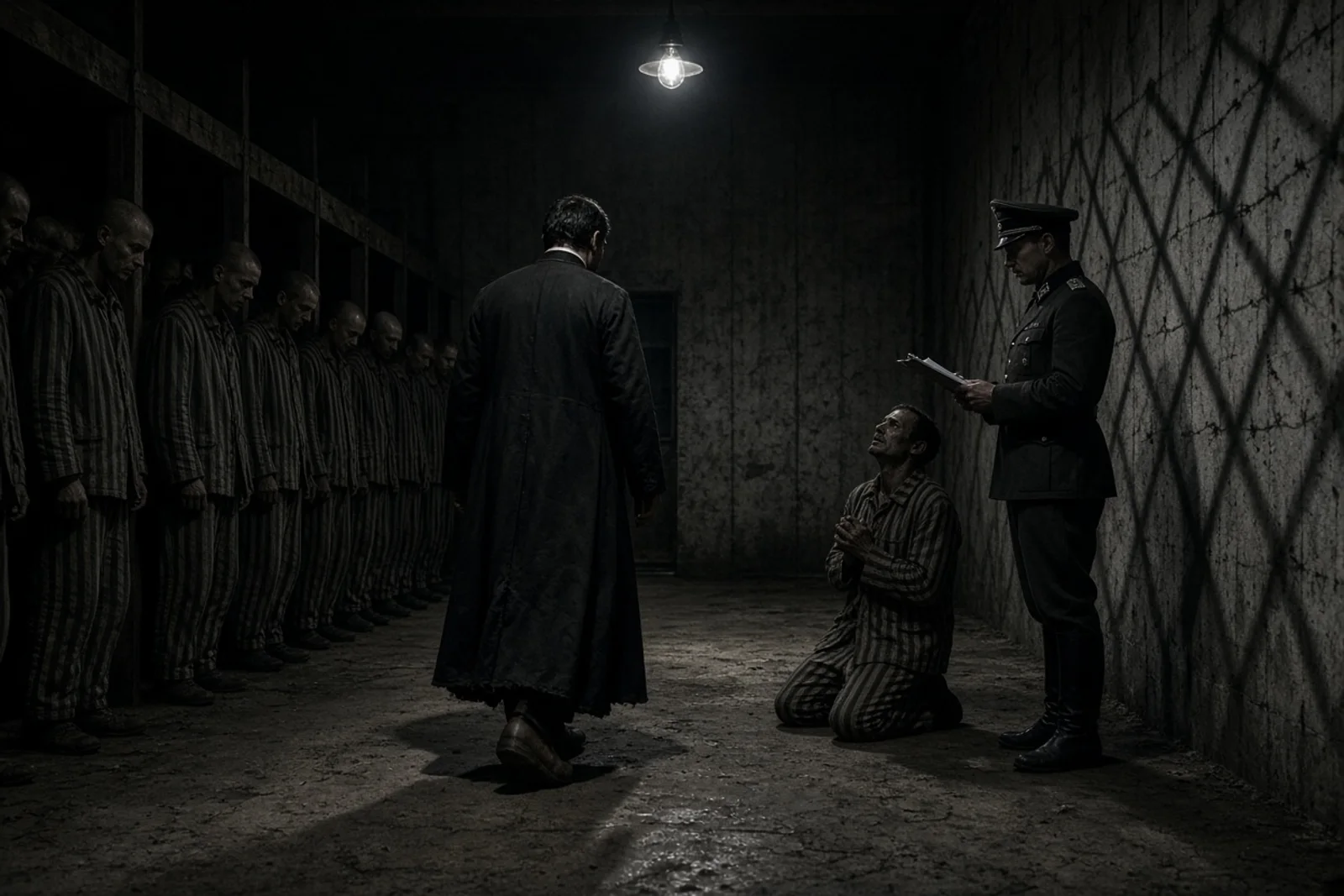
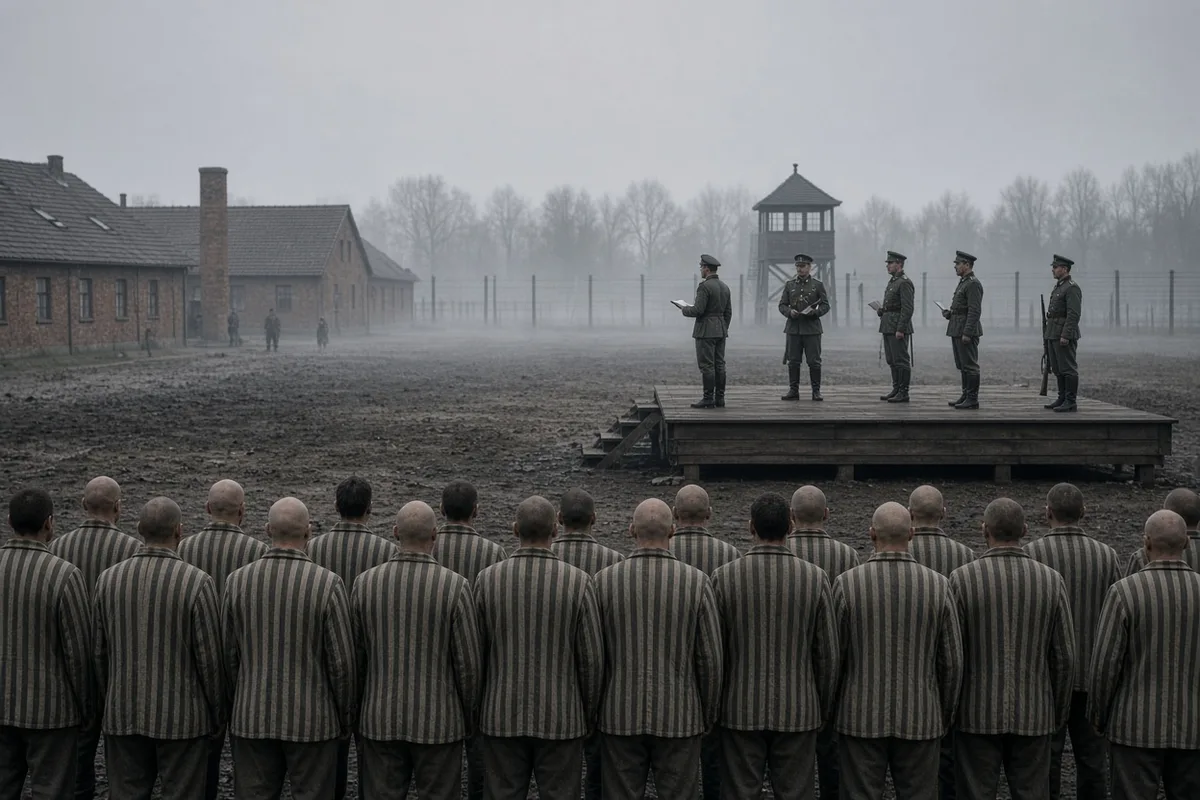
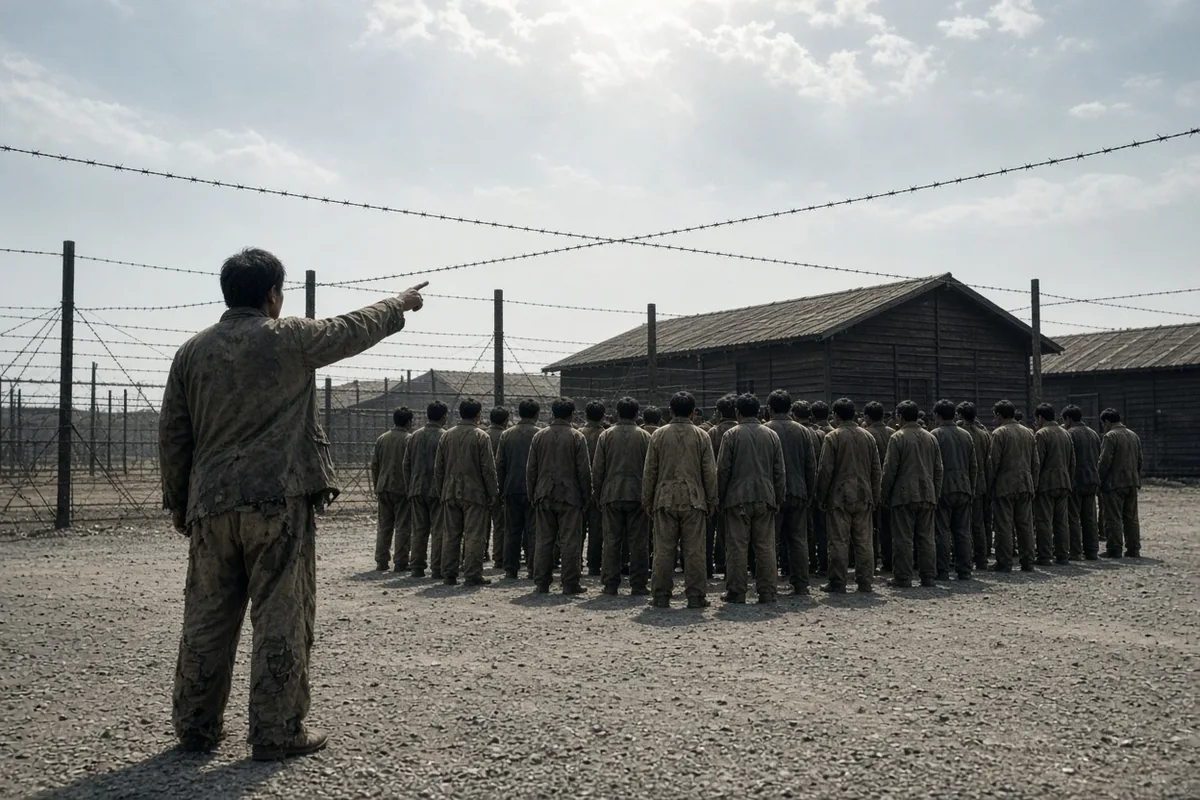
The sun had already dropped behind the barracks when the whistle cut through the square. We had been standing since morning, arms locked at our sides, while the SS walked the lines a second time. My legs shook from the hours on the gravel, but no one moved. The escape had happened two days before, and the whole block paid for it now.
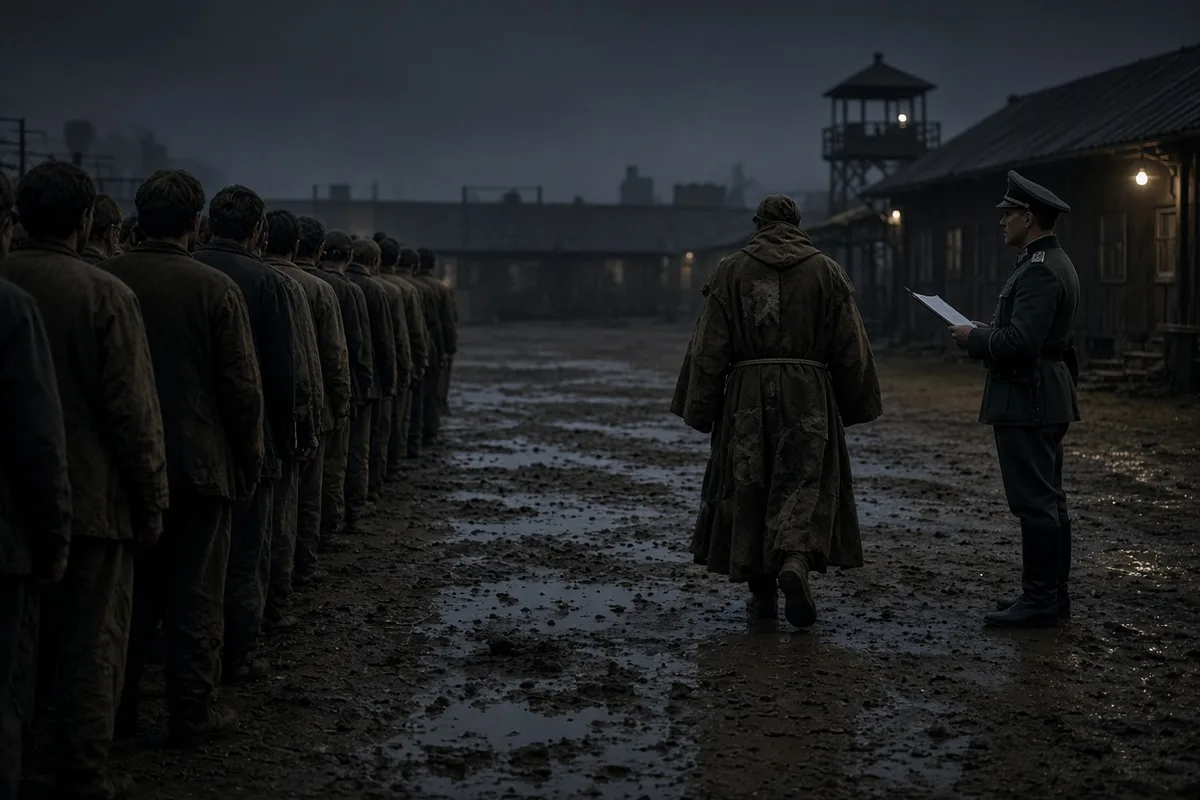
Fritzsch stood with a clipboard under one arm. Palitzsch pointed at men without looking at their faces. Ten names, ten numbers. When they reached Gajowniczek he was already crying, shoulders jerking, voice cracking as he begged. He said his wife and children were waiting. The words came out broken, loud enough for the front rows to hear.
A single prisoner stepped forward from the fourth rank. He was thin like the rest of us, gray from the dust, but he moved without hurry. He spoke to Fritzsch in Polish first, then German. The deputy commandant listened. No one else made a sound. After a moment Fritzsch gave a short nod and the priest took Gajowniczek’s place in the line of the chosen.
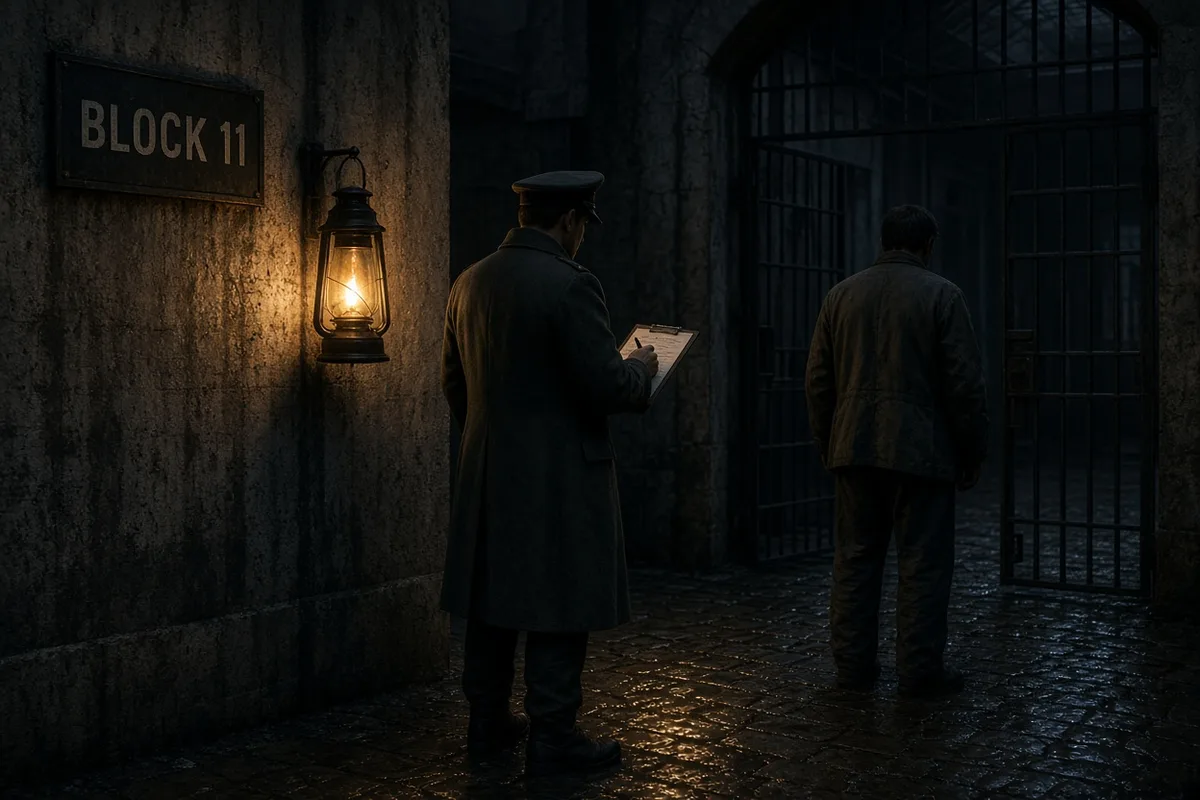
We were marched back inside Block 14 as the ten were led away toward the courtyard of Block 11. I caught one last look at the priest’s face before the gate closed. He did not turn around.
That night the block stayed silent longer than usual. Men lay on the planks and stared at the ceiling beams. Someone whispered the priest’s name—Maximilian Kolbe, number 16670—and the number passed from bunk to bunk like a password. I had seen him before, giving scraps of bread to the weaker prisoners and hearing confessions in the latrine when the guards were not looking.
Three days later I was sent with a work detail to clear rubble near the wall behind Block 11. We could hear nothing from the cells below, only the regular tread of the guards on the gravel above. At the end of the shift an SS man ordered us to carry two bodies out. They were already stiff. One had the number of a man chosen with Kolbe. The others were still inside.
A week after that I spoke with a prisoner who had been ordered to bring water to the starvation cells. He said Kolbe was still on his feet. The men sang together when they had strength left, the same hymns every evening. The water carrier stayed only long enough to empty the bucket and leave. He told me Kolbe’s voice was the clearest.
On the fourteenth of August the same work detail was called again. Four men remained in the cell. The guards finished them with phenol injections that afternoon. Kolbe was the last. The body was taken straight to the crematorium the next morning. I saw the smoke from the chimney while we stood at evening roll call.
Gajowniczek returned to the block two days later. He did not speak of what had happened. He kept his eyes on the ground and answered when spoken to. The rest of us watched him the way men watch someone who has been pulled back from a place they themselves will likely enter soon.
News of the exchange traveled through the camp in pieces. A letter left with a civilian worker reached the monastery at Niepokalanów by winter. The story was told again in Dachau after some of our transports arrived there. Gajowniczek survived the war and lived another fifty-two years. He visited the cell in Block 11 whenever he could and spoke the priest’s name to anyone who would listen.
I remained in Auschwitz until the evacuation in January 1945. On the march west I kept count of the days the way the priest had kept count inside the bunker—by the sound of breathing around me and the weight of the names we carried. Some nights, when the column halted, I still heard the hymns from the starvation cell, faint but steady, rising through the dark.
On the third day of the march the snow began to fall heavier near the village of Wodzisław Śląski, where we were loaded into open freight cars on 27 January 1945. The transport carried 3,500 prisoners from Auschwitz, and only 1,200 reached the gates of Buchenwald nine days later. I kept the number 16670 in my mind because the man who had taken it never asked for it back, and each evening when the train halted near Dresden I counted the breaths of the men still alive in my car the way the priest had counted inside the bunker. One of them, a Pole named Janusz Piekutowski from the same transport block, whispered that he had seen Kolbe’s file card marked “HKB” for hospital block before the phenol injection on 14 August 1941, and that the entry read “declared dead at 12:50 hours” in the handwriting of SS-Unterscharführer Hans Bock.
After liberation at Buchenwald on 11 April 1945 I returned to Poland by way of the displaced-persons camp at Bergen-Belsen, where I met a former Auschwitz orderly named Józef Kral who had carried the water bucket into the starvation cell on 12 August. Kral said Kolbe had answered the guard’s question in German with the words “I am a Catholic priest” and then asked only that the bucket be left so the others could drink. Kral repeated the sentence three times to make sure I heard the exact phrasing before he boarded a train for Kraków. In 1947 I traveled to Niepokalanów and spoke with Brother Zygmunt Różycki, who showed me the letter that had arrived from a civilian worker named Piotr Szwarc in December 1941; the letter stated that “the Polish priest in Block 14 gave his life for another man on the fourteenth of August.”
Franciszek Gajowniczek, number 5659, returned to his home in Zakopane and worked as a teacher until 1951. He testified at the Auschwitz trial in Kraków on 25 March 1947 that the deputy commandant Fritzsch had answered Kolbe’s request with the single word “accepted” and then struck the priest across the face before ordering him into the line. Gajowniczek repeated that testimony in 1971 at the beatification ceremony in Rome, where Pope Paul VI read the decree naming Kolbe “Blessed” on 17 October. I stood in the square outside St. Peter’s with 20,000 other pilgrims and heard the same sentence spoken over loudspeakers: “He offered his life so that another might live.”
In 1982 I returned to Oświęcim for the canonization. Pope John Paul II spoke from the altar on 10 October and quoted the Gospel of John directly: “Greater love has no man than this, that a man lay down his life for his friends.” The Pope added that Kolbe’s cell in Block 11, number 18 on the lower level, had been preserved exactly as the guards left it after the phenol injections. That same year the Polish government transferred the entire Block 11 structure to the Auschwitz-Birkenau State Museum, and the underground corridor received its first climate-control system in 1984 to keep the brick walls at a constant 8 degrees Celsius.
Each year after 1985 I visited the cell on 14 August. The museum register shows 1,478,000 visitors passed through the corridor between 1990 and 2000. On one of those visits in 1994 I met a Carmelite nun named Sister Maria Klemensa who had copied the original SS daily report for 15 August 1941; the report listed four bodies removed from Bunker 3, with the final entry “16670 Kolbe, executed.” She read the line aloud while we stood on the gravel path behind the block. Gajowniczek himself came for the last time in 1995, three months before his death on 13 March; he placed a single white rose on the concrete floor of cell 18 and said only the prisoner number.
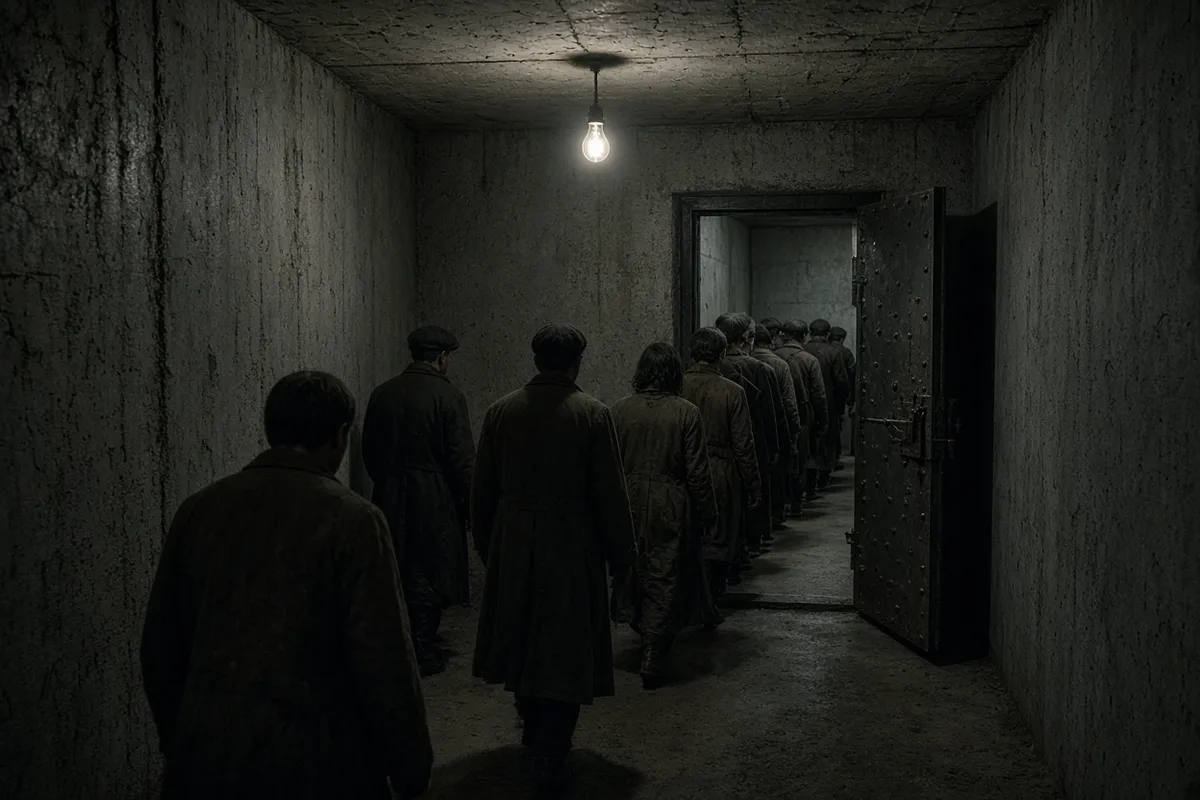
The museum today keeps the original wooden bunks from the starvation cell on display in a climate-controlled case inside Block 11. The iron door still carries the original lock mechanism installed in 1940 by the German firm Deutsche Ausrüstungswerke. On the wall opposite the door a small brass plate records the names of the ten men chosen on 31 July 1941, with Gajowniczek’s name crossed through and Kolbe’s written beneath it in the same hand that updated the camp records. The last documented visitor to sign the guest book on the day I last stood there was a woman from Nagasaki whose grandfather had been sheltered at Niepokalanów in 1936; she wrote only the date and the number 16670.
In the final years the memory returned most clearly not in the cell itself but on the platform at Oświęcim station when the evening train from Kraków halted. The sound of the wheels on the points matched the rhythm of the hymns the water carrier had described, and for a moment the faces of the men still inside the bunker appeared again in the reflection of the carriage windows, each one turning toward the priest whose voice remained the clearest until the injection on the afternoon of 14 August 1941.
The station platform at Oświęcim retained its original 1941 concrete edging when I returned on 12 September 1998 with the Polish Railway historical commission. Engineer Marek Zieliński from the Kraków division measured the rail gauge at 1435 millimetres and noted that the same switches installed by the Deutsche Reichsbahn in 1940 still clicked under the 18:47 train from Kraków. I stood at the exact spot where the freight cars had halted in 1945 and counted the bolts on the nearest switch plate—fourteen in total—while a maintenance crew replaced one sleeper marked with the stamp “DR 1943.” Zieliński recorded the date and my prisoner number in his ledger before the train departed at 19:12.
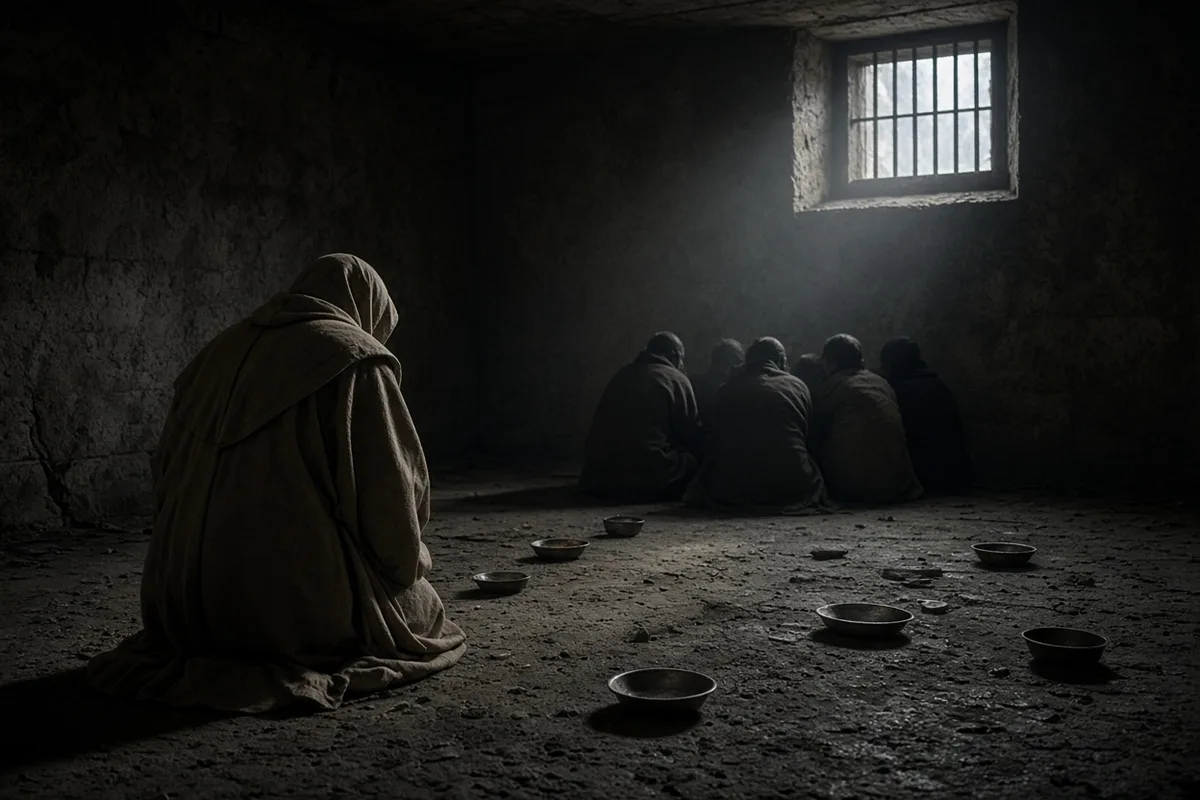
On 3 May 2001 the Auschwitz-Birkenau State Museum installed a new climate-control unit in Bunker 3 of Block 11. The contractor, Firma Klimatyzacyjna Kraków, logged an average temperature of 7.8 degrees Celsius and relative humidity of 52 percent across the twelve-month calibration period ending 30 April 2002. I signed the work-order sheet as witness number 47 that day and watched the technician adjust the sensor placed two metres from the original iron door of cell 18. The sensor serial number 2147 remained visible on the wall bracket when I checked it again on 14 August 2004.
Former prisoner Józef Stós, number 752, met me at the same platform on 27 January 2005. He carried a photocopy of the 15 August 1941 SS daily report that listed “16670 Kolbe, executed” in the hand of SS-Unterscharführer Hans Bock. Stós read the entry aloud at 11:40 hours while the 11:22 train from Katowice idled on track two. He then folded the paper, placed it inside his coat, and boarded the 12:05 service to Warszawa Centralna without further comment.
The museum guest book for 14 August 2009 records the signature of Maria Kolbe, a distant relative from the Niepokalanów community, who wrote only the time 14:50 and the phrase “cell 18, lower level.” That afternoon the visitor counter at the Block 11 entrance showed 2,847 entries for the month to date. I stood beside the brass plate listing the ten names chosen on 31 July 1941 and traced the crossed-through entry for Gajowniczek with the tip of my finger while the guide recited the exact wording of Fritzsch’s reply as preserved in the 1947 Kraków trial transcript.
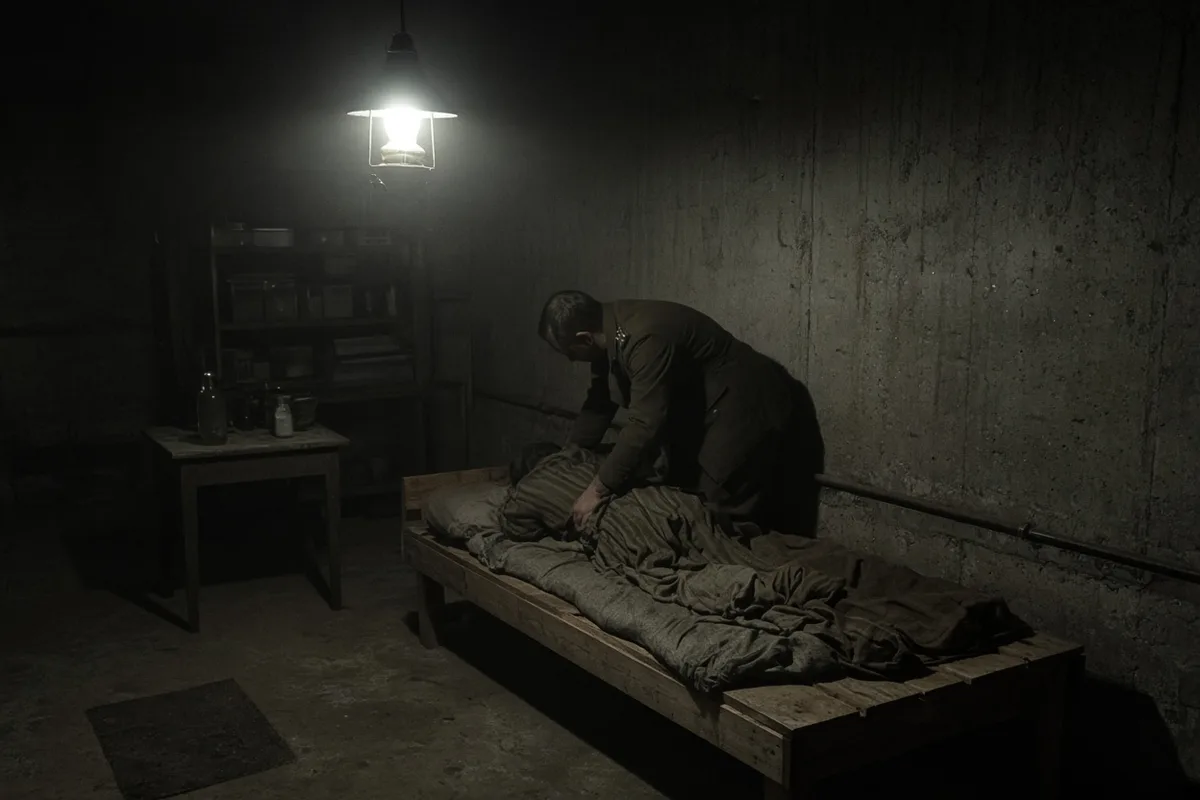
In October 2012 the Polish State Railways replaced the original switch lanterns at Oświęcim station with LED units numbered 03-47 through 03-52. The lantern nearest the 1945 loading point carried the new designation 03-49 and emitted 1800 lumens at 4000 K colour temperature. I noted the change in the margin of my 1945 pocket calendar, which still contained the pencilled tally of 3,500 prisoners loaded on 27 January. The replacement work order, signed by foreman Piotr Lewandowski, listed the old lanterns as scrapped on 18 October.
The last time I entered cell 18 occurred on 14 August 2016. The museum registrar, Anna Nowak, logged my visit at 09:17 and issued pass number 1847. The original lock mechanism, manufactured by Deutsche Ausrüstungswerke in 1940, still required a 42-millimetre key that the conservator turned twice before the door opened. I remained inside for eleven minutes while the humidity sensor recorded 51 percent and the temperature held at 8.1 degrees Celsius.
On 11 April 2019 I received a letter from the Buchenwald Memorial archive confirming that the transport of 1,200 survivors from the January 1945 evacuation had been processed through the former SS barracks at 14:30 hours on the day of liberation. The archivist, Dr. Thomas Hesse, quoted the entry from the camp register: “1,200 Polish prisoners, condition emaciated, deloused same day.” I placed the letter inside the 1945 calendar beside the earlier tally.
The final image returned on the platform at Oświęcim on 14 August 2022 when the 18:47 train from Kraków stopped at 19:03. A single passenger, a woman from Nagasaki whose grandfather had stayed at Niepokalanów in 1936, stepped down carrying a white rose. She placed the flower on the concrete edging, checked the time on her watch, and boarded again before the doors closed at 19:05. The wheels passed over the same switch plate I had counted in 1998, producing fourteen distinct clicks before the train cleared the platform.