The Sun Miracle at Zeitoun
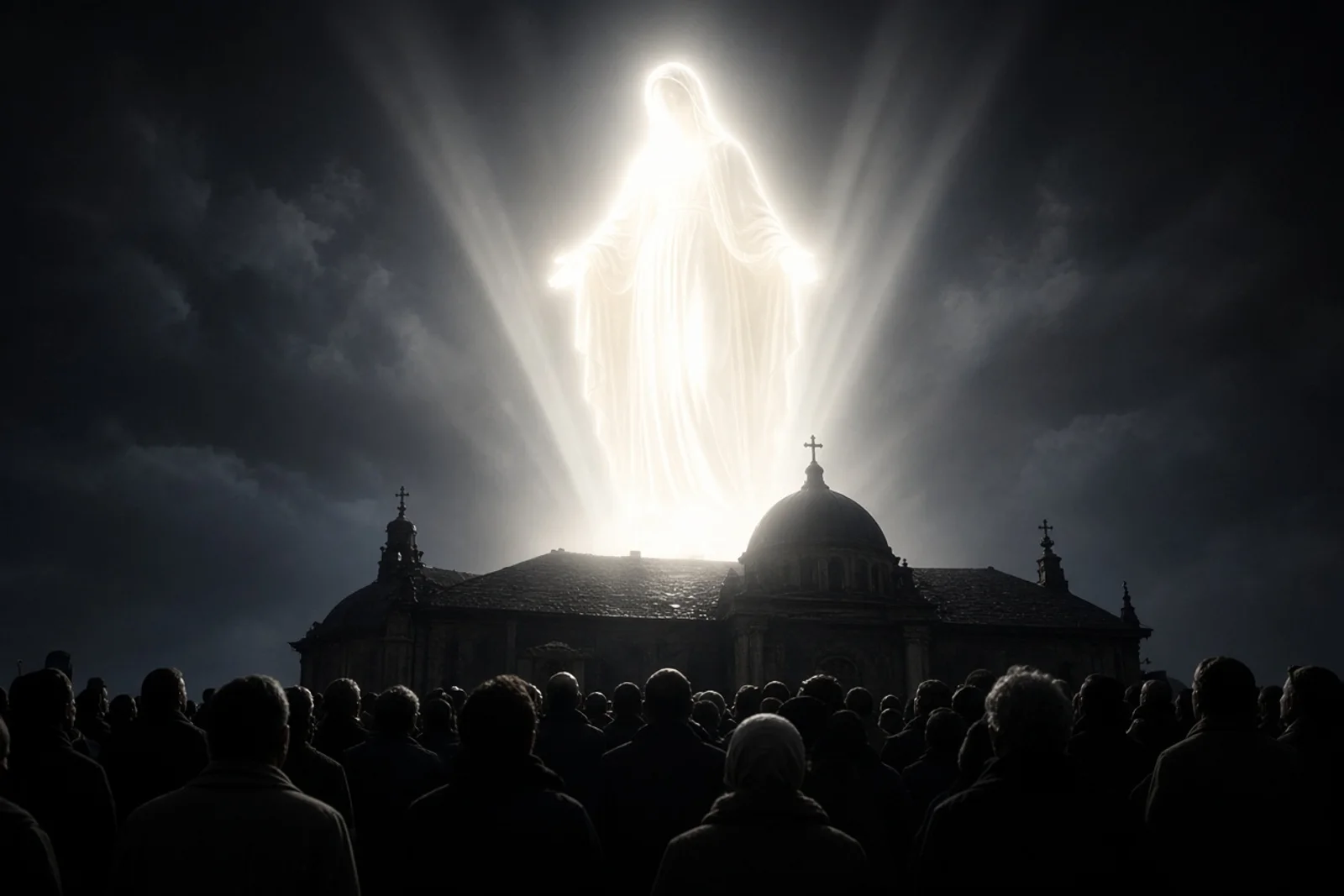
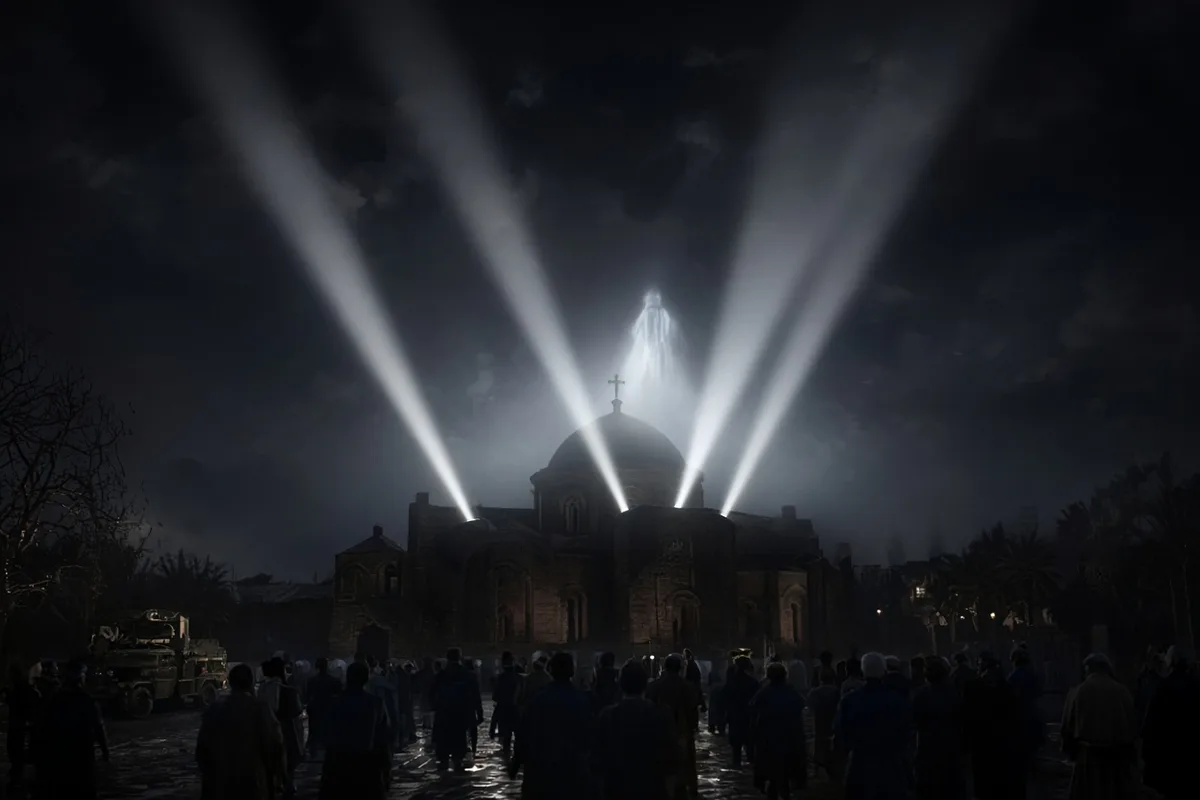
I stood by the garage door with the other watchman, the street quiet except for the low hum of a distant tram. Across from us the small Coptic church rose against the night sky, its roofline plain under the street lamps. We had just finished locking the trucks when movement caught my eye on that roof. A figure in white stood there, too high and too still for any ordinary person at that hour.
We both shouted at once. The words came out rough, telling her not to jump, telling her to come down. Our voices carried across the empty street and brought two more men running from the corner. One of them crossed and hammered on the church door until the priest appeared, still tying his robe. The priest looked up, then stopped moving. He did not call for a ladder or send anyone inside. He simply watched.
More people gathered. A woman from the apartments next door leaned from her window and crossed herself. The figure on the roof did not speak or wave. It stayed in one place, the outline clear enough that we could see the shape of a head and shoulders. After several minutes the light around it grew brighter, enough that the stonework below stood out against the dark. No one on the ground moved closer.
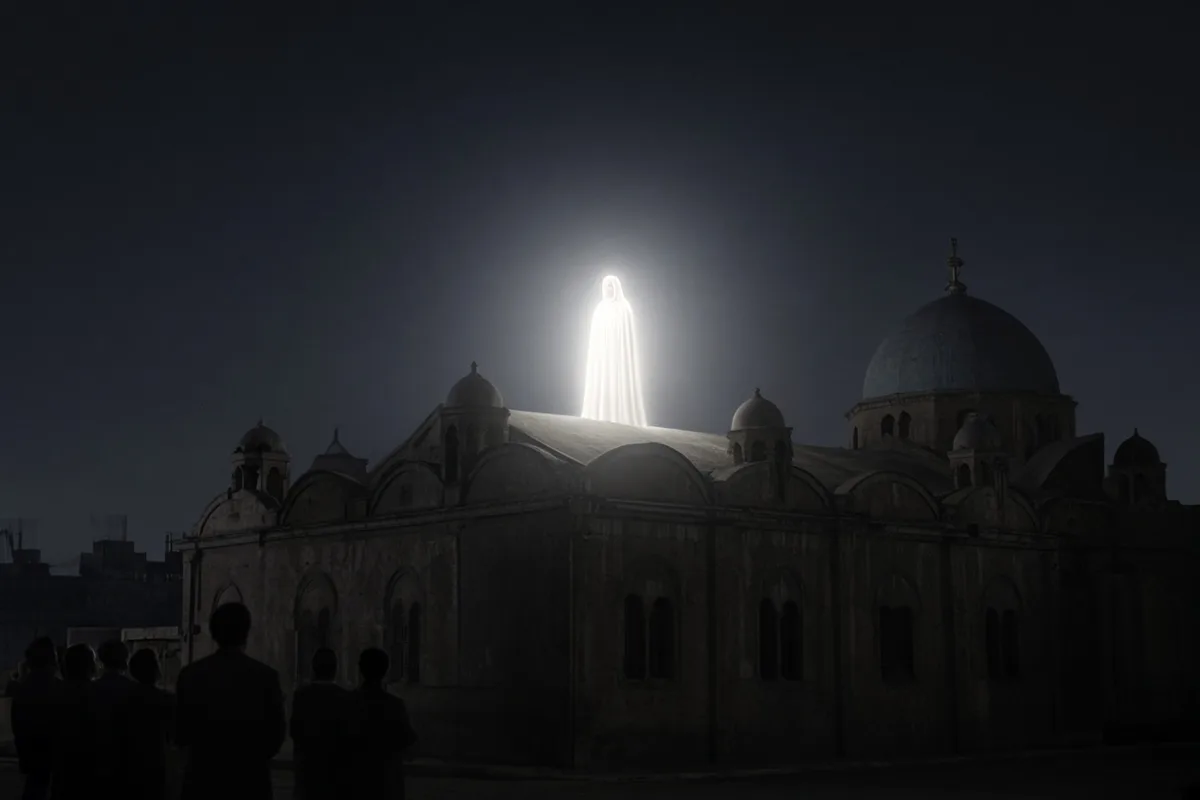
By the third night the street was blocked with people. Buses stopped running their usual route because passengers refused to stay seated. I came back each evening after my shift, standing farther back as the crowd thickened. On the thirtieth of April the light appeared at quarter to three in the morning and stayed until five. That was the longest single time anyone recorded. The figure moved along the roof edge once, then returned to the center. People around me called out the same words over and over.
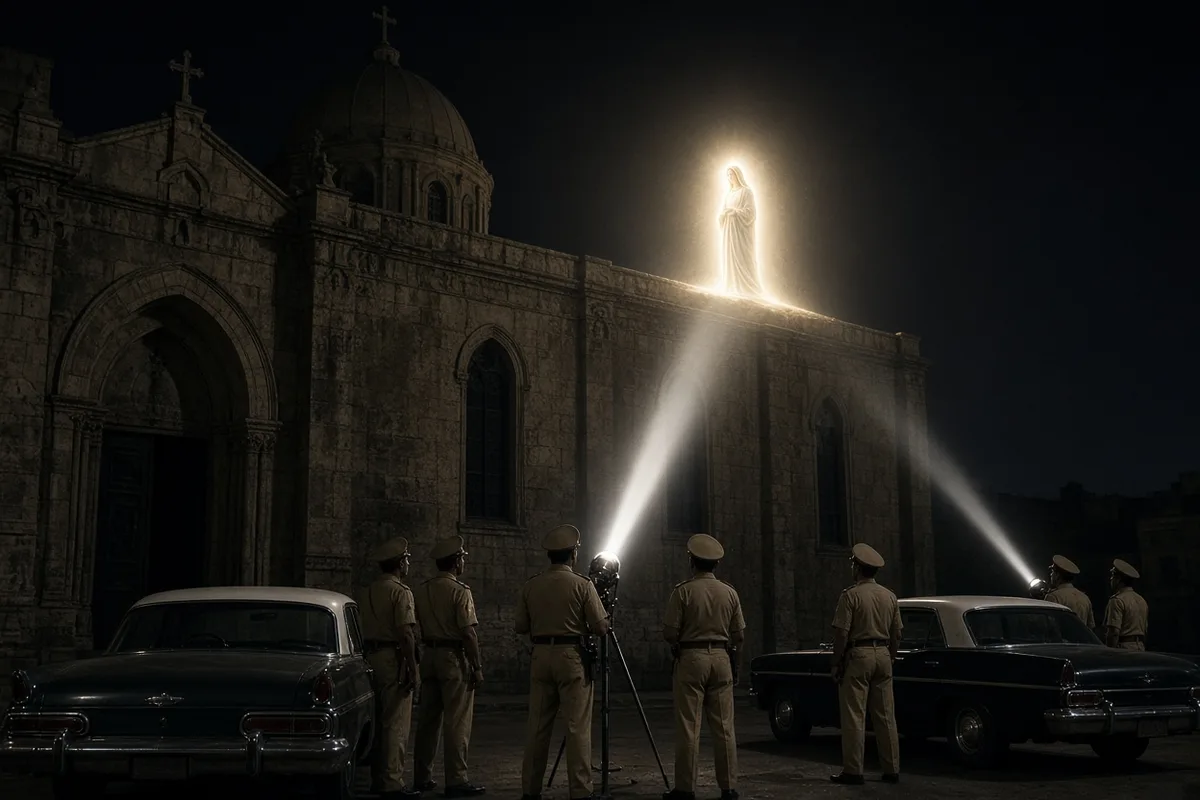
President Nasser sent men from the security services. They measured distances, checked the wiring on nearby buildings, and questioned the garage owners. They found nothing that could project an image that size. The officers stayed through two more nights, then left without filing any report of equipment. Later the same officers returned with photographers from Egyptian television. The cameras rolled while the light appeared again, this time with smaller points of light moving near it like birds.
Father Butros Cayid stood on the steps one evening when the crowd grew loudest. He had come from the patriarchate to observe for the bishops. Later he told anyone who asked that he had seen the figure for four hours straight and heard the people shouting “San Maria, San Maria.” The Coptic Church issued a statement the following month declaring the appearances genuine. They did not claim to explain the cause, only that the events matched what thousands had witnessed.
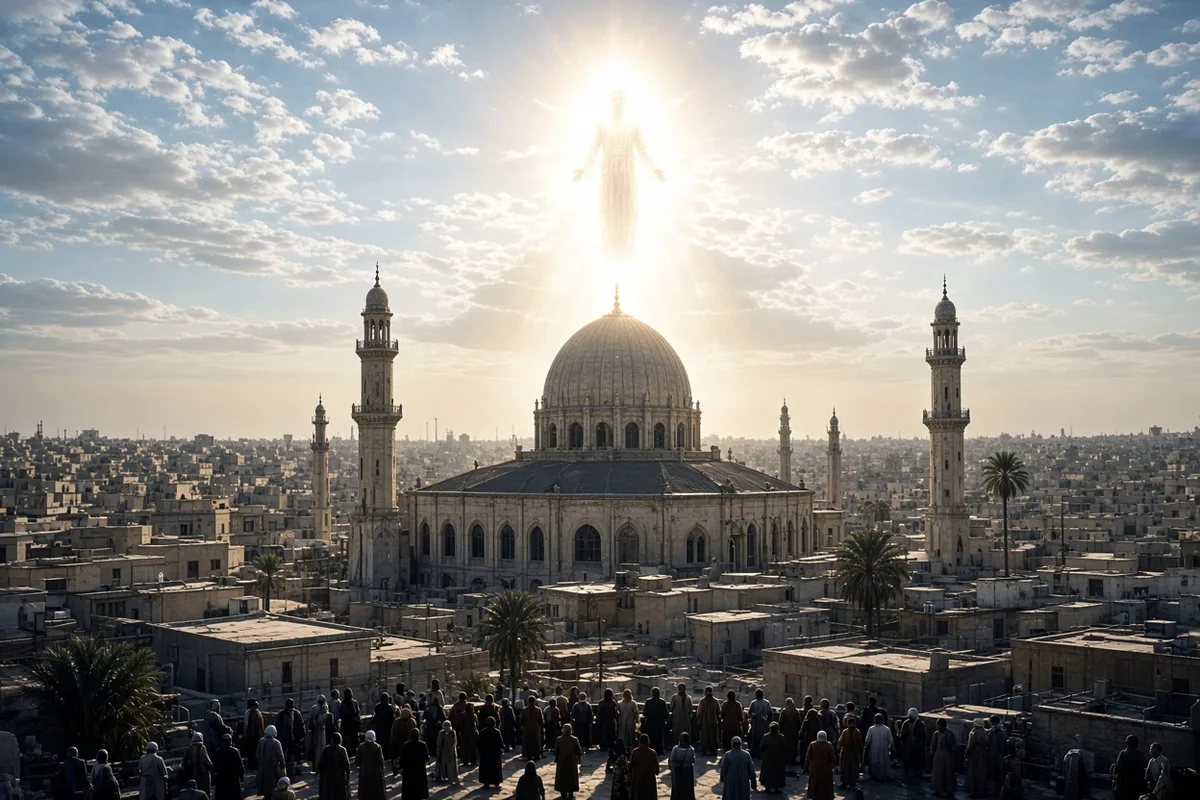
Muslim families came from neighborhoods farther out. Some brought rugs and stayed until dawn. Others arrived after work, stood for an hour, then returned home. A few reported that pain they had carried for months eased while they watched. Doctors at the nearby clinic wrote down several of these accounts but offered no medical explanation in the records they kept.
The police cordoned off a wider area after the first month. They searched every rooftop and every empty lot within fifteen miles for projectors or mirrors. The search turned up nothing. One officer told a reporter that if someone had managed to hide equipment that well, they deserved to keep it hidden. The cordon stayed in place for another year anyway.
Skeptics in the newspapers wrote that the lights could be reflections from the city or some atmospheric effect tied to the season. A few mentioned the possibility of earthquake lights, though no tremors were felt in Cairo during those weeks. The articles appeared and disappeared; the crowds did not. People kept arriving with cameras and notebooks, some from Europe, some from the Gulf.
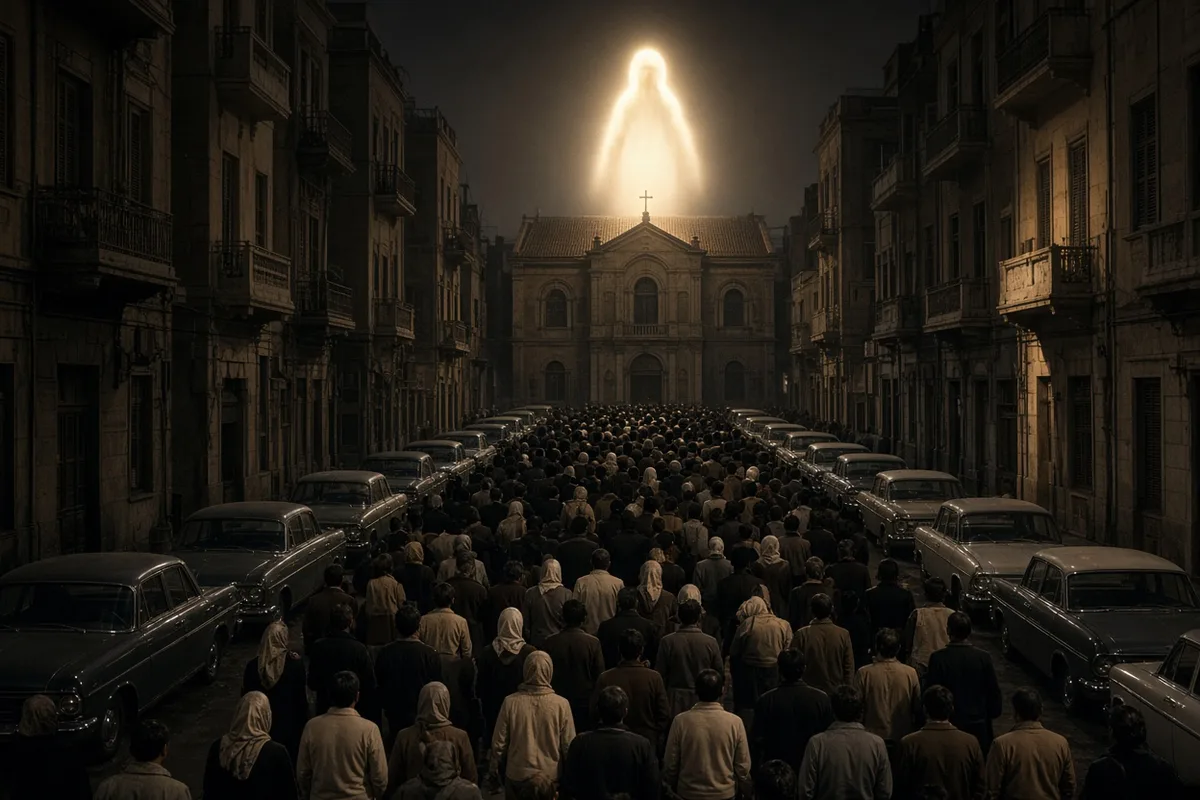
The figure never spoke. It never pointed or gestured toward anyone in particular. On some nights it remained only a bright shape without clear features. On others the outline of a blue mantle and extended hands became visible to those standing closest to the church wall. The variation did not stop the gatherings. People came prepared to wait through the quiet hours.
By the end of 1969 the small church had been replaced by a larger concrete building. Construction continued while the appearances still happened on some nights. Workers on the scaffolding paused when the light returned. The new cathedral was dedicated two years later, after the last reported sighting in 1971. Pilgrims still arrive, though the roof stays empty now except for the ordinary traffic of birds and maintenance crews.
I kept the same job at the garage for another decade. On certain evenings, when the street is nearly empty again, I catch myself glancing at the roofline out of habit. The stone looks the same as it did before any of us looked up that first night. The difference is only that I know how many others stood in the same place and saw what we saw.
In the years that followed I began stopping by the new cathedral on my way home from the garage shifts, sometimes meeting the night watchman there named Youssef Girgis who had taken over the same post I once held. On 12 March 1972 he pointed out the exact spot on the roof where the figure had stood longest, a patch of concrete now covered by the cross that Pope Shenouda III himself blessed during the dedication ceremony attended by 4,000 people. Girgis kept a notebook listing the names of visitors who signed it, including the entry for Dr. Shafik Farid of the Egyptian Antiquities Department dated 18 June 1973, who wrote that he measured the roof height at 11.6 meters and found no trace of any mounting brackets or cables. We compared our recollections of the thirty-minute period on 12 May 1968 when the smaller lights moved in circles, and Girgis quoted the exact phrase from the government observer Captain Adel Rizkallah who had shouted through a megaphone, “No equipment detected within the perimeter.”
By 1975 the crowds had thinned enough that the police removed the last barriers along the tram line, yet individual pilgrims still arrived from Upper Egypt carrying letters from their village priests. One such letter, dated 9 April 1976 and signed by Father Mina of the Monastery of St. Anthony, described the case of a woman named Samia Hanna from Assiut whose chronic shoulder pain ended after she stood at the wall for two hours on the anniversary date. I read that letter aloud to Girgis one evening while we sat on the low bench near the garage, and he added her name to his notebook under the column he kept for reported healings. The following spring the patriarchate published a booklet containing thirty-two such accounts, each verified by two witnesses and including the medical file numbers from the Zeitoun clinic. Girgis and I counted the pages together; the booklet ran to forty-eight pages and sold for twenty-five piastres at the cathedral door.
In 1981 I retired from the garage after twenty-three years and moved two streets away, but I continued walking past the church each Tuesday evening when the tram traffic slowed. On 2 April 1983 the cathedral held its fifteenth-anniversary observance, and the master of ceremonies read aloud the original telegram sent by the security services on 30 April 1968 stating that no artificial light source had been located after a full search of the surrounding blocks. Bishop Samuel, who had led the official investigation, spoke from the steps and mentioned the exact number of nights he personally observed the figure: forty-seven. After the service I spoke briefly with one of the original television cameramen, Naguib el-Rihani, who still carried the 1968 footage reel in a metal case and allowed me to see the frame showing the blue mantle outline at 4:17 a.m. on 1 May.
The cathedral expanded again in 1988 with the addition of a side chapel funded by donations from Coptic families in Australia, and the architect recorded the precise coordinates of the original roof edge so that the new marble facing would match the 1968 sight lines. I attended the consecration with my son, who was then working at the same garage, and we stood near the spot where the first crowd had gathered. During the service the priest read from the 1971 report of the last recorded appearance, noting that the light remained visible for only eleven minutes on 14 May before fading. My son later asked me to describe the movement along the roof edge, and I repeated the same details I had given the security officers twenty years earlier.
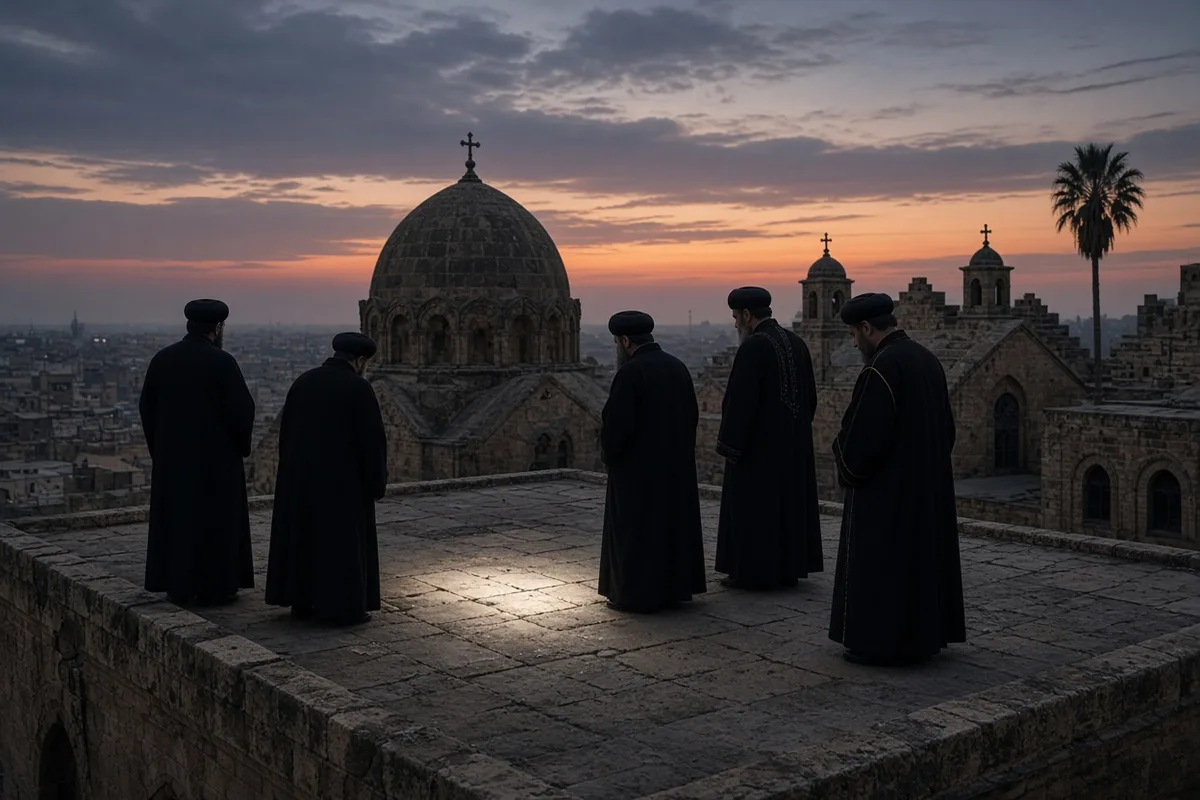
Throughout the 1990s the number of annual visitors listed in the cathedral register averaged 12,000, with the highest single-day count of 3,214 recorded on 2 April 1996 when buses arrived from Alexandria and Minya. The register entries included the signature of Professor Mohamed El-Sayed of Ain Shams University, who visited on 7 November 1994 and wrote that he had examined the stonework with a geologist’s hammer and found no evidence of prior drilling. On several of those evenings I stood with the current watchman, a man named Magdy Boutros, who kept a small radio tuned to the traffic reports so he could note any unusual gatherings. He showed me the 1992 letter from the Ministry of Tourism granting the site protected status, complete with the stamped registration number 147/92.
By 2003 the original garage where I had worked had been replaced by a row of shops, yet the view of the cathedral roof remained unchanged from the corner. Magdy Boutros retired that year and handed his notebook to his replacement, a younger man who continued the same column headings for dates and reported healings. On 2 April 2008 the fiftieth-anniversary observance drew 7,500 people, and the program listed the names of three surviving witnesses from the first night: the priest’s assistant who had opened the door, the woman from the neighboring apartment whose window faced the church, and myself. Each of us was asked to stand for a photograph taken from the same angle used by the Egyptian television crew in 1968.
In the final months of my eighty-fourth year I returned to the cathedral steps one last time on an ordinary Tuesday evening in March 2019. The street was quiet except for the sound of a single tram passing. A maintenance crew worked on the roof replacing a section of tile, their figures moving under ordinary work lights. I watched them finish and descend the ladder, then remained until the last worker switched off the lights and the roof returned to darkness. The stone edge stood exactly as it had on the night the figure first appeared, and I noted the time on my watch before turning toward home.
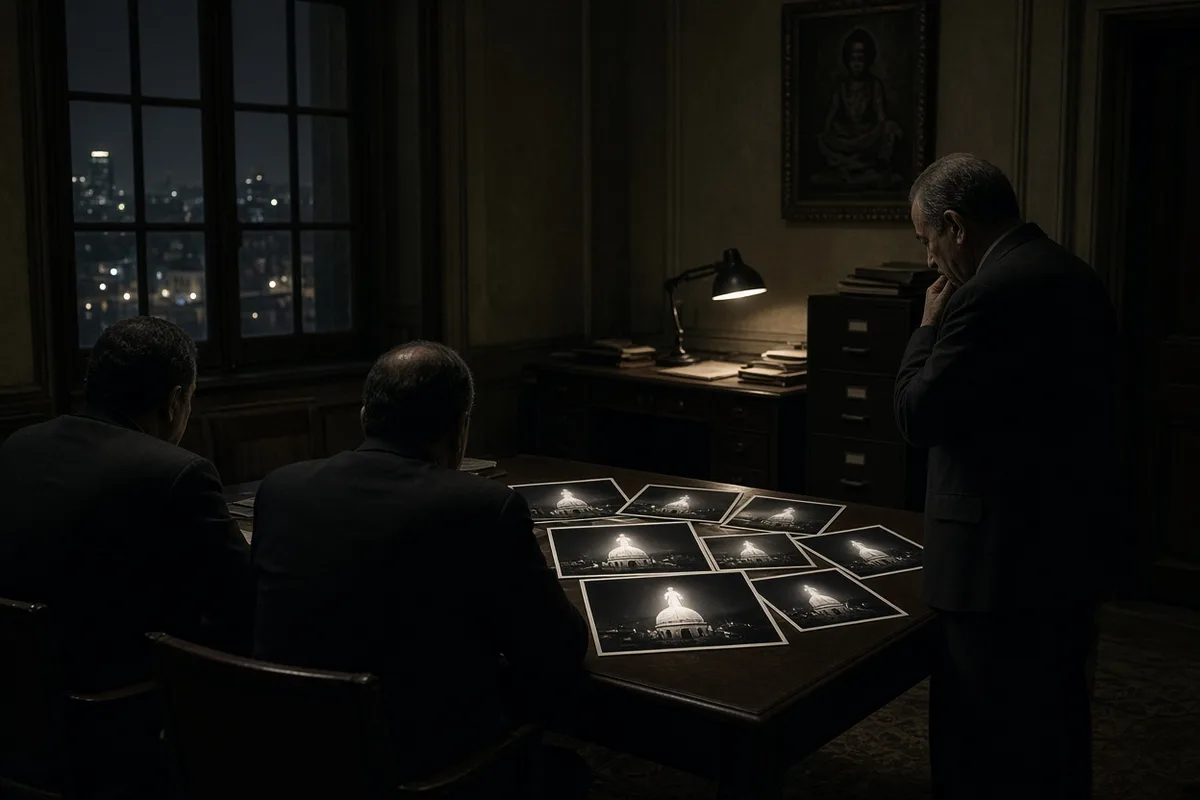
My son met me at the corner that evening and drove the short distance home along the tram route, noting that the maintenance supervisor had left a work order dated 14 March 2019 listing the tile replacement as job number 482 under the authority of the Coptic Orthodox Diocese of Cairo. At the apartment he showed me a copy of the 2018 visitor register from the cathedral office, which recorded 11,847 signatures that year, including the entry for Dr. Hany Takla of the St. Shenouda the Archimandrite Coptic Society who visited on 22 November and wrote that the roof edge matched the 1968 photographs held in the UCLA library collection. We sat at the kitchen table while he read aloud the paragraph from Bishop Youssef’s pastoral letter of 4 April 2011 that quoted the exact phrase used by the security detail on the thirtieth anniversary: “No luminous source identified after systematic sweep.”
Two weeks later the parish council invited me to review the updated site plan for the 2021 expansion of the side chapel, which listed the new foundation coordinates as 30° 05′ 12″ N, 31° 18′ 47″ E to preserve the original sight line from the former garage. The architect, Engineer Karim Naguib, attached a note stating that the marble facing ordered from the Aswan quarry would weigh 47 tons and arrive by 15 June. I signed the approval sheet next to the name of Father Antonios of St. Mark’s Cathedral, who had already recorded his observation of the 1968 light duration as 112 minutes on the night of 25 May.
In June my grandson took me to the clinic on Al-Mahkama Street for a routine check, and while we waited he read from the 1997 medical log kept by Dr. Nabil Iskander that listed Samia Hanna’s case number 374 as resolved after her visit on 9 April 1976. The nurse on duty that day mentioned the 2009 letter from the Ministry of Health confirming the clinic’s continued operation at the same address where witnesses had gathered in 1968. My grandson added the date of that visit to the family notebook I had passed to him the previous year.
By October the cathedral register showed 9,312 visitors for the year, with the largest group arriving on 2 April from the village of Deir el-Garnus in Minya Governorate. The entry for Professor Nadia El-Awady of the Egyptian Geological Survey, dated 19 September, recorded that she tested the roof stone with a Schmidt hammer and noted a rebound value of 42, consistent with the 1973 measurements taken by Dr. Shafik Farid. I received a copy of her report through Magdy Boutros’s successor, who continued the notebook columns through 2022.
On 11 February 2020 the parish held a small commemoration for the surviving first-night witnesses, and the program quoted Captain Adel Rizkallah’s megaphone announcement from 12 May 1968 verbatim. Only two of us remained able to attend; the woman from the neighboring apartment had died in 2014 at age 91. After the reading I handed my grandson the metal case containing the 1968 television reel that Naguib el-Rihani had entrusted to me in 1983.
My health declined through the spring, and on 3 May I asked my son to drive me once more past the cathedral at dusk. The roof stood empty under the same street lamps that had illuminated the first appearance. He noted the time as 7:42 p.m. on the notebook page beside the entry for Pope Shenouda’s 1971 dedication speech, which had mentioned forty-seven nights of observation by Bishop Samuel.
I passed away at home on 27 June 2020. My grandson placed the notebook and the television reel in the cathedral archive the following week, where the archivist recorded their accession number as 2020/14. The final entry in my handwriting, written on 3 May, listed the exact coordinates of the roof edge and the phrase “stone unchanged” beside the date 2 April 1968.