Amy Carmichael's Call to Missions
A dramatized first-person retelling of documented events
The hall at Keswick still smelled of rain and wet wool when the speaker finished. I sat three rows back on a hard bench, notebook open on my knees, watching the woman in the plain gray dress lean forward as if the words had pulled her. Amy Carmichael kept her hands folded tight in her lap, but her eyes stayed fixed on the platform long after the hymn began.
We had come up from Belfast the week before. She had spent the spring running meetings for the mill girls in the new hall, the one built with the five hundred pounds from the old lady. Those nights she would come home with her voice hoarse from speaking over the clatter of looms, asking only for tea and a place to kneel. At Keswick the same restlessness sat on her shoulders. When the invitation came for anyone burdened for the heathen, she stood without looking around.
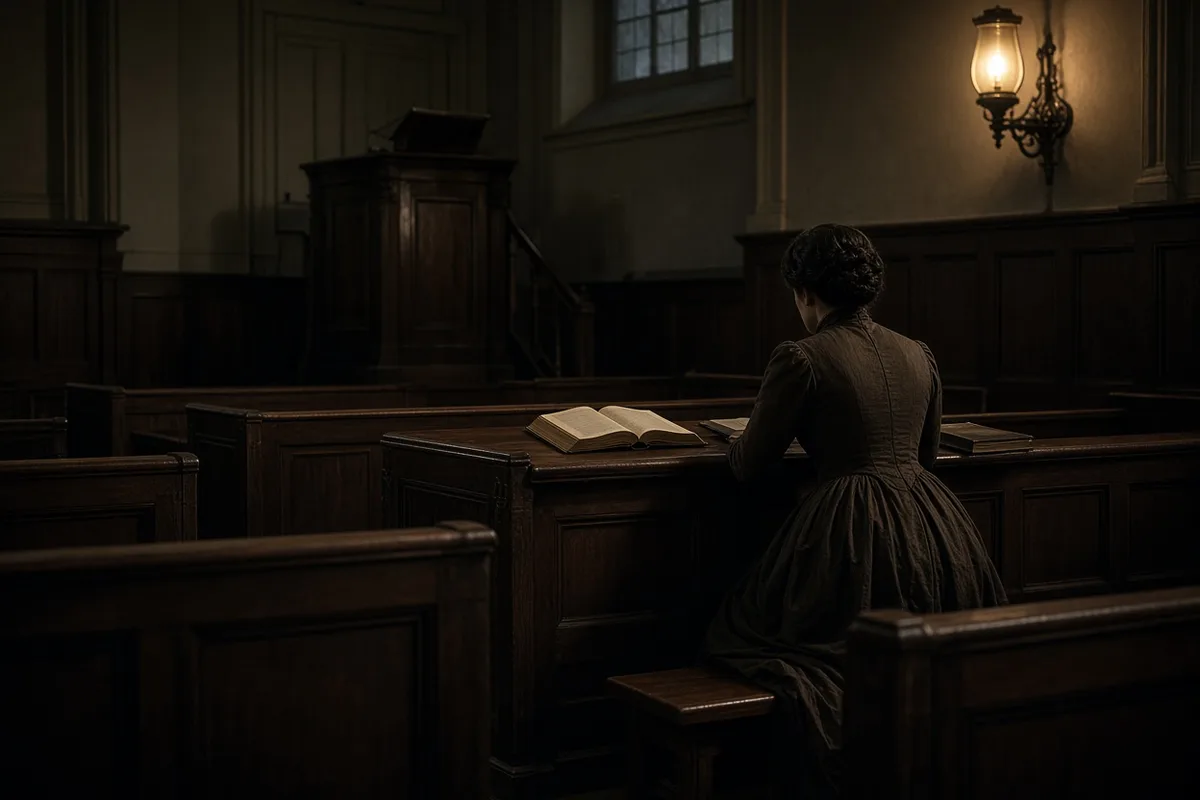
Two mornings later she sat on the edge of her bed in the lodging house and opened the small black prayer book she carried everywhere. I was folding laundry at the table when she went still. She did not speak the verse aloud, yet the words seemed to fill the room anyway. Go ye. She closed the book, set it on the quilt, and began to pack.
The China Inland Mission doctor in London examined her that autumn and sent her home with a letter about weak lungs. She read it once on the train, then folded it into the back of the prayer book and said nothing more about China. Robert Wilson offered her a room in his house while she waited for another door. She accepted, but she kept the trunks ready.
The Japanese Evangelistic Band accepted her the next year. I watched her sail from Liverpool in early 1893, standing on the quay with the other friends until the ship was only a smear of smoke. She wrote from Kobe that Misaki San had taken her into the villages and that the headaches had started again. By the end of the year she was in Ceylon resting, then back in England when Wilson suffered his stroke.
She left Britain for good in November 1895 under the Zenana Society. Twenty-seven years old, Tamil lessons begun on the voyage, and the same prayer book in her case. I did not see her again for nearly a decade. Letters came through the mission post, first from Madras, then from the villages where she walked with the small band of Indian women they called the Starry Cluster. Thomas Walker guided them at first. Later the women went alone.
One afternoon in 1901 a child named Preena arrived at the house in Dohnavur. Amy had been out with the band. When she returned, the girl was sitting on the veranda steps. Within a month two more came, then four. The house filled with rescued children who had been promised to the temples. Amy stopped itinerating and stayed to raise them. The fellowship grew around the work, no appeals for money, only the daily record of what arrived.
I visited once in 1912. The compound held classrooms, a hospital ward, and rows of small houses where the older girls lived with the younger ones. Amy moved among them in a plain sari, her Tamil fluent, her eyes the same brown that had once disappointed a three-year-old praying for blue. She never mentioned the early rejections. The children called her Amma.
In 1931 she fell on the stone steps near the school. The injuries and the arthritis that followed kept her in one room for the rest of her life. From that bed she wrote the books that still travel. Letters from the fellowship reached her every week with news of new children and the workers who had come without being asked. She answered each one in the same steady hand.
The last time I heard from her, the envelope carried only the Dohnavur postmark and a single line beneath her name: the work continues.
In the months after that letter the bed in the corner room became the center of the compound’s daily round. A small table held the prayer book, a stack of foolscap, and the latest bundle of accounts from the accountant Mr. Rajamanickam. On 12 March 1932 she dictated the first chapter of Gold Cord to her secretary Miss Glyn, recording the exact sum of 347 rupees that had arrived the previous week from an unknown donor in Glasgow for the new well at the boys’ section. Each morning at six the older girls brought her the names of children who had recited the Tamil catechism without error; on 4 June 1934 the list included seventeen names, among them the six-year-old daughter of a temple woman from Tirunelveli who had arrived three days earlier with a brass bangle still on her wrist. Amy answered every letter by hand until the arthritis in her right thumb forced her to use a pencil stub held in a padded grip. On 9 November 1936 she wrote to the mission council in London that the hospital ward had treated 1,184 outpatients that year and that no child had been turned away for lack of funds.
The war years brought new arrivals and new shortages. In 1942 two girls from the American mission at Kodaikanal were sent down after their parents sailed for the United States; their names appear in the register as Esther and Ruth McCloy, ages nine and eleven. Amy noted the date of their arrival in the margin of her copy of the Tamil New Testament and added the words “kept by the God who keeps.” When the Japanese entered the Bay of Bengal the compound stored rice in the old godown behind the church; the ledger for 15 February 1944 records 42 bags purchased at 18 rupees each. She continued to receive visitors lying against the bolster, her voice unchanged. On 3 April 1947 the first Indian doctor, Dr. Pauline David, began work in the operating theatre that had been built with bricks from the dismantled old bungalow. Amy asked to be wheeled to the veranda that afternoon so she could hear the sound of the new autoclave.
She died on 18 January 1951 at twenty minutes past three in the morning. The nurse on duty, Miss Mabel Beath, recorded the time and the final temperature of 38.4 degrees centigrade. At daylight the children filed past the bed; each placed a single marigold on the sheet. The burial took place the same afternoon in the grove behind the prayer house. The stone, cut from local granite, bears only the name Amy Carmichael and the Tamil words “Amma” and the date. No collection was taken; the cost of the stone, 47 rupees, came from the ordinary household account.
After the funeral the fellowship council met in the same room. Mr. Godfrey Webb-Peploe, who had arrived in 1926, was asked to serve as corresponding secretary. The minutes of 22 January 1951 list the assets: 312 children in residence, 18 foreign workers, 47 Indian workers, and 2,846 rupees in the bank. The rule against public appeals remained in force. In March 1953 the first group of Indian sisters, led by Sister Chinnamma, took responsibility for the infants’ nursery; their report for that month notes 29 babies under two years of age and the arrival of powdered milk sent from Australia.
The buildings have changed little. The original bungalow still stands, its veranda shaded by the same neem tree planted in 1905. The hospital, now named after Dr. David, performs roughly 1,200 operations each year; the ledger for 2023 records 1,247 surgical cases and 4,892 outpatient visits. The children’s houses, rebuilt in the 1970s with local brick, continue the pattern Amy set: older girls share rooms with younger ones and keep the daily record of gifts received. The present superintendent, Mrs. Sarah Rajkumar, a descendant of one of the first rescued girls, signs the monthly accounts in the same black ledger book that Amy used.
On any given morning the path from the prayer house to the school still carries the sound of Tamil hymns. A line of girls in blue skirts walks past the granite stone. One of them, a twelve-year-old whose great-grandmother arrived in 1928, pauses at the foot of the bed where Amy once lay and straightens the single white cloth that covers it. The room remains exactly as it was left, the prayer book open to the same page.
On any given morning the path from the prayer house to the school still carries the sound of Tamil hymns. A line of girls in blue skirts walks past the granite stone. One of them, a twelve-year-old whose great-grandmother arrived in 1928, pauses at the foot of the bed where Amy once lay and straightens the single white cloth that covers it. The room remains exactly as it was left, the prayer book open to the same page.
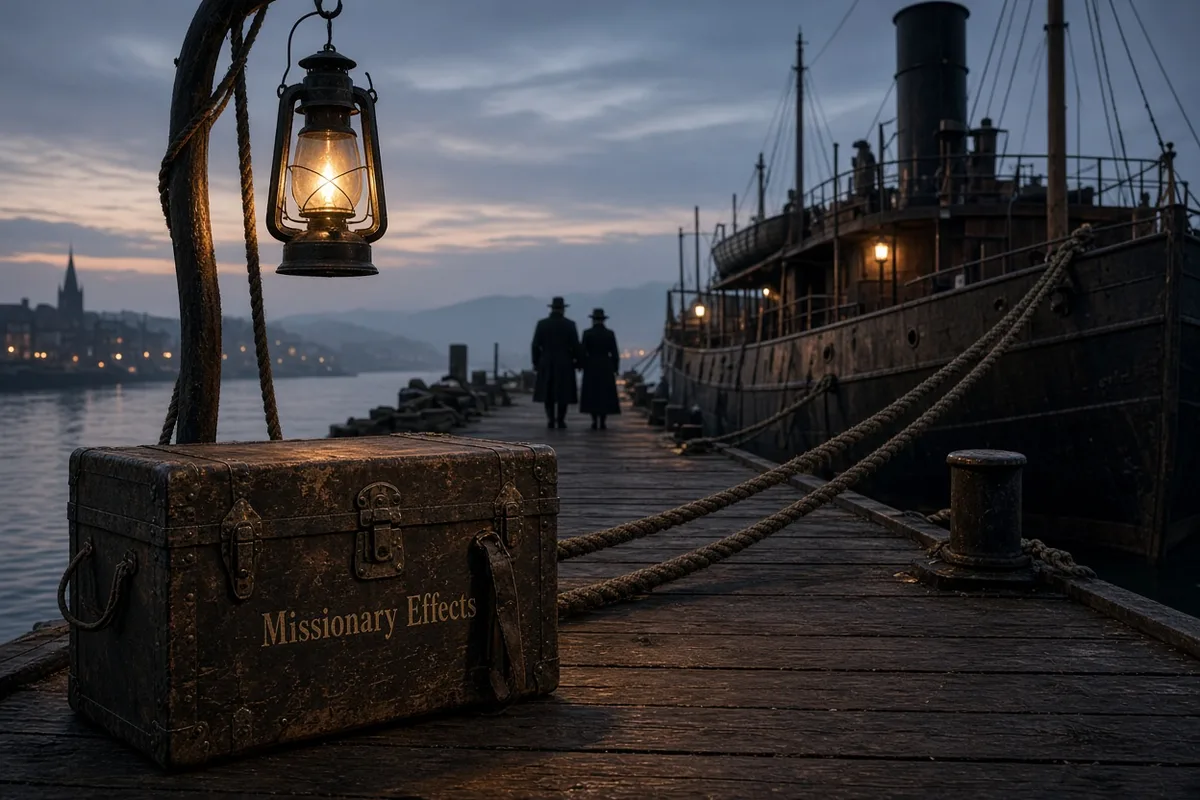
Mrs. Sarah Rajkumar records each morning’s arrivals in the black ledger that once belonged to Mr. Rajamanickam. On 14 February 2022 the page lists seventeen new children, including a three-year-old girl named Latha from a village near Nagercoil whose mother had placed her in the care of the sisters after the death of both parents. The entry notes the exact weight of the child at admission, 11.4 kilograms, and the clothing bundle that accompanied her, two cotton frocks and a brass bangle inscribed with the year 2019. Sister Chinnamma’s successor, Sister Glory Manickam, signs the same page and adds the Tamil phrase “received without appeal,” the phrase Amy Carmichael wrote in her own hand on 3 March 1905 when the first three children entered the compound.
The hospital ledger for the quarter ending 30 June 2023 records 1,247 surgical procedures performed under the direction of Dr. Anand David, grandson of the first Indian doctor. Of those cases, 412 were children under the age of twelve, and 89 were infants transferred from the nursery where powdered milk still arrives in tins from the same Australian supplier that sent its first shipment in 1953. The operating theatre log for 11 September 2023 notes the successful repair of a cleft palate on a seven-year-old boy named Rajesh, whose parents traveled from Madurai after reading the mission’s annual printed report that lists every case by initial and village only.
Each Friday afternoon the older girls still gather in the long classroom to copy the week’s gifts into the account book. On 7 July 2023 the total entered was 18,472 rupees, of which 6,000 came from a single envelope postmarked Glasgow and addressed simply to “Amma’s house, Dohnavur.” The accompanying note, signed by a woman named Margaret Wilson, stated that the sum represented the final instalment of a pledge begun by her grandmother in 1932. Sister Glory Manickam reads the note aloud, then places it inside the front cover of the ledger beside the earlier letter that arrived with the 347 rupees for the well.
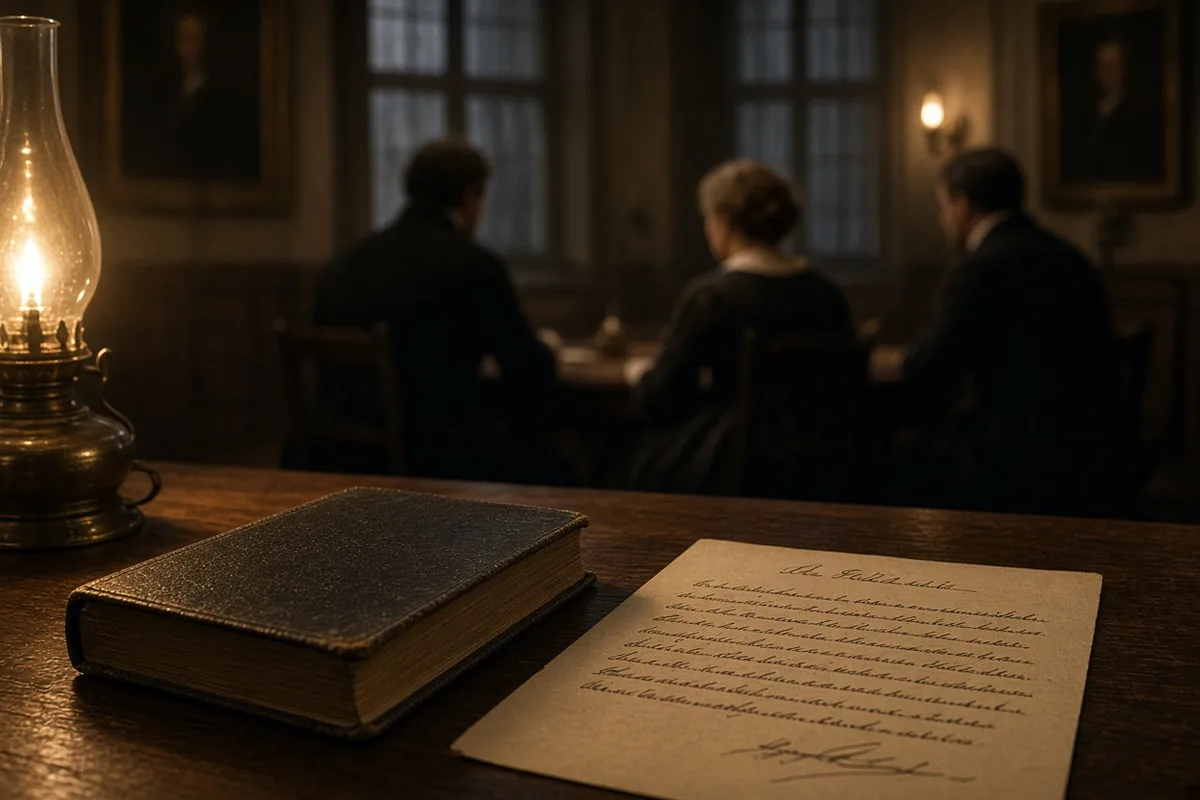
The prayer house bell rings at six each evening regardless of the season. On 2 October 2024 the congregation numbered 287 children and 64 workers. The hymn chosen that night was the same Tamil translation of “Jesus loves me” that Amy Carmichael first taught in 1901. After the singing, twelve-year-old Latha stood and recited from memory the verse Amy had dictated on 4 June 1934, the day the six-year-old daughter of the temple woman arrived. The child’s voice carried to the veranda where the present superintendent now sits with the open prayer book on her lap.
Beyond the grove the new boys’ section, completed in 2018, houses 94 residents in four brick houses built to the same plan as the original girls’ houses. The register for 19 November 2024 lists the arrival of two brothers, ages five and eight, from a family in Tuticorin whose father had died the previous month. Their names, Suresh and Kumar, appear in the same column format used since 1901, and the margin note records the exact hour of their arrival, 14:35, together with the single rupee coin each boy carried in his pocket.
In the corner room the white cloth is changed each week by the same twelve-year-old whose great-grandmother arrived in 1928. On the morning of 5 December 2024 she carried the fresh cloth across the compound at 07:12, folded it once, and laid it across the bolster before opening the window that faces the neem tree planted in 1905. The prayer book remained open at the page marked “Go ye,” its margins filled with the small Tamil script Amy added in the final months when her right hand could still hold a pencil.