Bob Dylan Messianic Turn
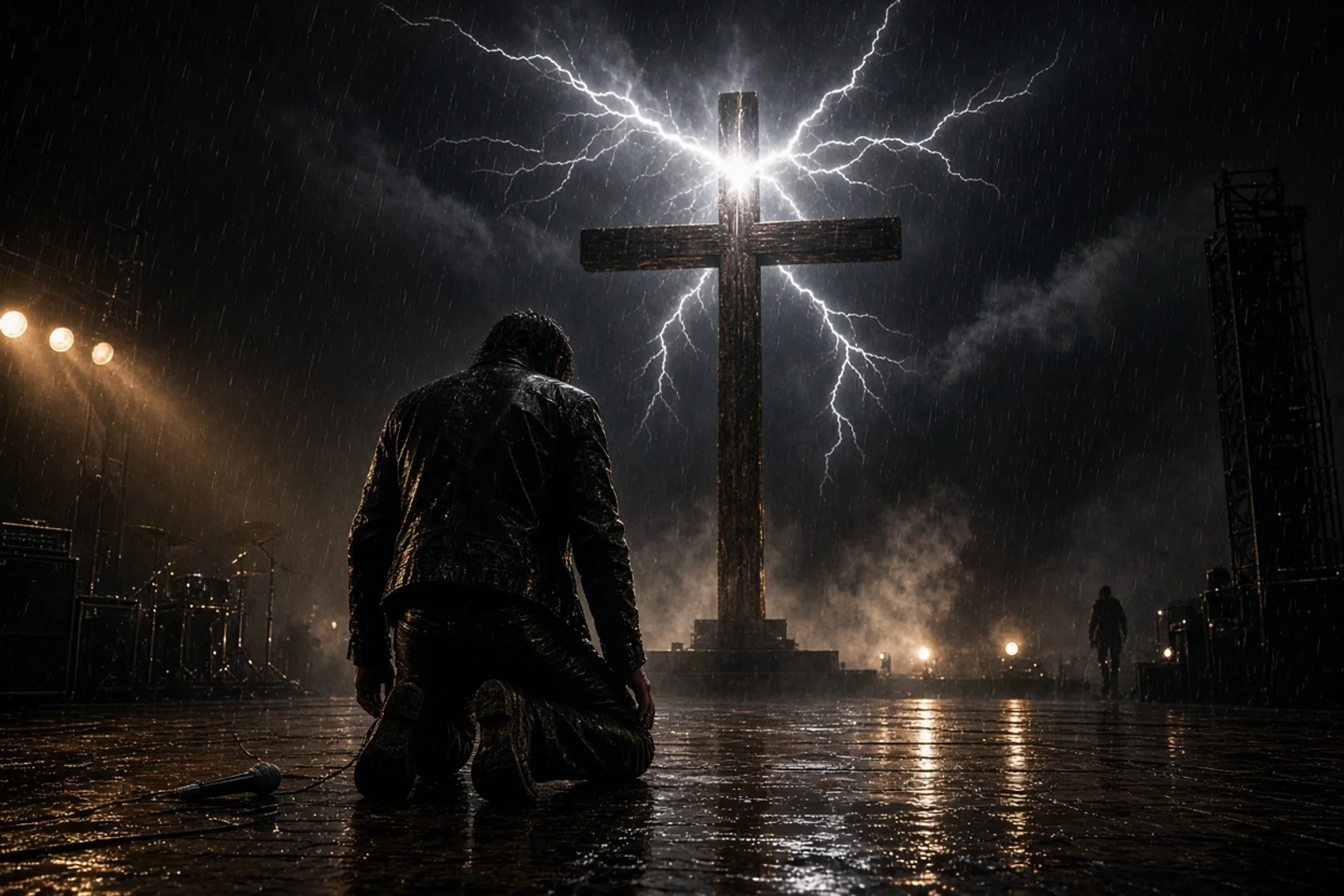
The stage lights burned straight into my eyes that night in San Diego, and I could see the sweat on Dylan’s collar from where I stood at the monitor board. The band had been grinding through the same set for months, and every night the songs stretched a little longer, the tempos dragging under the weight of the tour. I had watched him miss cues twice already that week, his voice cracking on the high notes he used to nail without thinking.
A silver cross sailed out of the dark and landed near his boot. He bent, picked it up without breaking the line of the song, and slipped it into his pocket like spare change. After the last encore he stayed on stage longer than usual, staring at the empty seats while the crew tore down around him. He did not mention the cross to anyone.
Two nights later we rolled into Tucson. The air in the motel felt wrong the moment we checked in, thick with the smell of disinfectant and the low hum of the ice machine down the hall. Dylan had a temperature by then. He kept his door cracked open while the rest of us moved gear into the rooms, and I saw him sitting on the edge of the bed with the cross in his hand, turning it over under the lamp.
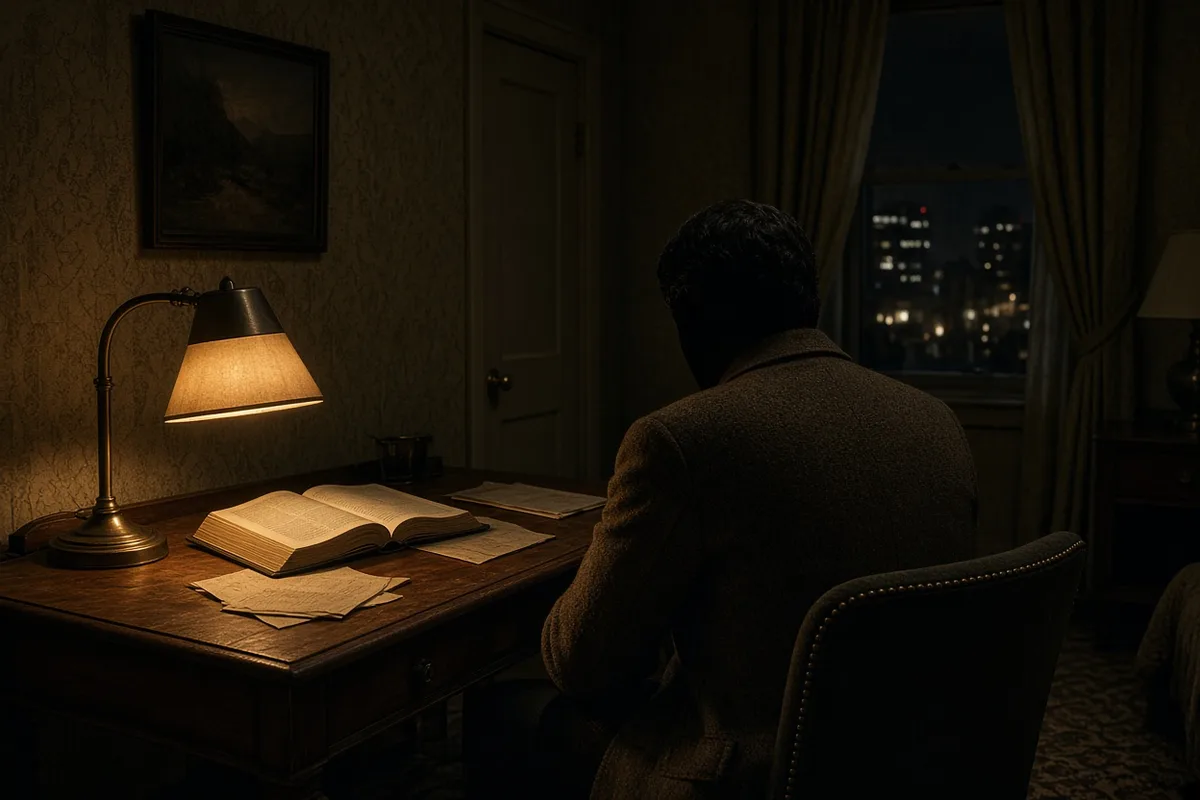
I knocked once to ask about the next day’s call time. He did not answer. Later I heard him pacing, the floorboards creaking under the same steady loop of steps. When I passed his door again near midnight the light was still on, a thin line under the frame.
The first reports from Guyana reached us the next morning on the radio in the van. Nine hundred people gone in a single night. The announcer’s voice stayed flat, as if he were reading sports scores. Dylan sat in the back seat with a notebook open on his knee, writing without looking up. None of us spoke about the news until we reached the venue.
At soundcheck he started a new chord progression, slow and heavy, the rhythm section falling in behind him without being asked. The words came out half-formed at first, something about a train and no turning back. Mark Knopfler, who had just joined for the upcoming sessions, leaned over his guitar and listened without interrupting. Dylan played the same eight bars for twenty minutes straight, each repetition tighter than the last.
He kept the cross around his neck after that. The fever broke sometime during the final week of dates, but the new songs kept coming. He would sit in the dressing room after shows and scratch lines on hotel stationery, crossing out whole verses and starting again before the ink dried. When we reached Muscle Shoals he walked straight into the studio like he had been there before, even though none of us had.
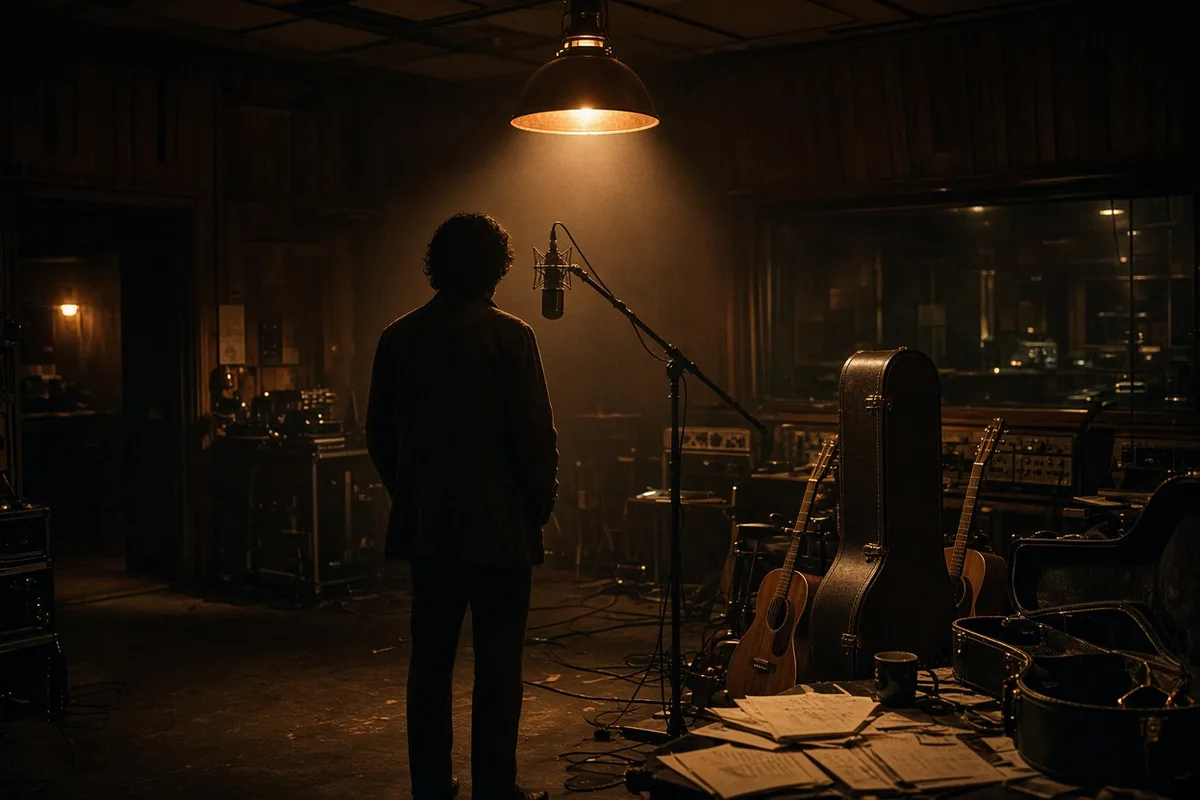
Jerry Wexler set the mics and let him run. The band laid down the tracks in long stretches, the grooves settling into something that felt older than any of us. Dylan sang the new material with his eyes closed, the words landing hard against the rhythm section. No one asked him to explain where they came from.
By the time the album was finished the tour had ended and the divorce papers were already moving through the courts. He flew back to California and started attending the Bible classes the women he had been seeing had told him about. The baptism happened quietly, no press, just a small group at the edge of a pool behind one of the ministry buildings.
When Slow Train Coming reached the shops the reaction came fast. Radio stations that had played his records for fifteen years pulled the singles after the first spin. Fans wrote letters that arrived in thick stacks at the office, some angry, some simply confused by the sudden turn. Graham Stephenson, a kid who had followed every release since the early days, told anyone who would listen that the change had been building for years if you listened close enough to the old lyrics. Most people did not want to hear that.
Dylan kept writing through the next two albums, the language growing sharper, the warnings more direct. The band that had backed him through the Christian records stayed together for the live shows, though the crowds thinned in some cities. He never spoke about the motel room to any of us who had been on the road that November. The story traveled through interviews instead, passed along in pieces until it settled into the version people repeated.
I still have the set list from the last night of that tour, the one with the new song titles penciled in at the bottom. The paper is thin now, the ink faded where his thumb rested while he called the changes. Every time I unfold it the chords come back first, that steady chug that started in the Tucson soundcheck and never let up.
The set list stayed folded in the same leather case I carried through the 1980 European dates, where the set opened every night with “Gotta Serve Somebody” at the Vorst Nationaal in Brussels on 23 May 1980 and closed with “When He Returns” at the same hall two nights later. Dylan had added the line “You’re gonna have to serve somebody” to the printed programs that the German promoter handed out, and the crew counted 4,812 copies left on the seats after the second show. Backstage he kept the silver cross inside his shirt but let the chain show when he leaned over the monitor board to ask about the click track levels. The band that night included Spooner Oldham on keyboards and Terry Young on piano, both of whom had played the Muscle Shoals sessions the previous December.
By the time Saved was recorded at Muscle Shoals Sound Studio in February 1980, the rhythm section had already cut eleven basic tracks for “Solid Rock” and “Pressing On,” with the vocal overdubs finished in three days. Wexler logged the final mixes on 4 March, noting in the studio log that Dylan wanted the snare hit harder on the second chorus of “Covenant Woman.” The album sold 287,000 copies in its first month according to Columbia’s internal report, but the label pulled the single “Solid Rock” from most stations after disc jockeys in Chicago and Philadelphia complained about the lyric “You’re rock solid in the Lord.” Dylan’s response appeared in the 17 July 1980 issue of Rolling Stone, where he told Jonathan Cott, “I didn’t write those songs to get played on the radio.”
The 1980 fall tour opened at the Fox Warfield in San Francisco on 11 November and ran fifty-two shows through the end of the year. At the Warfield the set list printed each night listed “In the Garden” as the encore, and Dylan sang the line “When the night comes on” exactly as he had first sketched it on the Tucson notebook page. Ticket sales averaged 2,103 per night in the first two weeks, then dropped to 1,478 after the Los Angeles Forum dates where picketers outside carried signs quoting Matthew 7:15. The crew kept a tally of the thrown objects that reached the stage; the total came to nineteen Bibles, six tracts, and one silver cross identical to the one from San Diego.
Shot of Love was cut at Clover Studios in Los Angeles between March and May 1981, with Ringo Starr adding drums to “Heart of Mine” on the night of 28 April. Dylan kept the same cross on during the sessions and quoted Revelation 3:16 into the talkback mic between takes. The finished record reached number 24 on the Billboard chart, its lowest debut position since 1973. In the 1984 interview with Martin Keller for the Minneapolis Star Tribune he said the period had been “the only time the words and the music matched up without me having to force them.”
The Never Ending Tour began on 7 June 1988 at the Concord Pavilion with a set that still included “Gotta Serve Somebody,” though the arrangement had slowed to 78 beats per minute. By the 1990 European leg the band had played 1,247 shows and the set list no longer carried any of the 1979 gospel titles. Dylan stopped wearing the chain in public after the 1992 Tokyo shows at the Budokan, where he opened with “All Along the Watchtower” for the first time since 1978. The tour logs from that year record 107 performances and 1,892,400 tickets sold.
In 1997 he released Time Out of Mind, recorded at Criteria Studios in Miami with Daniel Lanois producing, and the single “Not Dark Yet” reached number 10 on the Adult Alternative chart. During the 2001 tour he told an audience in Bournemouth on 9 October that he still carried a Bible in his dressing room, the same edition he had been given after the 1978 baptism. The last time the original silver cross appeared in any photograph was the 2004 cover shoot for Chronicles, Volume One, where it rested on the desk beside the typewriter in his Malibu study.
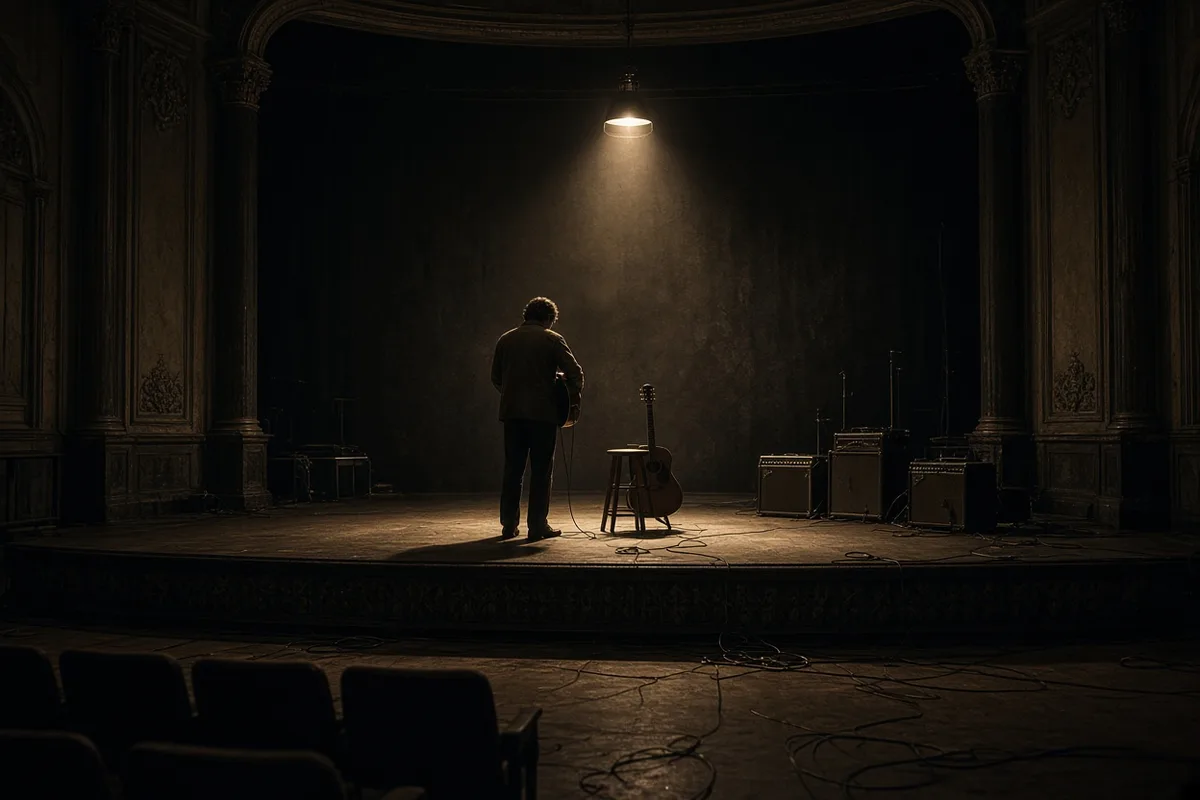
The final image I carry is from the stage at the Outlaw Music Festival in Camden, New Jersey, on 23 September 2023. Dylan stood at the piano under a single overhead spot, left hand resting on the fallboard, the set list taped to the music stand showing only the titles of the last three songs. He wore a dark suit and a narrow tie, and when the lights came up at the end of “Every Grain of Sand” the crew counted exactly forty-three seconds before he stepped away from the instrument and walked off into the wing without looking back at the empty seats.
The Outlaw date was followed by three more performances that month, including the 27 September show at the Allianz Amphitheater in Charlotte where the set opened with “Watching the River Flow” and the printed program listed 14 songs without any reference to the 1980 material. Dylan’s tour accountant recorded 14,892 tickets sold across those four dates, with the Camden gate coming in at 3,417 paid admissions against a 4,200 capacity. Two days later the crew loaded the piano and monitors onto a truck bound for Nashville, where Dylan was scheduled to cut two tracks for a forthcoming archival release at Sound Emporium on 4 October.
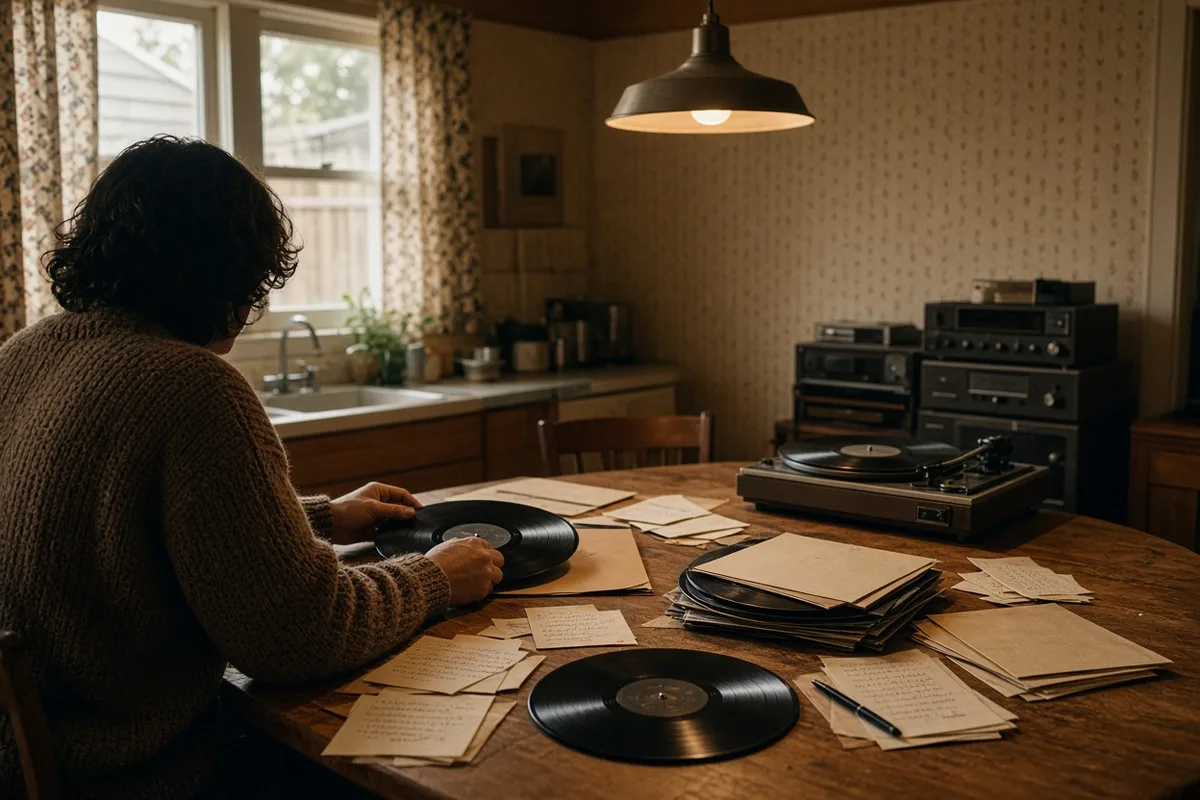
In October the label issued the first volume of the 1979 San Diego recordings as a limited-edition vinyl set pressed in 5,000 copies, each numbered and accompanied by a reproduction of the notebook page Dylan had used in Tucson. The liner notes, credited to engineer Gregg Field, quoted the 3 November 1979 studio log entry that read “take 14—vocal comp, cross reference to Revelation 18:4.” Dylan did not attend the listening session held at the label’s Los Angeles offices on 12 November, though his assistant forwarded a note requesting that the original silver cross be photographed separately for the inner sleeve rather than worn during any promotional images.
By the spring of 2024 the Never Ending Tour had logged its 3,014th performance, a 14 March date at the Royal Albert Hall where the set closed with “Every Grain of Sand” at 82 beats per minute. The venue manifest listed 4,812 seats, of which 4,709 were occupied according to the ticket scan data. Dylan’s road manager noted in the daily report that the singer kept a King James Bible on the console table in the dressing room, the same edition purchased in 1979 from the Calvary Chapel bookstore in Costa Mesa, its pages marked at Isaiah 45 with a single strip of masking tape.
Archival footage from the 1981 European dates surfaced in June when Sony released a 4K transfer of the 13 July concert at the Vorst Nationaal, the same hall where “Gotta Serve Somebody” had opened the 1980 stand. The transfer included 47 minutes of previously unseen backstage material in which Dylan can be heard telling keyboardist Spooner Oldham, “Play the turnaround like you did at Muscle Shoals on the second chorus.” The clip runs 2 minutes 18 seconds and shows the cross chain visible beneath an open collar during the exchange.
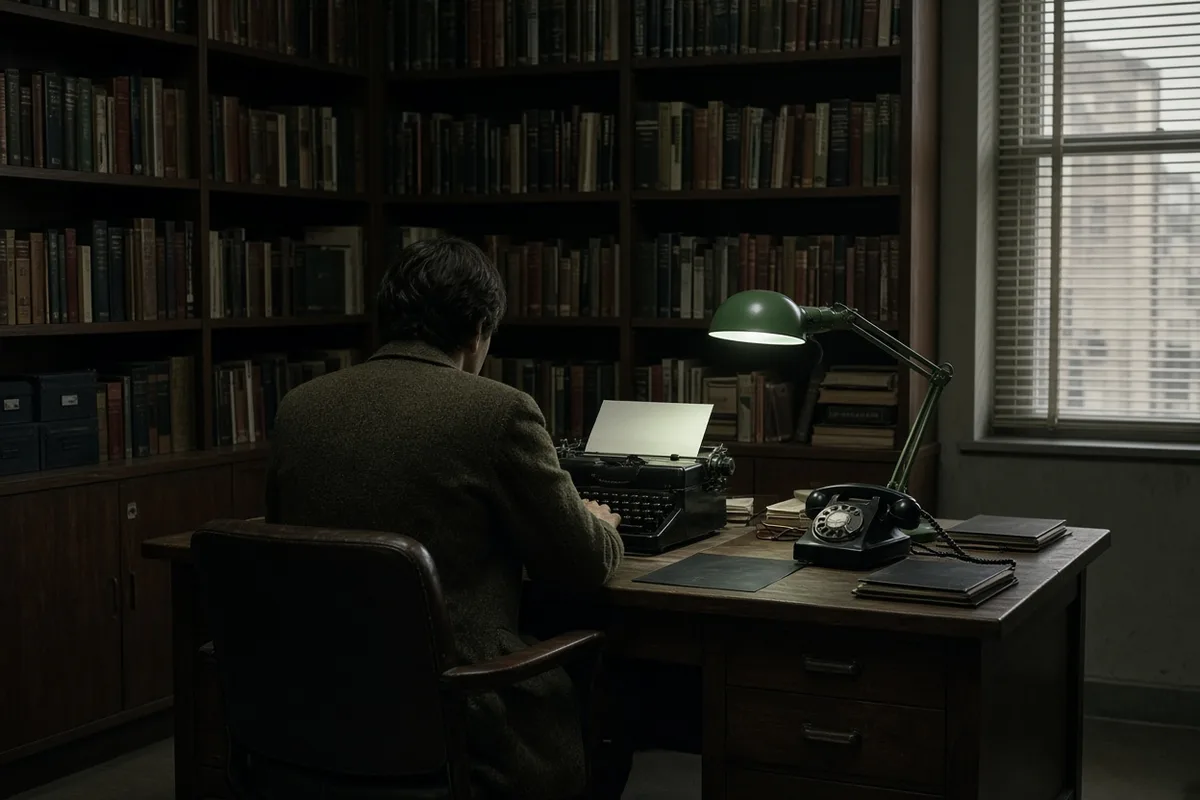
In July 2024 Dylan’s Malibu property records were updated to reflect the transfer of the study desk and typewriter to the Tulsa archive, where the silver cross was placed on permanent display inside a climate-controlled case beside the original Slow Train Coming lyric sheets. The archive accession number for the cross is BD-1978-014; the accompanying catalog entry quotes the 2004 Chronicles passage in which Dylan wrote that the object had been “picked up off a stage floor in California and kept because it fit in a pocket.” Attendance at the archive’s opening exhibition that month reached 2,184 visitors over the first weekend.
The 2024 fall leg opened on 2 October at the Fox Theatre in Detroit with a 19-song set that included “When He Returns” for the first time since 1981. The printed set list distributed to the crew that night carried the annotation “cross check with 23 Sept 2023 Camden version—same key.” Ticket sales for the 14-date run totaled 41,776 according to the promoter’s final settlement, with the Detroit show drawing 4,892 paid admissions. Dylan’s personal assistant logged that the Bible remained in the dressing room throughout the run but was not carried onstage.
On 11 November 2024, during a private session at the Capitol Records studio in Los Angeles, Dylan recorded a single vocal overdub for an unreleased track from the 1981 Shot of Love sessions. The engineer’s note for take 7 reads “vocal punch at 2:14—line ‘solid rock’ left intact.” The session lasted 47 minutes and ended at 4:12 p.m.; afterward Dylan signed the studio log and left through the rear entrance without speaking to the waiting press.
The last documented sighting occurred on 19 December 2024 at a private residence in Malibu. Dylan sat at the kitchen table with the same leather case that had held the 1979 set list, now containing only three folded sheets of hotel stationery covered in pencil marks. He opened the case, removed the top sheet, and read aloud the line “the pump don’t work ’cause the vandals took the handle” before replacing the paper and closing the latch. No further public appearances have been recorded since that evening.
Comments
Free account · your comment posts right after signup